








Center-Based, In-Home, and School-Based ABA Therapy Compared
Center-based, in-home, and school-based ABA therapy offer different settings. Your child's goals guide the choice.


Key Points:
- Center-based, in-home, and school-based ABA therapy have no single best option for every child.
- Insurance approval, caregiver schedules, and school arrangements can affect which services are available.
- Children can practice skills with caregivers and teachers even when therapy happens mainly in one setting.
Center-based, in-home, and school-based ABA therapy offer different places to practice communication, daily activities, and social skills. A therapy center provides planned learning activities, home sessions use household routines, and school sessions support participation during the school day.
Your child’s goals, comfort, and daily needs help determine where therapy should happen. Family schedules and available services also influence the decision. The comparison below explains what each setting can offer and what to review with your child’s therapy team.

How Do the Three ABA Therapy Settings Compare?
The main differences involve where children practice skills and who joins those activities. Goals can overlap across settings, so the examples below describe common opportunities without limiting what a child might learn.
A Board Certified Behavior Analyst, or BCBA, assesses a child’s needs and develops treatment goals. That plan helps the team decide which activities and settings can support those goals.
What Happens During Center-Based ABA Therapy?
Center-based ABA therapy takes place in a clinic. Sessions may include individual teaching, play, and activities with other children, depending on the treatment plan.
At Cross River Therapy, our center-based ABA therapy includes individualized activities and age-group opportunities for peer interaction. For example, a child learning to join a game might practice asking another child to play, then try that skill during a shared activity.
Travel and appointment times need to work with the family’s routine. The team also needs to plan how the child will use new skills beyond the center.
Does Research Show That Center-Based ABA Works Better?
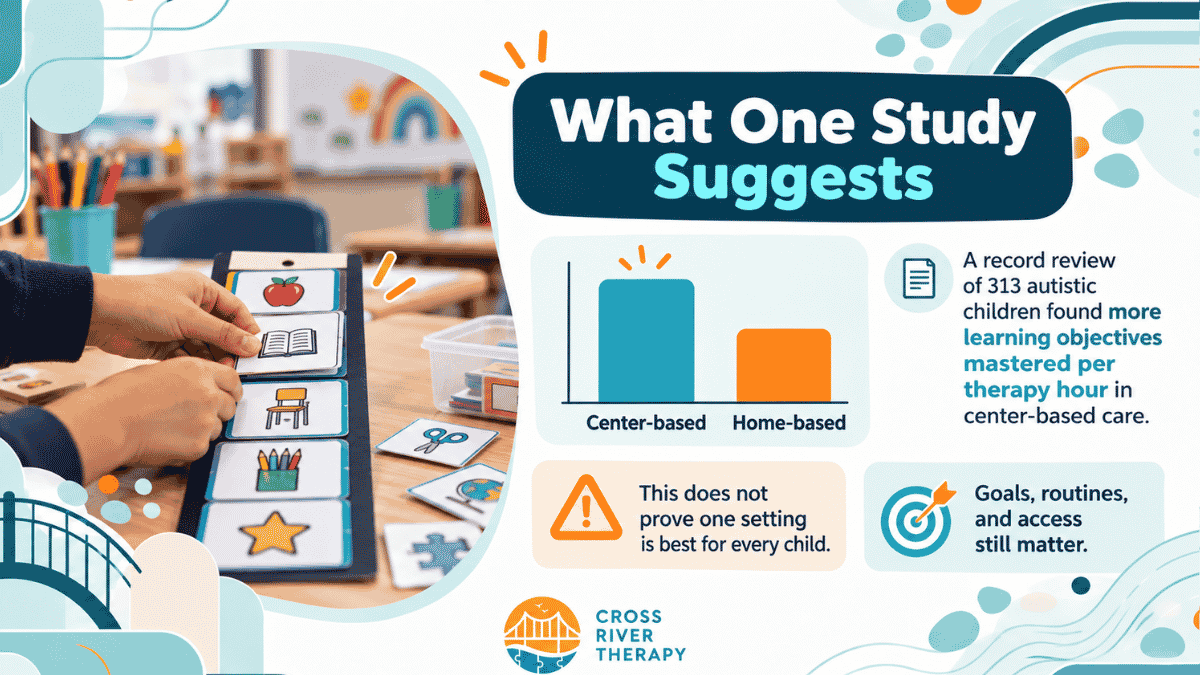
A study published in Behavior Analysis in Practice reviewed treatment records from 313 autistic children. Children receiving center-based services mastered more measured learning objectives per treatment hour than those receiving home-based services.
The study reviewed past treatment records. Its findings do not establish that location alone caused the difference or that every child will learn faster in a clinic. The results support considering the setting alongside the child’s needs and treatment plan.
How Does In-Home ABA Support Daily Routines?
In-home ABA therapy brings treatment into the child’s everyday environment. Therapists can observe household routines and help children practice communication, self-care, and play during familiar activities.
For example, a child who needs help requesting a snack might practice using words, gestures, pictures, or a communication device during snack time. A caregiver can learn how to support that same request between appointments.
Through our in-home ABA therapy, we involve families in treatment. We also offer parent training to help caregivers support treatment goals during daily activities.
Home sessions reduce travel, but household space, interruptions, and caregiver schedules still need consideration. Opportunities to practice with groups of peers may require activities outside the home.
How Does School-Based ABA Support Classroom Activities?
School-based ABA therapy helps children practice skills during lessons, classroom activities, and school routines. Goals may include asking for help, communicating with classmates, or requesting a break.
A child who finds changes between activities difficult might practice checking a picture schedule or communicating that they need help. During our school-based ABA therapy, our BCBAs collaborate with parents and school staff to support individualized goals during the school day.
Before an outside provider begins services, the family, provider, and school need to confirm access and arrangements. Insurance approval may also be necessary. School-based treatment is not automatically available at every school.
How Does Private ABA Differ From IEP Services?
An Individualized Education Program, or IEP, describes a student’s educational goals, special education services, and school support. Federal IEP requirements also require the plan to explain how the school will measure progress.
A private ABA treatment plan is a separate clinical plan. Both plans may address communication, for example, but private therapy does not replace the services in the IEP. An outside therapist’s involvement requires coordination with the school.
How Can You Choose an ABA Therapy Setting?
The decision starts with the skills your child needs and the situations where they use them. These five areas can help organize a conversation with the provider:
- Your child’s goals. Support during dressing or meals may call for practice at home. A goal involving group play may need opportunities with peers. The provider should explain how the proposed setting supports each goal.
- Comfort and preferences. Noise, unfamiliar people, and different activities can affect participation. Your child’s interests and responses should inform the plan.
- Family routines. Travel, school hours, caregiver participation, rest, and family time all belong in the scheduling conversation.
- Available services. A provider may offer several settings without offering each one in every area. School access and local staffing also affect availability.
- Treatment recommendations and insurance. A BCBA’s assessment informs the treatment plan. Your insurance plan determines coverage and any required approval, which may affect the services you can arrange.
At Cross River Therapy, our intake team gathers family information before a BCBA assesses your child and develops individualized goals. Families can share which activities their child enjoys and where daily routines become difficult. Those details help connect treatment planning with everyday life.
Can a Child Receive ABA Therapy in More Than One Setting?
Some children receive therapy in multiple settings when their goals, available services, and required approvals support that arrangement. The CDC’s treatment overview recognizes that autism interventions can take place across home, education, healthcare, and community settings.
Skills may need practice with different people and in different places. Therapists call this generalization. A child might learn to request a break at the center, then practice the same request during homework or a classroom activity.
Multiple treatment locations are not necessary for every child. Caregivers and teachers can also support practice outside scheduled sessions. The provider should explain how the team will review progress and help skills carry into daily activities.

FAQs About ABA Therapy Settings
Is center-based ABA the same as daycare?
Center-based ABA is a treatment service with individual goals and clinical oversight. Daycare provides childcare. Families should confirm session times, supervision, drop-off, and pickup arrangements before enrolling. A therapy appointment does not automatically include childcare before or after the scheduled session.
Do caregivers need to attend every ABA session?
Attendance expectations depend on the provider, setting, and treatment plan. The provider should explain whether an adult must remain present, when caregivers participate in training, and how the team shares updates. Caregiver training and attendance throughout a child’s session are separate expectations.
Does ABA replace speech or occupational therapy?
ABA, speech therapy, and occupational therapy are separate services that can address different needs. The CDC’s explanation of developmental therapies describes how these approaches can work alongside behavioral treatment. Families can share other therapy plans with each team to help coordinate goals.
Explore ABA Therapy Options With Our Team
An ABA setting should give your child opportunities to practice skills they need in daily life. Treatment goals and family routines provide a starting point for reviewing which services are available.
At Cross River Therapy, we offer center-based, in-home, and school-based ABA therapy, depending on local availability. We serve North Carolina, Arizona, New Mexico, Indiana, Arkansas, and New Jersey. Our intake team can gather your information and begin the insurance authorization process. A BCBA assessment then helps us develop individualized treatment recommendations.
Recent News
Related articles

6 Arkansas Medicaid ABA Therapy Rules Families Need to Know
Arkansas Medicaid ABA therapy has age, diagnosis and approval rules. Families can check six requirements before care.
Arizona Autism Laws for ABA Coverage and School Rights
Arizona autism laws for ABA coverage vary by plan. Families can check insurance, appeal options, and school rights.

ABA Therapist Salary in Arkansas for RBTs and BCBAs
Compare ABA therapist salary in Arkansas by role. See how paid hours and benefits affect earnings before applying.

5 Autism Support Groups and Family Resources in New Mexico
Autism support groups in New Mexico connect families. Local resources offer events, parent support, and school help.

Where to Get an Autism Evaluation in New Mexico
Autism evaluation options in New Mexico include UNM and NMSU. Age and referral details help parents prepare.

7 North Carolina Autism Resources to Contact Before ABA Therapy Starts
Autism resources North Carolina families can call for diagnosis, early intervention, rights, and parent support. Start ABA intake with Cross River.

Does Indiana Medicaid Cover ABA Therapy? A Parent Checklist
Indiana Medicaid ABA therapy may cover care for eligible children. The checklist covers coaching and renewals.
How to Apply for the New Mexico DD Waiver
Your NM DD waiver application starts with state intake. The steps cover records, submission, and enrollment.

Does Insurance Cover ABA Therapy in New Jersey?
ABA therapy insurance in New Jersey varies by plan. Learn what NJ FamilyCare covers and how to check costs.

How ABA Therapy Builds Communication for Nonverbal Children Without Forcing Speech
ABA therapy communication for nonverbal children starts with AAC, signs, and daily routines. See how kids ask, refuse, choose, and get help.

How to Start ABA Therapy in New Jersey With a Checklist
Your guide explains how to start ABA therapy in New Jersey. A first-call checklist covers records and next steps.

How to Get an Autism Evaluation in Arkansas Before Starting ABA Therapy
How to get an autism evaluation in Arkansas starts with a referral, provider choice, and key records. Use this parent checklist before ABA intake.