








How therapists prevent problem behavior escalation
Expert Strategies in ABA Therapy: Preventing Behavioral Escalation in Autism Care


Understanding Behavioral Challenges and Therapeutic Responses
Challenging behaviors such as aggression, self-injury, and property destruction can significantly impact the lives of individuals with autism and those around them. Therapists specializing in Applied Behavior Analysis (ABA) employ a range of proactive and reactive strategies to prevent these behaviors from escalating, promote independence, and improve quality of life. This article explores the methods and principles therapists use to understand and manage problem behaviors effectively within ABA therapy.
What is Applied Behavior Analysis (ABA) Therapy and Its Role in Autism Support?
What is Applied Behavior Analysis (ABA) therapy, and how is it used to support individuals with autism?
Applied Behavior Analysis (ABA) therapy is a research-based approach grounded in the science of learning and behavior. It helps individuals with autism by teaching new skills and reducing harmful behaviors through reinforcement. ABA focuses on understanding behavior by examining what happens before (antecedents) and after (consequences) behaviors occur.
ABA programs are tailored to each person’s needs by assessing their environment and behaviors. This leads to individualized treatment plans that emphasize communication, social, academic, and self-care skills. Techniques like positive reinforcement, prompting and fading, behavior chaining, and natural environment teaching are commonly used to encourage desired behaviors.
ABA therapy is provided in various settings including homes, schools, and community environments. Initially, programs can be intensive — often lasting 25 to 40 hours per week over several years — but are customized depending on the individual’s progress and challenges. Qualified behavior analysts supervise these programs to ensure their effectiveness.
The primary goal of ABA is to replace unsafe or disruptive behaviors with skills that promote independence, communication, and safety. Modern ABA focuses on naturalistic, play-based methods that build on the individual’s strengths and interests, rather than forcing conformity to neurotypical norms. This supportive approach aims to improve quality of life and enable fuller participation in everyday society for those on the autism spectrum.
Key Qualifications of ABA Therapists Delivering Behavioral Interventions

Roles of BCBAs, BCaBAs, and RBTs in ABA therapy
ABA therapy involves a team of specialized professionals. Board-Certified Behavior Analysts (BCBAs) are graduate-level clinicians responsible for designing and overseeing individualized treatment plans. They assess behaviors, develop Behavior Intervention Plans (BIPs), and supervise other team members. Board Certified Assistant Behavior Analysts (BCaBAs) have completed undergraduate-level training and can provide some clinical services and assist in therapy delivery under supervision. Registered Behavior Technicians (RBTs) are entry-level practitioners who implement therapy directly with clients under the supervision of BCBAs or BCaBAs.
Educational and Certification Requirements
BCBAs must complete an approved graduate program, accrue supervised fieldwork hours, and pass the Behavior Analyst Certification Board (BACB) exam. BCaBAs require undergraduate coursework in ABA principles and supervised experience before certification. RBTs complete specific training, pass a competency assessment, and maintain ongoing supervision. Some states also require additional licensure or credentials, ensuring therapists meet regional regulatory standards.
Supervision and Ethical Standards in Practice
Certified practitioners adhere to comprehensive ethical guidelines established by the BACB. BCBAs oversee treatment implementation and provide ongoing supervision to BCaBAs and RBTs, ensuring interventions are evidence-based and tailored to individual needs. This supervision includes regular reviews of progress, modifying behavior plans as necessary, and maintaining professional standards to protect client welfare.
Scope of Responsibilities for Various Practitioner Levels
BCBAs develop and revise behavior plans, conduct assessments, and provide clinical oversight. BCaBAs assist in delivering interventions and can provide some direct therapy under supervision. RBTs focus primarily on executing intervention strategies during sessions, collecting data, and reporting progress. This hierarchy supports a coordinated, effective approach to therapy.
Importance of Professional Training in Effective Therapy Delivery
Extensive professional training ensures therapists understand the science of behavior, enable accurate analysis of antecedents and consequences, and promote skill development in clients. Well-trained ABA therapists personalize interventions using strategies like positive reinforcement, functional communication training, and environmental modifications. This expertise fosters meaningful behavior change, enhances independence, and supports safety for individuals receiving ABA services.
| Practitioner Level | Education & Certification | Primary Responsibilities | Supervision Level |
|---|---|---|---|
| BCBA | Graduate degree, BACB certification | Treatment design, assessment, supervision | Oversees BCaBAs and RBTs |
| BCaBA | Undergraduate coursework, BACB certification | Assists clinical services, delivers therapy under supervision | Supervised by BCBAs |
| RBT | Training program, competency assessment | Direct implementation of interventions, data collection | Supervised by BCBAs or BCaBAs |
Understanding and Analyzing Challenging Behaviors in ABA Therapy
What are common challenging behaviors in individuals with autism?
Challenging behaviors often seen in individuals with autism include aggression, self-injury, elopement (running away), noncompliance, and property destruction. These behaviors can interfere with learning, safety, and social participation.
How does ABA assess and understand these behaviors?
Applied Behavior Analysis (ABA) employs a scientific and systematic approach called Functional Behavior Assessment (FBA). This process involves carefully examining three components:
- Antecedents: Events or situations that occur immediately before the behavior.
- Behavior: The specific action exhibited by the individual.
- Consequences: What follows the behavior and reinforces or discourages it.
Through this analysis, practitioners determine why a behavior occurs, providing insight into its function.
What are the functions of challenging behaviors?
Challenging behaviors often serve specific purposes for the individual, like:
- Escape or avoidance: Trying to get out of a difficult or unpleasant situation.
- Attention seeking: Gaining notice from others.
- Access to tangible items: Obtaining a preferred object or activity.
- Sensory stimulation: Meeting sensory needs or seeking sensory input.
Identifying the function allows targeted interventions that address the root cause rather than just the behavior's symptoms.
How are Behavior Intervention Plans (BIPs) utilized?
After understanding the behavior's function, a Behavior Intervention Plan (BIP) is developed. This plan uses evidence-based strategies tailored to the individual, aiming to reduce challenging behaviors by modifying antecedents, teaching replacement skills, and adjusting consequences.
What is the scientific foundation behind ABA's approach to behavior?
ABA interprets behavior as a product of environmental interactions. By manipulating antecedents and consequences scientifically, ABA seeks to increase positive behaviors and decrease problematic ones. The focus is on understanding cause-and-effect relationships to create lasting, meaningful change in behavior.
This structured and data-driven approach makes ABA an effective methodology for supporting individuals with autism in managing challenging behaviors and enhancing overall quality of life.
Proactive Strategies: Preventing Behavior Escalation through Environment and Routine
How do environmental modifications help reduce behavior triggers?
ABA therapy uses environmental modifications to create safer, more predictable settings for individuals. Adjustments in the physical surroundings, such as removing hazards or reducing sensory overload, lower the chances of challenging behaviors occurring. These changes help individuals feel more comfortable and secure, preventing behavior escalation before it begins.
Why are structured routines and visual schedules important?
Structured routines and visual schedules provide consistency and clear expectations, which are crucial for many individuals with autism. Research shows that these tools can decrease crises by about 30%. Visual schedules break down the day into manageable segments, reducing anxiety and confusion that may lead to disruptive behaviors.
How effective are sensory accommodations like quiet spaces and sensory tools?
Sensory accommodations play a vital role in preventing sensory overload, a common trigger for challenging behaviors. Offering access to quiet spaces or using sensory tools such as fidget devices and weighted blankets helps individuals self-regulate. These accommodations support emotional regulation and decrease the likelihood of behavior escalation.
What are antecedent interventions, and how do they help?
Antecedent interventions include strategies like modifying tasks to make them more manageable and providing individuals with choices. This proactive approach reduces frustration and noncompliance by addressing potential triggers before challenging behaviors arise. By adjusting demands and increasing autonomy, antecedent interventions foster positive engagement.
What is the overall impact of proactive strategies on crisis reduction?
Proactive strategies in ABA are designed to prevent crises rather than just reacting to them. Their impact is significant, with structured routines and environmental modifications collectively reducing crisis episodes by around 30%. When combined with tailored sensory accommodations and antecedent interventions, these approaches create a supportive environment that promotes safer, more positive behaviors and enhances overall well-being.
Teaching Replacement Behaviors: Functional Communication and Skill Building
What communication systems are used in ABA to teach replacement behaviors?
ABA therapy employs several functional communication systems to help individuals express needs and feelings more effectively. These include verbal requests, sign language, and the Picture Exchange Communication System (PECS). Each system is tailored to the individual's abilities and preferences, providing accessible alternatives to challenging behaviors.
How does functional communication serve as an alternative to challenging behaviors?
Functional communication acts as a replacement behavior that meets the same needs underlying problem behaviors like aggression or noncompliance. By teaching individuals to request attention, items, or breaks through appropriate communication, ABA reduces reliance on harmful or disruptive actions.
What teaching methods support learning replacement behaviors?
ABA therapists use methods such as Task Analysis, which breaks down complex skills into manageable steps for easier learning. Visual Supports—including pictures, schedules, or social stories—help individuals understand expectations and follow routines. These strategies accommodate diverse learning styles and developmental levels.
How does ABA build skills that promote independence and social engagement?
Beyond communication, ABA focuses on developing skills that increase autonomy and interaction. By replacing unsafe behaviors with functional abilities, individuals gain tools to participate more fully in daily life and social settings. This fosters long-term improvements in independence and community integration.
Reinforcement Techniques to Encourage Positive Behaviors and Reduce Problems
How is Reinforcement Tailored to Individual Preferences?
Reinforcement in ABA therapy is personalized to suit each individual's unique interests and needs. Common reinforcers include verbal praise, access to preferred activities, or specific sensory inputs like tactile stimulation. This customization ensures that the reinforcement is motivating and meaningful, increasing the likelihood that desired behaviors will be repeated.
How Does ABA Use Positive Reinforcement and Behavior Chaining?
Positive reinforcement involves rewarding desired behaviors immediately after they occur to encourage repetition. Behavior chaining breaks down complex skills into smaller, teachable steps that are linked together sequentially. Each step is reinforced, gradually building toward the complete behavior. This structured approach helps individuals acquire new skills effectively while maintaining motivation.
How Are Reinforcement Techniques Balanced with Naturalistic Play-Based Teaching?
Modern ABA emphasizes integrating reinforcement within natural play environments rather than relying solely on structured drills. Play-based, naturalistic teaching methods use the individual's interests to create engaging learning opportunities where reinforcement occurs organically. This approach supports more generalizable skills by embedding learning in real-life contexts.
How Does ABA Replace Unsafe or Disruptive Behaviors with Adaptive Skills?
Instead of focusing only on reducing problematic behaviors, ABA targets the underlying functions of those behaviors and teaches functional communication and adaptive skills as replacements. For example, teaching verbal requests or sign language offers safer ways to meet needs previously expressed through challenging behavior. Reinforcement is then used to strengthen these positive alternatives, promoting independence, safety, and better social outcomes.
Reactive Strategies and Crisis Management in ABA Therapy
Ensuring Safety by Eliminating Hazards from the Environment
One of the first priorities during a behavioral crisis in ABA therapy is guaranteeing safety. This involves removing any potential hazards from the environment that could cause injury to the individual or others. Creating a safe space minimizes risks and helps both the therapist and individual focus on de-escalation techniques.
Techniques Such as Deep Pressure, Calming Phrases, and Distraction
During a crisis, therapists often use specialized calming methods such as applying deep pressure, which can have a soothing effect. Additionally, using calming phrases helps reduce anxiety by providing reassurance. Distraction techniques redirect attention away from the triggering stimuli, allowing the individual to regain control over their emotions and actions.
Use of Visual Supports and Social Stories for De-escalation
Visual supports, including social stories that explain situations in a clear and structured way, are effective tools for helping individuals with autism comprehend events better. These aids assist in reducing confusion and stress, supporting the natural de-escalation process during challenging moments.
Following Individualized Behavior Intervention Plans During Crises
Each individual’s Behavior Intervention Plan (BIP) outlines personalized strategies tailored to their specific needs. During reactive episodes, adhering closely to these plans ensures that interventions are appropriate and effective. This individualized approach helps manage behaviors promptly and facilitates quicker recovery.
In summary, reactive strategies in ABA therapy emphasize safety and personalized interventions. Combining environmental modifications, calming techniques, and visual aids ensures that crises are handled effectively, fostering emotional recovery and reinforcing long-term positive behavior changes.
The Role of Caregivers and Ongoing Collaboration in Preventing Behavior Escalation
Why is caregiver education and involvement crucial in ABA therapy?
Caregivers play a vital role in the success of ABA therapy by consistently reinforcing behavioral strategies outside of clinical settings. Educating caregivers equips them with tools to understand the functions of challenging behaviors and apply evidence-based interventions at home. This continuity enhances the likelihood of sustained behavior improvement.
How are caregivers trained to support ABA strategies at home?
Training involves teaching caregivers to implement components of the Behavior Intervention Plan (BIP), such as reinforcing replacement behaviors and using visual supports like social stories. They learn to recognize antecedents that trigger behaviors and adapt their responses accordingly. Hands-on practice and ongoing guidance ensure caregivers confidently apply these techniques.
What post-crisis strategies support emotional recovery for individuals and caregivers?
Following a crisis, emotional support is essential. Caregivers and clients benefit from debriefing sessions that use visual aids or social stories to process the event and reinforce progress. This approach fosters understanding and helps prevent recurrence, while empowering caregivers to support emotional resilience.
How are caregivers involved in adapting and maintaining Behavior Intervention Plans?
Caregivers collaborate with ABA professionals to evaluate treatment effectiveness and suggest modifications based on daily observations. Their insights help tailor sensory accommodations, routine adjustments, and communication strategies, ensuring that BIPs remain individualized and proactive in preventing escalation.
Through ongoing education, hands-on training, and collaborative adjustments, caregivers become integral partners in ABA therapy, promoting positive outcomes and reducing behavior crises.
Monitoring and Adapting Treatment Plans for Sustained Success

Why is regular evaluation and modification of ABA treatment plans necessary?
Behavior and learning needs evolve over time, making it important to regularly evaluate and adjust Applied Behavior Analysis (ABA) treatment plans. This continuous review ensures interventions remain effective and relevant to the individual's progress and emerging goals.
How does supervision by qualified analysts support this process?
Qualified Board Certified Behavior Analysts (BCBAs) oversee the assessment and modifications of treatment plans. Their expertise guides data-driven decision-making to refine behavior intervention strategies, optimize outcomes, and maintain ethical standards throughout the therapy.
What are the typical durations and intensity levels for ABA interventions?
ABA therapy hours typically range between 10 to 20 hours per week, though some intensive programs may provide up to 90.61 hours monthly. The duration and intensity are tailored to meet the severity of behavioral or developmental challenges, balancing effectiveness with the individual's capacity and needs.
How is technology, including AI, enhancing ABA therapy efficiency?
Advanced technology integration, particularly AI, automates tasks like progress reporting, reducing administrative burdens on therapists. This allows clinicians to increase direct engagement with clients, focus on personalized interventions, and maintain up-to-date documentation without sacrificing therapy time.
Together, these strategies form a dynamic approach to ABA therapy—one that continually adapts to individual progress and leverages supervision and technology to sustain and improve treatment success.
Addressing Criticisms and Evolving Ethical Practices in ABA Therapy

Historical Use and Rejection of Aversive Techniques
Early forms of ABA, particularly Discrete Trial Training (DTT) developed by Dr. O. Ivaar Lovaas, included aversive methods such as electric shocks combined with positive reinforcement. These practices aimed to reduce undesirable behaviors but have since been discredited and are no longer used. Modern ABA now focuses on positive, play-based, and naturalistic approaches that emphasize learning through environment manipulation without physical punishment.
Concerns About Rigidity and Neurotypical Conformity
Critics argue that ABA therapy can sometimes be too rigid, seeking to make autistic individuals conform to neurotypical standards of behavior. This approach may overlook the emotional context behind behaviors and fails to fully respect natural neurodiversity. Such concerns highlight risks of suppressing authentic traits and inadvertently causing emotional harm when the focus is primarily on reducing behaviors without fostering underlying communication or coping skills.
Shift Towards Individualized, Strength-Based, and Respectful Interventions
Contemporary ABA interventions prioritize personalized plans built on each individual's strengths, interests, and needs. The goal is to promote independence, communication, and safety while supporting autonomy rather than forcing conformity. This evolution reflects increased recognition of neurodiversity and the importance of respecting emotional well-being and individual preferences throughout therapy.
Ongoing Debates on Emotional Context and Stakeholder Involvement
Debates continue regarding how well ABA addresses the emotional experiences of autistic individuals. There is a growing demand for greater stakeholder involvement, including feedback from autistic clients and their families, to ensure interventions are ethical, socially valid, and emotionally supportive. These discussions aim to balance evidence-based practice with a compassionate, person-centered approach.
Overall, ABA therapy has made significant progress in ethical practice and methodology, moving away from punitive measures toward a respectful, individualized support system. However, continuing critique and thoughtful adaptation remain essential to align therapy with the values and voices of the autistic community.
Sustaining Progress and Promoting Well-being in ABA Therapy
Therapists who specialize in ABA use a comprehensive, evidence-based framework to prevent problem behavior escalation in individuals with autism. Through detailed functional behavioral assessment, personalized intervention plans, and the teaching of adaptive replacement skills, ABA fosters independence and safety. Proactive environmental modifications, sensory accommodations, and structured routines significantly reduce triggers, while reactive crisis management techniques preserve safety and facilitate de-escalation. Collaboration with caregivers ensures consistent reinforcement beyond therapy sessions, maximizing success. While ABA therapy continues to evolve to address ethical concerns and prioritize individual strengths, its core principles remain instrumental in improving quality of life. With ongoing evaluation and professional oversight, ABA therapy supports autistic individuals in navigating behaviors constructively, empowering them to participate fully in their communities.
References
- How To Address Challenging Behaviors With ABA Therapy
- 7 Essential Crisis Emergency ABA Strategies Every ...
- Master Proactive & Reactive ABA Techniques
- What Is Applied Behavior Analysis - Exploring ABA ...
- The Controversy Around ABA
- Applied Behavior Analysis (ABA)
- A Comprehensive Guide to ABA Therapist Requirements
- Types Of ABA Therapy Jobs And Their Degree Requirements
- Qualifications Needed to Receive ABA Therapy
- 6 Benefits of ABA Therapy for Children with Autism
Recent News
Related articles

6 Arkansas Medicaid ABA Therapy Rules Families Need to Know
Arkansas Medicaid ABA therapy has age, diagnosis and approval rules. Families can check six requirements before care.

Arizona Autism Laws for ABA Coverage and School Rights
Arizona autism laws for ABA coverage vary by plan. Families can check insurance, appeal options, and school rights.

ABA Therapist Salary in Arkansas for RBTs and BCBAs
Compare ABA therapist salary in Arkansas by role. See how paid hours and benefits affect earnings before applying.

5 Autism Support Groups and Family Resources in New Mexico
Autism support groups in New Mexico connect families. Local resources offer events, parent support, and school help.

Where to Get an Autism Evaluation in New Mexico
Autism evaluation options in New Mexico include UNM and NMSU. Age and referral details help parents prepare.

7 North Carolina Autism Resources to Contact Before ABA Therapy Starts
Autism resources North Carolina families can call for diagnosis, early intervention, rights, and parent support. Start ABA intake with Cross River.

Does Indiana Medicaid Cover ABA Therapy? A Parent Checklist
Indiana Medicaid ABA therapy may cover care for eligible children. The checklist covers coaching and renewals.
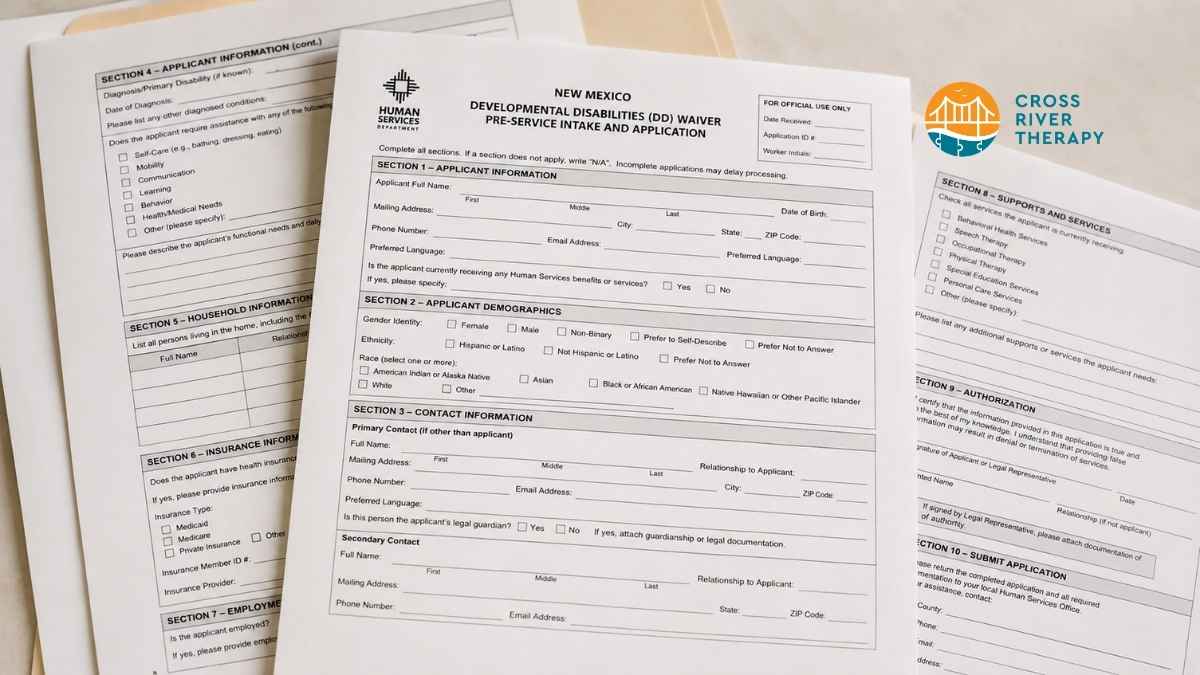
How to Apply for the New Mexico DD Waiver
Your NM DD waiver application starts with state intake. The steps cover records, submission, and enrollment.

Does Insurance Cover ABA Therapy in New Jersey?
ABA therapy insurance in New Jersey varies by plan. Learn what NJ FamilyCare covers and how to check costs.

How ABA Therapy Builds Communication for Nonverbal Children Without Forcing Speech
ABA therapy communication for nonverbal children starts with AAC, signs, and daily routines. See how kids ask, refuse, choose, and get help.

How to Start ABA Therapy in New Jersey With a Checklist
Your guide explains how to start ABA therapy in New Jersey. A first-call checklist covers records and next steps.

How to Get an Autism Evaluation in Arkansas Before Starting ABA Therapy
How to get an autism evaluation in Arkansas starts with a referral, provider choice, and key records. Use this parent checklist before ABA intake.