







The benefits of combining ABA and speech therapy
How Integrating ABA and Speech Therapy Empowers Children with Developmental Challenges


Unlocking Synergy: ABA Meets Speech Therapy
Combining Applied Behavior Analysis (ABA) therapy with speech therapy offers a multifaceted approach that uniquely supports children with autism and other developmental disorders. This alliance targets both behavioral and communication needs, enriching progress and fostering enduring improvements in social skills, language, and independence. As awareness grows surrounding the benefits of this collaborative strategy, families and professionals alike seek clearer insights into how these therapies complement each other, who provides them, and what measurable outcomes they produce.
Understanding Applied Behavior Analysis (ABA) Therapy and Its Role in Autism Support
What is Applied Behavior Analysis (ABA) therapy, and how is it used to support individuals with autism?
Applied Behavior Analysis (ABA) therapy is a scientifically supported approach grounded in the principles of learning and behavior. It aims to improve social, communication, and adaptive skills for individuals with autism. ABA uses personalized treatment plans developed by professionals who assess behaviors systematically. Techniques like Discrete Trial Training (DTT) break down complex skills into manageable steps, while Natural Environment Training (NET) focuses on teaching skills during everyday activities. ABA targets increasing positive behaviors and reducing those that interfere with learning or social interaction. Early and intensive intervention leads to better outcomes in language, social engagement, and independence.
What are the main techniques and principles used in ABA therapy?
ABA therapy employs strategies such as positive reinforcement, where desired behaviors are encouraged through rewards. The ABC model (Antecedent-Behavior-Consequence) helps identify triggers and consequences of behaviors, enabling therapists to design effective interventions. DTT provides structured learning opportunities by repeatedly practicing specific skills, whereas NET emphasizes learning in natural settings to promote generalization. Overall, ABA combines various data-driven methods tailored to the child's individual needs.
What goals does ABA therapy focus on?
The therapy aims to develop functional communication, improve social skills, and decrease problem behaviors such as repetitive actions or aggression. ABA also assists in building life skills like self-care and academic abilities. Enhancing willingness to communicate and fostering social integration are key objectives.
Who provides ABA therapy, and what qualifications do these professionals have?
ABA therapy is delivered by trained experts including Board Certified Behavior Analysts (BCBAs), Certified Assistant Behavior Analysts (BCaBAs), and Registered Behavior Technicians (RBTs). BCBAs oversee therapy design and ethical practice, creating individualized plans based on thorough assessments. RBTs implement interventions under supervision. These professionals hold specialized education and certification in behavior analysis. Family members also play an important role, receiving coaching to reinforce skills beyond therapy sessions.
How Speech Therapy Complements ABA by Targeting Communication and Language Skills
Objectives of Speech Therapy
Speech therapy primarily aims to help children improve their ability to communicate effectively. This includes overcoming speech delays and refining various language skills to boost their confidence and social interaction abilities.
Areas Addressed: Articulation, Expressive/Receptive Language, Fluency, Swallowing
Speech therapy focuses on multiple communication components:
- Articulation: Enhancing the clarity and accuracy of speech sounds.
- Expressive Language: Improving the ability to convey thoughts and feelings through words and sentences.
- Receptive Language: Developing skills to understand and interpret spoken language.
- Fluency: Addressing issues like stuttering to produce smooth, uninterrupted speech.
- Swallowing: Supporting safe swallowing which is essential for oral health and communication confidence.
Techniques Used Like Play-Based Activities and Natural Interactions
Engagement is critical in speech therapy. Techniques often involve play-based activities, games, and natural interactions that promote learning in enjoyable and motivating ways. These methods support children in practicing communication skills in settings that feel familiar and less pressured.
Role of Speech-Language Pathologists (SLPs)
Speech therapy is delivered by Speech-Language Pathologists (SLPs), professionals trained in diagnosing and treating communication and swallowing disorders. SLPs tailor therapy plans to each child's unique needs, ensuring progress towards clearer and more effective communication.
Speech Therapy Goals Aligned with Social Communication Enhancement
Goals in speech therapy emphasize improving speech clarity, expanding vocabulary, understanding spoken instructions, and recognizing nonverbal cues. These improvements support the child's ability to engage in social communication, understand social cues, and build meaningful relationships, complementing behavioral goals addressed in ABA therapy.
The Powerful Partnership: Combining ABA and Speech Therapy for Holistic Development
What Are the Synergistic Benefits of Combining ABA and Speech Therapy?
Combining Applied Behavior Analysis (ABA) therapy with speech therapy creates a powerful synergy that enhances language skills beyond what each therapy achieves alone. ABA therapy’s structured behavior modification techniques complement the communicative focus of speech therapy, helping children with developmental challenges improve articulation, expressive and receptive language, fluency, and social communication. This partnership supports children in reducing negative behaviors while building positive communication skills like vocabulary, sentence structure, and conversational abilities.
How Does This Combination Address Both Behavioral and Communication Challenges?
ABA therapy applies scientifically tested principles of learning, using positive reinforcement to encourage desirable behaviors and reduce problematic ones. Speech therapy focuses on overcoming hurdles in speech sounds, understanding instructions, and using gestures. Working together, these therapies address the complete spectrum of challenges — behavioral, social, and communicative. The integrated approach helps children understand social cues, engage in conversations, and develop meaningful relationships, leading to lasting developmental progress.
How Does Collaboration Improve Treatment Consistency and Quality of Care?
Collaboration between ABA therapists and speech-language pathologists ensures more consistent, focused, and effective treatment plans. By sharing expertise, defining their distinct roles, and maintaining clear communication, professionals avoid duplicating efforts, streamline interventions, and align their goals. This teamwork enhances the quality of care and supports long-term development outcomes, providing a comprehensive and well-rounded approach tailored to each child's unique needs.
What Role Do Shared Goals and Data Play Between Professionals?
When ABA and speech professionals work together, they set shared goals and exchange data collected from real-time ABA tracking and standardized speech assessments. This data-driven collaboration allows them to track progress accurately, adjust strategies, and reinforce communication and behavioral skills across multiple environments. Together, they create personalized plans that dynamically respond to the child’s evolving abilities and challenges.
How Does Combining Therapies Reduce Duplicated Efforts and Save Costs?
Integrated treatment plans coordinated between ABA providers and speech therapists eliminate overlapping interventions, reducing unnecessary repetition and associated costs. By respecting each other's expertise and clearly defining responsibilities, the therapies complement rather than duplicate each other’s work. This efficient collaboration not only saves families money but also optimizes therapy sessions, making interventions more impactful and time-effective.
| Aspect | ABA Therapy Focus | Speech Therapy Focus | Collaborative Benefits |
|---|---|---|---|
| Main Objective | Behavior modification and skill building | Speech articulation and language development | Holistic development addressing behaviors and communication |
| Techniques Used | Reinforcement, discrete trial training, NET | Play-based activities, natural interactions | Coordinated strategies targeting all skill areas |
| Professional Roles | Board Certified Behavior Analysts (BCBAs) | Speech-Language Pathologists (SLPs) | Shared goals, data, and role clarity |
| Impact on Child | Social skills, behavior reduction | Speech clarity, language comprehension | Comprehensive gains in social and communication skills |
| Cost and Efficiency Benefits | Avoids duplicated sessions | Enhances communication | Saves costs through streamlined, focused therapy |
Practical Collaboration: Effective Strategies Between ABA and Speech Therapists
Importance of Clear Role Definition and Respecting Expertise
Successful collaboration between ABA and speech therapists begins with clearly defining each professional's role. ABA therapists focus on behavior modification and foundational communication skills using reinforcement techniques, while speech therapists concentrate on articulation, expressive and receptive language, and social communication. Respecting each other's expertise ensures that therapy plans complement rather than duplicate efforts, optimizing resource use and patient progress.
Communication and Shared Goal Setting
Open and ongoing communication between therapists is essential. Both parties should regularly share observations, data, and insights to align strategies. Establishing shared goals that address both behavioral and communication challenges allows for a cohesive treatment approach. Jointly crafted objectives encourage consistency in therapy sessions and natural environments.
Ongoing Improvement and Adjustment in Therapy Plans
Therapy plans should be dynamic, adapting to the child’s evolving needs as progress data is reviewed. ABA's data-driven methods — tracking behavior changes through visual charts and quantitative measures — combined with standardized speech assessments provide a comprehensive view of progress. Continuous adjustments improve treatment effectiveness and ensure that goals remain relevant and achievable.
Parent Involvement and Coaching to Reinforce Skills
Engaging parents as active participants through coaching strengthens the impact of therapy. Parents learn to reinforce both communication and behavioral skills in daily routines, increasing generalization of gains. Consistent support across environments helps children practice skills naturally, contributing significantly to their long-term success.
Use of Data from ABA and Standardized Assessments for Monitoring Progress
Effectiveness is measured by collecting ongoing ABA data on targeted behaviors and skills, visualizing trends through graphs, and utilizing standardized tools such as the Vineland Adaptive Behavior Scales and VB-MAPP. These assessments help evaluate development across domains, track social competence, and guide treatment dosage decisions. Regular data analysis informs therapists when modifications are needed to maximize outcomes.
| Collaboration Aspect | Description | Outcome |
|---|---|---|
| Role Definition | Distinct responsibilities, mutual respect | Avoids treatment overlap, enhances efficiency |
| Communication & Goal Setting | Regular data sharing, unified objectives | Promotes targeted, consistent intervention |
| Treatment Adaptation | Data-driven revisions based on ongoing performance | Maintains relevance and effectiveness of therapy |
| Parent Coaching | Training caregivers for reinforcement | Facilitates skill generalization and engagement |
| Progress Monitoring | Use of ABA data and standardized assessments | Objective evaluation, informed clinical decisions |
How Combining ABA and Speech Therapy Accelerates Skill Development and Social Integration
ABA’s Role in Building Foundational Communication Skills and Social Behaviors
ABA therapy focuses on shaping positive behaviors and communication by using reinforcement strategies that develop vocabulary, sentence structure, and conversational abilities. Techniques like discrete trial training (DTT) and natural environment training (NET) break down complex communication tasks into manageable steps. This foundation supports better social interaction and helps reduce restrictive, repetitive behaviors, which is especially beneficial for children with autism and developmental disorders.
Speech Therapy’s Refinement of Articulation, Fluency, and Expressive Language
Speech therapy complements ABA by enhancing specific speech skills such as articulation, fluency, and expressive language. Using play-based activities and natural interactions, speech therapists work to improve how children pronounce words, express ideas, and understand spoken language. This therapy builds confidence in communication, promoting clearer and more effective exchanges.
Growth in Understanding Social Cues, Conversation Engagement, Relationship Building
Together, ABA and speech therapy help children interpret social cues and engage in conversations more effectively. The integrated approach offers structured behavior modification alongside communicative skill development, allowing children to build stronger relationships. By fostering both behavioral and language skills, children gain the ability to navigate social situations with increased ease.
Impact on Reducing Negative Behaviors and Enhancing Willingness to Communicate
ABA’s focus on reducing problematic behaviors combined with speech therapy’s enhancement of communication encourages children to voluntarily express themselves. Positive reinforcement used in ABA promotes repetition of desirable behaviors, helping children overcome communication hesitancy while speech therapy sharpens their ability to articulate and respond.
Long-Term Functional Life Skills and Emotional Resilience Gained
The continuing collaboration between ABA and speech therapies supports long-term outcomes like functional life skills, social competence, and emotional resilience. Children not only improve communication and social interaction but also learn self-care routines and emotional regulation. This comprehensive development leads to greater independence and quality of life.
The Role of Multidisciplinary Teams and Additional Therapies in Supporting Children with Autism
Integration of Occupational Therapy, Play Therapy with ABA and Speech Therapy
For children with autism, combining therapies offers a holistic approach to development. Occupational therapy (OT) complements Applied Behavior Analysis (ABA) and speech therapy by focusing on motor skills, sensory integration, and daily living skills. Play therapy enriches this mix by encouraging natural exploration, emotional expression, and generalization of skills learned in more structured ABA and speech sessions.
Addressing Sensory, Motor, Emotional, and Daily Living Skills
Multidisciplinary teams target not just communication and behavior but also sensory processing challenges, fine and gross motor skills, emotional regulation, and functional life skills like dressing or eating. OT uses sensory regulation techniques and reinforcement strategies to build independence. Play therapy supports social-emotional growth and encourages spontaneous skill use in natural settings.
Benefits of Family Involvement and Coaching
A core contributor to successful outcomes is family involvement. Coaching parents to reinforce therapeutic strategies at home boosts learning and consistency. Families play an active role in supporting generalization of skills across environments, creating a continuous learning atmosphere beyond therapy sessions.
Coordinated Treatment Plans from Specialist Teams
Collaboration among ABA therapists, speech-language pathologists, occupational therapists, and play therapists leads to more focused and efficient treatment plans. Sharing data and goals prevents redundancy and ensures all developmental areas are addressed cohesively. This teamwork promotes consistency in therapy delivery and fosters long-term growth.
Faster Progress and Comprehensive Developmental Support
Integrating multiple therapies accelerates skill acquisition and enhances long-term developmental outcomes. Children gain improved functional life skills, social competence, and emotional resilience. The multidisciplinary approach supports each child's unique profile, providing comprehensive support that addresses behavior, communication, motor function, and emotional well-being simultaneously.
Looking Ahead: The Future of Combined ABA and Speech Therapy Practices
How are data-driven, personalized intervention plans shaping future therapies?
Advancements in data analytics and personalized assessment are transforming combined ABA and speech therapy. By continually monitoring progress through detailed ABA data and standardized assessments, providers can tailor interventions to each child's unique needs. This individualized approach ensures that therapy goals remain relevant and effective, maximizing skill acquisition and behavioral improvements.
Why is collaboration across therapy disciplines increasingly important?
The future of therapy emphasizes seamless collaboration among ABA therapists, speech-language pathologists, occupational therapists, and play therapists. With clearly defined roles and shared goals, this teamwork enhances treatment consistency and avoids duplicated efforts. Sharing data and strategies across disciplines fosters comprehensive care that addresses communication, behavior, motor skills, and social development holistically.
What new delivery methods and engagement strategies are emerging?
Innovations such as teletherapy, digital engagement tools, and interactive play-based learning are broadening access and improving participation. These methods allow flexible scheduling, increased family involvement, and individualized follow-through beyond clinical settings. Incorporating technology alongside traditional approaches supports sustained motivation and generalization of skills in natural environments.
How can holistic care improve outcomes for children with developmental challenges?
Integrating ABA with speech therapy and related disciplines provides a full-spectrum approach that addresses both communication and behavior challenges concurrently. This integration accelerates learning, reduces negative behaviors, and promotes social competence. The result is more meaningful, lasting gains in language, life skills, and emotional resilience.
How can families and professionals build stronger partnerships?
Empowering families through coaching and active involvement reinforces therapeutic strategies at home and in daily life. Transparent communication, mutual respect, and ongoing education equip parents and caregivers to support progress confidently. Strengthened partnerships between professionals and families enhance consistency and foster environments where children thrive.
Combining the power of data-driven personalization, interprofessional collaboration, innovative delivery, holistic strategies, and robust family engagement is setting a promising course for the future of ABA and speech therapy. This evolving model aims to unlock greater potential for children with developmental needs, ensuring more effective, accessible, and compassionate care.
Integrating Therapies for Lasting Impact
The combination of ABA and speech therapy presents a compelling model for supporting children with autism and developmental challenges more effectively than either approach alone. By addressing behavioral and communicative needs in tandem, these therapies produce comprehensive, lasting gains in skills essential for independence, social connection, and quality of life. The success of this approach hinges on strong collaboration among skilled professionals, active family engagement, and ongoing data-informed adjustments. As multidisciplinary teams continue to refine these integrated practices, the future holds promise for even more tailored and impactful interventions that empower children to thrive in all facets of life.
References
- The Collaboration Of Speech Therapy And ABA
- Combining ABA and Speech Therapy for Optimal Results
- Does ABA Therapy Help With Speech?
- ABA Therapy vs Speech Therapy: Which One to Choose?
- Combining ABA with Other Therapies: How to Maximize You...
- Who Qualifies for ABA Therapy: Eligibility Guide
- Applied Behavior Analysis (ABA)
- Applied Behavior Analysis (ABA)
Recent News
Related articles

6 Arkansas Medicaid ABA Therapy Rules Families Need to Know
Arkansas Medicaid ABA therapy has age, diagnosis and approval rules. Families can check six requirements before care.
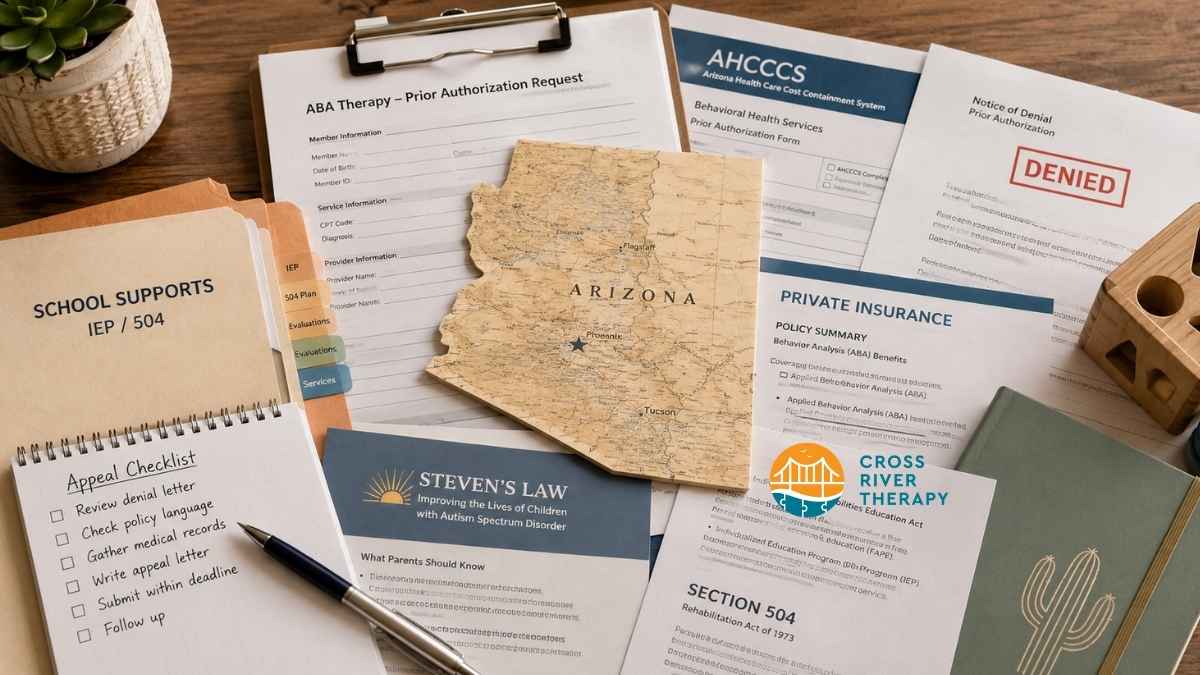
Arizona Autism Laws for ABA Coverage and School Rights
Arizona autism laws for ABA coverage vary by plan. Families can check insurance, appeal options, and school rights.

ABA Therapist Salary in Arkansas for RBTs and BCBAs
Compare ABA therapist salary in Arkansas by role. See how paid hours and benefits affect earnings before applying.

5 Autism Support Groups and Family Resources in New Mexico
Autism support groups in New Mexico connect families. Local resources offer events, parent support, and school help.

Where to Get an Autism Evaluation in New Mexico
Autism evaluation options in New Mexico include UNM and NMSU. Age and referral details help parents prepare.

7 North Carolina Autism Resources to Contact Before ABA Therapy Starts
Autism resources North Carolina families can call for diagnosis, early intervention, rights, and parent support. Start ABA intake with Cross River.
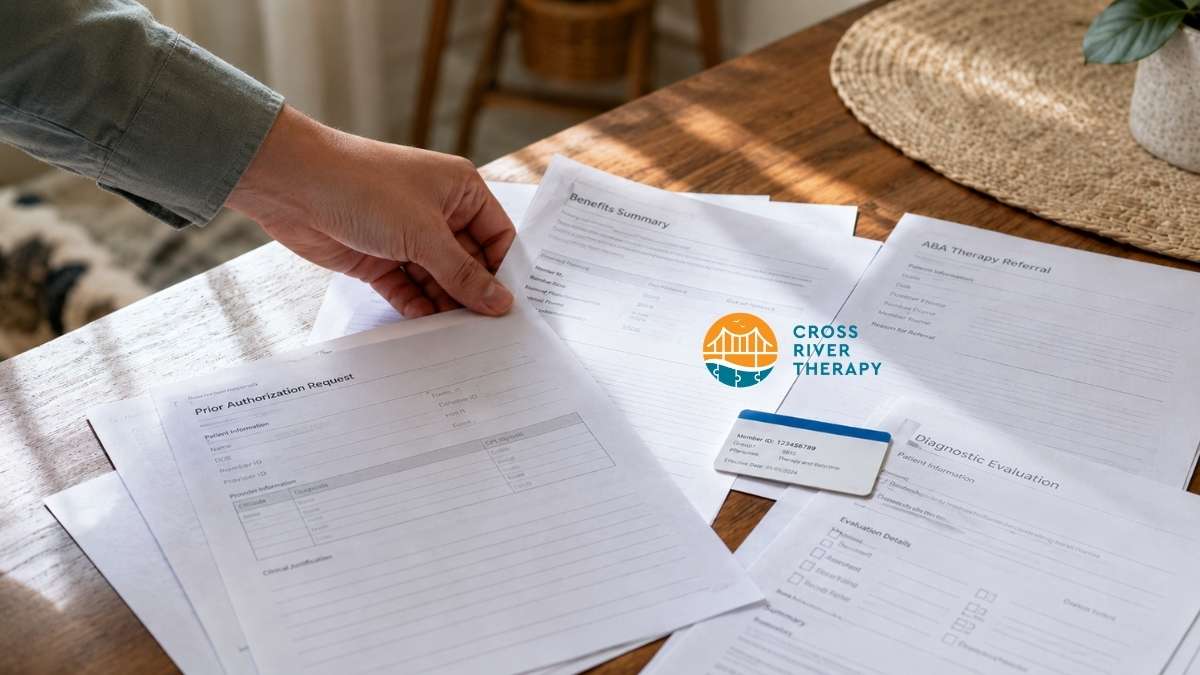
Does Indiana Medicaid Cover ABA Therapy? A Parent Checklist
Indiana Medicaid ABA therapy may cover care for eligible children. The checklist covers coaching and renewals.
How to Apply for the New Mexico DD Waiver
Your NM DD waiver application starts with state intake. The steps cover records, submission, and enrollment.

Does Insurance Cover ABA Therapy in New Jersey?
ABA therapy insurance in New Jersey varies by plan. Learn what NJ FamilyCare covers and how to check costs.

How ABA Therapy Builds Communication for Nonverbal Children Without Forcing Speech
ABA therapy communication for nonverbal children starts with AAC, signs, and daily routines. See how kids ask, refuse, choose, and get help.

How to Start ABA Therapy in New Jersey With a Checklist
Your guide explains how to start ABA therapy in New Jersey. A first-call checklist covers records and next steps.

How to Get an Autism Evaluation in Arkansas Before Starting ABA Therapy
How to get an autism evaluation in Arkansas starts with a referral, provider choice, and key records. Use this parent checklist before ABA intake.