








How to Get ABA Therapy Covered by Medicaid in North Carolina
Medicaid ABA therapy in North Carolina requires approval. See eligibility, required records, and renewal steps.


Key Points:
- Medicaid ABA therapy in North Carolina includes assessment, treatment planning, and approved services for qualifying members.
- Providers submit the clinical request, while families keep enrollment information current.
- Initial approval can last up to 180 days for 16 or fewer weekly service hours or 90 days for more than 16 hours.
North Carolina Medicaid covers qualifying ABA therapy for people with autism when treatment meets state requirements. Families need active Medicaid coverage, the required clinical records, and approval before covered treatment begins.
For families starting the process, checking existing coverage comes first. An ABA provider then reviews records, assesses treatment needs, and submits the request for approval.

Does North Carolina Medicaid Cover ABA Therapy?
NC Medicaid covers medically necessary Applied Behavior Analysis (ABA) through its Research-Based Behavioral Health Treatment (RB-BHT) benefit.
Medical necessity means the records show why someone needs treatment to support everyday skills, such as communication or safety. An autism diagnosis alone does not approve a set number of therapy hours. The requested services must match the person’s assessed needs under Clinical Coverage Policy 8F.
Who Qualifies for ABA Therapy Under NC Medicaid?
Eligible children and adults with autism may qualify for RB-BHT services. North Carolina’s adult coverage approval confirms that the statewide benefit extends beyond childhood. Coverage still depends on Medicaid eligibility and treatment requirements.
Members younger than 21 also have protections under Early and Periodic Screening, Diagnostic, and Treatment (EPSDT). This federal Medicaid benefit requires coverage of qualifying medically necessary care. Prior approval requirements still apply.
At Cross River Therapy, our North Carolina ABA services focus on children and their families. Our program’s age range does not set the statewide Medicaid coverage rules.
How to Apply for NC Medicaid or Check Enrollment
Current Medicaid members can begin by checking their enrollment and the plan handling their benefits. An existing member does not need a new Medicaid application simply to request ABA therapy.
Families without coverage can apply for NC Medicaid online through ePASS or through their local Department of Social Services (DSS). Phone, in-person, mail, email, and fax options are available. DSS may request information about income, residency, or other eligibility details.
A regular Medicaid application can take up to 45 days. Disability applications can take up to 90 days. These timelines concern Medicaid enrollment; ABA authorization is a separate decision.
What Autism Records Does NC Medicaid Require?
NC Medicaid requires an autism diagnosis that meets its clinical standards. A screening result or school eligibility decision alone does not establish eligibility for RB-BHT treatment.
A licensed physician, including an MD or DO, or licensed psychologist must sign and date the treatment service order. The order documents the need for services based on the assessment and treatment plan. It is separate from the diagnostic report.
Records families can gather for intake include:
- The autism diagnostic report.
- Previous developmental or behavioral evaluations.
- Relevant school or early intervention records.
- Any existing referral or service order.
The provider can identify missing records and explain which documents the treatment team will prepare.
Can Children Under 3 Start With a Provisional Autism Diagnosis?
NC Medicaid accepts a qualifying provisional autism diagnosis for children younger than 3 when services begin. A provisional diagnosis means an authorized professional has identified significant concern for autism before completing the full evaluation.
A final autism diagnosis must follow within six months of the provisional diagnosis to maintain eligibility.
How to Find an ABA Provider That Accepts NC Medicaid
A provider’s Medicaid participation needs to match the child’s specific coverage arrangement. North Carolina has several Medicaid health plans and programs, including managed care plans and NC Medicaid Direct. Participating providers can differ between plans.
A first conversation can address these questions:
- Does the provider accept the child’s specific Medicaid plan?
- Who handles assessment and treatment authorization requests?
- Who completes the ABA assessment?
- Which treatment settings are available nearby?
- What records does the intake team need?
We offer at-home ABA therapy and center-based ABA therapy in North Carolina. Our Medicaid ABA intake team can review plan information and explain the next steps for services in your area.

How Do ABA Assessment and Prior Authorization Work?
An ABA assessment examines communication, daily living skills, behavior, and other areas related to treatment. The provider uses the results to develop goals and recommend service hours.
For example, a child who cannot communicate when they need help might practice requesting assistance through speech, gestures, or a communication device. The assessment helps the team choose goals that address the child’s daily needs.
Prior authorization means Medicaid or the health plan reviews the request before covered treatment begins. The provider submits the required records and treatment plan.
Our intake specialists request assessment authorization when needed. Our Board Certified Behavior Analysts (BCBAs) then assess the child, review recommendations with caregivers, and develop the treatment plan. We also handle insurance filing as part of our enrollment process.
How Long Does NC Medicaid Approve ABA Therapy?
Under the policy effective August 1, 2026, maximum initial approval periods depend on weekly service hours.
These periods describe how long an approval can last before another review. They do not set the number of hours someone needs or the total length of treatment.
All RB-BHT services count toward the 16-hour threshold. The state’s authorization update also explains that existing approvals retain their duration, with the updated rules applying at reauthorization.
How to Keep ABA Therapy Covered After Approval
Ongoing coverage requires active Medicaid eligibility and records supporting continued treatment. The provider monitors progress, updates the treatment plan, and requests reauthorization before the current approval expires.
Caregiver training is also part of treatment planning. The policy allows providers to document barriers to participation and explain adjustments. A caregiver facing work, transportation, or scheduling problems can tell the treatment team so those barriers receive attention.
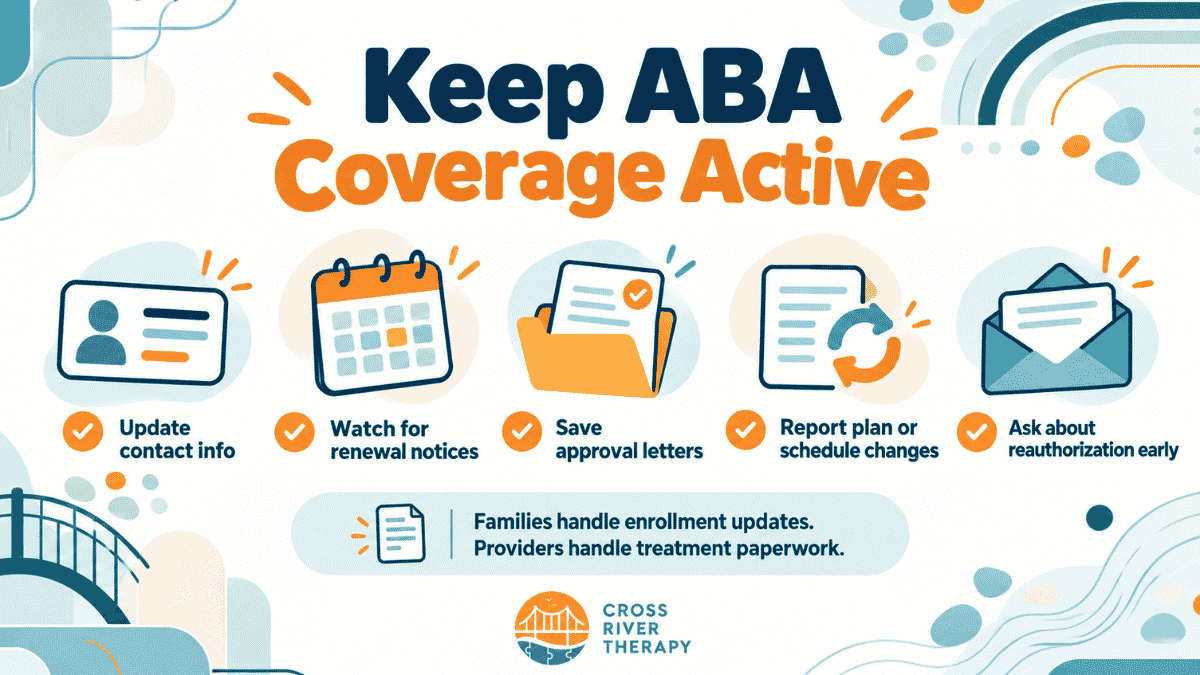
Families can help prevent interruptions by:
- Keeping Medicaid contact information current.
- Responding to renewal notices.
- Saving approval letters and coverage decisions.
- Reporting insurance or scheduling changes to the provider.
Medicaid eligibility renewal and ABA reauthorization are separate processes. The family handles requested enrollment updates while the provider manages treatment documentation.
What Happens if NC Medicaid Denies or Reduces ABA Therapy?
The written decision explains the reason and the applicable appeal process. A denial of a new request and a reduction of existing services may involve different next steps.
Families can review the notice with their ABA provider and discuss whether additional clinical records are needed. The notice’s deadlines require attention, even while the team gathers information.
NC Medicaid’s prior approval and due process information provides further details about service decisions. The provider can explain treatment records; Medicaid or the health plan handles the formal coverage review.
FAQs About Medicaid ABA Therapy in North Carolina
Is the NC Innovations Waiver required for ABA therapy?
The RB-BHT benefit is separate from the NC Innovations Waiver. An eligible Medicaid member can request ABA without first receiving a waiver slot. Innovations offers other home and community supports for qualifying people with intellectual or developmental disabilities.
Can NC Medicaid cover ABA therapy at school?
NC Medicaid may approve school-based treatment when the setting supports the person’s treatment goals. School-based ABA therapy must meet medical coverage requirements and cannot duplicate or replace services the school already provides through educational programs.
Can Medicaid-funded ABA serve as childcare?
The RB-BHT benefit does not cover childcare or respite care, which gives caregivers a temporary break. Covered ABA sessions must address approved treatment goals. A therapist’s presence does not make general supervision a covered ABA service.
Start Your Child’s North Carolina ABA Intake
Ongoing ABA coverage depends on current Medicaid eligibility and a treatment plan that meets your child’s needs. Approval notices identify the services and dates Medicaid has authorized.
Our team can review your Medicaid information, gather available records, and explain our assessment process. Your ABA intake request gives us the details needed to contact you about the next steps for your child.
Recent News
Related articles

How to Start In-Home ABA Therapy in Arkansas in 6 Steps
In-home ABA therapy in Arkansas begins with intake and a care plan. The steps explain records and the assessment.

6 Arkansas Medicaid ABA Therapy Rules Families Need to Know
Arkansas Medicaid ABA therapy has age, diagnosis and approval rules. Families can check six requirements before care.
Arizona Autism Laws for ABA Coverage and School Rights
Arizona autism laws for ABA coverage vary by plan. Families can check insurance, appeal options, and school rights.

ABA Therapist Salary in Arkansas for RBTs and BCBAs
Compare ABA therapist salary in Arkansas by role. See how paid hours and benefits affect earnings before applying.

5 Autism Support Groups and Family Resources in New Mexico
Autism support groups in New Mexico connect families. Local resources offer events, parent support, and school help.

Where to Get an Autism Evaluation in New Mexico
Autism evaluation options in New Mexico include UNM and NMSU. Age and referral details help parents prepare.

7 North Carolina Autism Resources to Contact Before ABA Therapy Starts
Autism resources North Carolina families can call for diagnosis, early intervention, rights, and parent support. Start ABA intake with Cross River.

Does Indiana Medicaid Cover ABA Therapy? A Parent Checklist
Indiana Medicaid ABA therapy may cover care for eligible children. The checklist covers coaching and renewals.

How to Apply for the New Mexico DD Waiver
Your NM DD waiver application starts with state intake. The steps cover records, submission, and enrollment.

Does Insurance Cover ABA Therapy in New Jersey?
ABA therapy insurance in New Jersey varies by plan. Learn what NJ FamilyCare covers and how to check costs.

How ABA Therapy Builds Communication for Nonverbal Children Without Forcing Speech
ABA therapy communication for nonverbal children starts with AAC, signs, and daily routines. See how kids ask, refuse, choose, and get help.

How to Start ABA Therapy in New Jersey With a Checklist
Your guide explains how to start ABA therapy in New Jersey. A first-call checklist covers records and next steps.