








How to Get an Autism Evaluation in Arkansas Before Starting ABA Therapy
How to get an autism evaluation in Arkansas starts with a referral, provider choice, and key records. Use this parent checklist before ABA intake.


Key Points:
- How to get an autism evaluation in Arkansas starts with a pediatrician referral, an Arkansas diagnostic provider, and complete records for payer review.
- Families should prepare screening notes, school or therapy records, and examples of daily behavior.
- A written diagnosis helps ABA intake confirm medical necessity and next steps.
Parents searching how to get an autism evaluation in Arkansas should start with their child’s pediatrician, request an autism-specific referral, choose an Arkansas evaluation provider, and ask what report their ABA payer needs.
A formal assessment connects directly to therapy access. The Centers for Disease Control and Prevention (CDC) suggests that autism screenings at 18 and 24 months are reliable. Research indicates professionals can make a stable diagnosis by age 2.
A formal evaluation often relates to access to Applied Behavior Analysis (ABA) because payers usually require a diagnosis and medical necessity records. Arkansas families may use developmental centers, qualified clinicians, or Bryant clinic evaluations for children under 5.
Step 1: How to Get an Autism Evaluation in Arkansas Starts With Your Child’s Doctor
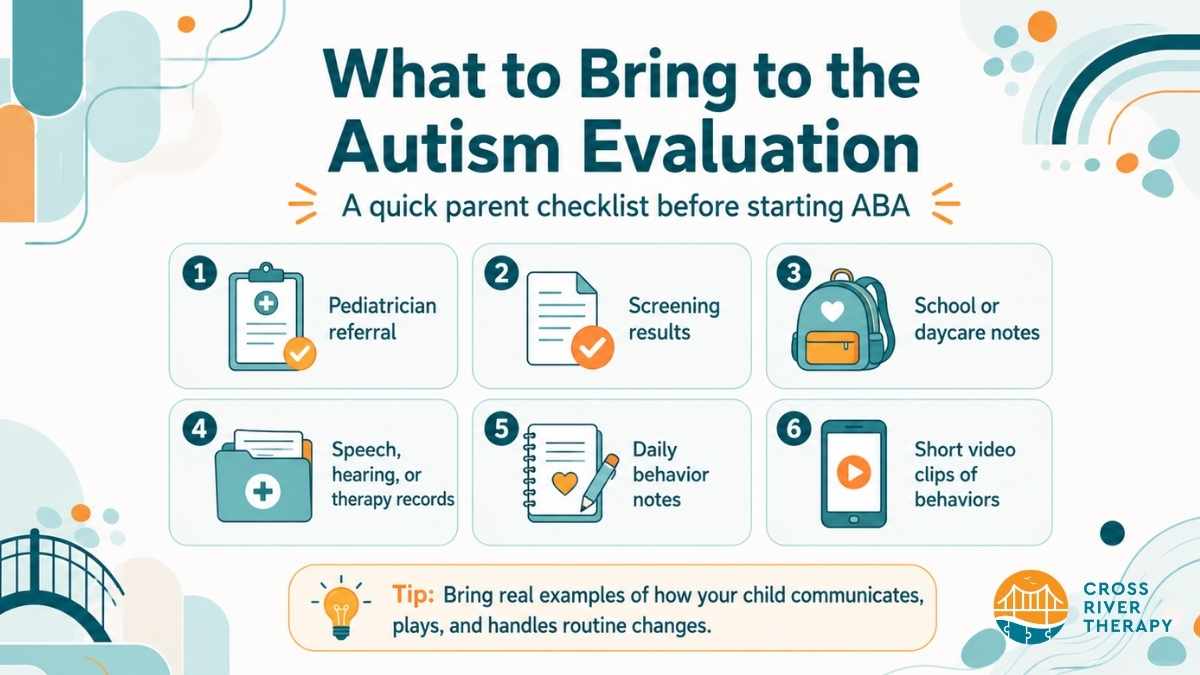
Your child’s doctor is the first stop. Ask for developmental screening and an autism evaluation referral in Arkansas if you see delayed speech, limited gestures, repeated play, sensory reactions, regression, or limited response to name.
Arkansas Medicaid’s state plan says ABA must be prescribed by the child’s assigned primary care provider when Medicaid is the payer. Bring the concern list for documentation.
Ask for:
- Screening results, such as the Modified Checklist for Autism in Toddlers, Revised with Follow-Up
- Referral order
- Growth and developmental history
- Hearing or speech records
- Insurance information
- School, daycare, or therapy notes

Step 2: Pick the Right Arkansas Evaluation Provider
For parents asking where to get a child tested for autism in Arkansas, the Arkansas Department of Human Services lists autism-focused options, including Dennis Developmental Center, Schmieding Developmental Center, and Community-Based Autism Liaison and Treatment Project locations.
For parents asking where to get a child tested for autism in Arkansas, the right provider depends on your child’s age, needs, location, and ABA intake goal.
The Arkansas Department of Human Services (DHS) says a developmental center team evaluation can issue a qualifying diagnosis. A licensed psychologist or speech-language pathologist may also evaluate, but the child’s primary care provider or another physician must review the report and agree with the diagnosis for that route.
Step 3: Ask the Evaluation Provider What Records They Need Before Scheduling
After the referral, ask the evaluation provider what records they need before they can schedule or complete the appointment. Arkansas DHS lists several diagnostic routes, so the paperwork can vary by provider type
This step matters because a missing form, school note, or medical record can slow the evaluation. Ask for the checklist early. Then gather records that show how your child communicates, plays, learns, and handles daily routines.
Parents may need:
- Prior therapy assessments
- School Individualized Education Program (IEP) records
- Daycare observation forms
- Family medical history
- Daily behavior notes
- Video clips of specific behaviors

Step 4: Prepare for Child Autism Testing in Arkansas Step by Step
What actually happens during the clinical appointment? Knowing what to expect helps reduce parent anxiety.
The formal child autism testing in Arkansas step by step process involves several distinct parts:
- Your visit may start with an intensive parent interview.
- Clinicians conduct direct child observations using play-based tasks and review specific communication styles. They assess adaptive behavior while analyzing social interaction patterns.
- The provider will ask about behavior in various settings. They want to know how your child acts at home before in-home ABA therapy begins. They ask about behavior at daycare or church.
Arkansas parents should prepare specific real-world examples. Do not just read a general list of symptoms.
Be ready to talk about these specific topics:
- Your child asks for help using specific cues.
- Toy play styles involve specific repetitive motions.
- Routine change reactions cause visible emotional distress.
- Sensory responses occur during loud community events.
- Stranger communication differs from interactions with parents.
- Skill regression shows up in speech habits.
How to Get Autism Evaluation Arkansas Records Ready for the Visit
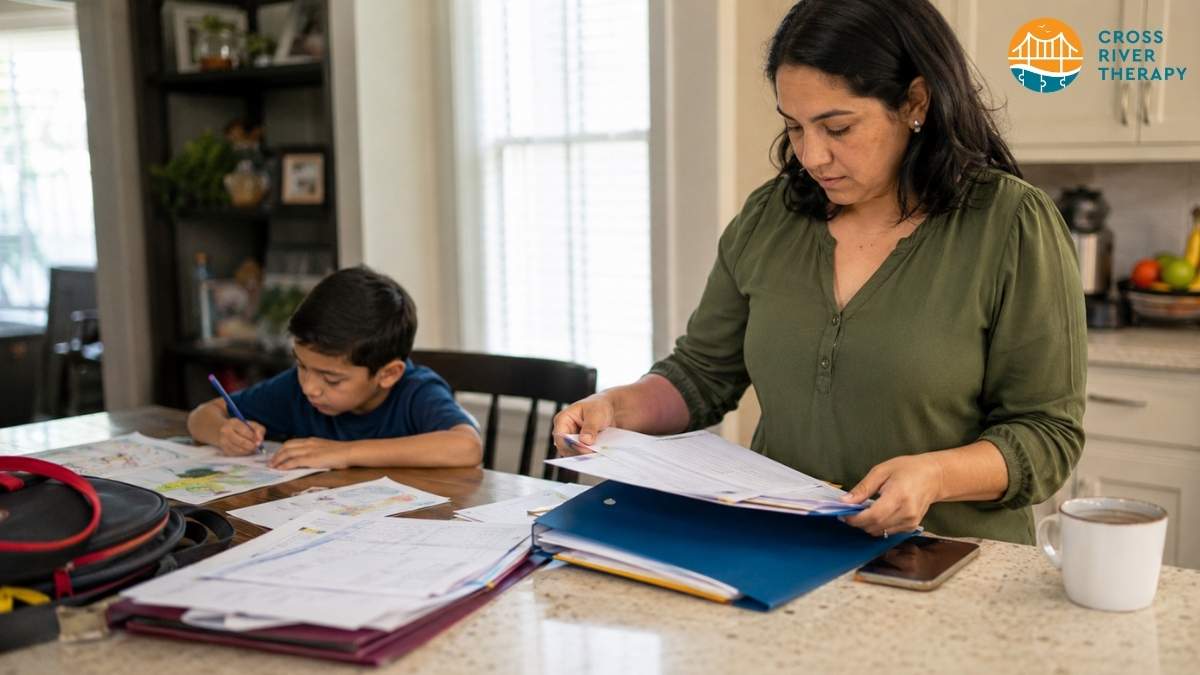
Organizing your paperwork before the appointment is essential. Knowing how to get an autism evaluation in Arkansas approved requires showing clear behavioral patterns. Bringing complete medical records helps the evaluator see consistent traits across multiple environments. This documentation supports an accurate diagnostic conclusion.
Step 5: Check the Written Diagnosis Before ABA Intake
The autism diagnosis steps Arkansas parents follow should end with a written report that says whether the child meets the criteria for autism spectrum disorder. The report should name the evaluator, testing date, diagnosis, recommendations, and referrals. Parents asking how to get autism diagnosed in the state also need to think about the next step for ABA therapy in Arkansas.
Arkansas Medicaid’s state plan connects ABA to medical necessity, evaluation records, and a treatment plan. The autism assessment process Arkansas families complete can slow down if the report is missing a required physician review. If the evaluation came from a psychologist or speech-language pathologist, ask whether the Arkansas DHS review step has been completed.
Step 6: Start the ABA Intake While the Paperwork Is Fresh
ABA intake is separate from the diagnostic evaluation. The ABA provider reviews the diagnosis, insurance, referral or prescription, and medical necessity details. A Board Certified Behavior Analyst may complete a behavior assessment before the treatment plan starts.
Ask which setting matches your child’s needs: home, school, clinic, or a mix allowed by the provider and payer.
Keep these ready:
- Diagnostic report
- Insurance card
- Primary care provider order or prescription
- Prior therapy records
- School records
- Parent goals for communication, safety, daily living, and behavior
Need help checking whether your child’s evaluation is ready for ABA therapy services? At Cross River Therapy, we can review your records, explain the next intake step, and tell you whether our Bryant evaluation option may match your child. Our Arkansas team supports in-home, school-based, and clinic-based ABA for ages 1 to 21, with Bryant evaluations limited to children under 5.

FAQs About How to Get an Autism Evaluation in Arkansas
Can my child start services while waiting for an autism diagnosis in Arkansas?
Yes. Developmental, speech, school, or early intervention services, such as First Connections, may begin based on need while the medical autism evaluation is pending. ABA coverage often requires a formal diagnosis and medical-necessity records, so keep both tracks moving.
Does a school autism label count as a medical autism diagnosis for ABA?
Usually no. A school evaluation decides special education eligibility based on state criteria. ABA insurance or Medicaid access usually requires a medical diagnosis of autism and supporting records. School reports can still help the evaluator and the ABA team understand your child’s needs.
What if the Arkansas evaluation says my child does not have autism?
Ask the evaluator what the findings mean and what should happen next. Your child may need speech, hearing, developmental, attention, or learning testing. If concerns continue or new patterns appear, ask when a re-evaluation would be appropriate.
Connect with an Arkansas Care Team
Arkansas autism evaluation paperwork helps most when it clearly names the diagnosis, shows who completed the evaluation, and explains why ABA is being requested. Parents can save time by gathering the report, primary care provider order, insurance card, and school or therapy records before the ABA intake call.
At Cross River Therapy, we support Arkansas families with in-home, school-based, and clinic-based ABA for children and teens ages 1 through 21. Call 501-298-2559 or submit the start ABA form so our team can review your records, explain what may be missing, and walk you through the next intake step.
Recent News
Related articles

6 Arkansas Medicaid ABA Therapy Rules Families Need to Know
Arkansas Medicaid ABA therapy has age, diagnosis and approval rules. Families can check six requirements before care.

Arizona Autism Laws for ABA Coverage and School Rights
Arizona autism laws for ABA coverage vary by plan. Families can check insurance, appeal options, and school rights.

ABA Therapist Salary in Arkansas for RBTs and BCBAs
Compare ABA therapist salary in Arkansas by role. See how paid hours and benefits affect earnings before applying.

5 Autism Support Groups and Family Resources in New Mexico
Autism support groups in New Mexico connect families. Local resources offer events, parent support, and school help.

Where to Get an Autism Evaluation in New Mexico
Autism evaluation options in New Mexico include UNM and NMSU. Age and referral details help parents prepare.

7 North Carolina Autism Resources to Contact Before ABA Therapy Starts
Autism resources North Carolina families can call for diagnosis, early intervention, rights, and parent support. Start ABA intake with Cross River.

Does Indiana Medicaid Cover ABA Therapy? A Parent Checklist
Indiana Medicaid ABA therapy may cover care for eligible children. The checklist covers coaching and renewals.
How to Apply for the New Mexico DD Waiver
Your NM DD waiver application starts with state intake. The steps cover records, submission, and enrollment.

Does Insurance Cover ABA Therapy in New Jersey?
ABA therapy insurance in New Jersey varies by plan. Learn what NJ FamilyCare covers and how to check costs.

How ABA Therapy Builds Communication for Nonverbal Children Without Forcing Speech
ABA therapy communication for nonverbal children starts with AAC, signs, and daily routines. See how kids ask, refuse, choose, and get help.

How to Start ABA Therapy in New Jersey With a Checklist
Your guide explains how to start ABA therapy in New Jersey. A first-call checklist covers records and next steps.
How to Get an Autism Evaluation in Arkansas Before Starting ABA Therapy
How to get an autism evaluation in Arkansas starts with a referral, provider choice, and key records. Use this parent checklist before ABA intake.