








7 North Carolina Autism Resources to Contact Before ABA Therapy Starts
Autism resources North Carolina families can call for diagnosis, early intervention, rights, and parent support. Start ABA intake with Cross River.


Key Points:
- Autism resources North Carolina families can contact include statewide support groups, early intervention programs, diagnostic clinics, rights advocates, and parent networks.
- The best contact depends on whether a child needs evaluation, coverage help, or community support.
- Families can contact several programs while preparing records for ABA intake.
A parent can collect several names and websites, yet still wonder, “Who should I call first?” The right autism resources in North Carolina depend on the step your family needs to complete. One organization may answer general questions. Another may handle early intervention, diagnostic services, insurance concerns, disability rights, or parent support.
The seven resources below are arranged by purpose, not rank, whether a family is comparing options or already starting ABA therapy in North Carolina. Each entry explains who should call, what to ask, and how the resource may connect with ABA intake.
1. Autism Resources in North Carolina Often Start With the Autism Society
The Autism Society of North Carolina employs dedicated resource specialists to answer questions from families across all 100 counties. Many of these specialists are parents or relatives of individuals with autism, so they understand your situation firsthand. You can request a conversation through an online form, which is also available in Spanish.
Contact this group if you have just received a diagnosis, suspect developmental delays, or feel stuck with a list of names. Ask them which diagnostic or therapy options are available for your child's age in your specific county. They can tell you what documents to gather before you contact a provider.
This organization provides vital autism support in North Carolina, but their advice does not replace a clinical assessment.
2. The NC Infant-Toddler Program Supports Children Before Age 3
The North Carolina Infant-Toddler Program serves eligible children from birth through age 3 who have developmental delays or established conditions. Local Children’s Developmental Services Agencies (CDSAs) receive referrals and coordinate services. Parents may refer their own child by phone, email, fax, letter, in-person request, or the state referral form.
Parents do not need to wait for a diagnosis to raise concerns about early signs of autism. Referral details may include:
- Child’s full name and birth date
- Parent or caregiver contact information
- Pediatrician details
- Developmental concerns
- Existing screening or evaluation records
Eligible children receive an Individualized Family Service Plan (IFSP). The program can provide autism help in North Carolina while a family discusses diagnostic or ABA options with qualified providers.

3. UNC TEACCH® Connects Families With Regional Autism Services
The University of North Carolina TEACCH® Autism Program operates seven regional centers across the state. You can find offices in areas like Chapel Hill, Charlotte, North Carolina, Greensboro, Greenville, and Asheville. Their clinical options include diagnostic evaluations, parent coaching, and educational programs across different life stages.
Contact them if you need a reliable diagnostic evaluation or structured parent training within the university health system. Instead of calling every office, use their online regional center finder to locate the closest clinic.
The records from a TEACCH® evaluation are highly detailed and provide the paperwork required for therapy intake. These clinical autism services in North Carolina operate separately from private behavior providers. Using these autism programs in North Carolina helps you establish a solid clinical foundation for your child's development.
4. Duke Autism Clinic Provides Assessments in Durham
The Duke Autism Clinic in Durham provides autism assessment, diagnosis, behavioral consultation, and medication consultation for children and adolescents. Parents may consider Duke when they need a formal evaluation, have received an unclear developmental assessment, or have behavioral and medical concerns that may need several specialists.
Families traveling from the Triangle or nearby counties can ask:
- Does the clinic need a professional referral?
- Which records should the family send?
- Does the clinic accept the child’s insurance plan?
- Will hospital facility charges apply?
Duke describes the clinic as a hospital outpatient department, so added facility charges may apply. Appointment access may also be limited. A formal diagnosis and current clinical records are commonly requested during ABA intake or insurance review, but each insurer and provider sets its own documentation rules.
Ask What Your ABA Intake Will Require
Are you wondering if your child's current evaluation records meet the requirements for behavior therapy? At Cross River Therapy, our team can review your documentation, verify your insurance coverage, and discuss the best care setting for your family. Contact us to learn about our intake process and discuss how we can support your child.
5. Disability Rights North Carolina Helps When Access Is Denied
Disability Rights North Carolina explains rights involving private insurance, Medicaid, Early and Periodic Screening, Diagnostic and Treatment rules, education, and disability services. It is North Carolina’s federally designated protection and advocacy organization.
Parents may contact the organization when they face:
- A denied service
- Fewer approved therapy hours
- A confusing Medicaid notice
- A school-service dispute
- Questions about appeal rights
An ABA provider can explain clinical and intake requirements. A rights organization handles questions about a denial or possible legal violation. A denial is not always final. The written notice should include appeal instructions and a deadline, so parents should review it soon.
6. The Arc of North Carolina Connects Families With Regional Support
The Arc of North Carolina provides advocacy and disability services through five regional offices. Its West, Triangle, Charlotte, Triad, and East regions give families outside Raleigh and Charlotte, including those near Durham, North Carolina, another place to ask about community support.
Families may contact The Arc for disability programs, advocacy contacts, community services, housing, employment support, or future independence. Its work extends beyond childhood and covers needs outside ABA sessions.
Among autism organizations in North Carolina, The Arc can connect families with support involving school, community participation, family needs, and adult services. Regional programs vary, so parents should ask which services are available in their county.

7. Family Support Network Connects Parents With Other Families
Family Support Network of North Carolina offers free and confidential parent-to-parent support, information, referrals, groups, workshops, and help with health, education, and disability-service systems.
This resource can help while you wait for an evaluation or prepare for ABA intake. Another parent may share practical questions. Their experience cannot predict your child’s coverage, staffing, schedule, or clinical recommendations.
Parent Resources for Autism in North Carolina Can Fill the Waiting Period
Parent connections can help families prepare questions about provider communication, session schedules, insurance paperwork, school coordination, travel distance, and home-based versus center-based care. These autism resources in North Carolina add family context without replacing medical, legal, or insurance advice.
A Simple Contact Order Helps Parents Use These Resources
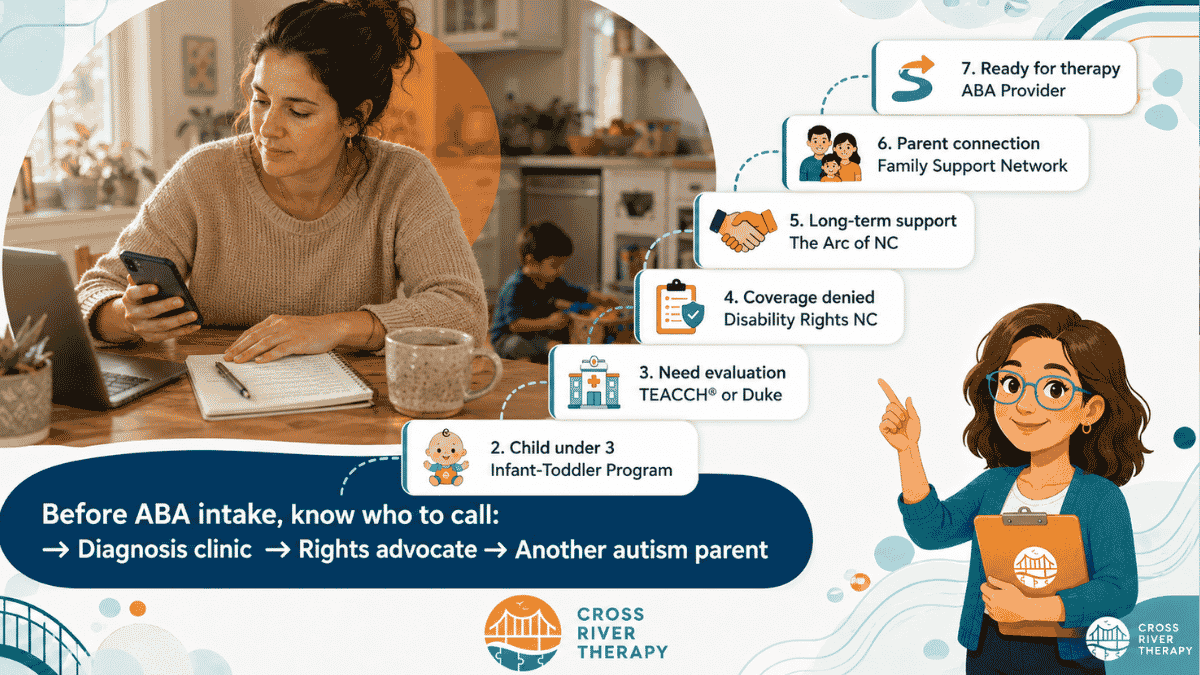
These autism resources in North Carolina can be contacted in this order:
- General questions: Autism Society of North Carolina
- Child under 3: NC Infant-Toddler Program
- Evaluation needed: UNC TEACCH® or Duke Autism Clinic
- Coverage or rights problem: Disability Rights North Carolina
- Regional or long-term support: The Arc of North Carolina
- Parent connection: Family Support Network
- ABA intake questions: An ABA provider

FAQs About Autism Resources in North Carolina
Can I contact several North Carolina autism programs at the same time?
Yes. Families can contact multiple programs for different reasons simultaneously. You can request a diagnostic evaluation from a clinic, speak with a resource specialist, and talk to an ABA provider about intake requirements without waiting for each organization to finish its process.
What should I do when the nearest program has a long wait?
Ask the program staff to place your child on their cancellation list and inquire about telehealth options. You can also contact other regional offices, gather necessary medical records ahead of time, or connect with local parent support groups during the waiting period.
Will these organizations choose an ABA provider for my child?
No. These organizations offer information, guidance, and regional referrals, but parents make the final choice. You must contact providers directly to verify your insurance benefits, discuss available care settings, and complete the specific intake steps for your child.
Start ABA Therapy With a Prepared First Call
The right state organization or non-profit depends on whether you need a diagnosis, insurance help, or parent connections. At Cross River Therapy, our team provides ABA therapy for children across North Carolina, serving families who are ready to take the next step. We offer in-home, school-based, and center-based care to match your child's daily routine.
To learn more about our services, call us or email info@crossrivertherapy.com. Our intake team will guide you through your insurance benefits, review your child's clinical records, and discuss the best care setting.
Recent News
Related articles

6 Arkansas Medicaid ABA Therapy Rules Families Need to Know
Arkansas Medicaid ABA therapy has age, diagnosis and approval rules. Families can check six requirements before care.
Arizona Autism Laws for ABA Coverage and School Rights
Arizona autism laws for ABA coverage vary by plan. Families can check insurance, appeal options, and school rights.

ABA Therapist Salary in Arkansas for RBTs and BCBAs
Compare ABA therapist salary in Arkansas by role. See how paid hours and benefits affect earnings before applying.

5 Autism Support Groups and Family Resources in New Mexico
Autism support groups in New Mexico connect families. Local resources offer events, parent support, and school help.

Where to Get an Autism Evaluation in New Mexico
Autism evaluation options in New Mexico include UNM and NMSU. Age and referral details help parents prepare.
7 North Carolina Autism Resources to Contact Before ABA Therapy Starts
Autism resources North Carolina families can call for diagnosis, early intervention, rights, and parent support. Start ABA intake with Cross River.

Does Indiana Medicaid Cover ABA Therapy? A Parent Checklist
Indiana Medicaid ABA therapy may cover care for eligible children. The checklist covers coaching and renewals.

How to Apply for the New Mexico DD Waiver
Your NM DD waiver application starts with state intake. The steps cover records, submission, and enrollment.

Does Insurance Cover ABA Therapy in New Jersey?
ABA therapy insurance in New Jersey varies by plan. Learn what NJ FamilyCare covers and how to check costs.

How ABA Therapy Builds Communication for Nonverbal Children Without Forcing Speech
ABA therapy communication for nonverbal children starts with AAC, signs, and daily routines. See how kids ask, refuse, choose, and get help.

How to Start ABA Therapy in New Jersey With a Checklist
Your guide explains how to start ABA therapy in New Jersey. A first-call checklist covers records and next steps.

How to Get an Autism Evaluation in Arkansas Before Starting ABA Therapy
How to get an autism evaluation in Arkansas starts with a referral, provider choice, and key records. Use this parent checklist before ABA intake.