








Does Indiana Medicaid Cover ABA Therapy? A Parent Checklist
Indiana Medicaid ABA therapy may cover care for eligible children. The checklist covers coaching and renewals.


Key Points:
- Indiana Medicaid ABA therapy requires a qualified autism evaluation and approval for the requested services.
- A new referral is needed in specific circumstances, including a six-month break in ABA services.
- Providers can request reduced caregiver-coaching hours when documented barriers prevent participation despite efforts to offer alternatives.
Indiana Medicaid covers medically necessary applied behavior analysis (ABA) therapy for eligible children under 21. An autism diagnosis and an active Medicaid card do not, by themselves, approve treatment. Your provider must submit records showing why your child needs ABA and obtain approval before covered treatment begins.
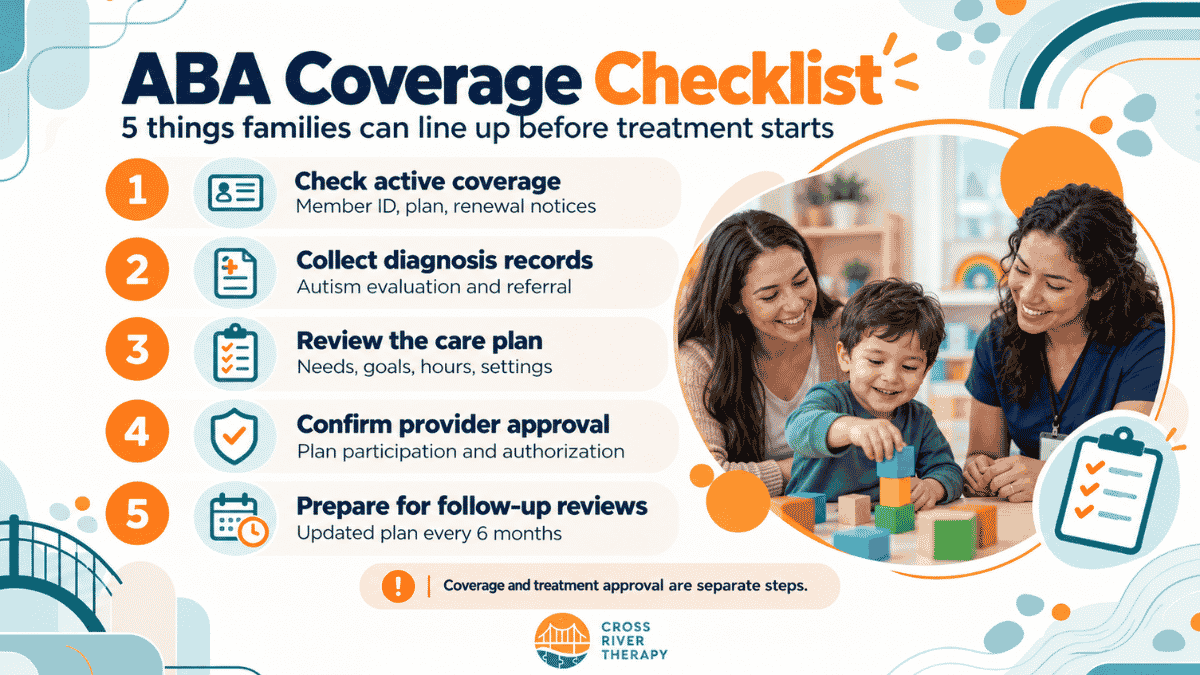
The five-step checklist below explains what families can gather and what the ABA team prepares. It also covers caregiver coaching, treatment reviews, and options when family circumstances affect participation.
What Happens to ABA Coverage at Age 21?
Early and Periodic Screening, Diagnostic and Treatment (EPSDT) is Medicaid’s health benefit for eligible members under 21. Under Indiana’s ABA coverage policy, Medicaid no longer authorizes or pays for ABA services for members 21 and older for service dates beginning October 1, 2026. Families approaching that age can speak with their plan’s care manager about other services and supports.
Five Steps for Indiana Medicaid ABA Therapy
Step 1: Check Active Coverage and the Health Plan
Your child’s coverage must be active when therapy takes place. Before contacting a provider, gather:
- Medicaid member ID and current health plan name
- Insurance renewal date and notices
- Letters requesting missing documents
- Details of any other insurance
Medicaid enrollment renewal and ABA treatment approval are separate processes. A child can remain enrolled in Medicaid while an ABA request awaits review.
At Cross River Therapy, we can review your insurance information and discuss our Indiana ABA services.
Step 2: Gather the Autism Evaluation and Referral
The first ABA approval request requires a comprehensive diagnostic evaluation, or CDE. This is the full evaluation used to diagnose autism.
Indiana recognizes licensed physicians, advanced practice registered nurses, physician assistants, and doctoral-level clinical psychologists endorsed as health service providers in psychology. They must have specialized training in autism diagnosis.
Your child’s records should include the full report, evaluation date, evaluator’s credentials, and any existing referral. Indiana’s diagnostic documentation requirements explain which professionals and records qualify.
Indiana’s referral rules require a referral:
- When ABA starts and the evaluation is more than one year old
- At a treatment renewal when an active patient’s evaluation becomes more than one year old
- With a new approval request after a six-month break in ABA
A “statement of need” means the same thing as a referral. Once submitted for the applicable situation, it does not need resubmission at every renewal or annually. An older report does not automatically require another full autism evaluation.
Step 3: Review the Assessment and Treatment Plan
The ABA assessment identifies current needs and supports the treatment request. It serves a different purpose from the autism diagnostic evaluation.
The provider prepares a plan with:
- Current communication, behavior, and daily living needs
- Goals the team can measure
- Requested hours and treatment settings
- Caregiver involvement and progress reviews
For example, a child who cannot easily request help might work toward asking through words, gestures, or a communication device.
Our Board Certified Behavior Analysts assess children’s needs and develop treatment plans. With our home-based ABA therapy, goals can address routines families encounter at home.
Beginning October 29, 2026, Indiana requires a functional behavior assessment for every behavior addressed in a behavior intervention plan. This assessment examines why a behavior happens. The provider completes the required clinical records.
Step 4: Confirm Provider Participation and Treatment Approval
The provider must meet Indiana Medicaid enrollment requirements and participate with your child’s health plan when applicable. “We accept Medicaid” alone does not confirm participation with a specific plan.
Prior authorization means the insurance program reviews treatment before agreeing to cover it. Indiana’s authorization process differs for managed care and fee-for-service coverage, which the state administers through its contractors.
Four questions can help:
- Does the provider participate with my child’s plan?
- Which records are missing?
- Who submits the approval request?
- Has the plan issued a decision?
An intake form or submitted request does not guarantee approval.
Step 5: Prepare for Continued-Care Reviews
An initial ABA approval may last up to six months. Continued treatment requires another request and approval. Reassessment and an updated treatment plan must occur at least every six months.
The family’s records and the provider’s documents serve different purposes:
How Much Caregiver Coaching Does Indiana Medicaid Require?
Caregiver coaching helps families practice strategies during everyday activities. A session might involve helping a child request a snack or communicate that they need a break. We include parent training in our ABA services so caregivers can learn the strategies used in their child’s plan.
Comprehensive ABA Coaching Requirements
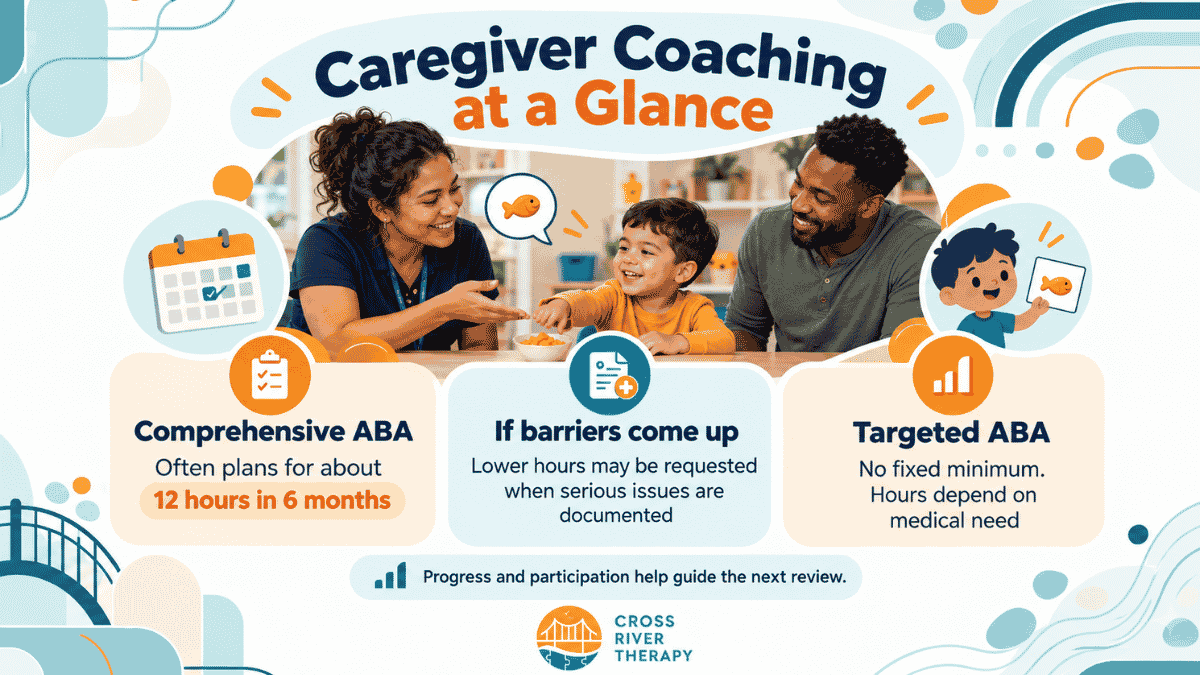
Indiana’s coaching requirements set a standard minimum of two hours per month or 12 hours during a six-month approval period for comprehensive ABA. The policy does not require an identical monthly schedule for every family.
Providers generally request 12 to 18 hours over six months. More than 18 hours may receive approval when medically necessary, and shorter approval periods have proportionally reduced minimums.
When Family Circumstances Prevent Participation
Indiana’s caregiver-coaching exceptions allow requests below 12 hours when documented barriers prevent participation despite reasonable efforts to offer alternatives.
Possible barriers include:
- Hospitalization or serious illness
- Housing or transportation problems
- Custody changes
- Intensive caregiving responsibilities
For example, a parent hospitalized for several weeks may miss coaching. The provider should document it and explore different appointment times before requesting attainable hours. The plan reviews each case; an adjustment is not automatic.
When the minimum is not completed, the provider must include an improvement plan with the next treatment approval request. It explains the barriers, efforts to address them, and ways to support future participation.
Targeted ABA Coaching Requirements
Targeted ABA addresses fewer treatment goals. Coaching must appear in its approval request, but Indiana sets no fixed monthly or six-month minimum. The amount depends on medical necessity.
How Do Indiana Medicaid ABA Hour Limits Work?
Indiana distinguishes comprehensive and targeted ABA:
The 4,000-hour allocation excludes certain services and ABA delivered by school corporations. Additional comprehensive ABA can receive coverage through an EPSDT medical-necessity review. Reaching the allocation does not automatically end every ABA service.
What Can Families Do About a Delay or Denial?
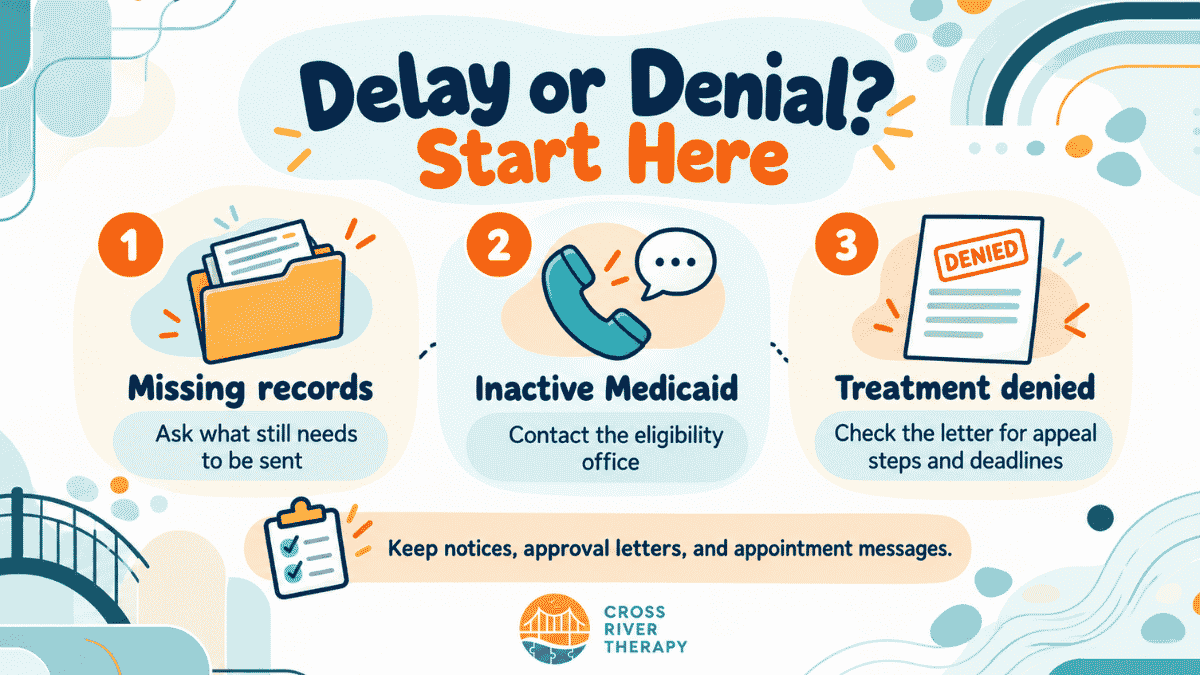
The next action depends on the reason:
- Missing records: The provider can identify what the request still needs.
- Inactive enrollment: The eligibility office can explain the steps to restore coverage.
- Treatment denial: The decision notice lists appeal instructions and deadlines.
Indiana’s member appeals information distinguishes enrollment decisions from decisions about care. Families should follow the process for the organization that issued the notice.
FAQs About Indiana Medicaid ABA Therapy
Does my child need an Indiana Medicaid waiver for ABA?
A separate waiver is not required for Indiana’s state-plan ABA benefit. A waiver waiting list is separate from the treatment approval process.
Can my child change ABA providers?
Families can request a provider change. Before arranging a start date, the new provider and health plan should review participation, existing records, and authorization requirements. An existing approval should not be assumed to transfer automatically.
Can caregiver coaching take place over video?
Some coaching services may take place through real-time video when they meet Indiana Medicaid requirements. Several assessment and direct-treatment services require in-person visits. Your provider and plan can confirm which arrangements they approve.
Start Your Indiana ABA Coverage Review
Indiana Medicaid ABA coverage involves both family records and provider documentation. Scheduling difficulties also belong in that conversation so the team can address them before the next review.
At Cross River Therapy, we can review your insurance information and explain the next intake step. Our enrollment form requests contact details, insurance information, and location. Your Medicaid plan decides coverage and treatment approval.
Recent News
Related articles

ABA Parent Training in New Mexico: What to Expect
ABA parent training teaches skills for daily routines. New Mexico families can learn what sessions include.

Can Children Receive School-Based ABA in New Mexico?
School-based ABA in New Mexico needs planning. School access, coverage, and treatment goals shape the next steps.

AHCCCS ABA Therapy: Coverage and Approval in Arizona
AHCCCS ABA therapy covers medically necessary care. Plan rules determine provider access and treatment approval.

How to Coordinate School-Based ABA Therapy in Arkansas
School-based ABA therapy in Arkansas needs shared routines. Team roles and progress notes help explain daily support.

6 Tour Checks for Center-Based ABA Therapy in Arkansas
Center-based ABA therapy in Arkansas varies by provider. A tour helps parents check staff, safety, and progress.

How to Start In-Home ABA Therapy in Arkansas in 6 Steps
In-home ABA therapy in Arkansas begins with intake and a care plan. The steps explain records and the assessment.

6 Arkansas Medicaid ABA Therapy Rules Families Need to Know
Arkansas Medicaid ABA therapy has age, diagnosis and approval rules. Families can check six requirements before care.

Arizona Autism Laws for ABA Coverage and School Rights
Arizona autism laws for ABA coverage vary by plan. Families can check insurance, appeal options, and school rights.

ABA Therapist Salary in Arkansas for RBTs and BCBAs
Compare ABA therapist salary in Arkansas by role. See how paid hours and benefits affect earnings before applying.

5 Autism Support Groups and Family Resources in New Mexico
Autism support groups in New Mexico connect families. Local resources offer events, parent support, and school help.

Where to Get an Autism Evaluation in New Mexico
Autism evaluation options in New Mexico include UNM and NMSU. Age and referral details help parents prepare.

7 North Carolina Autism Resources to Contact Before ABA Therapy Starts
Autism resources North Carolina families can call for diagnosis, early intervention, rights, and parent support. Start ABA intake with Cross River.