








6 Tour Checks for Center-Based ABA Therapy in Arkansas
Center-based ABA therapy in Arkansas varies by provider. A tour helps parents check staff, safety, and progress.


Key Points:
- A tour of center-based ABA therapy in Arkansas should show how staff supervise care, protect children, and support individual goals.
- Examples of progress tracking help families understand what the team measures and changes.
- Written details about staff coverage, parent updates, and enrollment terms help families compare centers after the visit.
A tour helps you evaluate center-based ABA therapy in Arkansas by connecting a center’s promises to daily care. Staff should explain who oversees treatment, how sessions work, and what happens when your child needs help or a break.
At Cross River Therapy, we offer center-based ABA services with treatment plans based on each child’s needs. Families comparing an ABA center in Little Rock, AR, or an ABA center in Bryant, AR, can use these six checks during their conversations and visits.

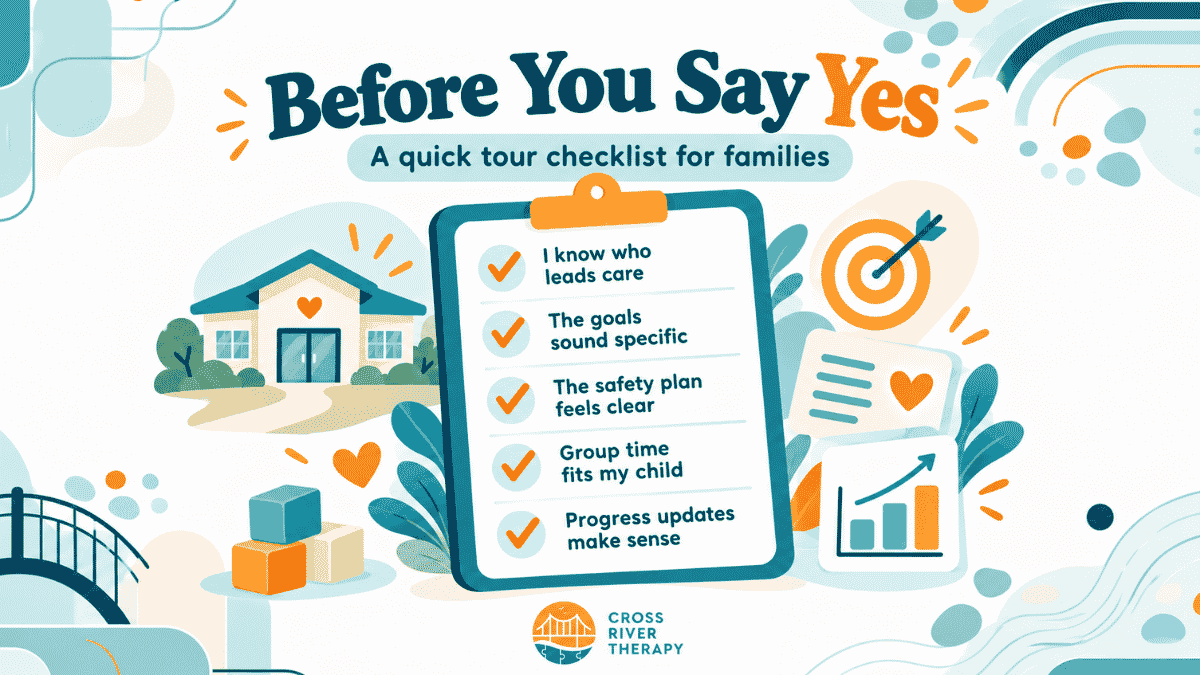
1. Who Will Oversee Your Child’s Care?
The center should explain which clinician will oversee your child’s treatment and how that person supports the daily therapy team.
A Board Certified Behavior Analyst, or BCBA, develops and oversees treatment plans. A Registered Behavior Technician, or RBT, helps deliver therapy under qualified supervision. The BACB’s explanation of the RBT role describes that supervision requirement.
During the visit, questions can include:
- Who would oversee my child’s treatment?
- How often would that clinician observe sessions?
- How can I reach the clinician with a concern?
The BACB certification verification page lets families check an individual’s certification status and any reportable disciplinary actions. Credentials provide one check; the center’s answers should also explain how supervision works during care.
2. How Will the Team Explain Your Child’s Goals?
The team should describe goals in everyday language and explain how each goal connects to your child’s needs.
At our centers, a BCBA assesses the child before developing an individual treatment plan. That assessment helps identify what the child can do and where support is needed.
A goal such as “improve communication” leaves much unexplained. A more specific example is learning to request help opening a snack container through words, a gesture, or a communication device. The team can explain what counts as a request and how much help the child needs.
Questions about goals can include:
- Which daily activity would this goal help my child with?
- What would staff teach during a session?
- How would my child’s interests and preferences influence the activities?
Families whose children communicate without speech can also read about communication goals beyond spoken words.
3. What Happens When a Therapist Is Absent?
The center should explain its staffing arrangements, including how it handles absences and introduces a different therapist.
A statement such as “our staff receive training” needs more detail. Parents can request an explanation of how a therapist learns a child’s treatment plan, communication methods, and safety needs.
Before enrolling, details to confirm include:
- Who covers an absence and whether a session might be canceled
- How a replacement therapist learns the child’s plan
- Who checks that staff can carry out the assigned activities
- How the center tells families about team changes
The BACB Ethics Code requires behavior analysts to check that supervised staff can perform assigned tasks and to monitor their work. A tour conversation can help you understand how a center puts those responsibilities into practice.

4. Daily Safety and Comfort During the Tour
A center visit should help you understand how staff protect children throughout the day.
The rooms provide part of the picture. Staff should also explain what happens during arrival, bathroom visits, meals, breaks, and pickup.
Tour checks can include:
- Arrival and pickup: How does the center confirm who may collect a child?
- Leaving the building: What happens if a child tries to leave unexpectedly?
- Meals and allergies: How does the team record and share food restrictions?
- Bathroom support: How do staff protect privacy and provide help?
- Breaks: Where can a child rest when noise or activity becomes too much?
A child covering their ears during play offers a practical example. The team should be able to explain how it would respond, reduce discomfort, and decide whether to change the activity.
Your child’s communication belongs in that conversation. A parent can describe how their child signals pain, tiredness, refusal, or a need for help.
5. Peer Activities That Match Your Child’s Needs
Peer activities should have a purpose that staff can explain for your child.
In our center-based programs, we group children by age to encourage interaction and play. During a visit, families can also explore how communication needs and individual goals influence participation.
A shared game might give one child practice requesting a turn. Another child might work on choosing an activity or telling someone they want to stop. The same activity can support different goals.
Details to explore include group size, adult support, and how staff respond when a child wants to leave an activity.
Families still deciding where therapy should happen can review our comparison of ABA therapy settings. A center tour helps with the next decision: how a particular program would support your child.
6. Progress Updates Your Family Can Understand
The center should explain what it measures, how it shares progress, and what happens when an approach needs to change.
A sample report with identifying information removed can show how the center explains results. For the snack example, a report might record whether the child requested help independently or needed a reminder. Those details tell families more than a general statement that the session went well.
The BACB Ethics Code requires behavior analysts to use treatment data when making decisions and to take corrective action when desired results are not occurring.
Before enrollment, communication details to confirm include:
- Who provides session updates
- How families arrange a conversation with the BCBA
- How parents share observations from home
- How the team explains changes to treatment
In a published parent review of our Arkansas services, Alethea Marcellus valued the time staff took to understand her son’s needs and their ongoing check-ins. Her experience highlights a specific aspect of family communication; it does not predict another child’s results.
FAQs About Center-Based ABA Therapy in Arkansas
What should I bring to a center visit?
A short list of questions and notes about your child can help guide the conversation. The notes might cover communication, favorite activities, sensory needs, and safety concerns. The center can tell you whether it needs records for that visit.
Can I take photos or videos during a tour?
Photography requires the center’s permission. Other children, families, staff, or records may appear in the background. The center can explain what you may photograph while protecting private information.
Does BACB certification apply to the whole center?
BACB certification applies to individual professionals. A center’s statement that it employs BCBAs does not mean the BACB has certified the business. Families can verify staff credentials and evaluate the center’s policies separately.
Plan Your Next Conversation About Arkansas Center Care
A center tour should leave your family with specific answers about the care your child would receive. Notes from the visit can help you compare providers and identify any details you still need before enrolling.
At Cross River Therapy, our intake team can speak with you about our Arkansas ABA services, your child’s needs, and the location you are considering. Our contact form provides a starting point for that conversation.
Recent News
Related articles
6 Tour Checks for Center-Based ABA Therapy in Arkansas
Center-based ABA therapy in Arkansas varies by provider. A tour helps parents check staff, safety, and progress.

How to Start In-Home ABA Therapy in Arkansas in 6 Steps
In-home ABA therapy in Arkansas begins with intake and a care plan. The steps explain records and the assessment.

6 Arkansas Medicaid ABA Therapy Rules Families Need to Know
Arkansas Medicaid ABA therapy has age, diagnosis and approval rules. Families can check six requirements before care.
Arizona Autism Laws for ABA Coverage and School Rights
Arizona autism laws for ABA coverage vary by plan. Families can check insurance, appeal options, and school rights.

ABA Therapist Salary in Arkansas for RBTs and BCBAs
Compare ABA therapist salary in Arkansas by role. See how paid hours and benefits affect earnings before applying.

5 Autism Support Groups and Family Resources in New Mexico
Autism support groups in New Mexico connect families. Local resources offer events, parent support, and school help.

Where to Get an Autism Evaluation in New Mexico
Autism evaluation options in New Mexico include UNM and NMSU. Age and referral details help parents prepare.

7 North Carolina Autism Resources to Contact Before ABA Therapy Starts
Autism resources North Carolina families can call for diagnosis, early intervention, rights, and parent support. Start ABA intake with Cross River.

Does Indiana Medicaid Cover ABA Therapy? A Parent Checklist
Indiana Medicaid ABA therapy may cover care for eligible children. The checklist covers coaching and renewals.
How to Apply for the New Mexico DD Waiver
Your NM DD waiver application starts with state intake. The steps cover records, submission, and enrollment.

Does Insurance Cover ABA Therapy in New Jersey?
ABA therapy insurance in New Jersey varies by plan. Learn what NJ FamilyCare covers and how to check costs.

How ABA Therapy Builds Communication for Nonverbal Children Without Forcing Speech
ABA therapy communication for nonverbal children starts with AAC, signs, and daily routines. See how kids ask, refuse, choose, and get help.