





How to Apply for New Mexico’s DD Waiver While Starting ABA Therapy
Autism waiver New Mexico applications need DD Waiver records and proof of daily support needs. Your next step is to start ABA intake with Cross River.

Key Points:
- Autism waiver New Mexico applications go through the state’s DD Waiver Pre-Service Intake process.
- Eligibility depends on developmental disability criteria, daily functional limitations, required care level, and supporting records.
- Families can pursue Medicaid-authorized ABA therapy separately while the waiver application and Central Registry process continue.
Parents searching for an autism waiver in New Mexico usually need information about the state’s Developmental Disabilities Waiver, or DD Waiver. New Mexico does not offer a program officially called an Autism Waiver, but the state provides the DD Waiver instead.
This program may provide home- and community-based supports for an eligible child. ABA therapy in New Mexico follows a separate Medicaid approval process, so your family can start intake while the waiver process continues.
What Parents Mean by “Autism Waiver New Mexico”
The traditional DD Waiver serves eligible children and adults with intellectual or developmental disabilities. It provides approved services at home and in the community as an alternative to institutional care.
Autism can count as a qualifying related condition, but a diagnosis alone does not establish eligibility. State reviewers also consider when the condition began, its expected duration, daily support needs, and the required level of care.
Parents may see the phrase HCBS waiver for autism in New Mexico when reading about this program. Services may include case management, respite, assistive technology, environmental changes, transportation, and behavioral support consultation. Behavioral support consultation under the waiver differs from clinical ABA treatment.
The New Mexico Health Care Authority describes the traditional DD Waiver as an alternative to institutional care for eligible people with intellectual and developmental disabilities.
Check Whether Your Child May Meet DD Waiver Requirements
New Mexico applies several requirements before a person can enroll in the traditional DD Waiver. The applicant generally must have an intellectual disability or a qualifying related condition that began before age 22. The condition must be expected to continue indefinitely and create a need for long-term, coordinated services.
The applicant must also meet the level of care used for an Intermediate Care Facility for Individuals with Intellectual Disabilities. Medicaid financial and non-financial reviews occur when a funded waiver position becomes available.
For a related condition, state rules look for substantial limitations in at least three areas:
- Self-care
- Receptive and expressive language
- Learning
- Mobility
- Self-direction
- Independent living
- Economic self-sufficiency
A parent’s description should focus on daily function. Your notes should explain what your child cannot do independently, what help is needed, and how often. “Needs reminders” gives less detail than “needs an adult beside them during dressing each morning because they cannot complete the steps alone.”
These requirements come from the New Mexico Health Care Authority and state rules. An ABA provider does not decide DD Waiver eligibility.

Start the New Mexico Autism Waiver Application Through Pre-Service Intake
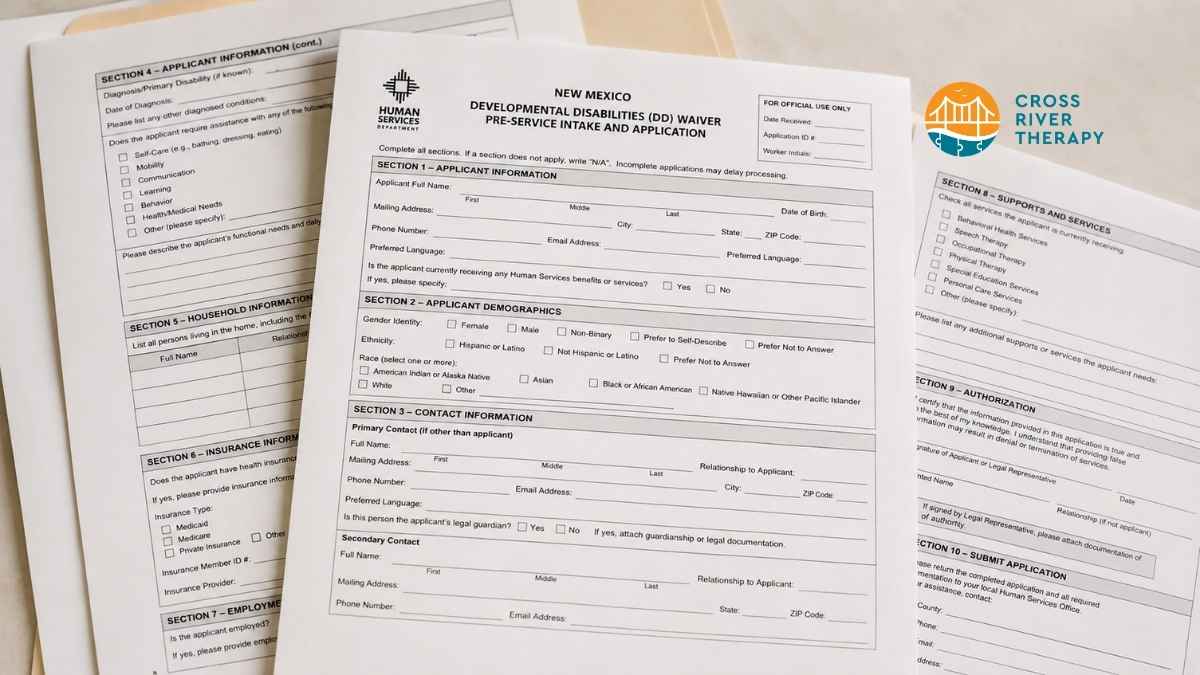
The autism waiver application in New Mexico begins through the Pre-Service Intake Bureau. A parent, guardian, applicant, or authorized representative can start the process.
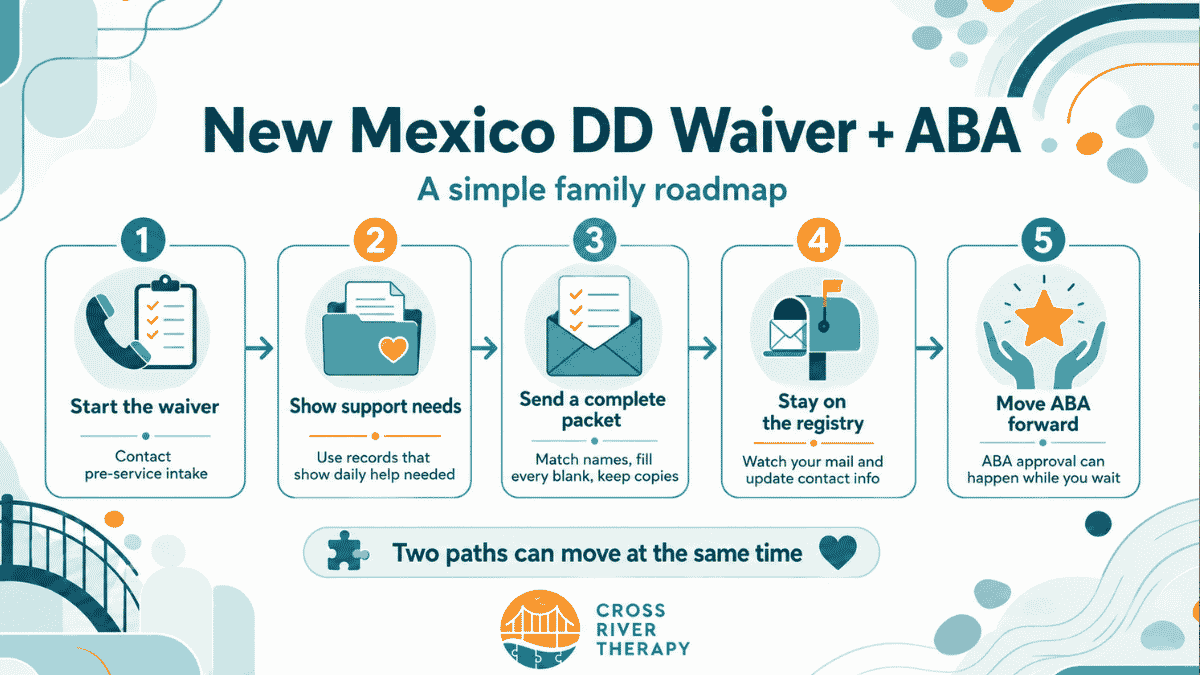
Step 1: Contact Pre-Service Intake
Visit the New Mexico Health Care Authority’s Developmental Disabilities Waiver page and scroll to the “How to Apply” section. The page provides the current Pre-Service Intake contact information and a contact list for specialists.
Ask to begin a DD Waiver application and confirm which Pre-Service Intake Specialist handles your area. You should have the applicant’s legal name, birth date, mailing address, phone number, and preferred language ready. Write down the date, the staff member’s name, and the instructions provided.
Step 2: Complete every required form
You should read each question before signing. The same legal name should appear across all records. Release forms allow state staff to request records when needed.
An unanswered box can slow down the review. You can ask the assigned specialist what to enter instead of leaving a section blank.
Step 3: Submit the packet as instructed
You should keep a full copy of everything sent. Paper records should go through a mailing service that provides tracking. Your file should include mailing receipts, fax confirmations, and sent emails.
You can ask the specialist to confirm receipt and identify anything missing. The registration date can affect the applicant’s place in the Central Registry process.
Build a Records Packet That Shows Daily Support Needs
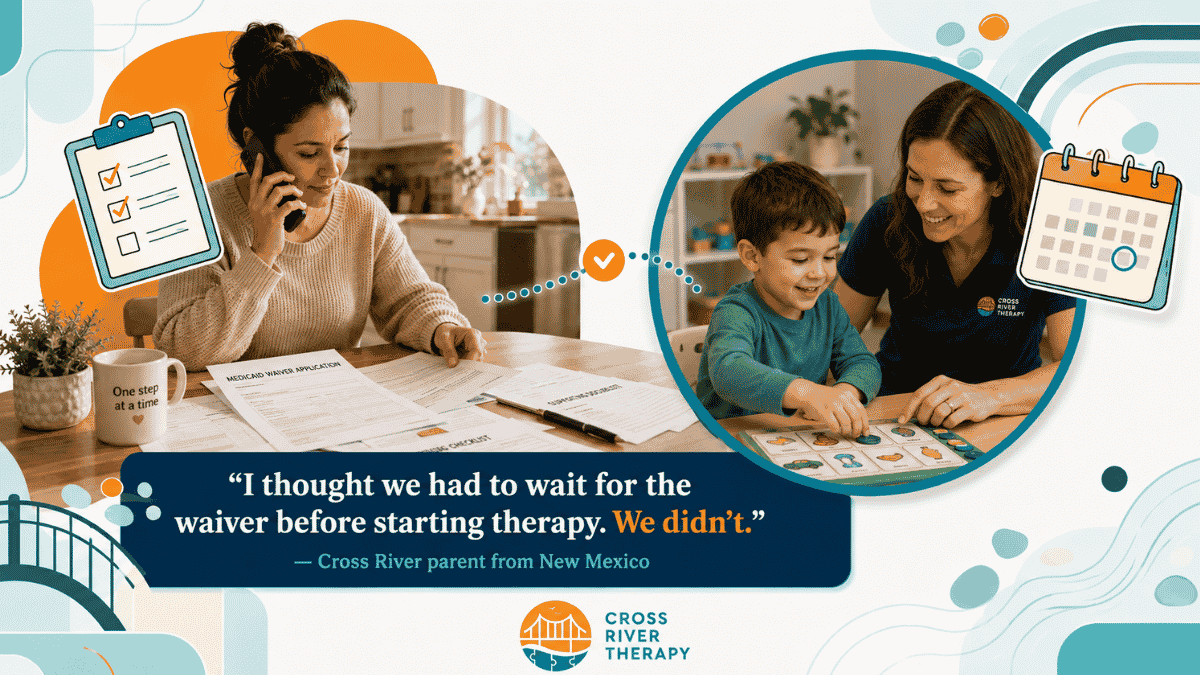
A diagnosis report confirms a condition, but state reviewers need to see how that condition impacts daily life. Which files actually matter when you submit your packet? Gathering specific documents helps paint a clear picture of the support your child requires. You should look for files that detail real-world limitations rather than just repeating a medical label.
Consider gathering these records for your submission:
- Diagnostic and psychological evaluations.
- Adaptive-behavior testing results.
- School Individualized Education Programs and multidisciplinary evaluations.
- Speech, occupational, physical, or behavioral therapy reports.
- Pediatrician progress notes and safety-related hospital records.
Open these documents and look for sections describing daily struggles. Highlight passages that mention communication support, toileting assistance, feeding difficulties, or a lack of safety awareness.
DD Waiver records and ABA insurance records serve different purposes. At Cross River Therapy, we can review the documents commonly needed for ABA intake and verify available insurance benefits while your family completes the state waiver process. Contact our intake team to discuss the next steps.
Follow the Central Registry and Allocation Process
Once the state reviews your application and records, your child may be placed on the Central Registry. Placement on this registry confirms your child is in the system, but it does not mean immediate funding or services. Available waiver positions depend directly on state budget allocations and federally authorized program capacities.
Here's what that means for your schedule:
- You cannot predict the exact timeline, so it is best to focus on keeping your file active.
- Avoid relying on unofficial estimates about how many years the wait might take.
- Contact your assigned Pre-Service Intake Specialist periodically to verify your status.
Keep your phone number and mailing address updated with the state. Allocation notices arrive by mail, and missing a deadline can remove your child from the registry. When a slot opens, you will receive a Primary Freedom of Choice notice to select between the traditional DD Waiver or the self-directed Mi Via program.
The state will re-evaluate the medical level of care and Medicaid financial eligibility during the final enrollment window. Handle any denial or request for more information by the deadline shown on the notice.

Keep ABA Therapy Moving During the Waiver Process
Waiting for state services can feel discouraging, but your child does not need to pause their development in the meantime. You can seek behavioral services in your area independently of the state waitlist.
How the Autism Waiver in New Mexico and Medicaid ABA Coverage Differ
Families often confuse the Medicaid waiver for autism in New Mexico with standard insurance benefits. The DD Waiver focuses on long-term community supports like respite and home modifications. In contrast, New Mexico Medicaid covers Applied Behavior Analysis as a separate, covered behavioral health service. This rule allows children with autism to receive therapy while they remain on the Central Registry.
Services from both programs can be coordinated, provided they do not duplicate the exact same hours of care. To start the ABA enrollment process, your child needs a documented autism diagnosis, an initial assessment, a clinical treatment plan, and explicit insurance authorization. Getting approved for the waiver does not automatically start ABA therapy.
Likewise, starting ABA does not grant you a waiver slot. Our intake team can check your insurance benefits and explain the assessment process to help you prepare.

FAQs About the Autism Waiver in New Mexico
Can I apply for the DD Waiver before my child has Medicaid?
Yes. You can contact Pre-Service Intake and begin the Central Registry application process before your child is enrolled in Medicaid. However, your child must meet all Medicaid financial and technical eligibility requirements when a funded waiver slot becomes available.
What should I do if my address or phone number changes?
Notify your assigned Pre-Service Intake Specialist immediately when your contact information changes. The state sends crucial allocation notices and documentation requests by mail and phone. Request a written or email confirmation to ensure the staff updated your file correctly.
Can an ABA provider submit the DD Waiver application for my family?
No. The parent, legal guardian, or authorized representative must submit the application directly to Pre-Service Intake. A therapy provider can supply helpful clinical records or school reports, but they cannot manage your application or influence registry placement.
Start ABA Therapy While Your Waiver Application Proceeds
A complete DD Waiver application should show how autism affects daily functioning and the level of support the applicant needs. Careful records, deadline tracking, and regular contact with Pre-Service Intake can prevent avoidable application delays.
At Cross River Therapy, we provide in-home, school-based, center-based, and online ABA therapy for children ages 1–21 across New Mexico. Call our team today or email info@crossrivertherapy.com to begin intake. Our team will gather your child’s information, verify insurance benefits, and explain the assessment and authorization steps.
Recent News
Related articles

Arizona Autism Laws Every Parent Should Know Before Starting ABA Therapy
Autism laws Arizona parents should know cover ABA insurance, AHCCCS appeals, IEPs, and Section 504 rights. Check ABA coverage with Cross River.

ABA Therapist Salary in Arkansas: What BCBAs and RBTs Actually Earn in 2026
ABA therapist salary Arkansas figures compare RBT and BCBA rates, benefits, guaranteed hours, and contract terms. Explore careers at Cross River.

5 Autism Support Groups and Family Resources in New Mexico Alongside ABA Therapy
Autism support groups New Mexico families can use offer peer support, local events, and school help. Cross River can explain ABA therapy options.

Where to Get an Autism Evaluation in New Mexico Before Starting ABA Therapy
Autism evaluation New Mexico options include UNM, NMSU, FIT, and private providers. Compare providers, records, and ABA steps with Cross River.

7 North Carolina Autism Resources to Contact Before ABA Therapy Starts
Autism resources North Carolina families can call for diagnosis, early intervention, rights, and parent support. Start ABA intake with Cross River.

Does Indiana Medicaid Cover ABA Therapy? A Step-by-Step Eligibility Checklist for Parents
Medicaid ABA therapy Indiana covers eligible children under 21 with prior authorization. Your five-step coverage review can start with Cross River.
How to Apply for New Mexico’s DD Waiver While Starting ABA Therapy
Autism waiver New Mexico applications need DD Waiver records and proof of daily support needs. Your next step is to start ABA intake with Cross River.

Is ABA Therapy Covered by Insurance in New Jersey? What Every Parent Should Know
ABA therapy insurance New Jersey may cover medically necessary care based on plan type, network, and authorization. Verify benefits with Cross River.

How ABA Therapy Builds Communication for Nonverbal Children Without Forcing Speech
ABA therapy communication for nonverbal children starts with AAC, signs, and daily routines. See how kids ask, refuse, choose, and get help.

How to Start ABA Therapy in New Jersey With a First-Call Checklist
How to start ABA therapy in New Jersey begins with records, insurance details, and intake questions. Use this first-call checklist before you call.

How to Get an Autism Evaluation in Arkansas Before Starting ABA Therapy
How to get an autism evaluation in Arkansas starts with a referral, provider choice, and key records. Use this parent checklist before ABA intake.

Center-Based vs In-Home vs School-Based ABA Therapy and How to Choose the Right Fit
Center-based, in-home, and school-based ABA therapy each fit different goals, routines, and settings. Compare options before your intake call.