








Where to Get an Autism Evaluation in New Mexico
Autism evaluation options in New Mexico include UNM and NMSU. Age and referral details help parents prepare.


Key Points:
- An autism evaluation in New Mexico requires a provider whose age range and qualifications meet the child’s needs.
- FIT offers free developmental services for eligible children under three without requiring an autism diagnosis.
- Medicaid separates medical evaluation, ABA assessment, and treatment, with specific provisions for eligible toddlers at risk of autism.
Families seeking an autism evaluation in New Mexico can contact the University of New Mexico (UNM), New Mexico State University (NMSU), or a qualified private provider. The starting point depends on your child’s age, location, and insurance requirements.
An evaluation can help explain your child’s development and support needs. For families considering applied behavior analysis (ABA) therapy, the next steps include choosing an evaluator, preparing records, and understanding how diagnosis differs from treatment planning.

How Autism Screening and Diagnosis Differ
Autism screening checks for signs that need a closer look. A screening questionnaire cannot diagnose autism. A diagnostic evaluation examines development and behavior in more detail to determine whether a child meets the criteria for autism.
Your child’s pediatrician can discuss concerns and help arrange a referral. For example, a parent might mention that their toddler rarely uses gestures to request something. That observation gives the provider information to consider during screening.
A school evaluation serves another purpose: deciding whether a child qualifies for educational services. A child may receive classroom support while the family pursues a medical evaluation. An educational autism classification does not automatically satisfy insurance requirements for ABA therapy.
Where Families Can Get an Autism Evaluation in New Mexico
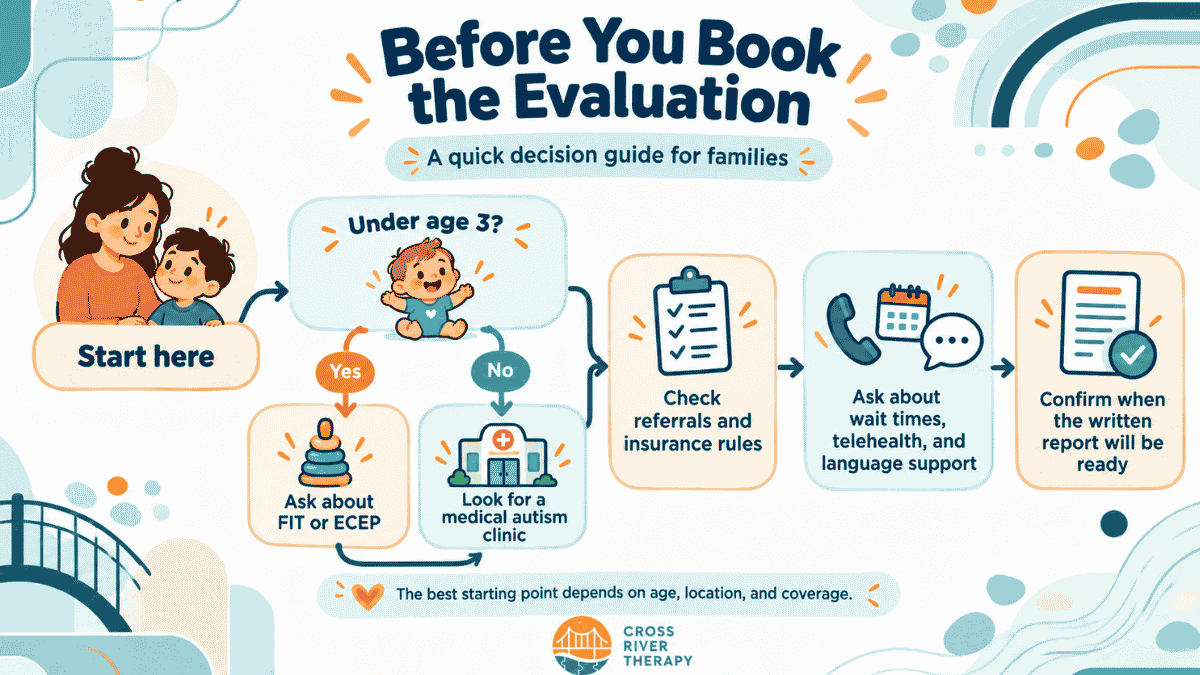
University programs and private clinics have different age ranges and referral requirements. The following options give families places to begin.
UNM Early Childhood Evaluation Program
The UNM Early Childhood Evaluation Program, or ECEP, evaluates children from birth to age three with developmental or medical concerns, including concerns about autism.
Its team uses play activities, caregiver observations, and a medical history review. Appointments take place in Albuquerque and other communities across the state.
Families receiving early intervention can speak with their service coordinator about a referral. Those who are not receiving services can contact ECEP directly.
UNM Autism Spectrum Evaluation Clinic
The UNM Autism Spectrum Evaluation Clinic serves people ages three and older. Its services include autism diagnostic evaluations through professionals trained in developmental disabilities and behavioral health.
UNM’s Center for Development and Disability bills Medicaid and private insurance. Families should confirm whether the clinic accepts their specific plan and what paperwork it requires.
NMSU Papen-Aprendamos Autism Diagnostic Center
The NMSU Papen-Aprendamos Autism Diagnostic Center provides medical autism evaluations from 18 months through adulthood.
A referral from a licensed healthcare provider must include an autism screening that indicates a need for further evaluation. NMSU’s referral instructions explain how providers submit the paperwork.
Some evaluations may take place through telepractice, although an in-person visit may still be necessary. The center has a waitlist; families should contact it for current scheduling information.
Private Autism Evaluation Providers
Private diagnostic providers offer another option. Your health plan can help identify participating specialists near your home.
Before booking, families should confirm that the provider performs medical autism evaluations and can supply the documents their plan requires. Medicaid members should also check whether the provider meets the program’s autism evaluation requirements.
How FIT Helps Children Under Three
New Mexico’s Family Infant Toddler Program, or FIT, provides free developmental evaluations and early intervention for eligible children under three. Parents can contact a local FIT agency without waiting for an autism diagnosis.
For example, a family concerned about their toddler’s communication can request an evaluation. Eligible children may receive speech therapy, occupational therapy, or other developmental support during everyday routines.
FIT participation does not automatically supply the medical autism documentation needed for insurance-funded ABA. Families pursuing ABA should check their health plan’s evaluation requirements.

What Should Parents Check Before Scheduling?
Parents should confirm the clinic’s requirements before booking. These questions can help prevent missing paperwork or unexpected costs:
- Which ages does the clinic evaluate?
- What referral or screening forms does my child need?
- Which services does our insurance plan cover at this clinic?
- What costs would our family pay?
- How long is the current appointment wait?
- What cancellation-list or remote appointment options are available?
- Which language or interpreter services can the clinic provide?
- When will we receive the written report?
- What documents will our health plan require before an ABA assessment?
For families considering treatment with us, our team can help check ABA insurance benefits. Evaluation coverage and therapy coverage may involve different providers and approval steps.
What Happens During a Child’s Autism Evaluation?
An autism evaluation generally includes caregiver questions, a review of developmental history, and observation of the child. The evaluator may use structured activities to learn about communication, play, and behavior.
Your child may behave differently in an unfamiliar room. Details from home can help the evaluator understand those differences. For example, a child might use gestures with family members but communicate less around unfamiliar people.
What Families Can Bring
The clinic’s intake instructions should explain which records it needs. A preparation folder may include:
- Insurance information and referral forms
- Completed screening questionnaires
- Previous medical or developmental reports
- Speech or occupational therapy reports
- School evaluations or an Individualized Education Program (IEP)
- Notes about communication, play, and daily routines
A favorite toy or comfort item may help your child during the visit. The clinic can explain whether snacks, breaks, or other arrangements are available.
How an Autism Evaluation Leads to ABA Therapy
A medical evaluation and an ABA assessment answer different questions. Diagnosis examines whether a child meets autism criteria. The ABA assessment identifies treatment goals and support needs.
New Mexico Medicaid’s ABA coverage rule describes three stages.
Stage 1: Medical Evaluation and Referral
An approved autism evaluation provider documents autism or qualifying autism risk, develops an integrated service plan, and refers the child for ABA assessment.
Some children ages 12 to 36 months qualify through documented autism risk. Specific developmental and genetic risk requirements apply, so developmental concerns alone do not establish eligibility.
Stage 2: ABA Assessment and Planning
The ABA provider assesses the child’s skills and behavior to develop a treatment plan.
At Cross River Therapy, our Board Certified Behavior Analysts (BCBAs) complete an initial assessment, review goals, and create an individual plan. Caregiver input helps connect those goals to daily needs, such as requesting help or taking part in meals.
Stage 3: ABA Treatment
Treatment follows the plan and any required insurance approval.
We offer in-home ABA therapy, school-based ABA support, and center-based care through our New Mexico ABA program. Available settings depend on service arrangements and your child’s needs. Our caregiver training also helps families support learning between sessions.
FAQs About Autism Evaluation in New Mexico
What does Medicaid require if my child already has an autism diagnosis?
New Mexico Medicaid does not require diagnostic re-evaluation solely because a child needs ABA. An approved provider must still develop the integrated service plan and establish medical necessity, meaning why the child needs treatment.
How do blood tests relate to autism diagnosis?
A blood test cannot diagnose autism. Professionals assess developmental history and behavior. Any genetic testing recommended during the evaluation serves a separate purpose and does not replace the autism diagnostic assessment.
What happens if my child does not receive an autism diagnosis?
The evaluation may still identify developmental needs or recommend further assessments. Your child’s healthcare provider can review those findings with you and explain the next steps. The report can help the family understand concerns even without an autism diagnosis.
Prepare for Your Child’s Next Step in ABA Care
Your child’s evaluation report can help the treatment team understand their development and support needs. A separate ABA assessment then connects that information to individual treatment goals.
At Cross River Therapy, we help families begin intake and check insurance benefits. Our team can explain the information needed to get started and the ABA services available in your area.
Recent News
Related articles

How to Start In-Home ABA Therapy in Arkansas in 6 Steps
In-home ABA therapy in Arkansas begins with intake and a care plan. The steps explain records and the assessment.

6 Arkansas Medicaid ABA Therapy Rules Families Need to Know
Arkansas Medicaid ABA therapy has age, diagnosis and approval rules. Families can check six requirements before care.

Arizona Autism Laws for ABA Coverage and School Rights
Arizona autism laws for ABA coverage vary by plan. Families can check insurance, appeal options, and school rights.

ABA Therapist Salary in Arkansas for RBTs and BCBAs
Compare ABA therapist salary in Arkansas by role. See how paid hours and benefits affect earnings before applying.

5 Autism Support Groups and Family Resources in New Mexico
Autism support groups in New Mexico connect families. Local resources offer events, parent support, and school help.
Where to Get an Autism Evaluation in New Mexico
Autism evaluation options in New Mexico include UNM and NMSU. Age and referral details help parents prepare.

7 North Carolina Autism Resources to Contact Before ABA Therapy Starts
Autism resources North Carolina families can call for diagnosis, early intervention, rights, and parent support. Start ABA intake with Cross River.

Does Indiana Medicaid Cover ABA Therapy? A Parent Checklist
Indiana Medicaid ABA therapy may cover care for eligible children. The checklist covers coaching and renewals.

How to Apply for the New Mexico DD Waiver
Your NM DD waiver application starts with state intake. The steps cover records, submission, and enrollment.

Does Insurance Cover ABA Therapy in New Jersey?
ABA therapy insurance in New Jersey varies by plan. Learn what NJ FamilyCare covers and how to check costs.

How ABA Therapy Builds Communication for Nonverbal Children Without Forcing Speech
ABA therapy communication for nonverbal children starts with AAC, signs, and daily routines. See how kids ask, refuse, choose, and get help.

How to Start ABA Therapy in New Jersey With a Checklist
Your guide explains how to start ABA therapy in New Jersey. A first-call checklist covers records and next steps.