







Is ABA Therapy Covered by Insurance in New Jersey? What Every Parent Should Know
ABA therapy insurance New Jersey may cover medically necessary care based on plan type, network, and authorization. Verify benefits with Cross River.


Key Points:
- ABA therapy insurance in New Jersey often covers medically necessary treatment, but benefits depend on plan funding, diagnosis, network status, and prior authorization.
- Fully insured plans, self-funded employer plans, and NJ FamilyCare follow different rules.
- Families should verify costs, documents, approved settings, and appeal rights before care starts.
Does insurance cover ABA therapy in New Jersey? For many families, the answer is yes. Many insurance plans in the state cover medically necessary Applied Behavior Analysis (ABA) therapy. The exact benefit depends on the health plan, your child’s age and diagnosis, the provider network, and prior authorization rules.
Understanding insurance coverage starts with finding out who funds the ABA therapy in New Jersey plan you're using. State law affects many fully insured plans issued in NJ. Self-funded employer plans follow different rules. NJ FamilyCare also covers autism services for eligible members, but its process is separate from private insurance.
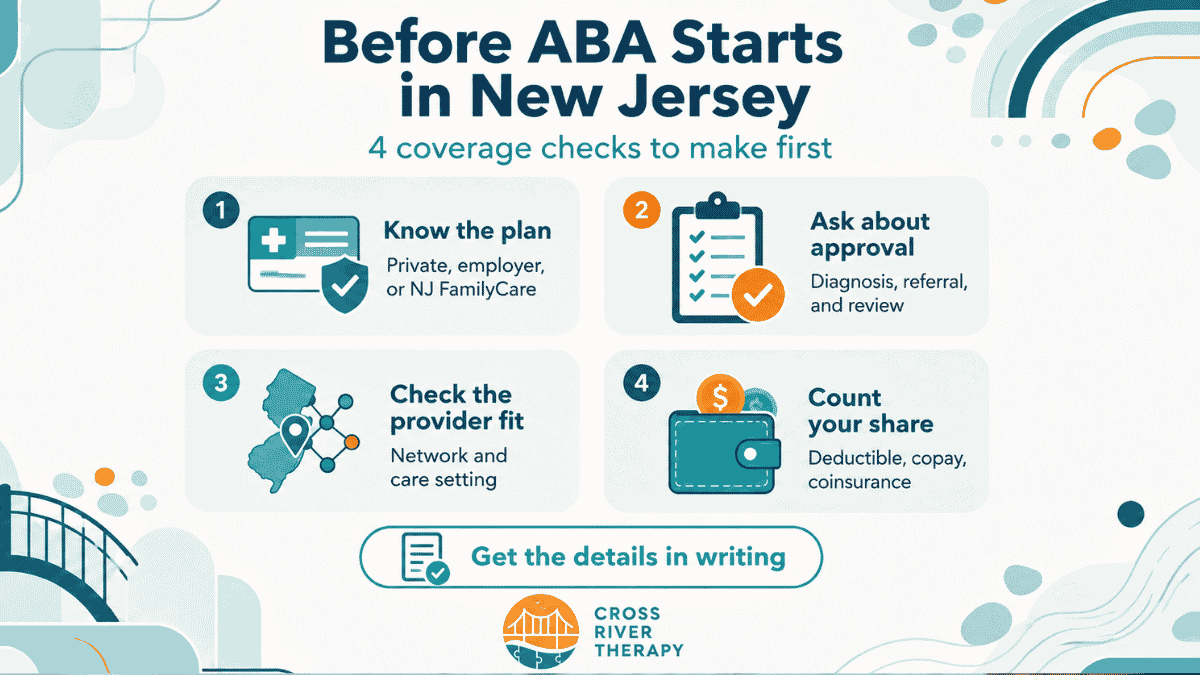
Before care starts, ask what documents the plan requires, which provider settings are in-network, and what costs may remain your responsibility.
How ABA Therapy Insurance Works in New Jersey
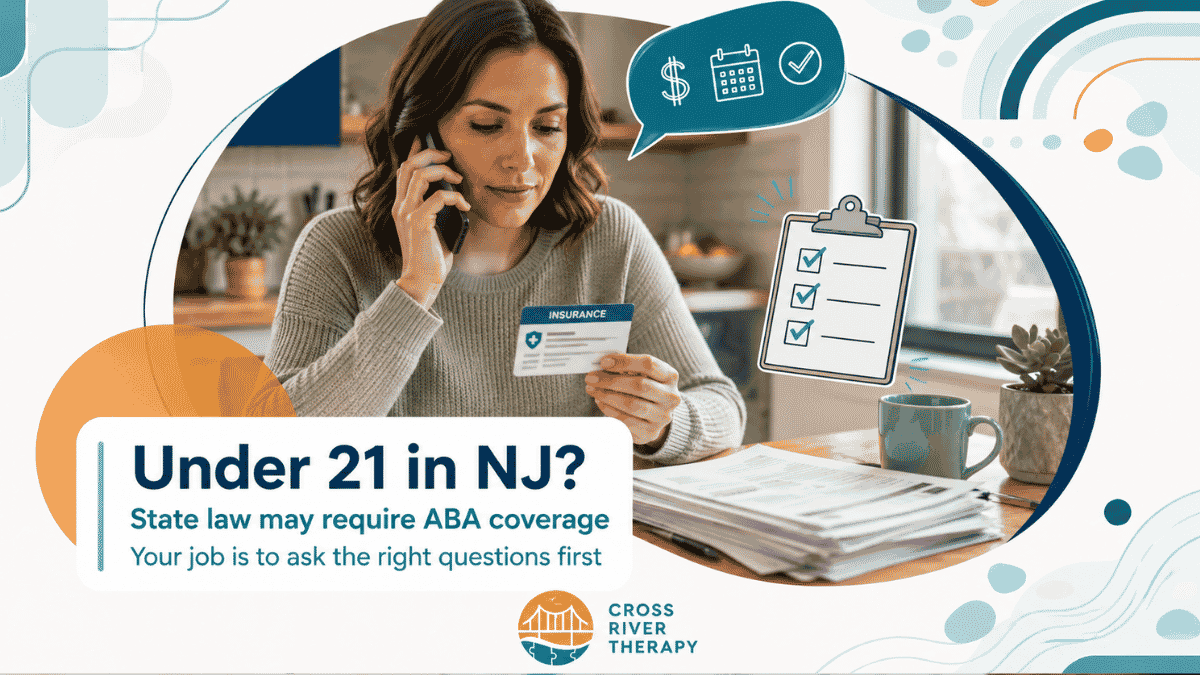
State laws provide strong protections for families seeking behavioral health insurance benefits. Under the New Jersey autism insurance mandate, known legally as P.L.2009, c.115, certain health insurance policies must provide coverage for screening, diagnosing, and treating autism spectrum disorder.
For eligible members under age 21, covered care can include behavioral treatment based on ABA principles. To access these benefits, your child generally needs a formal diagnosis and a treatment plan prescribed by a licensed physician or psychologist.
Quick Note
You might hear conflicting stories about annual limits on these benefits. The original 2009 state law included a $36,000 annual cap on behavioral treatment. However, federal mental health parity rules changed how insurance companies apply these limits.
A bulletin from the New Jersey Department of Banking and Insurance clarified that many group health plans cannot enforce a strict dollar limit on autism services unless they also impose similar caps on medical care. Because rules vary by your specific plan structure, you should check your current policy terms rather than relying on outdated statutory numbers.

Which New Jersey Health Plans Must Follow the State Mandate?
The insurance company name on the card does not tell you who funds the plan. Two families may carry cards with the same logo while having different legal protections. The plan document or the employer benefits office can confirm it.
Fully Insured Plans Usually Follow New Jersey Requirements
In a fully insured private insurance plan, the employer pays premiums, and the insurer covers eligible claims. Plans issued and regulated in New Jersey generally follow applicable state benefit mandates.
Private insurance for ABA in New Jersey may follow the state mandate when the policy is fully insured and issued in the state. The front page of the coverage certificate may identify the state that governs the policy. Parents can also call the insurer or ask the employer’s benefits office for written confirmation.
Useful questions include:
- Is this policy fully insured?
- Was the policy issued in New Jersey?
- Which autism benefits appear in the plan document?
Self-Funded Employer Plans Follow Different Rules
A self-funded employer pays health claims from its own funds. An insurance company may still process claims and provide the network. That arrangement can make a self-funded plan look fully insured on the card.
Many large corporations use self-funded plans in which the employer pays for medical claims from its own budget. An insurance company simply handles the administrative paperwork. State benefit laws do not control these plans because federal law governs them instead.
Have you asked your human resources department about your specific plan structure? You should speak with your company's benefits office rather than relying only on the customer service number on your card.

What NJ FamilyCare Covers for ABA Therapy
Public health programs offer alternative options for families. NJ FamilyCare covers behavioral services, including applied behavior analysis, for eligible members through age 21.
Accessing these benefits usually involves several specific state guidelines:
- The child must receive a formal diagnosis from a qualified professional.
- The family must contact the managed care organization listed on the NJ FamilyCare insurance card.
- The managed care organization requires prior authorization based on medical necessity before services can start.
- The chosen provider must maintain active credentials and contracts with that specific managed care network.
- A new approval process is typically required if a family decides to switch therapy providers.
Many parents worry that school services interfere with medical insurance. An Individualized Education Program at a school in districts like Newark or Edison does not automatically cancel your medical benefits. If your plan reduces your hours, you retain the right to file an appeal under state guidelines.
Get Expert Help with Your Insurance Verification
At Cross River Therapy, we can review your insurance information before services begin and explain which records your plan may request. Simply share your insurance details through our secure contact form, and our clinical intake team can check your benefits and explain the next required step for your family. Reach out to us to learn more.
What ABA Therapy Insurance in New Jersey May Still Require
Even when a plan approves treatment, families often face out-of-pocket ABA therapy costs. ABA therapy costs in New Jersey can differ even among families whose children have insurance coverage.
A major study published in the journal Pediatrics found that state insurance mandates successfully moved treatment spending to insurance corporations, but families with high service usage could still experience significant monthly expenses.
Depending on your policy, you may remain responsible for specific charges:
- Deductibles that you must pay out of pocket before insurance coverage begins
- Fixed copayments for every individual therapy session
- Coinsurance percentages for the total cost of care
- Out-of-network charges if your provider does not contract with your plan
- Unapproved hours or services delivered before the official authorization date
Your policy likely has an annual out-of-pocket maximum that limits your financial liability for in-network care. You should verify which behavioral expenses count toward this limit. An approval letter specifies authorization details, but it does not guarantee final payment. The actual billing codes, service settings, dates of care, and child's enrollment status must match the approved terms perfectly when the provider submits the claim.
Ask These Questions Before Your Child’s First ABA Session
Conversations in online parent groups show that families frequently face confusion about deductibles, secondary Medicaid options, network status, and claims that go unpaid despite initial approval. To navigate insurance for ABA therapy, you should contact your insurer and request written answers or a specific call-reference number for your records.
Written verification of autism insurance coverage in New Jersey gives parents a record they can compare with later authorization letters and claims.
Make sure to ask these exact questions during your call:
- Is this specific health plan fully insured or self-funded?
- Does the policy cover behavioral therapy for my child’s specific age and diagnosis?
- Do you require a primary care referral, a formal prescription, or an updated diagnostic report?
- Does this service require prior authorization, and who submits the assessment for approval?
- How many weekly hours are authorized, and when will the insurance company review them again?
- Is our selected provider fully in network for home-based, school-based, or center-based care?
- What specific deductible, copayment, coinsurance, and out-of-pocket maximum rules apply to this treatment?
- Will the insurance company provide a written benefit estimate before services begin?
- What specific appeal steps should we take if services are reduced or denied?
Taking the time to compile these details helps prevent billing surprises later on.

FAQs About ABA Therapy Insurance in New Jersey
Can NJ FamilyCare act as secondary insurance for ABA therapy?
NJ FamilyCare can cover deductibles or copayments after private insurance pays. The provider must participate with your NJ FamilyCare plan, and payment cannot exceed program limits.
Does insurance approval guarantee that every ABA session will be paid?
Authorization does not guarantee payment. Each claim must match the authorized provider, dates, settings, billing codes, and hours. Coverage must remain active on the day of service.
Can insurance cover both home-based and center-based ABA therapy?
Plans cover both in-home ABA therapy and center-based settings if medically necessary, and the provider meets network rules. Ask if separate place-of-service approvals are required before moving care from home to a center.
Verify Your New Jersey ABA Benefits Before Care Begins
Securing behavioral health coverage depends on your plan’s funding type, network contracts, prior authorization approvals, and your child’s clinical documentation. Getting a clear written benefits check up front clarifies what your insurer will cover and outlines any remaining family responsibilities.
At Cross River Therapy, we provide dedicated in-home ABA services across all New Jersey communities, as well as center-based programs at our Jersey City location, for children ages 1 to 21. Reach out to us, email our team at info@crossrivertherapy.com, or submit our online enrollment form. Our intake team will review your insurance details, explain the required records, and contact you directly to guide you through the next step.
Recent News
Related articles

ABA Therapist Salary in Arkansas: What BCBAs and RBTs Actually Earn in 2026
ABA therapist salary Arkansas figures compare RBT and BCBA rates, benefits, guaranteed hours, and contract terms. Explore careers at Cross River.

5 Autism Support Groups and Family Resources in New Mexico Alongside ABA Therapy
Autism support groups New Mexico families can use offer peer support, local events, and school help. Cross River can explain ABA therapy options.

Where to Get an Autism Evaluation in New Mexico Before Starting ABA Therapy
Autism evaluation New Mexico options include UNM, NMSU, FIT, and private providers. Compare providers, records, and ABA steps with Cross River.

7 North Carolina Autism Resources to Contact Before ABA Therapy Starts
Autism resources North Carolina families can call for diagnosis, early intervention, rights, and parent support. Start ABA intake with Cross River.

Does Indiana Medicaid Cover ABA Therapy? A Step-by-Step Eligibility Checklist for Parents
Medicaid ABA therapy Indiana covers eligible children under 21 with prior authorization. Your five-step coverage review can start with Cross River.
How to Apply for New Mexico’s DD Waiver While Starting ABA Therapy
Autism waiver New Mexico applications need DD Waiver records and proof of daily support needs. Your next step is to start ABA intake with Cross River.
Is ABA Therapy Covered by Insurance in New Jersey? What Every Parent Should Know
ABA therapy insurance New Jersey may cover medically necessary care based on plan type, network, and authorization. Verify benefits with Cross River.

How ABA Therapy Builds Communication for Nonverbal Children Without Forcing Speech
ABA therapy communication for nonverbal children starts with AAC, signs, and daily routines. See how kids ask, refuse, choose, and get help.

How to Start ABA Therapy in New Jersey With a First-Call Checklist
How to start ABA therapy in New Jersey begins with records, insurance details, and intake questions. Use this first-call checklist before you call.

How to Get an Autism Evaluation in Arkansas Before Starting ABA Therapy
How to get an autism evaluation in Arkansas starts with a referral, provider choice, and key records. Use this parent checklist before ABA intake.

Center-Based vs In-Home vs School-Based ABA Therapy and How to Choose the Right Fit
Center-based, in-home, and school-based ABA therapy each fit different goals, routines, and settings. Compare options before your intake call.

Early Signs of Autism: A Guide for North Carolina Parents
Early signs of autism North Carolina parents notice can include speech, play, sensory, or skill loss patterns. See what to track before screening.