








How to Coordinate School-Based ABA Therapy in Arkansas
School-based ABA therapy in Arkansas needs shared routines. Team roles and progress notes help explain daily support.


Key Points:
- School-based ABA therapy in Arkansas involves separate clinical and school responsibilities that the adults need to coordinate.
- The BCBA oversees treatment, while the IEP team determines educational services and supports.
- Specific observations about communication, adult assistance, and classroom conditions help the team review how support works during the school day.
School-based ABA therapy in Arkansas requires teachers, parents, and therapy staff to agree on how support will work during the school day. Applied behavior analysis, or ABA, can address skills such as asking for help and taking part in classroom routines. Team coordination connects those goals to the moments when your child needs support.
At Cross River Therapy, our Board Certified Behavior Analysts (BCBAs) collaborate with school districts. Our school-based ABA services target each child's treatment-plan goals. A shared plan for responsibilities and updates helps the adults communicate with each other about your child's support.
What Should the Team Agree On Before School Sessions Begin?
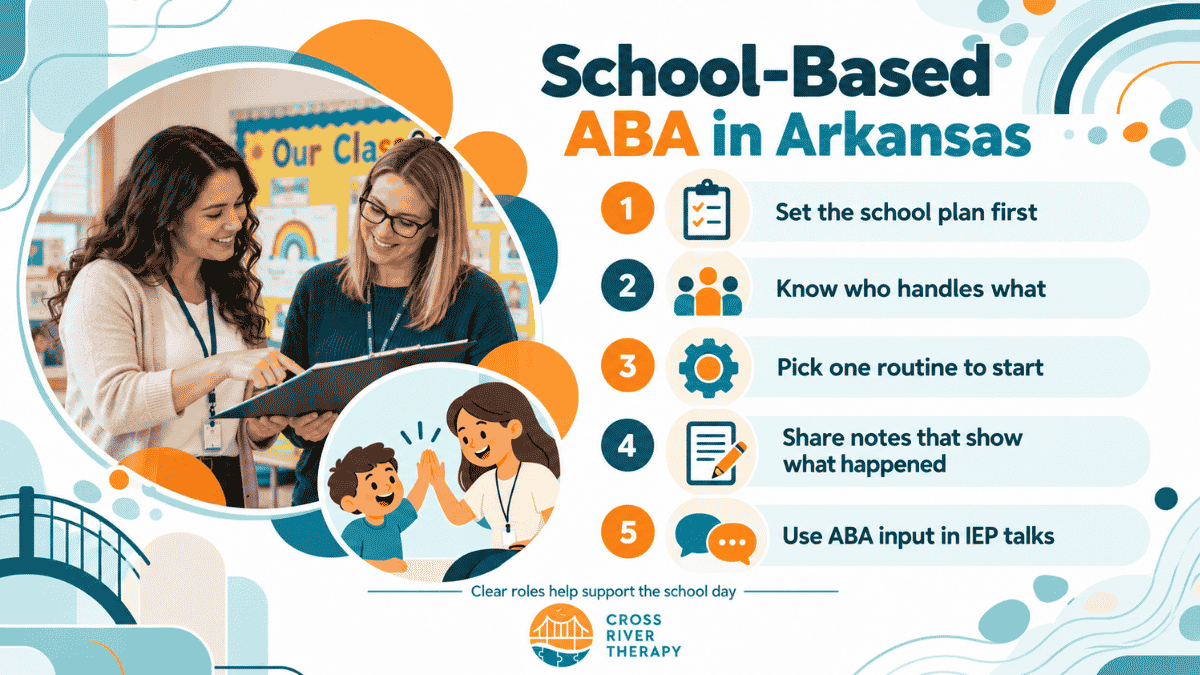
The school and ABA provider should settle the practical details before classroom sessions start. A provider's offer of school services does not establish permission to enter your child's classroom.
A planning conversation can cover:
- School access: Who handles permission for an outside therapist, visitor requirements, and approved session times?
- Classroom priorities: Which routines need support, and how will sessions work alongside lessons and other services?
- Contacts: Who handles school questions, treatment questions, and urgent concerns?
- Follow-up: When will the team review how the arrangement is working?
Insurance coverage needs a separate review. Families can contact us about ABA insurance coverage, including requirements for the proposed setting. Coverage and school permission answer different questions, so both belong in the planning conversation.
Who Handles Each Part of School Support?
Each team member contributes different information and makes different decisions. Knowing those roles helps you send a concern to the person who can address it.
The Behavior Analyst Certification Board explains that RBTs work under supervision. An RBT can report observations to the supervising clinician; treatment decisions belong with the qualified clinician responsible for the plan.
Your child's perspective belongs in these conversations too. Preferences, signs of distress, and ways of asking for help give the adults information that a progress chart alone cannot provide.
How to Agree on Support for One Classroom Routine
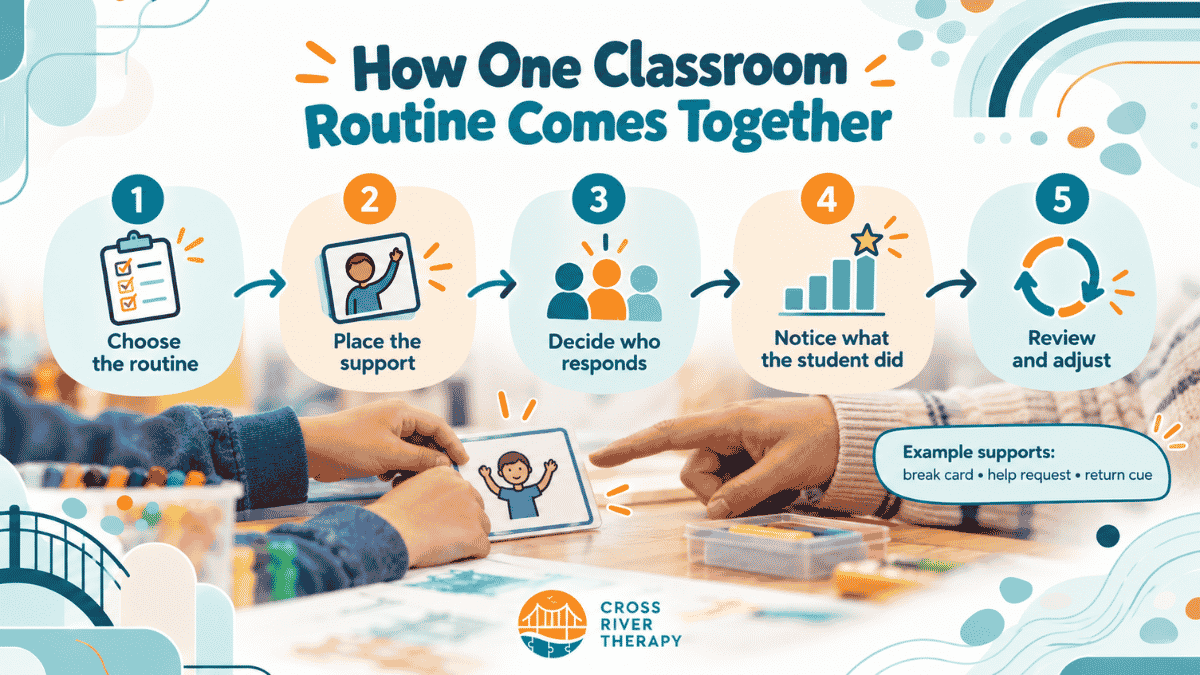
The team can make coordination easier by starting with one specific routine. A broad goal such as “participate in class” leaves many details unanswered.
A hypothetical example is a child who requests a break with a picture card during a noisy group activity. The teacher, caregiver, and BCBA could review:
- The request: How does the child communicate a need for a break?
- The materials: Where will the child find the card during that activity?
- The response: Which adult will respond, and what support does the plan describe?
- The return: What helps the child rejoin when ready?
- The observation: Did the child request help independently, or did an adult provide a reminder?
The example illustrates a planning conversation. The BCBA and school team should choose supports based on the student's needs and classroom conditions.
At Cross River Therapy, our Arkansas ABA programs include parent training goals based on each family's needs. That support gives caregivers a place to learn about their child's goals and share what happens at home.
How Can the ABA Team Contribute to an IEP?
An ABA clinician can contribute observations and treatment information to an IEP discussion. An Individualized Education Program, or IEP, describes a student's educational goals, services, and supports. Parents and school personnel develop it through the school planning process.
The clinical ABA treatment plan serves a separate purpose. Sharing information can help both teams address the same child's needs, but an outside clinician does not independently change the IEP.
Under the federal rules for IEP team membership, parents or the school may invite someone with knowledge or special expertise about the child. A BCBA may participate in that role; families should check the clinician's availability before arranging attendance.
What Information Can a BCBA Share?
A focused contribution could explain how often a student asks for help, which communication tools the student uses, or how much adult assistance a task requires. The IEP team decides how that information affects educational planning. Our explanation of ABA therapy and IEPs provides more background on their relationship.
How to Share Updates That Explain What Happened
Specific observations give the team more to work with than labels such as “good day” or “difficult day.” A brief note can identify the activity, what the child did, and what support was available.
A hypothetical update might read: “During art, Maya pointed to the glue bottle. She began her project after an adult opened the cap.” The note describes a request and the situation around it without claiming why the behavior occurred.
The team can agree on a manageable update schedule and a way to report concerns sooner. Observations worth sharing include:
- A skill the child used without an adult reminder
- A routine that became harder after a schedule change
- A communication tool that was unavailable when needed
- A strategy that the teacher could not carry out during a lesson
Different reports from home and school deserve attention. The adults can compare noise, task demands, available supports, and timing before drawing conclusions. Your child's response in one setting does not cancel out what another adult observed elsewhere.

FAQs About School-Based ABA Therapy in Arkansas
Does the school need permission to share records with an outside ABA provider?
Schools generally need signed, dated consent before sharing identifiable education records with an outside organization, unless an exception under federal student privacy law applies. The federal rules for sharing school records explain that consent identifies the records, the reason for sharing, and the recipient. The school can explain which release applies.
What should happen when my child changes teachers?
A handoff conversation can help the new teacher understand the existing arrangement. Relevant details include current supports, communication materials, approved session times, and contact names. The school and ABA provider should review anything that needs updating for the new classroom.
Where can Arkansas families get help with a special education disagreement?
The Arkansas Special Education Mediation Project helps parents and schools work through disagreements about educational services. Mediation is voluntary and confidential, and trained mediators help the parties seek an agreement. The program's mediation FAQ explains that parents pay no fee.
Plan School Support Around Your Child's Day
Coordinated support gives each adult a defined role and keeps attention on your child's daily needs. An agreed classroom routine and a follow-up date turn a general conversation about teamwork into something the adults can act on.
Our Arkansas services include school-based ABA therapy. Your first conversation with us can cover your child's school routine, current supports, and family priorities. Our intake team can explain the next steps for reviewing your request.
Recent News
Related articles
How to Coordinate School-Based ABA Therapy in Arkansas
School-based ABA therapy in Arkansas needs shared routines. Team roles and progress notes help explain daily support.

6 Tour Checks for Center-Based ABA Therapy in Arkansas
Center-based ABA therapy in Arkansas varies by provider. A tour helps parents check staff, safety, and progress.

How to Start In-Home ABA Therapy in Arkansas in 6 Steps
In-home ABA therapy in Arkansas begins with intake and a care plan. The steps explain records and the assessment.

6 Arkansas Medicaid ABA Therapy Rules Families Need to Know
Arkansas Medicaid ABA therapy has age, diagnosis and approval rules. Families can check six requirements before care.

Arizona Autism Laws for ABA Coverage and School Rights
Arizona autism laws for ABA coverage vary by plan. Families can check insurance, appeal options, and school rights.

ABA Therapist Salary in Arkansas for RBTs and BCBAs
Compare ABA therapist salary in Arkansas by role. See how paid hours and benefits affect earnings before applying.

5 Autism Support Groups and Family Resources in New Mexico
Autism support groups in New Mexico connect families. Local resources offer events, parent support, and school help.

Where to Get an Autism Evaluation in New Mexico
Autism evaluation options in New Mexico include UNM and NMSU. Age and referral details help parents prepare.

7 North Carolina Autism Resources to Contact Before ABA Therapy Starts
Autism resources North Carolina families can call for diagnosis, early intervention, rights, and parent support. Start ABA intake with Cross River.

Does Indiana Medicaid Cover ABA Therapy? A Parent Checklist
Indiana Medicaid ABA therapy may cover care for eligible children. The checklist covers coaching and renewals.
How to Apply for the New Mexico DD Waiver
Your NM DD waiver application starts with state intake. The steps cover records, submission, and enrollment.

Does Insurance Cover ABA Therapy in New Jersey?
ABA therapy insurance in New Jersey varies by plan. Learn what NJ FamilyCare covers and how to check costs.