




5 Autism Support Groups and Family Resources in New Mexico
Autism support groups in New Mexico connect families. Local resources offer events, parent support, and school help.


Key Points:
- Autism support groups in New Mexico offer several ways to connect, including caregiver discussions and activities for autistic people.
- Parents Reaching Out helps with school and healthcare concerns, while UNM CDD provides individual help finding services.
- Each organization handles its own registration, so families should confirm attendance requirements, costs, and access needs directly.
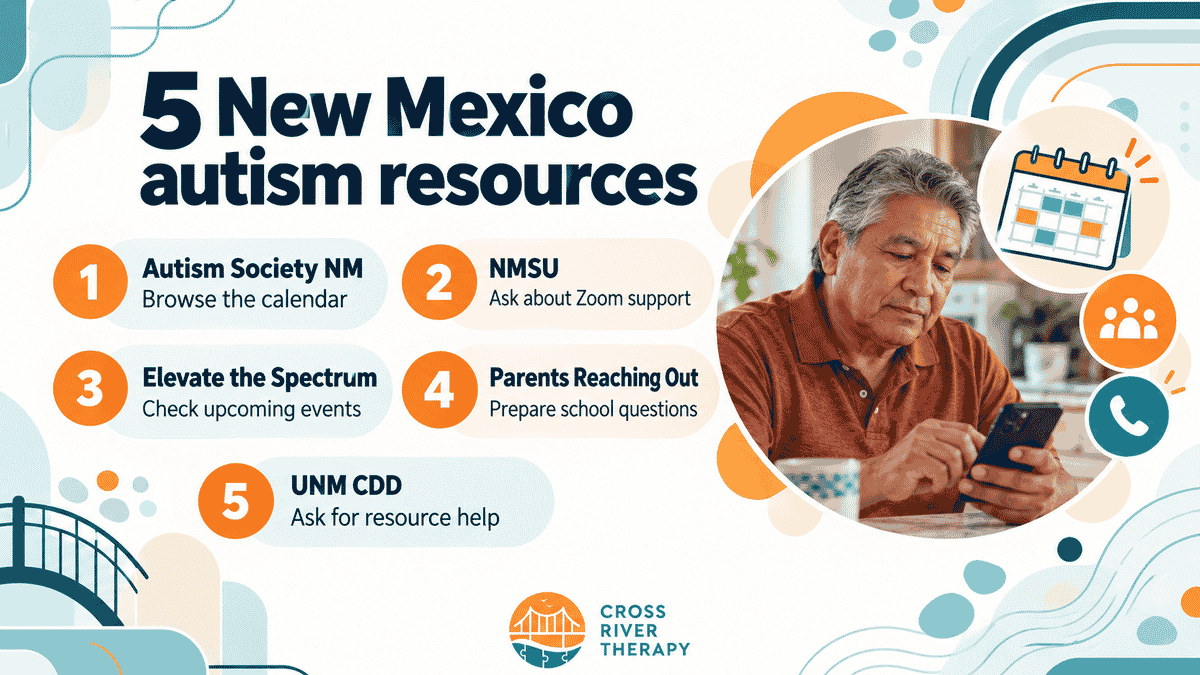
Autism support groups in New Mexico include caregiver meetings, family activities, and programs for teens. Five organizations offer different types of help: Autism Society New Mexico, New Mexico State University, Elevate the Spectrum, Parents Reaching Out, and the University of New Mexico Center for Development and Disability.
Some families want to meet people who share similar experiences. Others need help understanding school services or finding support after a diagnosis. The resources below explain what each organization offers and how to contact it.
How Can Autism Support Groups Help New Mexico Families?
Support groups give families space to talk, share experiences, and build relationships. Community organizations also arrange activities where autistic people can spend time with others. Family education programs help parents understand services and prepare questions for schools or healthcare providers.
Applied Behavior Analysis (ABA) therapy addresses individual learning and daily living goals. At Cross River Therapy, our New Mexico ABA services begin with an assessment of each child’s needs and family concerns. A community gathering offers social connection; a therapy session works on goals from the child’s treatment plan.
Our in-home ABA therapy involves families and uses everyday routines for practice. Community support remains a separate choice, whether a child receives therapy or not.
1. Autism Society New Mexico Offers Community Activities
Autism Society New Mexico connects autistic people and families through monthly activities, education, and support for autism groups across the state. Its gatherings give people opportunities to meet through shared activities. Monthly events are not necessarily caregiver discussion meetings.
The organization’s event calendar is the starting point for activity information. A family seeking time together outside appointments can review the calendar and contact the organization about an event that interests them.
2. NMSU Autism Diagnostic Center Supports Parents and Teens
New Mexico State University’s Papen-Aprendamos Autism Diagnostic Center offers caregiver support and teen programs. The center is based in Las Cruces, and its family support services include individual sessions and online contact.
Parent Support and Help After a Diagnosis
NMSU’s caregiver and new-diagnosis groups offer emotional support and conversations about family experiences. New-diagnosis groups can also cover autism information and available resources. Parents who need childcare to attend can contact the center about respite care options.
The Family Aid Support Team (FAST) helps families find resources and talk through concerns after a diagnosis. For example, a parent may want help identifying which service to contact next. NMSU offers individual or family sessions and open Zoom meetings through its family support services.
Social Programs for Autistic Teens
NMSU’s PEERS program teaches social skills to autistic teens ages 13–17. Lessons cover conversations, friendships, disagreements, and bullying. Parents or other adult family members participate as social coaches and help teens practice between sessions.
Families can contact the center at 575-646-3177 or adc@nmsu.edu about these programs, participation requirements, and enrollment.
3. Elevate the Spectrum Provides Inclusive Community Events
Elevate the Spectrum is a volunteer nonprofit serving New Mexico’s autistic community. Its activities have included family gatherings, seasonal events, and an autistic adult group. Shared activities can offer a comfortable starting point for people who prefer doing something together while getting to know others.
The events and programs page introduces its activities. Because some listings describe past events, families should contact info@elevatethespectrum.org about upcoming options. Adults interested in the adult group can email programs@elevatethespectrum.org about its current status and registration.
4. Parents Reaching Out Helps Families With Education and Healthcare
Parents Reaching Out supports New Mexico families whose children or young adults have disabilities or complex medical needs. Its work covers early childhood services, special education, healthcare, and preparation for adult life. The organization’s healthcare information center serves families of children and young adults from birth through age 26.
A parent preparing for a school meeting might want help understanding an evaluation or describing their child’s learning needs. Parents Reaching Out offers family assistance and educational resources for these concerns. Its workshop and event page provides a place to look for learning opportunities and registration information.
5. UNM CDD Helps Families Find Autism Resources
The University of New Mexico Center for Development and Disability (UNM CDD) helps people locate autism services through its Autism Family and Provider Resource Team. Team members include parents with lived experience and professionals who work with autistic people.
A family living outside Albuquerque may need help finding resources closer to home. The team offers contact by phone, email, video, and in person, so resource assistance does not require attendance at a regular group meeting. Families can call 505-272-1852 or 1-800-270-1861, or email HSC-AutismPrograms@salud.unm.edu.
How to Choose an Autism Support Group in New Mexico
The first organization to contact depends on the kind of support a person wants. This comparison separates group activities from education and individual resource assistance.
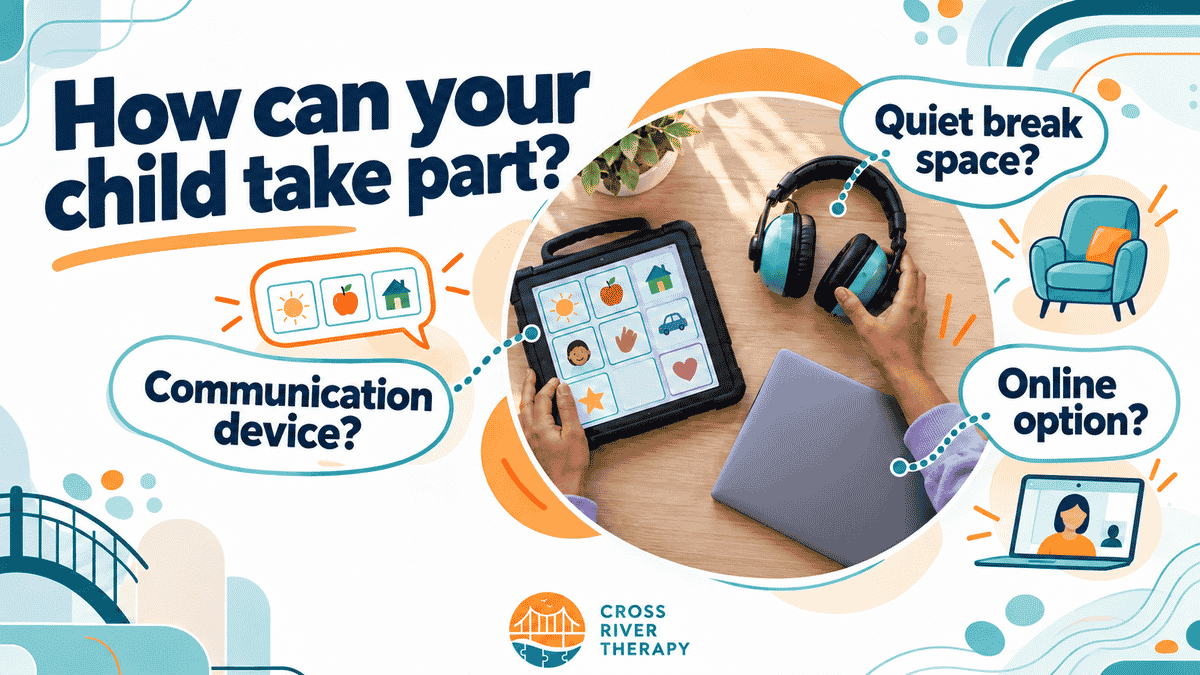
A child’s interests, sensory needs, and way of communicating also deserve attention. Someone who enjoys board games may prefer a small game gathering. Another child may need a quiet place to take breaks. Our article on communication beyond spoken words gives examples of signs, pictures, and devices that families can describe to an organizer.
How Do Families Join an Autism Support Group in New Mexico?
Each organization manages its own registration. Before attending, families can work through four steps:
- Program information: The official website identifies available activities and contact details.
- Attendance rules: The organizer can explain age requirements and whether an activity welcomes caregivers, children, adults, or whole families.
- Registration and costs: Families should confirm the date, location, sign-up process, and any admission or program fees.
- Participation needs: Questions can cover quiet spaces, childcare, language support, communication tools, or online attendance.
A short message can start the conversation: “My child is eight and uses a communication device. Which activities welcome children their age, and what should we know before attending?”
Community organizations handle their own enrollment. Our Cross River Therapy intake form is for ABA service inquiries.

FAQs About Autism Support Groups in New Mexico
Does a family need a diagnosis before contacting a support organization?
A family can contact an organization to ask about resources while seeking an evaluation. Individual programs set their own attendance requirements. Our New Mexico autism evaluation article explains options for families who also need diagnostic services.
Are there support programs for siblings?
NMSU offers Sibshops for siblings of children with developmental concerns. These programs combine activities with opportunities to talk about having a sibling with support needs. The center can explain the age requirements and upcoming sessions.
How can parents protect their family’s privacy in a group?
Parents can ask how the group handles photographs, recordings, and personal information. A family can share only what feels comfortable and avoid posting identifying details about a child in public discussions. The organizer should explain its privacy rules before participation.
Connect With ABA Support in New Mexico
Community support can give families relationships, shared experiences, and help finding services. A child who also needs support with communication or daily routines may benefit from an individual assessment to identify therapy goals.
At Cross River Therapy, we offer ABA services for children ages 1–21 in New Mexico, including home, school, and center settings based on local availability. Our intake team can review your child’s needs, explain assessment steps, and help with insurance-related requirements.
Recent News
Related articles

6 Tour Checks for Center-Based ABA Therapy in Arkansas
Center-based ABA therapy in Arkansas varies by provider. A tour helps parents check staff, safety, and progress.

How to Start In-Home ABA Therapy in Arkansas in 6 Steps
In-home ABA therapy in Arkansas begins with intake and a care plan. The steps explain records and the assessment.

6 Arkansas Medicaid ABA Therapy Rules Families Need to Know
Arkansas Medicaid ABA therapy has age, diagnosis and approval rules. Families can check six requirements before care.

Arizona Autism Laws for ABA Coverage and School Rights
Arizona autism laws for ABA coverage vary by plan. Families can check insurance, appeal options, and school rights.

ABA Therapist Salary in Arkansas for RBTs and BCBAs
Compare ABA therapist salary in Arkansas by role. See how paid hours and benefits affect earnings before applying.
5 Autism Support Groups and Family Resources in New Mexico
Autism support groups in New Mexico connect families. Local resources offer events, parent support, and school help.
Where to Get an Autism Evaluation in New Mexico
Autism evaluation options in New Mexico include UNM and NMSU. Age and referral details help parents prepare.

7 North Carolina Autism Resources to Contact Before ABA Therapy Starts
Autism resources North Carolina families can call for diagnosis, early intervention, rights, and parent support. Start ABA intake with Cross River.
Does Indiana Medicaid Cover ABA Therapy? A Parent Checklist
Indiana Medicaid ABA therapy may cover care for eligible children. The checklist covers coaching and renewals.
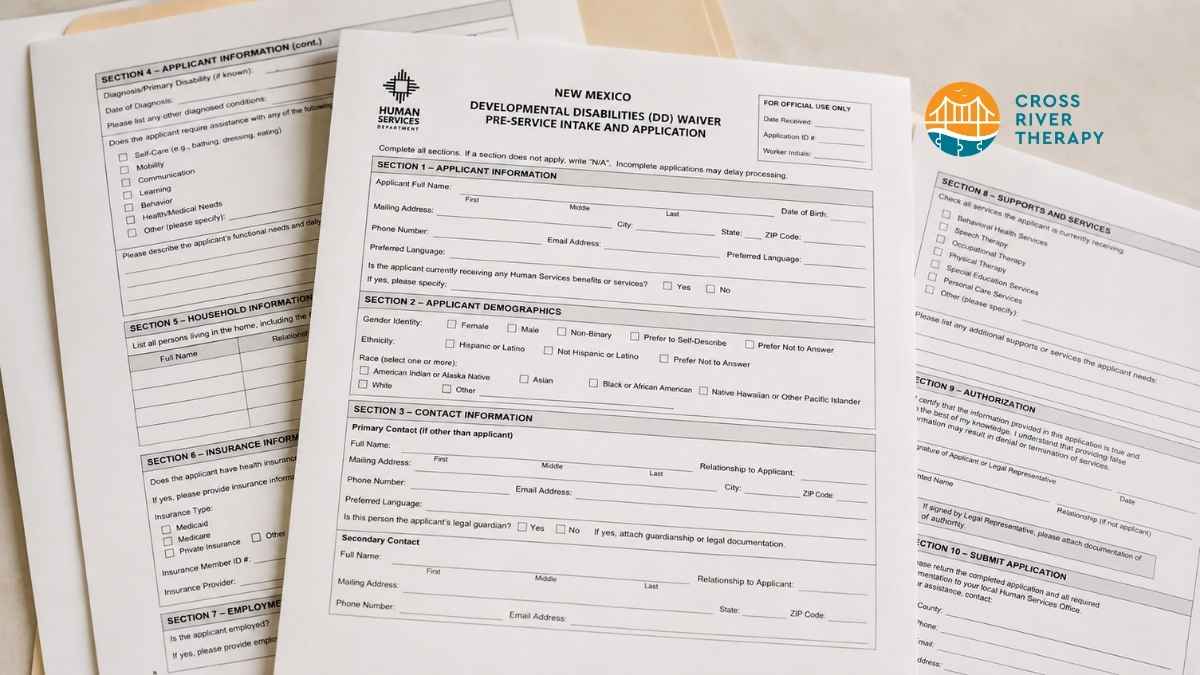
How to Apply for the New Mexico DD Waiver
Your NM DD waiver application starts with state intake. The steps cover records, submission, and enrollment.

Does Insurance Cover ABA Therapy in New Jersey?
ABA therapy insurance in New Jersey varies by plan. Learn what NJ FamilyCare covers and how to check costs.

How ABA Therapy Builds Communication for Nonverbal Children Without Forcing Speech
ABA therapy communication for nonverbal children starts with AAC, signs, and daily routines. See how kids ask, refuse, choose, and get help.