







ABA Therapist Salary in Arkansas for RBTs and BCBAs
Compare ABA therapist salary in Arkansas by role. See how paid hours and benefits affect earnings before applying.


Key Points:
- ABA therapist salary in Arkansas varies by role, qualifications, and employment terms.
- The RBT-only estimate uses just four salary records, which limits its value for judging statewide earnings.
- Paid hours, cancellation policies, and benefits help applicants evaluate the full offer.
The ABA therapist salary in Arkansas depends on the position and its qualifications. Indeed reports average base pay of $17.52 per hour for behavior technicians and $87,325 per year for Board Certified Behavior Analysts (BCBAs). These estimates come from Arkansas job postings and describe different types of work.
For someone entering the field, an hourly rate may be the first thing that catches their attention. The job’s duties, paid hours, and benefits also deserve a closer look. The comparisons below explain the salary figures and what to review before accepting an offer.

How Much Do ABA Therapists Make in Arkansas?
“ABA therapist” is a broad job title. Employers may use it for direct support positions, while RBT and BCBA refer to specific professional certifications.
The table keeps each reporting category separate so readers can compare the same type of work.
Indeed bases these figures on salary information from job postings over the previous 36 months. The RBT-only estimate uses just four records, so it offers limited evidence about statewide RBT earnings. The broader technician figures should not be treated as certified RBT averages.
These figures describe the wider Arkansas job market and do not represent our pay rates at Cross River Therapy.
How RBT and BCBA Roles Affect Pay
RBTs and BCBAs work in applied behavior analysis, or ABA, but their responsibilities and training differ. Those differences help explain why their salaries are not directly comparable.
Behavior Technician and RBT Responsibilities
Behavior technicians work directly with clients to practice skills in a treatment plan. An RBT holds certification from the Behavior Analyst Certification Board (BACB) and works under close supervision. The BACB’s RBT requirements explain how applicants earn and maintain that credential.
For example, an RBT may help a child practice asking for a break during an activity. The technician follows the teaching steps and records the child’s responses. The supervising professional uses those records to review progress.
At Cross River Therapy, our behavior technician positions involve direct services and following individual treatment plans with supervising behavior analysts. Applicants must be at least 18 and have a high school diploma or equivalent. We list RBT certification as preferred; holding the RBT credential requires meeting the BACB’s separate requirements.
BCBA Responsibilities and Qualifications
A BCBA holds a graduate-level certification and can independently provide behavior-analytic services within the credential’s scope. The BACB’s BCBA information explains the certification and supervision responsibilities.
BCBA duties can include:
- Assessments of a client’s skills and support needs.
- Individual treatment plans and teaching goals.
- Supervision and training for technicians.
- Progress reviews and changes to treatment.
- Communication with families and other professionals.
Our BCBA career information describes assessments, staff supervision, and tracking client progress. Arkansas also has a separate behavior analyst registration process through the Arkansas Psychology Board. BCBA certification and state registration are separate requirements.
Why Do Arkansas ABA Salary Estimates Differ?
Salary websites use different job categories, records, and reporting periods. Indeed’s figures come from job postings collected over 36 months. ZipRecruiter uses employer postings and third-party data, so its BCBA estimate comes from a different set of information.
The number of records also affects how much a figure can tell readers. An estimate based on four RBT records offers a much smaller view of the market than one based on 245 BCBA records. A difference between those averages does not measure the exact pay increase someone would receive after earning another certification.
Job titles need attention, too. An “ABA therapist” advertisement may describe technician work, but the title alone does not establish the required certification. The duties and qualifications in the listing provide that detail.
What Can Affect an Arkansas ABA Job Offer?
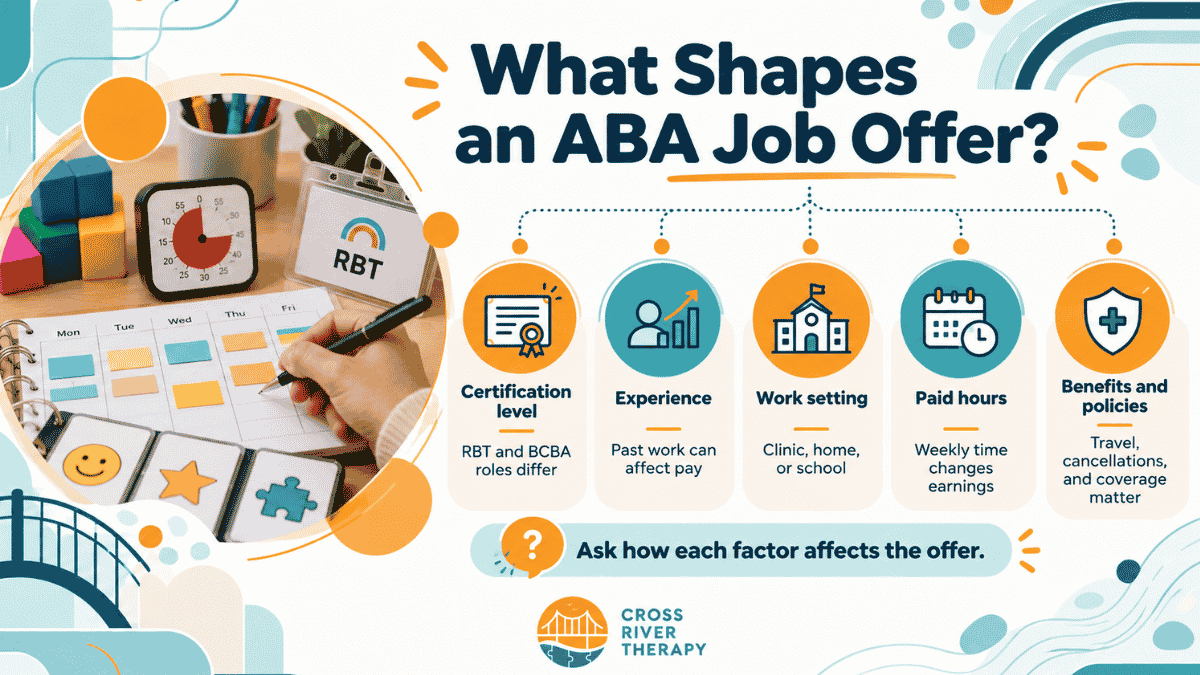
An employment offer may reflect experience, qualifications, work location, and assigned duties. At Cross River Therapy, we base Arkansas compensation on experience and provide clinic-based, in-home, and school-based services in Bryant and Little Rock.
Those ABA therapy settings involve different daily routines. A clinic assignment takes place at a center, while home and school assignments take place where the child lives or attends school. Applicants should understand where they will work and whether the position involves travel.
The number of paid hours can change weekly earnings even when the hourly rate stays the same. A scheduled session and a paid hour are not automatically equivalent; the employer’s cancellation and scheduling policies determine the details.
How to Compare ABA Job Offers in Arkansas
A job offer should explain how the pay works alongside the schedule and duties. Applicants can use these questions during an interview:
- Base pay: What is the hourly rate or annual salary, excluding bonuses?
- Paid hours: Does the position guarantee a minimum number each week?
- Cancellations: What happens to pay when a family cancels a session?
- Other work: How does the employer pay for notes, meetings, training, supervision, and required travel?
- Benefits: Which insurance, retirement, and paid-leave benefits apply, and when do they begin?
- Workload: What caseload and weekly therapy-hour expectations come with the position?
A simple example shows why paid hours deserve attention:
These hypothetical offers show earnings before deductions. Job B provides $90 more each week under the example schedules, even though its hourly rate is lower. Neither example represents Cross River Therapy’s compensation.
A written offer gives applicants something concrete to review. Any unanswered pay or scheduling questions should be resolved before accepting the position.
ABA Career Opportunities With Cross River Therapy in Arkansas
At Cross River Therapy, our Arkansas team supports children through clinic-based, in-home, and school-based ABA services. Our Arkansas recruiting form lets applicants provide their contact information and upload a resume.
Our careers page also welcomes interest in RBT, BCBA, and other roles. Applicants can share their qualifications and location so our recruiting team can explain available opportunities and position details.

FAQs About ABA Therapist Salary in Arkansas
How can an hourly worker estimate annual earnings?
Annual gross earnings equal the hourly rate multiplied by paid hours per week and paid weeks per year. For example, $20 per hour × 30 paid hours × 52 paid weeks equals $31,200 before deductions. Unpaid time off or changes in hours would change that total.
Why is take-home pay lower than the advertised salary?
Advertised pay usually describes gross earnings, before deductions. Take-home pay is the amount left after taxes and other deductions. The IRS explains the difference between gross and net pay, including income tax, Social Security, and Medicare withholding.
Does maintaining RBT certification involve fees?
Yes. The BACB charges a recertification application fee. The RBT Handbook lists current fees and certification requirements. Applicants should budget for these costs unless their employment agreement includes reimbursement.
Explore ABA Career Opportunities in Arkansas
An Arkansas ABA job offer deserves a review of the work, paid hours, and benefits alongside the salary. Those details help applicants understand what the position provides and what it expects.
At Cross River Therapy, we welcome applicants interested in supporting children and families. Our Arkansas recruiting form provides a place to share qualifications and a resume so our team can follow up about employment opportunities.
Recent News
Related articles

How to Coordinate School-Based ABA Therapy in Arkansas
School-based ABA therapy in Arkansas needs shared routines. Team roles and progress notes help explain daily support.

6 Tour Checks for Center-Based ABA Therapy in Arkansas
Center-based ABA therapy in Arkansas varies by provider. A tour helps parents check staff, safety, and progress.

How to Start In-Home ABA Therapy in Arkansas in 6 Steps
In-home ABA therapy in Arkansas begins with intake and a care plan. The steps explain records and the assessment.

6 Arkansas Medicaid ABA Therapy Rules Families Need to Know
Arkansas Medicaid ABA therapy has age, diagnosis and approval rules. Families can check six requirements before care.

Arizona Autism Laws for ABA Coverage and School Rights
Arizona autism laws for ABA coverage vary by plan. Families can check insurance, appeal options, and school rights.
ABA Therapist Salary in Arkansas for RBTs and BCBAs
Compare ABA therapist salary in Arkansas by role. See how paid hours and benefits affect earnings before applying.

5 Autism Support Groups and Family Resources in New Mexico
Autism support groups in New Mexico connect families. Local resources offer events, parent support, and school help.

Where to Get an Autism Evaluation in New Mexico
Autism evaluation options in New Mexico include UNM and NMSU. Age and referral details help parents prepare.

7 North Carolina Autism Resources to Contact Before ABA Therapy Starts
Autism resources North Carolina families can call for diagnosis, early intervention, rights, and parent support. Start ABA intake with Cross River.

Does Indiana Medicaid Cover ABA Therapy? A Parent Checklist
Indiana Medicaid ABA therapy may cover care for eligible children. The checklist covers coaching and renewals.
How to Apply for the New Mexico DD Waiver
Your NM DD waiver application starts with state intake. The steps cover records, submission, and enrollment.

Does Insurance Cover ABA Therapy in New Jersey?
ABA therapy insurance in New Jersey varies by plan. Learn what NJ FamilyCare covers and how to check costs.