








AHCCCS ABA Therapy: Coverage and Approval in Arizona
AHCCCS ABA therapy covers medically necessary care. Plan rules determine provider access and treatment approval.


Key Points:
- AHCCCS ABA therapy is a covered benefit when a member meets program requirements and needs the service for medical reasons.
- The member’s health plan determines which providers participate and what approval steps apply.
- An assessment supports the treatment request, while continued care may require updated records and another authorization.
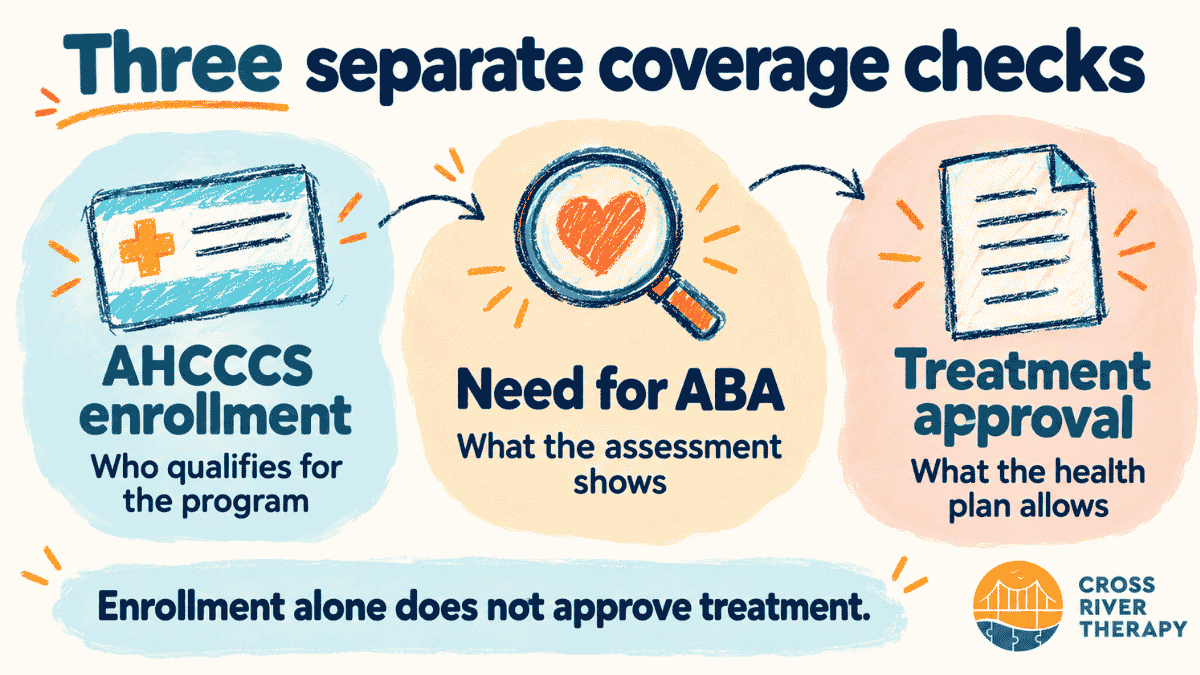
AHCCCS, Arizona’s Medicaid program, can cover Applied Behavior Analysis (ABA) for eligible members. A Medicaid card alone does not approve a particular provider, schedule, or treatment plan. Families need to check how their coverage applies before arranging sessions.
At Cross River Therapy, we provide ABA therapy in Arizona at home, at school, and in center-based settings. Our intake team gathers insurance information, helps with insurance paperwork, and connects families with the assessment process. Your plan makes the coverage decision.
Who Qualifies for AHCCCS ABA Therapy Coverage?
AHCCCS covers behavior analysis services for members with autism spectrum disorder and other diagnoses when medical necessity supports treatment. Medical necessity means the requested care addresses a health-related need.
Eligibility for Arizona Medicaid ABA therapy involves separate decisions:
A diagnosis provides clinical information, but the treatment request must also explain the person’s needs. Private insurance laws follow a separate system. Our Arizona autism laws article covers those insurance protections and school rights.
Your Health Plan Determines Provider Access
Most members receive care through an AHCCCS-contracted health plan. Each plan works with its own network of providers. A clinic that accepts one AHCCCS plan may not participate with yours.
Before arranging ABA therapy through Arizona Medicaid, families can confirm:
- Plan name: The exact plan listed on the member’s card.
- Provider participation: Whether the practice accepts that specific plan.
- Referral requirements: Whether a clinician must submit a referral.
- Assessment requirements: Whether the plan needs approval before the assessment.
- Access help: Whom to contact if participating providers have no openings.
The member-services number on your card is a starting point. Families using the American Indian Health Program or another fee-for-service arrangement should confirm their program’s provider and authorization process.
Our ABA insurance information explains common terms that may come up during these conversations.
Diagnosis and ABA Assessment Serve Different Purposes
A diagnostic evaluation identifies a condition, such as autism. An ABA assessment examines the person’s skills and support needs to help plan treatment.
Your child’s primary care clinician can help address developmental concerns and discuss an evaluation. Before booking one, the health plan can explain which diagnostic records and referrals it accepts.
Existing records are worth gathering first. Your child may already have a diagnostic report, school evaluation, or treatment history that the provider needs to review. A school report and a medical diagnosis serve different purposes, so the provider should identify any missing information.
During our Arizona intake process, a Board Certified Behavior Analyst, or BCBA, meets with the child and caregivers to gather background information. After the assessment, we review the findings and treatment recommendations with the family.
What Does the ABA Assessment Include?
An ABA assessment can use observation, caregiver information, rating scales, and skill assessments. The clinician uses the findings to identify goals and recommend treatment.
Caregivers can prepare examples from daily life, such as:
- Communication: How the child requests food, help, or a break.
- Daily activities: Which parts of dressing or mealtimes need support.
- Safety: Situations that create a risk of injury.
- Current supports: Strategies, communication tools, and routines already in use.
Specific examples help explain a concern. “My child cannot tell us when they need help opening food” gives the clinician more information than “communication is difficult.”
Families can also share what the child enjoys and how the child shows discomfort or refusal. Those details help the assessment reflect the person behind the paperwork.
How Does AHCCCS ABA Authorization Work?
Prior authorization is the plan’s review of a service request before treatment. Assessment and treatment can have different approval requirements.
For example, Mercy Care’s ABA requirements distinguish between:
- Assessment codes 97151 and 97152: No prior authorization required.
- Treatment codes 97153 through 97158: Prior authorization required.
These rules apply to Mercy Care. Your provider should check your own plan’s requirements before booking services. An assessment appointment does not mean ongoing treatment has already received approval.
Records for an AHCCCS ABA Therapy Request
The clinical request needs to connect the assessment findings with the recommended care. A treatment plan describes:
- The skills or behaviors treatment will address.
- The child’s starting abilities and measurable goals.
- The proposed setting and schedule.
- How the team will measure progress.
- Caregiver support and coordination with other providers.
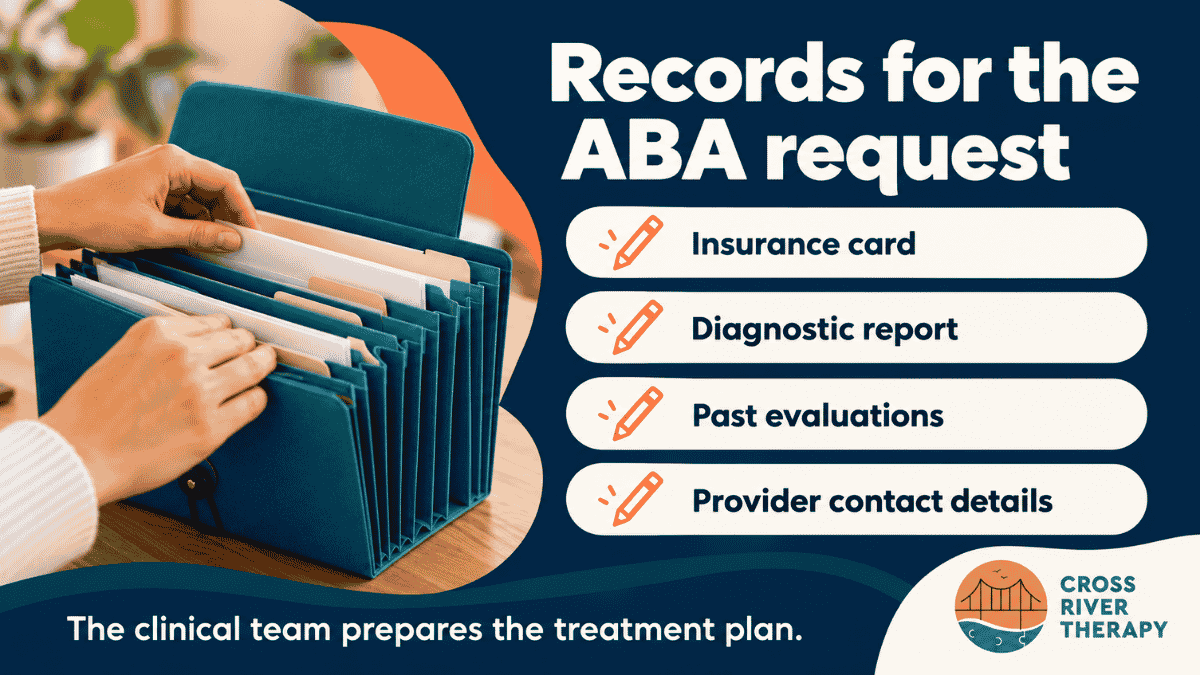
Families can ask the provider which records they need to supply and which documents the clinical team will prepare. A folder with the insurance card, diagnostic report, prior evaluations, and provider contact details can help keep the information together.
Our intake team handles insurance filing during the Arizona assessment process. We can explain the paperwork we need from you while the plan reviews the request.
Approved Hours, Settings, and Renewals
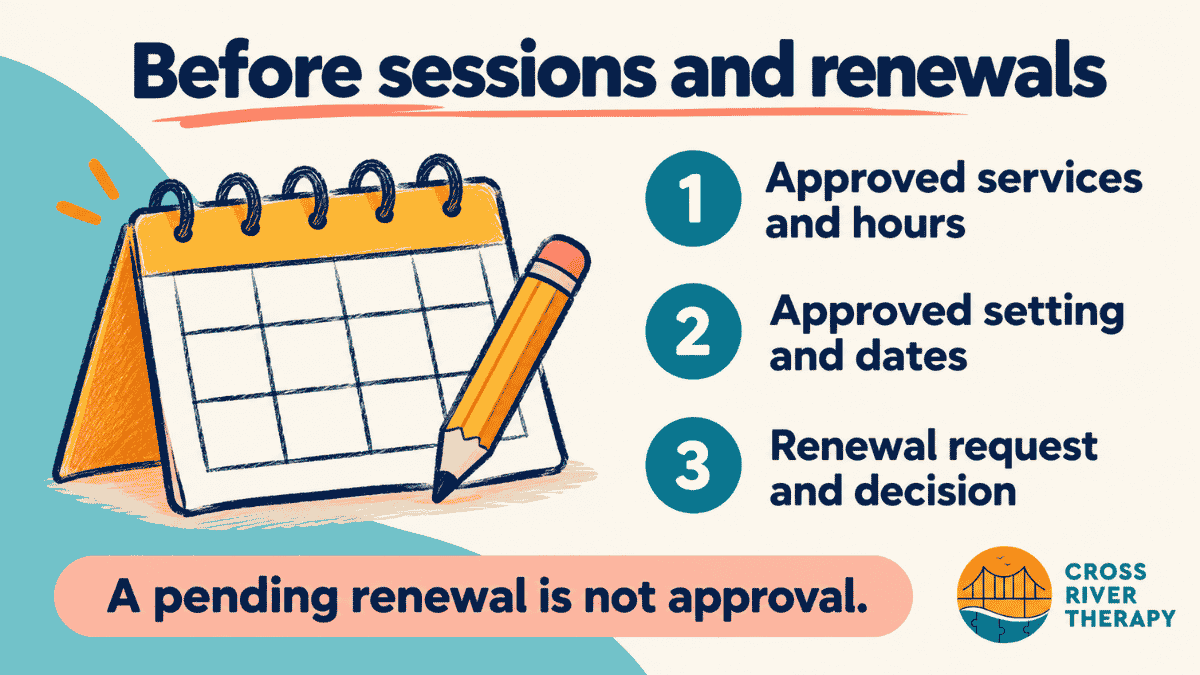
Approval applies to the services and dates in the authorization. Families should review those details with the provider before sessions begin.
A copy of the written decision gives you something to compare with the recommended schedule. Questions can focus on which services received approval, whether the dates match the planned start, and whether the provider needs to correct any details.
Treatment Hours Follow the Individual Request
AHCCCS does not assign the same ABA schedule to every member. The assessment, goals, and clinical recommendation support the proposed amount of care.
A recommendation for several sessions each week needs an explanation of why that schedule addresses the child’s needs. The family can also discuss school hours, other therapies, rest, and daily routines with the clinician.
The Setting Belongs in the Treatment Plan
The requested location should support the treatment goals. Home sessions may address household routines, while another setting may offer different practice opportunities.
Our comparison of home, center, and school-based ABA explains those differences. A provider’s service options and the plan’s approved setting both need checking before scheduling.
Continued Treatment May Need Another Review
Authorization has an end date. Mercy Care, for example, authorizes ABA treatment for six months at a time and requires a new request for continued services.
Families can keep track of:
- The current approval’s end date.
- The provider’s renewal submission date.
- Any request for additional information.
- The next written decision.
A pending renewal does not establish approval for future sessions. Your provider and plan can explain how the review affects scheduling.
FAQs About AHCCCS ABA Therapy
Does AHCCCS cover autism treatment beyond ABA?
AHCCCS can also cover medically necessary speech, occupational, and physical therapy for eligible members. Each service addresses different needs. Your child’s care team can discuss which treatments belong in the plan and how to coordinate them.
Does prior authorization guarantee payment?
Prior authorization does not guarantee payment. AHCCCS explains that claims must also meet payment requirements, including accurate supporting information and applicable review standards. A family receiving an unexpected bill should ask the provider and plan to explain the charge.
Do AHCCCS’s published ABA rates show what families owe?
AHCCCS’s fee-for-service rates describe provider reimbursement. A listed code or rate does not establish coverage or guarantee payment. Families should confirm any personal payment responsibility with their plan and provider before agreeing to services.
Prepare for Your Child’s ABA Coverage Review
AHCCCS coverage connects clinical needs with a specific treatment request. Knowing the provider, requested services, and approval dates helps families understand what needs to happen before care begins.
Our team can review the insurance information you share and explain the next intake step. A message through our contact form can include your child’s age, Arizona location, and plan name so we can begin the conversation.
Recent News
Related articles
AHCCCS ABA Therapy: Coverage and Approval in Arizona
AHCCCS ABA therapy covers medically necessary care. Plan rules determine provider access and treatment approval.

How to Coordinate School-Based ABA Therapy in Arkansas
School-based ABA therapy in Arkansas needs shared routines. Team roles and progress notes help explain daily support.

6 Tour Checks for Center-Based ABA Therapy in Arkansas
Center-based ABA therapy in Arkansas varies by provider. A tour helps parents check staff, safety, and progress.

How to Start In-Home ABA Therapy in Arkansas in 6 Steps
In-home ABA therapy in Arkansas begins with intake and a care plan. The steps explain records and the assessment.

6 Arkansas Medicaid ABA Therapy Rules Families Need to Know
Arkansas Medicaid ABA therapy has age, diagnosis and approval rules. Families can check six requirements before care.

Arizona Autism Laws for ABA Coverage and School Rights
Arizona autism laws for ABA coverage vary by plan. Families can check insurance, appeal options, and school rights.

ABA Therapist Salary in Arkansas for RBTs and BCBAs
Compare ABA therapist salary in Arkansas by role. See how paid hours and benefits affect earnings before applying.

5 Autism Support Groups and Family Resources in New Mexico
Autism support groups in New Mexico connect families. Local resources offer events, parent support, and school help.

Where to Get an Autism Evaluation in New Mexico
Autism evaluation options in New Mexico include UNM and NMSU. Age and referral details help parents prepare.

7 North Carolina Autism Resources to Contact Before ABA Therapy Starts
Autism resources North Carolina families can call for diagnosis, early intervention, rights, and parent support. Start ABA intake with Cross River.

Does Indiana Medicaid Cover ABA Therapy? A Parent Checklist
Indiana Medicaid ABA therapy may cover care for eligible children. The checklist covers coaching and renewals.
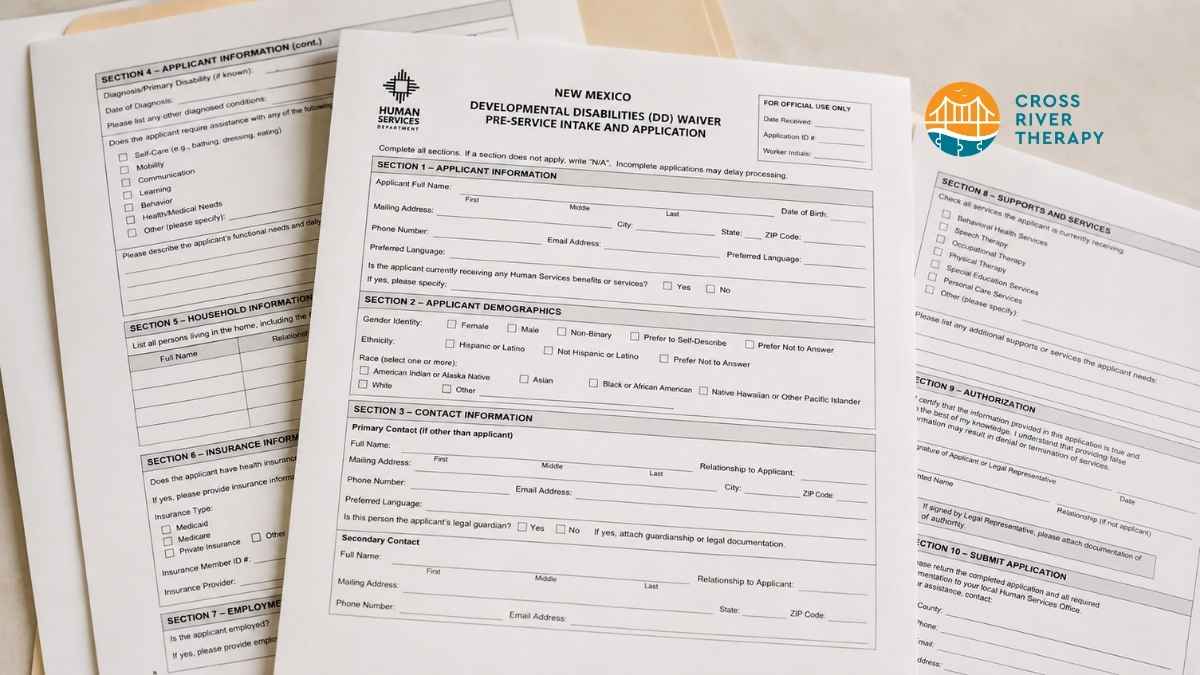
How to Apply for the New Mexico DD Waiver
Your NM DD waiver application starts with state intake. The steps cover records, submission, and enrollment.