





ABA Parent Training in New Mexico: What to Expect
ABA parent training teaches skills for daily routines. New Mexico families can learn what sessions include.

Key Points:
- ABA parent training teaches caregivers selected strategies from a child’s treatment plan.
- Sessions can include explanations, demonstrations, practice, and feedback, with goals tied to communication and everyday routines.
- A behavior analyst handles clinical decisions, while caregivers share observations and learn how to use agreed-upon steps between appointments.
A child may ask for help during therapy but need support using that skill at home. ABA parent training gives caregivers time to learn what to do when those everyday moments arise. The focus stays on practical steps that connect with the child’s needs.
At Cross River Therapy, we include parent and family training in our New Mexico ABA services. Our team pairs children with a Board Certified Behavior Analyst (BCBA) and a therapist team. Caregiver coaching helps families understand strategies connected to their child’s plan.
Starting Parent Training in New Mexico
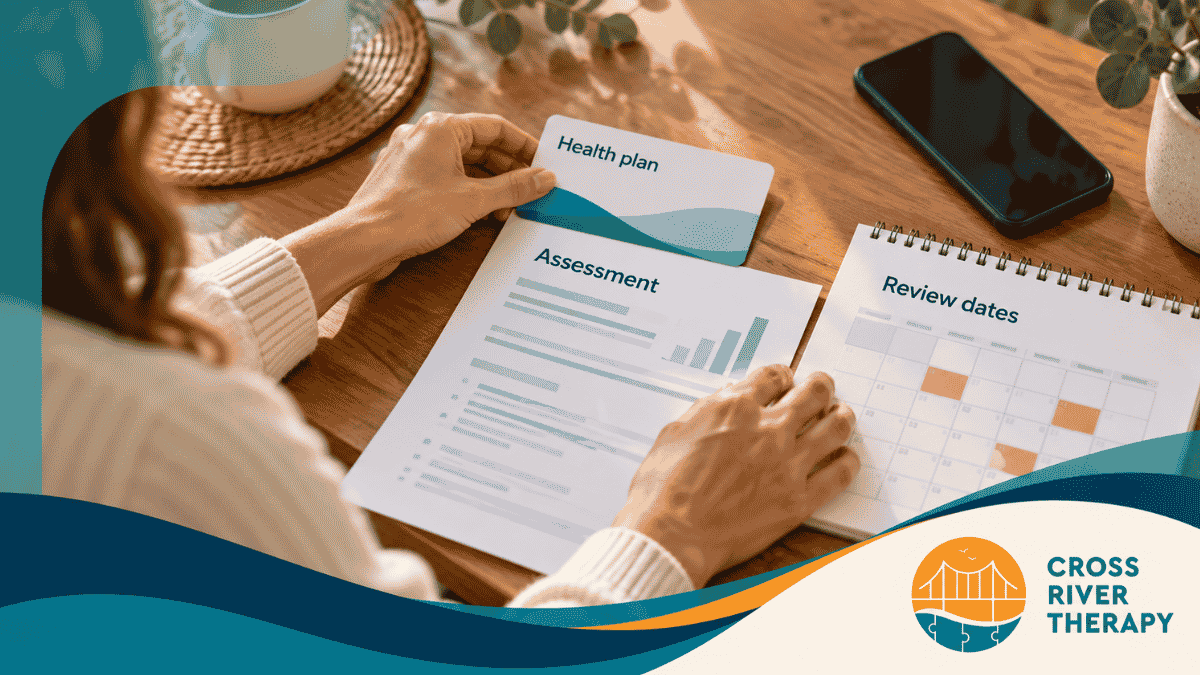
Caregiver training in ABA begins with the child’s needs and the family’s concerns. A BCBA uses an assessment to develop treatment goals. Your knowledge of daily life helps explain where support is needed.
For families using Medicaid, New Mexico’s ABA rules call for families, the supervising behavior analyst, and the child when appropriate to help determine the service model. The analyst remains responsible for assessment, goal measurement, and treatment planning.
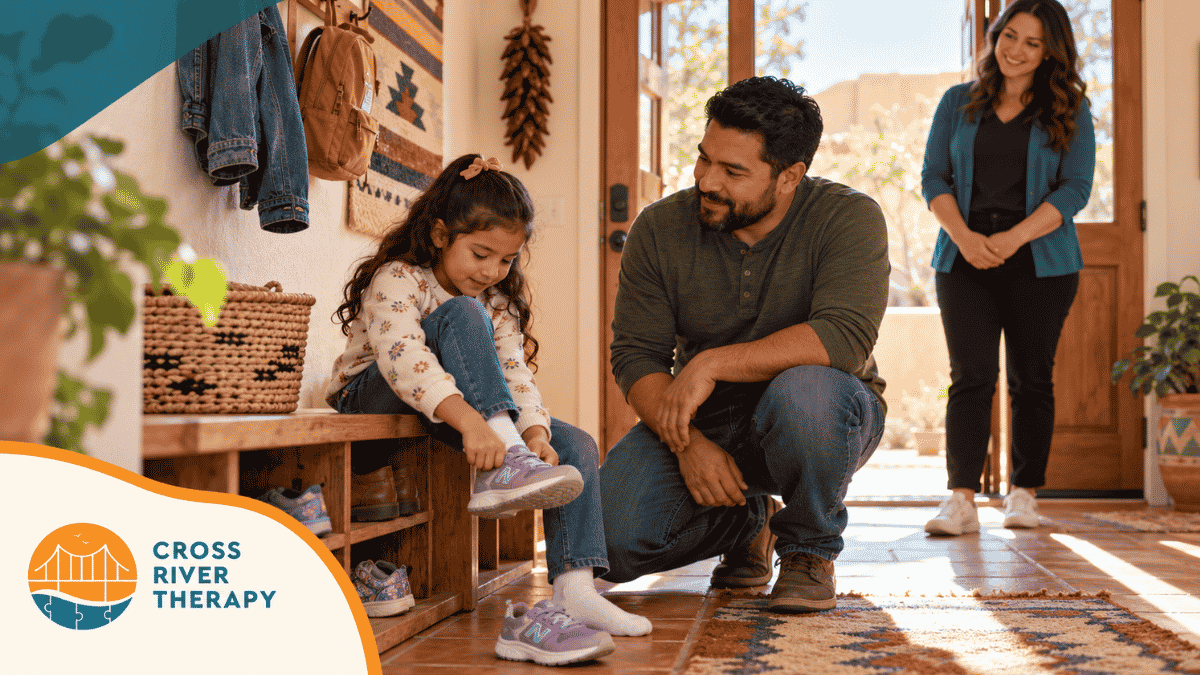
Parent involvement in ABA therapy gives you a role in those conversations. A concern such as “getting out the door is difficult” gives the team a starting point. Details about dressing, finding shoes, or leaving a favorite activity help narrow the goal.
Preparing for Your First Coaching Session
A few notes can help the clinician understand your concern:
- The routine you want help with and when it happens.
- How your child communicates needs, choices, or discomfort.
- Steps your child already completes independently.
- Strategies you have tried and what happened.
- Work, language, or scheduling needs that could affect participation.
Technical terms are unnecessary. A description in your own words gives the team information it can use. A note such as, “My child brings me the shoes but needs help putting them on,” describes a situation the clinician can explore. Your notes do not need to explain why the behavior happens; assessment remains the clinician’s job.
What Happens During ABA Parent Training?
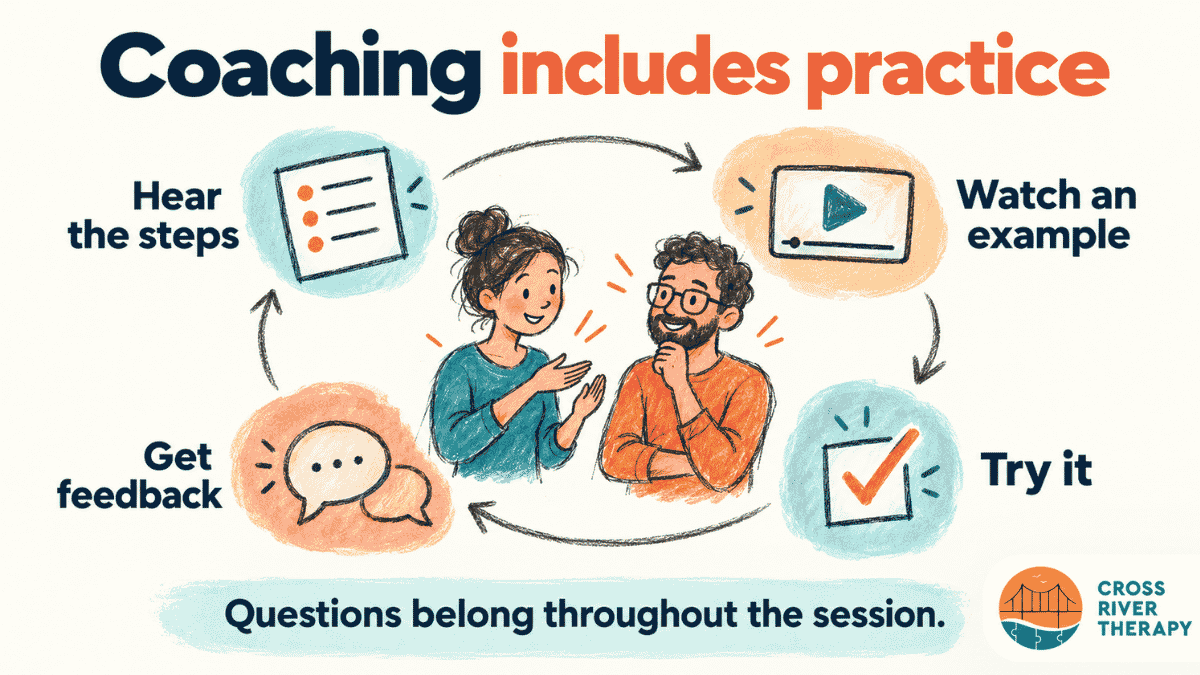
ABA parent coaching can include a clinician explaining a strategy, showing it, watching you practice, and offering feedback. Your questions belong throughout the session.
One teaching approach, behavioral skills training, uses these four parts:
The clinician may repeat a demonstration or break a step into smaller parts. A handout can support learning, but practice gives you a chance to check your understanding.
ABA Parent Training Example: Asking for Help
For example, a child’s plan might include requesting help with a toy. The BCBA could show a caregiver how to recognize the child’s request and respond using the agreed-upon steps. A request might involve words, a sign, or a picture.
The caregiver then practices while the clinician observes. Feedback could address noticing the request or using a prompt correctly. The example shows how a session can teach a specific caregiver skill; each child’s assessment determines the actual approach.
Between Sessions: Practice During One Routine
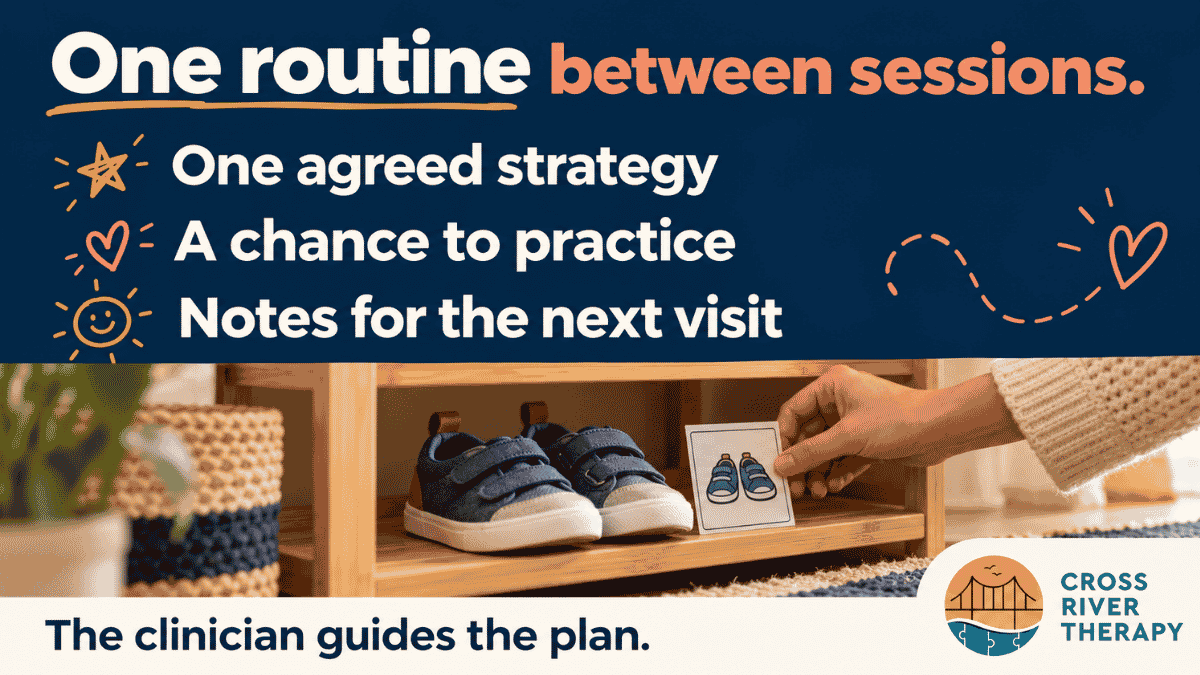
Practice can happen during an activity your family already does. Your BCBA may suggest one strategy to try at a particular time, along with instructions about what to observe.
A small plan might identify:
- The routine: Putting shoes on before leaving home.
- The caregiver’s step: Using a visual support the clinician has taught.
- The observation: Which steps your child completes and where help is needed.
- The follow-up: Sharing what happened at the next meeting.
Our in-home ABA therapy involves families and connects treatment with daily routines. Home-based care can make a household activity available for observation and practice.
A busy week may reveal that a suggested practice time is difficult to manage. Your clinician needs that information. A shorter routine or another teaching example may make practice easier to understand and carry out. A short written reminder of the agreed steps can also help you remember what to practice.
How Often Does Parent Training Happen?
The schedule depends on your child’s treatment plan and applicable health plan requirements. A general recommendation online cannot establish the number of sessions your family needs.
Before appointments begin, these questions can help you plan:
- How often will caregiver sessions occur, and how long will they last?
- When will coaching happen in relation to my child’s direct therapy?
- Which participation requirements come from the treatment plan or health plan?
- Who should I contact if work, travel, or childcare affects attendance?
Parent training in ABA therapy should include an explanation of what participation involves. Our enrollment process includes intake, an assessment, care-team matching, and parent training. Early conversations give you an opportunity to explain scheduling concerns before agreeing to arrangements.
How Will the BCBA Review Progress?
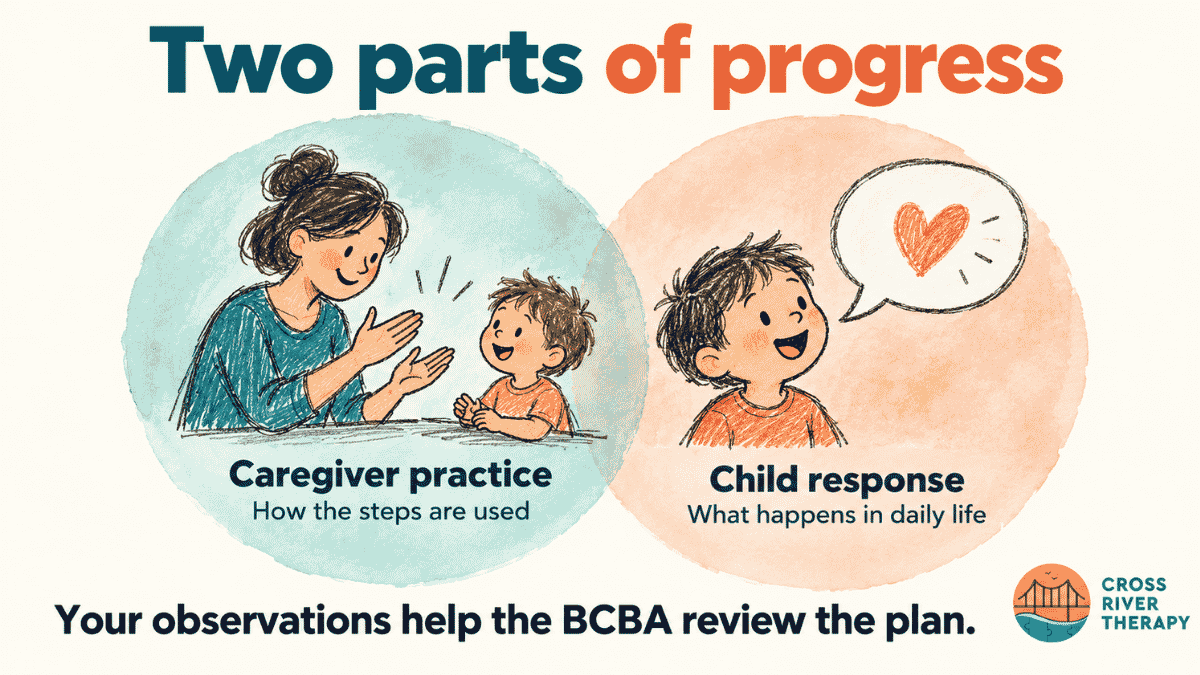
The BCBA can review both how you use a strategy and how your child responds. Understanding the instructions and seeing a change in your child’s skill are separate parts of that review.
A follow-up may involve watching practice, discussing your notes, or showing a step again. For example, your child may request help during quiet play but need more support during a rushed morning. That difference helps the clinician examine when the skill needs attention.
The BACB Ethics Code calls for client and stakeholder involvement in goals, interventions, and ongoing progress monitoring. Your feedback belongs in treatment discussions.
Questions worth raising include:
- Which part of the strategy should I practice again?
- What signs show that my child needs help or a break?
- What should I record, and how much detail is needed?
- When should we review whether this goal still helps our family?
Your child’s comfort, communication, and choices also belong in that conversation.
Other Parent Education Programs in New Mexico
New Mexico families may encounter programs that use similar names but offer different services. The University of New Mexico’s Parent Home Training program provides family education for children under six with an autism diagnosis or educational eligibility. UNM describes it as an educational program, separate from direct therapy.
Families can check who provides a program, its age requirements, and whether it connects to an existing treatment plan. For peer connection and help finding community services, our New Mexico autism support resources explain additional options.
FAQs About ABA Parent Training
Can RBTs provide parent training?
A Registered Behavior Technician (RBT) works under clinical direction and close supervision. An RBT may support assigned activities within that role. An RBT does not independently assess your child or design treatment. Your supervising clinician can explain who will lead caregiver coaching and each team member’s responsibilities.
Can grandparents or other caregivers participate?
Other adults who regularly care for your child may participate when appropriate. The treatment team can review consent, the person’s caregiving role, and any payer rules before including them. A grandparent who handles after-school care may need coaching related to that routine.
Does my child need to attend every parent session?
Family training can happen with or without your child present. Some meetings focus on caregiver discussion or role-play; others involve practicing with the child. Your clinician can explain the planned format before an appointment so you can arrange supervision or childcare if needed.
Build Everyday Skills With Support From Our Team
Caregiver coaching connects treatment goals with the moments when families need them. A manageable practice plan and regular feedback help caregivers understand their role while the clinical team directs treatment.
At Cross River Therapy, we offer parent and family training alongside our New Mexico ABA services. Our team can talk with you about your child’s needs and the next steps toward care.
Recent News
Related articles
ABA Parent Training in New Mexico: What to Expect
ABA parent training teaches skills for daily routines. New Mexico families can learn what sessions include.

Can Children Receive School-Based ABA in New Mexico?
School-based ABA in New Mexico needs planning. School access, coverage, and treatment goals shape the next steps.
AHCCCS ABA Therapy: Coverage and Approval in Arizona
AHCCCS ABA therapy covers medically necessary care. Plan rules determine provider access and treatment approval.
How to Coordinate School-Based ABA Therapy in Arkansas
School-based ABA therapy in Arkansas needs shared routines. Team roles and progress notes help explain daily support.

6 Tour Checks for Center-Based ABA Therapy in Arkansas
Center-based ABA therapy in Arkansas varies by provider. A tour helps parents check staff, safety, and progress.

How to Start In-Home ABA Therapy in Arkansas in 6 Steps
In-home ABA therapy in Arkansas begins with intake and a care plan. The steps explain records and the assessment.

6 Arkansas Medicaid ABA Therapy Rules Families Need to Know
Arkansas Medicaid ABA therapy has age, diagnosis and approval rules. Families can check six requirements before care.
Arizona Autism Laws for ABA Coverage and School Rights
Arizona autism laws for ABA coverage vary by plan. Families can check insurance, appeal options, and school rights.

ABA Therapist Salary in Arkansas for RBTs and BCBAs
Compare ABA therapist salary in Arkansas by role. See how paid hours and benefits affect earnings before applying.

5 Autism Support Groups and Family Resources in New Mexico
Autism support groups in New Mexico connect families. Local resources offer events, parent support, and school help.
Where to Get an Autism Evaluation in New Mexico
Autism evaluation options in New Mexico include UNM and NMSU. Age and referral details help parents prepare.

7 North Carolina Autism Resources to Contact Before ABA Therapy Starts
Autism resources North Carolina families can call for diagnosis, early intervention, rights, and parent support. Start ABA intake with Cross River.