





Can Children Receive School-Based ABA in New Mexico?
School-based ABA in New Mexico needs planning. School access, coverage, and treatment goals shape the next steps.


Key Points:
- School-based ABA in New Mexico can involve educational strategies through an IEP or separate clinical treatment from an outside provider.
- Private sessions require coordination around campus access, treatment needs, and payer requirements.
- New Mexico Medicaid excludes school activities that could replace educational services.
School-based ABA in New Mexico can take place during the school day, but an autism diagnosis alone does not arrange classroom sessions. Families seeking private Applied Behavior Analysis (ABA) therapy need answers from both the school and the treatment provider.
At Cross River Therapy, we offer ABA services in New Mexico, including school-based care. Our BCBAs work with school staff and caregivers to support goals in each child’s treatment plan. The steps below explain what families should review before care begins.
How Do IEP Support and Private ABA Differ?
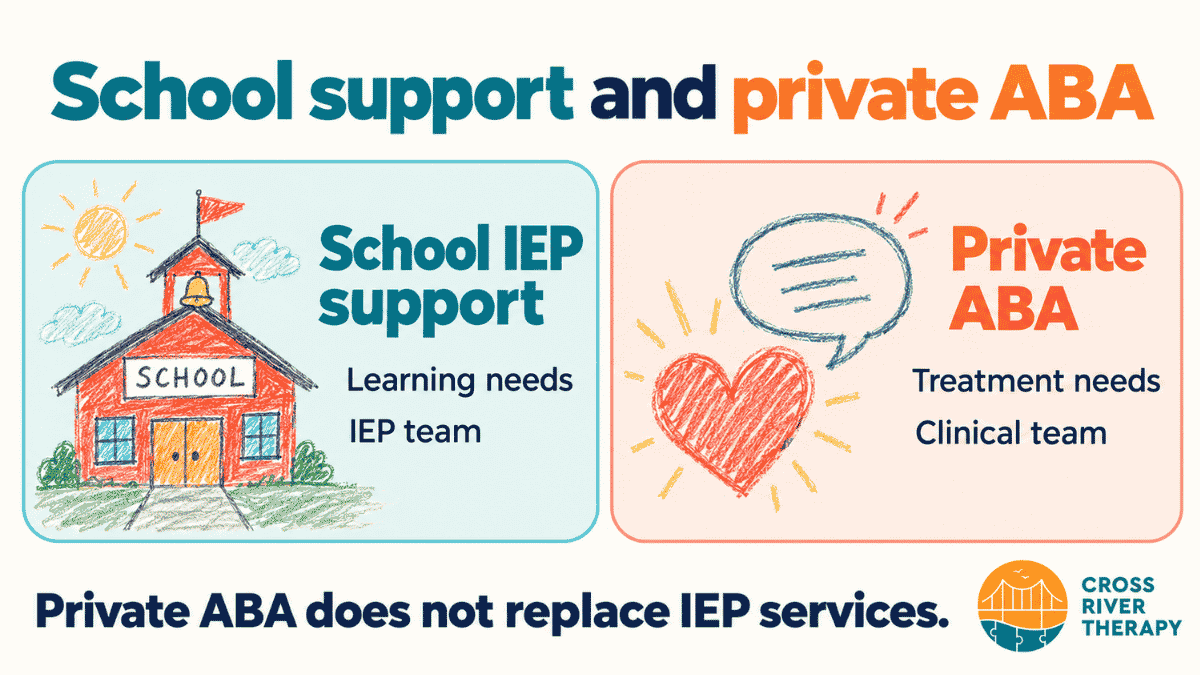
An Individualized Education Program, or IEP, sets out a student’s special education services and goals. Private ABA follows a clinical treatment plan. Both can address communication or daily routines, but the teams have different responsibilities.
New Mexico’s special education rules require IEP teams to consider research-based teaching strategies for eligible students with autism. ABA appears among those strategies. The rule does not promise every student a private therapist or a set number of ABA hours.
Federal IEP rules also require teams to consider positive behavioral supports when behavior interferes with learning. Families can raise those concerns with the school while they explore clinical care.
School-Based ABA in New Mexico Through an Outside Provider
A Board Certified Behavior Analyst, or BCBA, assesses the child’s needs and develops clinical goals. The team then considers whether school routines provide appropriate opportunities to address those goals.
Through our school-based ABA therapy, we target individualized treatment goals and collaborate with educators and caregivers. A private ABA provider’s involvement does not replace the school’s responsibility to deliver the services in an IEP.
What Does School-Based ABA in New Mexico Require?
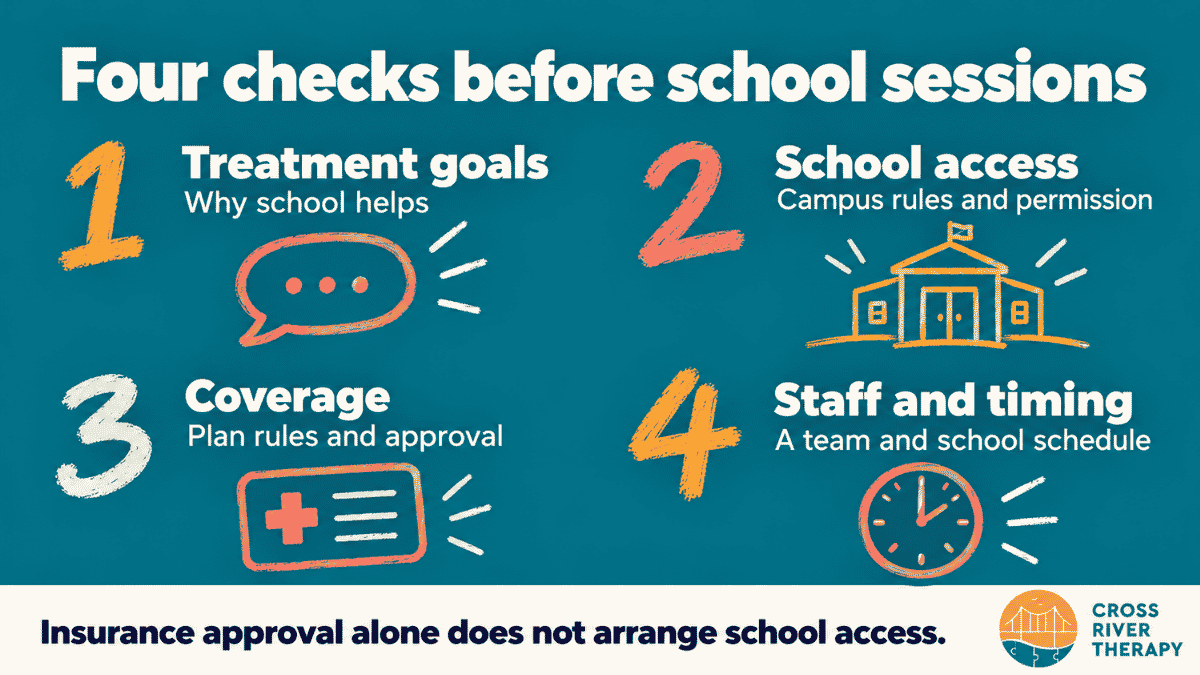
Private ABA at school needs a workable arrangement among the family, school, provider, and payer. Insurance approval alone does not settle campus access or classroom arrangements.
Families comparing ABA school services in New Mexico can organize the conversation around four checks:
- Treatment needs: The clinician explains why school is an appropriate setting for the proposed goals.
- School access: The school identifies its process for outside providers and the arrangements it requires.
- Coverage: The payer and provider review covered services, authorization, and any school-setting restrictions.
- Staffing and scheduling: The provider confirms whether a team can serve that school during the needed times.
A school’s permission and a provider’s available appointment are separate pieces of the plan. Families seeking ABA therapy in school in Albuquerque should identify the specific campus early. A provider serving Albuquerque does not establish access to every school there.
Can Insurance Cover ABA Therapy at School in New Mexico?
Coverage depends on the child’s benefits, clinical needs, provider requirements, and proposed services. Families should confirm school-based coverage before scheduling treatment.
New Mexico Medicaid’s ABA rule excludes activities at school that could take the place of educational services. The rule also excludes activities outside the ABA treatment plan. A school address alone cannot establish whether a service qualifies for payment.
That distinction means the provider needs to explain the clinical purpose of the requested service. A school’s request for extra classroom help does not, by itself, establish a covered medical treatment.
Questions for the health plan and ABA provider include:
- Which proposed ABA services does the plan cover in a school setting?
- Does the provider meet the plan’s network and enrollment requirements?
- Does an existing authorization include the proposed school sessions?
- What records describe the medical need and separate it from educational support?
- What costs, if any, would the family owe?
Private insurance rules may differ from Medicaid. Written benefit and authorization information gives families a record of what the plan has approved.
Four Steps to Arrange School ABA Support in New Mexico
A short set of records and focused conversations can help families understand what remains before school sessions can begin.
1. Describe the School Routine That Needs Support
A specific example gives the school and clinician more information than “my child needs help.”
A parent might describe a child who cannot yet request assistance during group work. Notes could include what happens before the difficulty, how the child communicates, and what adults already do to help.
The child’s comfort and communication belong in that discussion. A request for a break deserves attention alongside participation goals.
2. Contact the School About Outside Providers
The principal or special education contact can identify who handles requests for private therapists on campus.
Families can request information about:
- Required forms or provider agreements.
- Visitor procedures and any staff screening requirements.
- Where sessions could occur and how they would affect lessons.
- Permissions needed to exchange records.
- Who will communicate with the ABA team.
A written list of next steps helps everyone track responsibilities. School staff can also explain how to request an IEP meeting when educational support needs attention.
3. Gather Relevant Records
The ABA provider can identify the documents needed for intake and payer review. Families can prepare available diagnostic reports, insurance information, current treatment records, and relevant school documents.
An IEP or behavior support plan can help describe the school day. Those documents serve a different purpose from the provider’s clinical assessment.
Our comparison of ABA therapy settings explains how school, home, and center sessions offer different opportunities for practice. The choice should account for the child’s goals and daily schedule.
4. Review Assessment and Treatment Recommendations
Our New Mexico intake process begins with a service request. We gather information and request insurance authorization for the assessment. A BCBA reviews the child’s history, completes the assessment, and discusses recommendations with the family.
School-based care can be part of that conversation. The school’s process, payer review, and available staffing still need attention before anyone promises a start date.
Goals Should Address the Child’s Daily Needs
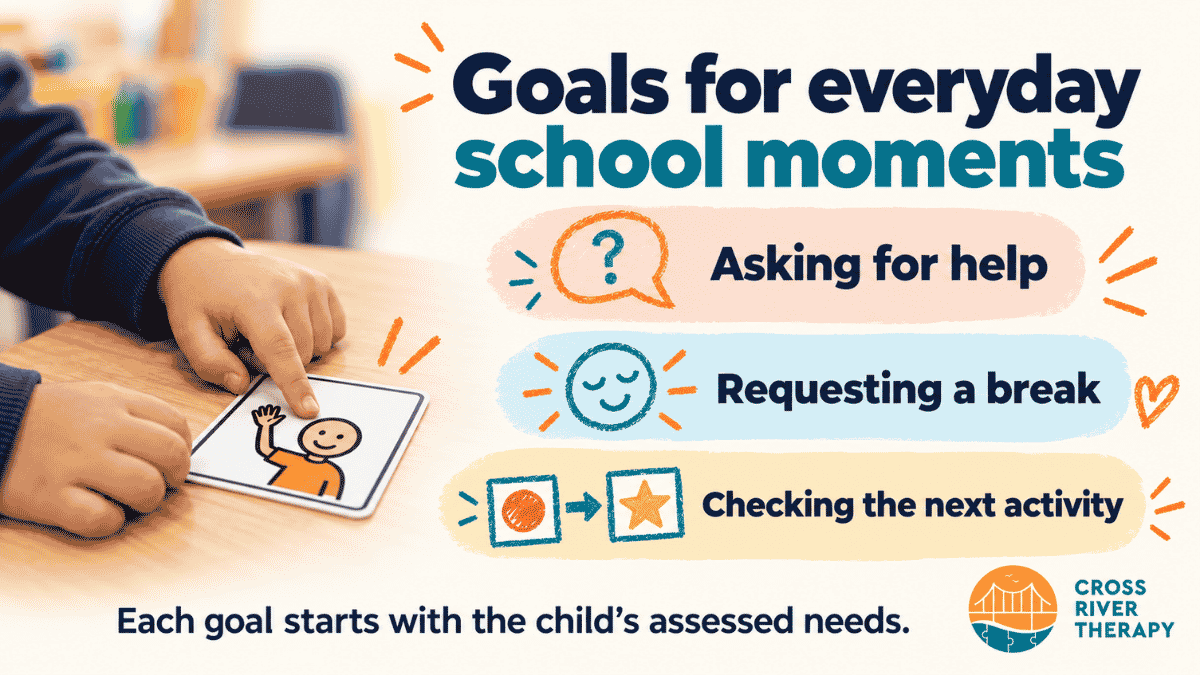
School-based ABA therapy should connect each goal to an assessed need. A goal such as asking for help explains more than a broad aim to “behave better.”
Possible examples include:
- A child requests a break using speech, pictures, gestures, or a device.
- A student practices checking a schedule before changing activities.
- A child learns how to seek help when materials are missing.
These examples illustrate possible goals, not a standard program for every student. Harmless autistic traits do not automatically need treatment.
When campus sessions are unavailable, families can review home or center options with the clinician. School staff remain responsible for school services. Our New Mexico family resource article also lists organizations that help with education questions and support outside therapy.
FAQs About School-Based ABA in New Mexico
Can my child’s BCBA attend an IEP meeting?
A parent may invite someone with knowledge or special expertise about the child, including a BCBA. Federal IEP team rules allow that participation. Families should coordinate attendance with the clinician and school; an invitation does not establish insurance payment for meeting time.
Can ABA continue during summer or school breaks?
Treatment may continue when the clinical plan, payer approval, staffing, and available setting allow it. Families should review school closures with the ABA team in advance. School-provided extended school year services follow a separate IEP decision.
What happens if my child changes schools?
A new campus may require new access arrangements and scheduling. The ABA provider should review whether the move affects treatment delivery or payer authorization. Early notice gives the teams time to address those details before the transfer.
Plan Your Child’s Next Step Toward School-Based ABA
School-based care brings treatment decisions into a busy school day. A workable plan accounts for the child’s needs, educational services, campus arrangements, and coverage before sessions begin.
Our intake team can talk with you about school-based ABA in New Mexico. Your child’s school name, ZIP code, insurance details, and the routine you want help with can support that conversation.
Recent News
Related articles
Can Children Receive School-Based ABA in New Mexico?
School-based ABA in New Mexico needs planning. School access, coverage, and treatment goals shape the next steps.

AHCCCS ABA Therapy: Coverage and Approval in Arizona
AHCCCS ABA therapy covers medically necessary care. Plan rules determine provider access and treatment approval.

How to Coordinate School-Based ABA Therapy in Arkansas
School-based ABA therapy in Arkansas needs shared routines. Team roles and progress notes help explain daily support.

6 Tour Checks for Center-Based ABA Therapy in Arkansas
Center-based ABA therapy in Arkansas varies by provider. A tour helps parents check staff, safety, and progress.

How to Start In-Home ABA Therapy in Arkansas in 6 Steps
In-home ABA therapy in Arkansas begins with intake and a care plan. The steps explain records and the assessment.

6 Arkansas Medicaid ABA Therapy Rules Families Need to Know
Arkansas Medicaid ABA therapy has age, diagnosis and approval rules. Families can check six requirements before care.
Arizona Autism Laws for ABA Coverage and School Rights
Arizona autism laws for ABA coverage vary by plan. Families can check insurance, appeal options, and school rights.

ABA Therapist Salary in Arkansas for RBTs and BCBAs
Compare ABA therapist salary in Arkansas by role. See how paid hours and benefits affect earnings before applying.

5 Autism Support Groups and Family Resources in New Mexico
Autism support groups in New Mexico connect families. Local resources offer events, parent support, and school help.

Where to Get an Autism Evaluation in New Mexico
Autism evaluation options in New Mexico include UNM and NMSU. Age and referral details help parents prepare.

7 North Carolina Autism Resources to Contact Before ABA Therapy Starts
Autism resources North Carolina families can call for diagnosis, early intervention, rights, and parent support. Start ABA intake with Cross River.
Does Indiana Medicaid Cover ABA Therapy? A Parent Checklist
Indiana Medicaid ABA therapy may cover care for eligible children. The checklist covers coaching and renewals.