








57 Scholarship Statistics, Facts & Demographics
Did you know over 1.7 million scholarships are awarded annually? Keep reading to find more scholarship statistics.


In this roundup of scholarship statistics, we'll take a look at some scholarship statistics to give you a better idea of how scholarships work and what you can expect when applying for them.
College Scholarship Statistics
- Only 7% of college students will receive a scholarship.
- The U.S. Department of Education awards an estimated $46 billion in scholarship money annually.
- On average, first-time undergraduates who receive government grants and scholarships at a 4-year college receive about $13,690 annually.
- The average scholarship award was $6,041 in 2022, a 22% decrease from last year.
- During the 2021-22 academic year, 60% of American families used scholarships to pay for college.
- In the same year, private sources provided 55% of all undergraduate scholarships.
- The average debt for a college graduate is $29,900.
- Scholarships can cover tuition fees, housing expenses, textbooks, and other academic costs.
- According to a survey by Sallie Mae, only 16% of students relied on scholarships to fund their education in 2020.
- The Gates Scholarship is one of the most prestigious scholarships in America and covers all costs associated with attending college.
- In 2019-2020, around $3.4 billion was awarded in athletic scholarships alone.
- Scholarships can be need-based or merit-based depending on the organization providing them.
- The Coca-Cola Scholars Program awards $20,000 to high school seniors who demonstrate leadership skills and academic excellence.
- There are more than 1 million scholarships available to students each year in America.
- The Harry S Truman Scholarship Foundation provides up to $30,000 for graduate studies to students committed to public service careers.
- The National Merit Scholarship Corporation awards around $31 million annually to high-performing high school seniors nationwide.
- According to a report by the National Center for Education Statistics (NCES), about 85% of full-time undergraduate students received financial aid during the 2017-18 academic year.
- The Jack Kent Cooke Foundation provides up to $40,000 per year for four years to low-income students pursuing undergraduate degrees at accredited institutions across America.
- Scholarships can be renewable or non-renewable depending on the terms set by the provider.
- Some organizations offer targeted scholarships for specific groups such as women, minorities, veterans or LGBTQ+ individuals
- In 2020-21 academic year HSF, offered over $100 million in scholarships
- Scholarship Owl has over 6 million scholarships worth over $30 billion
- The National Association of Student Financial Aid Administrators reports that there are an estimated $1 billion worth of unclaimed scholarships every year
There are thousands of scholarships available each year, with more being added all the time. In fact, the number of scholarships available has increased by 44% over the past decade. This means that there are more opportunities than ever before for students to receive financial aid for their education.

Scholarship Statistics for Public vs Private 4-year colleges
Scholarships are a great way for students to finance their education without having to take out loans or worry about paying back the money.
Scholarships can come from a variety of sources, including private organizations, corporations, and universities.
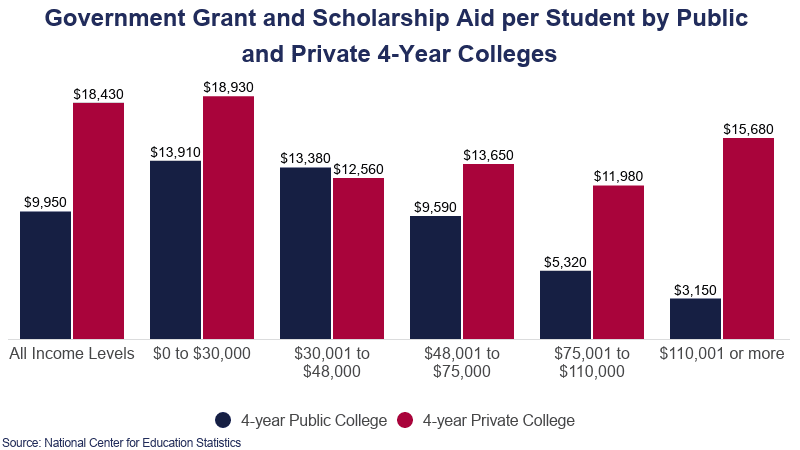
A student who receives a scholarship or a grant at a private 4-year college will receive $10,230 more than a student in a public 4-year college, on average.
Private Scholarships Statistics
- Private sources award more than $7.4 billion in scholarship money each year.
- Those 230 scholarships amounted to $750,000 total that year.
- In 2003, private sources awarded around $3.3 billion in scholarship money.
- The Center for Women in Technology (CWIT) offers scholarships from $5,000 to $20,000 annually for a maximum of 4 years.
- In 2003, the average value of an undergraduate private scholarship was $1,982.
- In 2003, 73% of private financial aid went to dependent students.
- Meanwhile, 27% of private financial aid went to independent students.
Public Scholarships Statistics
- The U.S. Department of Education awards around $46 billion in scholarship money each year.
- The average Pell grant award for undergraduates is $4,491.
- In 2016, the total amount of federal grant money awarded was $41.7 billion.
- The FSEOG awards between $100 to $4,000 in scholarship aid money.
- In 2015, $2.9 billion in federal grant money went unclaimed because 47% of high school students did not complete a FAFSA.
Division of Total Federal Grant Money by College Major
Scholarships Statistics by Race
- Most White students that received federal grant money received $2,100 to $3,599 in aid.
- Most Black students that received federal grant money also received $2,100 to $3,599 in aid.
- Most Hispanic students that were awarded federal grant money received between $3,600 to $5,699.
- Most Asian students that were awarded federal grant money received anywhere between $5,700 to $46,000.
- For American Indians and Alaskan Natives, most that did receive federal grant money received between $1 to $2,099.
- Most Native Hawaiians and other Pacific Islanders that did receive federal grant money received between $5,700 to $46,000.
- For students in the two or more races category, the majority of them received between $3,600 and $5,699.
Facts About Scholarships
Scholarships can cover a wide range of expenses.
Scholarships can cover everything from tuition and fees to room and board, books and supplies, and even travel expenses. Some scholarships are even available to cover the cost of studying abroad. This means that there are many different types of scholarships available to students, depending on their needs and interests.
The competition for scholarships can be fierce.
While there are many scholarships available, the competition for them can be intense. In fact, some scholarships have acceptance rates as low as 1%. This means that students need to put in a lot of effort to stand out from the crowd and increase their chances of receiving a scholarship.
Scholarships can have a significant impact on a student's financial situation.
Receiving a scholarship can make a huge difference in a student's financial situation. In fact, the average scholarship award is around $3,000 per year. This may not seem like a lot, but it can add up over time and help to reduce the amount of debt that a student has to take on.
There are many different types of scholarships available.
There are scholarships available for students of all ages, backgrounds, and interests. Some scholarships are based on academic achievement, while others are based on financial need or community service. There are even scholarships available for students who are interested in specific fields, such as science, technology, engineering, and math (STEM).
In conclusion, scholarships are an excellent way for students to finance their education and reduce the amount of debt they have to take on.
While the competition for scholarships can be fierce, there are many different types of scholarships available, and the number of scholarships available is increasing every year. If you're interested in applying for scholarships, be sure to do your research and put in the effort to stand out from the crowd.
Sources
Recent News
Related articles

How Many Friends Should You Have And Why? Friendship Statistics
There’s no “right” number of friends you should have, but new friendship statistics shows that most people have between 3 and 5 close friends.

43+ Homeschooling Statistics: Percentage Of Homeschooled Children
3% to 4% of children in the US are homeschooled, according to the most recent homeschooling statistics.

47 E-Learning/Online Learning Statistics
Did you know that e-learning increases retention rates by 25% to 60%?

80 Hospital Statistics, Facts & Demographics
In this roundup of 80 hospital statistics, facts & demographics we’re going to gain valuable insights into the healthcare landscape.

Fortnite Statistics: From Victory Royale to Stats Galore
Dive into Fortnite statistics: from victory royale to player engagement, discover the game's success story.

Facebook Statistics Unveiled
Dive deep into Facebook statistics: user demographics, engagement, financials, and future predictions.

49 Epilepsy Statistics, Prevalence & Demographics
In this roundup of Epilepsy statistics, we will explore some of the most important statistics and facts about epilepsy.

55+ Employee Training Statistics Uncovered
Discover the impact of employee training statistics on business success and employee engagement.

47 Doctor Demographics & Statistics In The U.S.
Find the most up-to-date doctor demographics, statistics, and facts.

33 Dyslexia Statistics & Facts: How Many People Have Dyslexia?
70-80% of people with poor reading skills, are likely dyslexic. Here are the most up-to-date statistics and facts about Dyslexia.

Online/E-Learning Market Size 2023: Surprising Statistics
By the year 2026, the worldwide e-learning industry will be worth $375 billion. Find more online learning market size statistics below.

47 Chiropractic Statistics, Facts & Demographics
New chiropractic statistics show that over 35 million people in the US are treated by chiropractors every year.