








ABA for Children with Complex Needs
Tailoring ABA Therapy: Unlocking Potential for Complex Needs


- Informed Consent: Ensuring that caregivers and families are fully informed about the therapy methods being applied.
- Individualized Treatment Plans: Customizing interventions ensures that each child’s unique needs are met respectfully and effectively.
- Least Restrictive Environment: Therapeutic strategies should favor minimal restrictions to allow for maximum independence.
- Ongoing Evaluation: Regular reviews of treatment effectiveness are necessary to ensure that interventions remain relevant and beneficial.
By integrating these ethical considerations into daily practice, ABA therapy can offer safe and supportive interventions that truly assist children with complex needs.
Broadening the Scope of ABA Beyond Autism

Is ABA therapy only used for autism, and what controversy surrounds it?
While ABA therapy is widely recognized for its effectiveness in treating individuals with autism spectrum disorders (ASD), it is not limited to this demographic. ABA principles can also be beneficial for a wide range of developmental and behavioral challenges, including ADHD, OCD, PTSD, and learning disabilities. It is a versatile approach that helps in encouraging positive behaviors not only in children with autism but also in neurotypical individuals.
However, ABA has been the subject of controversy, primarily due to its historical reliance on punitive techniques. Critics often highlight concerns that such methods can be too harsh, focusing on compliance with neurotypical behavior standards rather than valuing individual neurodiversity. This historical context has caused skepticism and criticism from some parents and professionals, who worry about emotional well-being and the importance of respecting unique needs.
In response, modern ABA practitioners have shifted towards a framework that emphasizes positive reinforcement, making learning engaging and enjoyable for children. The focus now lies on promoting autonomy and building upon individual strengths, ensuring that therapy plans are tailored to each child’s specific needs. This evolution illustrates a commitment to respecting neurodiversity while still harnessing the effectiveness of ABA techniques in various contexts.
The Future of ABA for Children with Complex Needs
As research continues to support the efficacy of ABA therapy for children with complex needs, its usage is likely to grow and further evolve. With advancements in techniques and a deepened emphasis on individualization and family involvement, ABA remains a cornerstone for fostering independence and improved life skills among children with developmental disorders. Families considering ABA can be assured of its evidence-based track record, while recognizing that selecting the right practitioners and methodologies are essential steps to maximize its benefits. ABA's adaptable nature promises ongoing innovation and long-term benefits, ensuring continued support for those it serves.
References
- ABA for Children with Complex Needs: What Works?
- Applied Behavior Analysis (ABA) | Autism Speaks
- Applied Behavior Analysis Therapy: Helping Children With Special
- [PDF] Behavioral Treatment of Autism and Other Developmental Disabilities
- ABA for Children with Complex Needs - Goldstar Rehabilitation
- Using ABA for Children with Complex Needs
- Applied Behavior Analysis (ABA) Program for Autism
Recent News
Related articles

6 Arkansas Medicaid ABA Therapy Rules Families Need to Know
Arkansas Medicaid ABA therapy has age, diagnosis and approval rules. Families can check six requirements before care.

Arizona Autism Laws for ABA Coverage and School Rights
Arizona autism laws for ABA coverage vary by plan. Families can check insurance, appeal options, and school rights.

ABA Therapist Salary in Arkansas for RBTs and BCBAs
Compare ABA therapist salary in Arkansas by role. See how paid hours and benefits affect earnings before applying.

5 Autism Support Groups and Family Resources in New Mexico
Autism support groups in New Mexico connect families. Local resources offer events, parent support, and school help.

Where to Get an Autism Evaluation in New Mexico
Autism evaluation options in New Mexico include UNM and NMSU. Age and referral details help parents prepare.

7 North Carolina Autism Resources to Contact Before ABA Therapy Starts
Autism resources North Carolina families can call for diagnosis, early intervention, rights, and parent support. Start ABA intake with Cross River.

Does Indiana Medicaid Cover ABA Therapy? A Parent Checklist
Indiana Medicaid ABA therapy may cover care for eligible children. The checklist covers coaching and renewals.
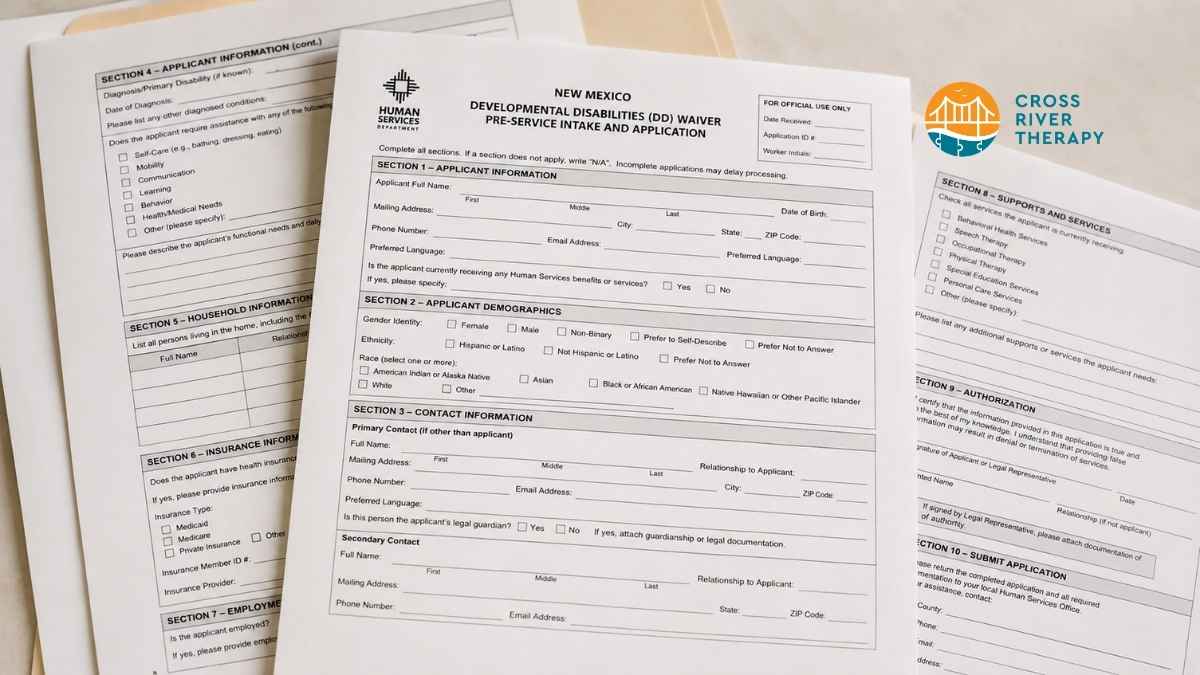
How to Apply for the New Mexico DD Waiver
Your NM DD waiver application starts with state intake. The steps cover records, submission, and enrollment.

Does Insurance Cover ABA Therapy in New Jersey?
ABA therapy insurance in New Jersey varies by plan. Learn what NJ FamilyCare covers and how to check costs.

How ABA Therapy Builds Communication for Nonverbal Children Without Forcing Speech
ABA therapy communication for nonverbal children starts with AAC, signs, and daily routines. See how kids ask, refuse, choose, and get help.

How to Start ABA Therapy in New Jersey With a Checklist
Your guide explains how to start ABA therapy in New Jersey. A first-call checklist covers records and next steps.

How to Get an Autism Evaluation in Arkansas Before Starting ABA Therapy
How to get an autism evaluation in Arkansas starts with a referral, provider choice, and key records. Use this parent checklist before ABA intake.