








Autism Treatment Programs Supported by ABA Therapy
Discover how ABA therapy and autism treatment programs can create positive change for your child!


Understanding ABA Therapy for Autism
ABA (Applied Behavior Analysis) therapy is a systematic approach designed to support children diagnosed with autism by developing skills tailored to their unique strengths and weaknesses. It emphasizes the use of positive reinforcement to encourage desired behaviors while minimizing any discouragement.
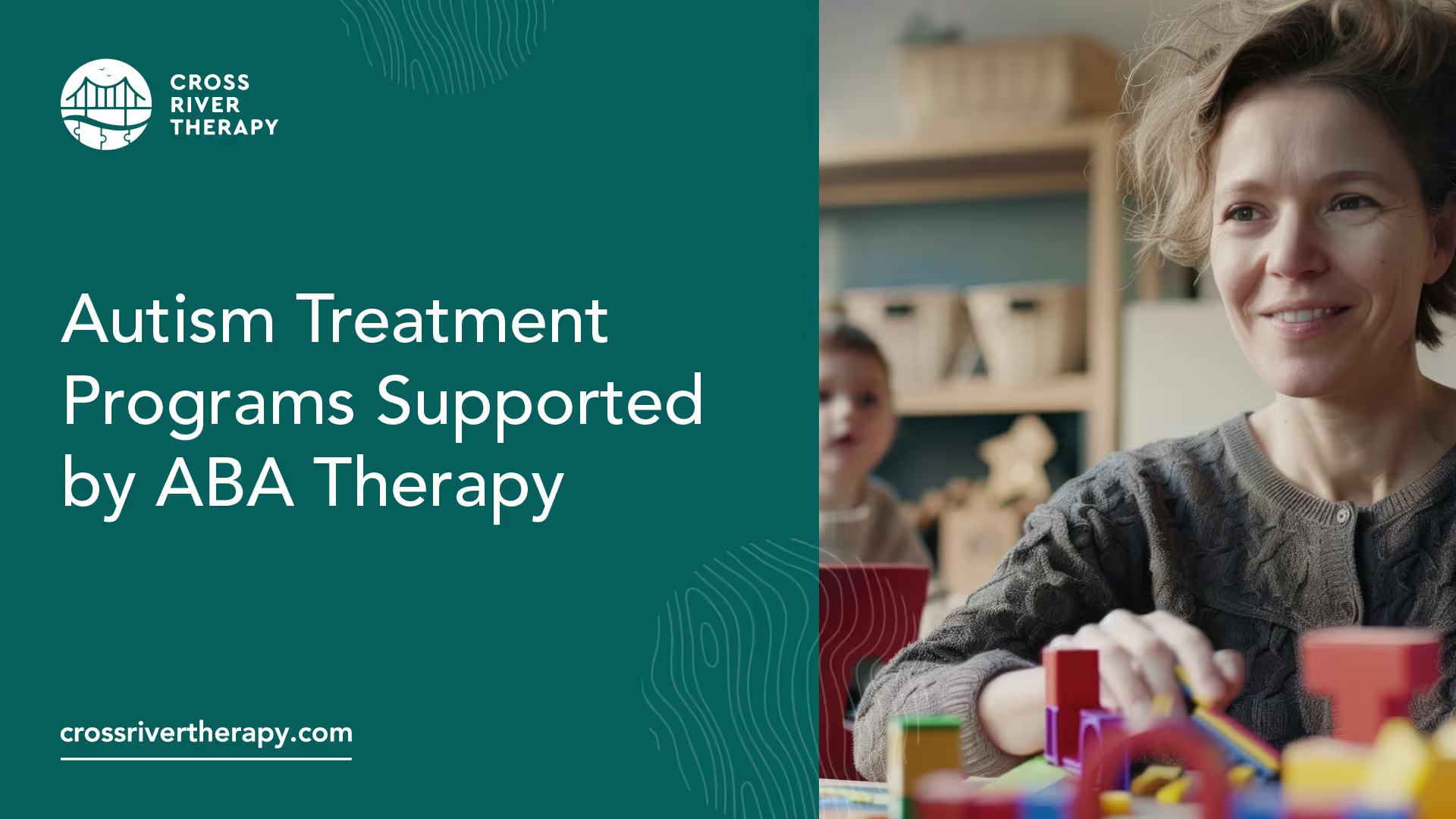
ABA therapy aids in the development of various skills, such as social skills, communication, reading, and adaptive learning. Each therapy plan is personalized to maximize efficacy, which is a key component of this treatment modality. Treatment involves thorough assessments of each child's needs to define specific goals and challenges, ensuring that therapy remains focused and productive.
Types of ABA Programs
The Board of Certification in Behavior Analysis (BACB) recognizes two main types of ABA program structures tailored for the treatment of autism: comprehensive and focused programs.
- Comprehensive ABA Programs: Involves several hours a day, several days a week, and may continue for weeks, months, or even years under supervision. These programs address a wide range of developmental areas.
- Focused ABA Programs: Designed to target specific skills or behaviors, typically with reduced direct therapy hours. These programs allow for more flexibility in addressing particular areas of need.
In addition to these types, there is also Early Intensive Behavioral Intervention (EIBI), which focuses on leveraging early childhood as a critical period for learning. EIBI aims to establish a strong foundation for later learning by addressing various developmental domains in a center-based model with connections to the home environment through parent training and home visits.
Structure of ABA Therapy Programs
ABA therapy utilizes various structured programs to cater to the individual needs of children diagnosed with autism. Understanding these structures can help parents make informed choices for their child's development.
Comprehensive ABA Programs
Comprehensive ABA programs offer an extensive approach, addressing a range of developmental areas. These programs are designed to provide a full spectrum of therapy based on the child's unique needs, which often includes communication, social skills, and life skills.
Typically, comprehensive ABA programs involve:
- Duration: 20-40 hours per week
- Age Range: Typically 2-7 years old
- Focus Areas: Communication, social skills, daily living skills
According to recent studies, these programs have proven effective for individuals diagnosed with Autism Spectrum Disorder (ASD) [2]. Both structured and individualized elements are essential in these programs, emphasizing measurable behaviors.
Focused ABA Programs
Focused ABA programs target specific skills or behaviors that need improvement. These interventions concentrate on particular challenges the child may face, such as improving social interactions or reducing disruptive behavior.
Key aspects of focused ABA programs include:
- Duration: 10-20 hours per week
- Age Range: Varies based on goals
- Focus Areas: Social skills, academics, behavior management
These programs may be appropriate for children who already have a foundation of skills but require additional support in specific areas. Research has consistently shown that targeted interventions lead to significant improvements.
Early Intensive Behavioral Intervention (EIBI)
Early Intensive Behavioral Intervention (EIBI) is a specialized program designed for younger children. EIBI is intended to load skills early in life when children are most amenable to learning [3].
Key features of EIBI include:
- Duration: 20-40 hours per week
- Age Range: Typically 2-5 years old
- Focus Areas: Foundational skills, learning readiness
EIBI focuses on building essential skills that serve as a foundation for more complex abilities. The program typically combines center-based sessions with home support for parents, ensuring a cohesive approach to learning.
In summary, understanding the various structured ABA therapy programs can aid parents in selecting the best options for their child's development.
Implementation of ABA Therapy
Implementing ABA therapy effectively relies on structured approaches that involve parents, caregivers, and educational settings. This section discusses essential components such as parent training, home-based, and school-based therapy.
Parent Training in ABA
Parent training is a critical aspect of ABA therapy that equips parents with strategies to support their child. This training includes setting goals, assessment, and follow-up meetings to track progress. Often, parent training is conducted in small groups, allowing for a supportive learning environment.
Family involvement is encouraged, with parents, family members, and caregivers being taught basic principles of ABA. This ensures the new skills and behaviors learned during therapy can carry over to home environments.
- Goal Setting: Establishing specific objectives for the child.
- Group Sessions: Learning in a supportive small group setting.
- Ongoing Assessment: Regularly reviewing progress with a professional.
Home-Based ABA Therapy
Home-based ABA therapy addresses the unique needs of children within their home environment. This approach focuses on routines, mealtime, and transitions, ensuring therapy is integrated into everyday activities. Home-based services can involve one-to-one instruction or fully embedded programming, making it suitable for each child's specific requirements.
This approach allows therapists to work in familiar settings, helping to create a comfortable and less distracting situation for the child. It promotes generalization of skills learned during therapy to real-life situations, enhancing the effectiveness of the treatment.
School-Based ABA Therapy
School-based ABA therapy is tailored to foster skills essential for academic performance and social interactions. It focuses on developing skills across various domains, including academic, social, behavioral, adaptive, motor, and communication skills. This therapy may involve consultation with the educational team, training for classroom staff, and setting specific goals within the Individualized Education Plan (IEP).
The inclusion of ABA strategies in educational settings ensures that children continually receive support throughout their school day, allowing them to thrive academically and socially.
Home-Based ABA
- Focus Areas: Daily routines and transitions
- Training Involved: One-on-one instruction
School-Based ABA
- Focus Areas: Academic and social skills
- Training Involved: Training for classroom staff
Implementing ABA therapy involves a collaborative effort among parents, home environments, and educational settings. By embracing these strategies, families can enhance the effectiveness of ABA therapy and better support their children as they navigate the complexities of autism treatment programs in various environments.
Benefits and Efficacy of ABA Therapy
Applied Behavior Analysis (ABA) therapy has proven to be a valuable approach for children diagnosed with autism. Extensive research highlights its effectiveness and the significant impact it has on various aspects of development.
Effectiveness of ABA Therapy
Research shows that more than 20 studies confirm that intensive and long-term therapy using ABA principles leads to improved outcomes for many children with autism. These gains can be seen in intellectual functioning, language development, daily living skills, and social functioning. ABA is recognized as an evidence-based best practice treatment by the US Surgeon General and the American Psychological Association, having successfully met scientific tests of quality and effectiveness.
- Intellectual Functioning: Significant gains
- Language Development: Significant gains
- Daily Living Skills: Significant gains
- Social Functioning: Significant gains
Impact on Autism Spectrum Disorder (ASD)
ABA therapy employs various techniques that enhance socialization, communication, and expressive language in children with Autism Spectrum Disorder (ASD). Studies conducted since the initial research by Wolf et al. in 1964 have consistently demonstrated the positive effects of ABA on improving crucial skills and reducing interfering behaviors, such as shaping, discrete trial teaching, and pivotal response training.
However, it is important to note that while ABA interventions show significant effectiveness in some areas, they do not necessarily result in improvements in all aspects of autism symptoms or cognitive abilities. Specifically, findings indicate limited improvements in receptive language, adaptive behavior, daily living skills, and restricted or repetitive behaviors.
Role of Board-Certified Behavior Analyst (BCBA)
The role of a Board-Certified Behavior Analyst (BCBA) is critical in the implementation and effectiveness of ABA therapy. BCBAs are trained professionals who develop and oversee individualized treatment plans based on each child's unique needs. They utilize data-driven approaches to assess progress and make necessary adjustments to the therapy programs.
For instance, a BCBA might tailor interventions that focus on enhancing communication skills or decreasing problematic behaviors, ensuring that the therapy remains effective and aligned with the child's specific goals.
Components of ABA Therapy
ABA therapy is composed of several essential techniques that play a crucial role in the effective treatment of children diagnosed with autism. These components help simplify learning and enhance skill acquisition. In this section, we will explore task analysis, chaining, and prompting techniques.
Task Analysis
Task analysis refers to the method of breaking down complex activities into smaller, manageable steps. This approach allows children to learn each step individually, gradually leading to the ability to complete the entire task independently. In ABA therapy, once a child learns a new skill, positive reinforcement is used to encourage continued use and application of that skill in the future.
Chaining
Chaining involves linking multiple steps together to form a complete behavior or skill. There are two types of chaining: forward chaining and backward chaining. In forward chaining, the child learns the first step of a task and then gradually learns the subsequent steps. In backward chaining, the child begins with the last step and learns backward to the first step. This technique can enhance the child's ability to remember and execute complex tasks.
Example of Chaining:
- Forward Chaining: Learning steps from beginning to end. For instance, teaching how to tie shoelaces by starting with crossing the laces.
- Backward Chaining: Learning steps from end to beginning. For instance, tying shoelaces is learned by finishing with the final knot first.
Prompting Techniques
Prompting techniques are used to encourage specific responses from a child during ABA sessions. Prompts can be verbal, visual, physical, or gestural and help guide the child toward the correct response. Gradually fading these prompts is essential for promoting independence.
Types of Prompts:
- Verbal Prompt: Using words or phrases to guide the child.
- Visual Prompt: Providing pictures or written instructions to assist the child.
- Physical Prompt: Using hand-over-hand guidance to help the child complete a task.
- Gestural Prompt: Using body language or gestures to encourage a response.
Incorporating these components into ABA therapy can significantly enhance the effectiveness of autism treatment programs. Parents of children with autism may explore additional resources on the impact of these techniques in various settings, such as aba therapy and autism services and aba therapy and child development centers.
Considerations and Controversies
As parents consider enrolling their children in ABA therapy, there are important aspects and criticisms to bear in mind regarding the treatment programs. This section discusses the role of positive reinforcement, the development of individualized treatment plans, and the various challenges and controversies surrounding ABA therapies.
Positive Reinforcement in ABA
Positive reinforcement is a key component of ABA therapy, used to encourage desired behaviors by providing rewards. This can include verbal praise, tokens, or other incentives that motivate children to perform specific tasks or exhibit certain behaviors. The goal is to increase the likelihood that these behaviors will be repeated.
While effective, there are concerns that the focus on rewards may inadvertently pressure children to conform to neurotypical standards, rather than fostering an understanding of their unique traits and personality. This aspect of ABA therapy raises questions about the balance between encouraging positive behaviors and appreciating individuality.
Individualized Treatment Plans
The foundation of effective ABA therapy lies in creating individualized treatment plans tailored to each child's specific needs. These plans should consider the child's strengths, preferences, and challenges, allowing for a more meaningful and supportive approach.
The importance of customization cannot be overstated. Individualized plans may incorporate various components, such as skill-building activities that are relevant to the child's interests. Families should collaborate closely with therapists to ensure that the treatment aligns with their child's specific circumstances.
Challenges and Criticisms of ABA Therapies
While ABA therapy has shown effectiveness in treating children with Autism Spectrum Disorder (ASD), it has garnered criticism on multiple fronts.
- Behavior Modification Concerns: Some critics argue that traditional ABA methods have focused on trying to change a child's behavior to fit neurotypical ideals. This focus may lead to suppressing natural behaviors instead of promoting functional skills.
- Use of Punishments: The early practices of ABA included punishments as a method to modify behavior. Many parents are concerned about these past approaches and their potential long-term impact on children.
- Repetitiveness: Some children may struggle with the repetitive nature of ABA sessions, leading to frustration rather than engagement. Parents should advocate for approaches that are both effective and enjoyable for their children.
- Activist Concerns: Organizations advocating for autism rights and neurodiversity voice concerns about the historical and current practices in ABA therapy. They emphasize the importance of understanding and accommodating neurodiversity rather than pushing for conformity [4].
Treatment programs leveraging ABA therapy must navigate these criticisms thoughtfully. Parents are encouraged to engage with ABA professionals openly and to explore various perspectives and options, ensuring a supportive and effective environment for their children. For further information on ABA therapy, check out ABA therapy and autism treatment programs.
References
[4]: https://www.ncbi.nlm.nih.gov/pmc/articles/PMC9114057/
[5]: https://www.autismspeaks.org/applied-behavior-analysis
Recent News
Related articles

6 Arkansas Medicaid ABA Therapy Rules Families Need to Know
Arkansas Medicaid ABA therapy has age, diagnosis and approval rules. Families can check six requirements before care.

Arizona Autism Laws for ABA Coverage and School Rights
Arizona autism laws for ABA coverage vary by plan. Families can check insurance, appeal options, and school rights.

ABA Therapist Salary in Arkansas for RBTs and BCBAs
Compare ABA therapist salary in Arkansas by role. See how paid hours and benefits affect earnings before applying.

5 Autism Support Groups and Family Resources in New Mexico
Autism support groups in New Mexico connect families. Local resources offer events, parent support, and school help.

Where to Get an Autism Evaluation in New Mexico
Autism evaluation options in New Mexico include UNM and NMSU. Age and referral details help parents prepare.

7 North Carolina Autism Resources to Contact Before ABA Therapy Starts
Autism resources North Carolina families can call for diagnosis, early intervention, rights, and parent support. Start ABA intake with Cross River.

Does Indiana Medicaid Cover ABA Therapy? A Parent Checklist
Indiana Medicaid ABA therapy may cover care for eligible children. The checklist covers coaching and renewals.

How to Apply for the New Mexico DD Waiver
Your NM DD waiver application starts with state intake. The steps cover records, submission, and enrollment.

Does Insurance Cover ABA Therapy in New Jersey?
ABA therapy insurance in New Jersey varies by plan. Learn what NJ FamilyCare covers and how to check costs.

How ABA Therapy Builds Communication for Nonverbal Children Without Forcing Speech
ABA therapy communication for nonverbal children starts with AAC, signs, and daily routines. See how kids ask, refuse, choose, and get help.

How to Start ABA Therapy in New Jersey With a Checklist
Your guide explains how to start ABA therapy in New Jersey. A first-call checklist covers records and next steps.

How to Get an Autism Evaluation in Arkansas Before Starting ABA Therapy
How to get an autism evaluation in Arkansas starts with a referral, provider choice, and key records. Use this parent checklist before ABA intake.