








Behavioral Assessments Conducted Through ABA Therapy
Discover how ABA therapy and behavioral assessment can transform your child's social and communication skills!


Understanding ABA Therapy
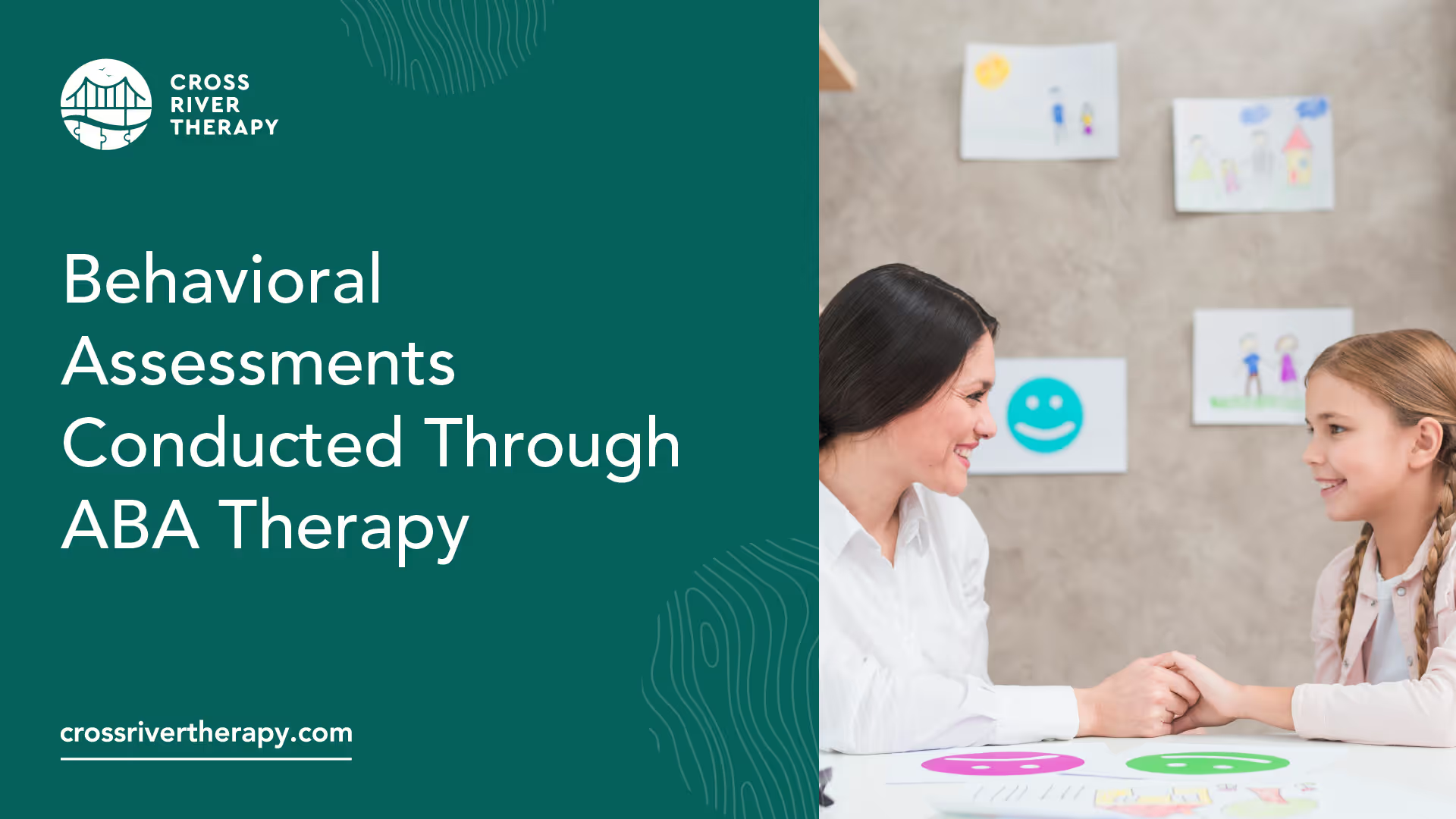
Initial Assessment Process
The journey into ABA therapy begins with a comprehensive assessment conducted by a board-certified behavior analyst (BCBA). This thorough evaluation aims to gather valuable insights about the child’s unique needs. The assessment process typically includes several components:
- Parent Interviews: The BCBA engages parents to understand their concerns, the child’s history, and any prior interventions.
- Observation: Observing the child in various settings helps the BCBA assess how the child interacts with others and handles different situations.
- Child Engagement: Direct interactions with the child allow the BCBA to gather firsthand information on the child’s behavior and skills.
This systematic assessment is crucial in forming a personalized treatment plan that addresses the specific strengths and challenges of each child with autism.
Individualized Treatment Plans
Based on the information collected during the initial assessment, the BCBA crafts a tailored treatment plan for the child. This individualized plan typically includes:
- Background Information: A summary of the child’s history and unique circumstances.
- Current Abilities: An outline of the child’s existing skills and areas needing improvement.
- Treatment Goals: Specific, measurable objectives designed to address the child’s needs.
- Steps to Achieve Goals: Clear action plans outlining how to reach each objective.
- Timelines: Defined deadlines for achieving each goal.
The BCBA oversees 10% of the treatment implementation, with registered behavior technicians (RBTs) executing the majority of the sessions. Formal progress assessments take place every six months, enabling adjustments to the treatment plan as necessary.
ABA therapy often recommends a minimum of 15 hours per week for noticeable progress, with some children receiving up to 40 hours weekly. Factors such as the severity of problem behaviors, parental involvement, and the application of learned skills impact each child's progress.
- Initial Assessment: Conducted by a BCBA including interviews, observations, and engagement.
- Treatment Goals: Specific objectives customized to the child’s needs.
- Progress Assessments: Conducted every six months to evaluate and modify treatment plans.
- Recommended Hours per Week: 15 to 40 hours, depending on individual needs and severity of behavior.
Understanding the initial assessment and subsequent treatment planning is essential for parents navigating the world of ABA therapy. These steps lay the groundwork for building foundational skills that lead to improved behaviors in communication, social interaction, and daily living.

Tools and Techniques in ABA Therapy
In the realm of ABA therapy, various tools and techniques are employed to assess a child's behavior and craft personalized treatment plans. These methods aim to ensure that each child's unique needs are met effectively.
Assessment Tools and Benchmarks
A comprehensive assessment is a critical first step in ABA therapy. A board-certified behavior analyst (BCBA) conducts an initial evaluation for children diagnosed with autism. This thorough assessment includes gathering observations and data which are then used to develop a tailored treatment plan for each child.
ABA professionals utilize several assessment tools and benchmarks to quantify data accurately. These tools can help gauge various skills and behaviors, allowing for a clear understanding of the child’s current functioning level. Some commonly used assessment tools include:
- Functional Behavior Assessment: Identifies behaviors and the reasons behind them.
- Vineland Adaptive Behavior Scales: Assesses social abilities and daily living skills.
- ABLLS-R (Assessment of Basic Language and Learning Skills): Evaluates foundational language and learning skills.
Each of these tools helps provide a comprehensive picture of the child's strengths and challenges, contributing to a well-rounded treatment approach.
Customization for Effective Treatment
A hallmark of ABA therapy is its tailored nature. Every child's program is customized according to their specific needs and developmental milestones [1]. This individualized approach ensures that the strategies and interventions employed are not only relevant but also effective in fostering growth and learning.
Customization involves collating data from assessments and continuously adapting techniques as the child progresses. ABA therapy emphasizes measurable and observable behaviors; therefore, any adjustments are guided by data collected throughout the treatment process.
Effective treatment may integrate various techniques such as positive reinforcement to encourage desired behaviors and diminish unwanted ones. Parents can rest assured knowing that the treatment process is both versatile and structured to meet the unique needs of their child within the framework of ABA therapy and autism interventions.
This personalized focus not only supports the development of essential skills but also fosters an environment where the child feels understood and valued.
Core Principles of ABA
Understanding the core principles of Applied Behavior Analysis (ABA) is vital in comprehending how this therapy can effectively support children diagnosed with autism. Two primary areas within ABA include behavior analysis and behavior modification strategies.
Behavior Analysis
Behavior analysis is a fundamental aspect of ABA therapy. It refers to a collection of principles that focus on how behaviors evolve and are influenced by the surrounding environment. The goal is to enhance socially significant behaviors, including academic, social, communication, and daily living skills.
In the context of ABA, behavior encompasses all actions and skills demonstrated by an individual, whether they are positive or negative. This approach emphasizes measurable and observable behaviors. The application of these principles considers behavior in various contexts, creating a deeper understanding of how and why certain actions occur in different environments.
- Focus on Behavior Change: Targeting and modifying specific behaviors.
- Influenced by Environment: Understanding how surroundings affect behavior.
- Socially Significant Skills: Emphasizing skills that enhance daily living.
Behavior Modification Strategies
Behavior modification strategies form another essential principle of ABA. These strategies target behaviors that hold significant social value, aiming to enhance vital skills. Examples include teaching children how to cross the street safely or how to order lunch in a cafeteria [2].
ABA employs various techniques in behavior modification, such as positive reinforcement, negative reinforcement, visual modeling, prompting and fading, behavior chaining, and extinction. Each technique plays a key role in developing essential skills and modifying behaviors.
- Positive Reinforcement: Encouraging desired behaviors by providing rewards.
- Negative Reinforcement: Encouraging behaviors by removing negative stimuli.
- Visual Modeling: Using demonstrations to teach new skills.
- Prompting and Fading: Assisting with cues, gradually reducing support.
- Behavior Chaining: Breaking down complex tasks into manageable steps.
By implementing these behavior analysis and modification strategies, parents can find effective ways to support their children’s development.
Benefits of ABA Therapy
ABA therapy offers numerous advantages for children diagnosed with autism. Two of the key benefits are improving social skills and enhancing communication abilities.
Improving Social Skills
One of the primary goals of ABA therapy is to foster social skills. Through various assessment tools and benchmarks, ABA professionals can measure a child's social responsiveness and set clear targets for improvement. These targets may include skills such as initiating conversations, making eye contact, and understanding social cues. Here are some common social skills that can be focused on during therapy:
- Initiating Interactions: Starting conversations or play with peers.
- Understanding Body Language: Recognizing non-verbal cues during interactions.
- Sharing and Turn-Taking: Engaging in group activities and taking turns.
- Expressing Feelings: Communicating emotions effectively.
Research indicates that systematic analysis of behaviors plays a significant role in identifying areas that need development. This empowers therapists to implement appropriate interventions to promote social engagement, making playdates and interactions less daunting for children.
Enhancing Communication Abilities
Communication skills are vital for children with autism, and ABA therapy focuses on this aspect as well. The therapy employs various strategies, including positive reinforcement and visual modeling, to help children express themselves more effectively. Techniques such as prompting and fading are also used to encourage verbal communication and reduce reliance on gestures over time.
- Verbal Expression: Using words to communicate needs and thoughts.
- Non-Verbal Communication: Understanding and using gestures or expressions.
- Following Directions: Responding appropriately to spoken instructions.
- Asking Questions: Inquiring for information or clarification.
ABA professionals gather observational data through ongoing assessments, allowing them to adjust treatment plans as needed to support each child's unique communication goals. Regular formal progress assessments, conducted every six months, ensure continuous improvement in both social and communication skills.
Utilizing ABA therapy allows children to develop essential social and communication skills that facilitate valuable interactions, enhancing their overall quality of life. This systematic approach to behavioral assessment and intervention also reflects the importance of individualized treatment plans tailored by trained professionals.
ABA Therapies and Techniques
In the realm of ABA therapy and behavioral assessment, there are specific therapies and techniques that are particularly beneficial for children with autism. This section will discuss two prominent approaches: Pivotal Response Treatment (PRT) and the Early Start Denver Model (ESDM).
Pivotal Response Treatment
Pivotal Response Treatment (PRT) is a more natural and less structured approach compared to traditional methods like Discrete Trial Training (DTT). PRT emphasizes play and activities that are relevant to the child's life. By utilizing the child's own interests and attention, PRT guides their learning in a way that feels engaging and enjoyable [4].
Key aspects of PRT include:
- Focus: Child-centered activities aligned with their interests.
- Goals: Improvements in communication, social skills, and behavior.
- Flexibility: Adaptable to the child's learning style and pace.
PRT fosters motivation and independence, allowing children to learn through play rather than through rigid instructional methods.
Early Start Denver Model (ESDM)
The Early Start Denver Model (ESDM) also incorporates play-based techniques similar to PRT but integrates more traditional ABA practices when necessary. ESDM is designed for younger children, particularly those between 12 and 48 months. The goal is to promote skill development across multiple domains during engaging activities [4].
Some key points about ESDM include:
- Age Focus: Designed for toddlers and young children.
- Integration: Combines play-based activities with structured learning.
- Comprehensive Goals: Addresses communication, social interaction, and cognitive skills.
ESDM is particularly effective because it utilizes everyday opportunities to promote learning, ensuring that the skills children develop are functional and applicable to their daily lives.
Both PRT and ESDM are grounded in evidence-based practices and are recognized as effective interventions for individuals with autism.
Addressing Challenges with ABA
ABA therapy is designed to address numerous challenges faced by individuals with autism. This includes difficulties with communication and social interactions, as well as repetitive behaviors and sensory sensitivities.
Communication and Social Interaction
Individuals diagnosed with Autism Spectrum Disorder (ASD) often experience significant communication barriers and social interaction difficulties. These challenges may manifest as underdeveloped verbal and non-verbal communication skills, complicating the way they engage with others in social settings.
According to QBSsocal, ABA therapy employs targeted strategies aimed at enhancing communication skills and fostering social interaction.
The methods utilized in ABA therapy often focus on practical communication skills. This can include teaching the use of appropriate greetings, understanding body language, and developing the ability to maintain conversations.
Therapy sessions typically involve role-playing and social stories to practice real-life scenarios, thereby improving social competence and reducing anxiety in group situations.
Repetitive Behaviors and Sensory Sensitivities
Repetitive behaviors and restricted interests are common among individuals with ASD. Such behaviors can include hand-flapping, repeating phrases, or fixating on specific topics.
ABA therapy addresses these behaviors using behavior modification techniques to redirect these patterns and encourage the development of more adaptive alternatives. As noted by QBSsocal, this approach helps reduce instances of maladaptive behaviors while promoting more socially acceptable actions.
The therapy also acknowledges sensory sensitivities that many individuals with ASD experience. Sensitivity to light, sound, or touch can significantly affect their everyday interactions and comfort levels.
ABA therapy may include sensory integration techniques to help children adapt to sensory input in a more manageable way, ultimately contributing to improved behavior and social responsiveness.
In managing these challenges, parents can work closely with ABA therapists to create tailored intervention plans that address the unique needs of their child. Learning about ABA therapy for autism diagnosis can also provide further insight into the specific challenges and potential strategies that can be beneficial.
References
[1]: https://appliedabc.com/how-outcomes-are-measured-using-aba-therapy/
[2]: https://vcuautismcenter.org/resources/factsheets/printView.cfm/982
[3]: https://aba-therapy-and-behavioral-sciences/
[4]: https://my.clevelandclinic.org/health/treatments/25197-applied-behavior-analysis
Recent News
Related articles

6 Arkansas Medicaid ABA Therapy Rules Families Need to Know
Arkansas Medicaid ABA therapy has age, diagnosis and approval rules. Families can check six requirements before care.

Arizona Autism Laws for ABA Coverage and School Rights
Arizona autism laws for ABA coverage vary by plan. Families can check insurance, appeal options, and school rights.

ABA Therapist Salary in Arkansas for RBTs and BCBAs
Compare ABA therapist salary in Arkansas by role. See how paid hours and benefits affect earnings before applying.

5 Autism Support Groups and Family Resources in New Mexico
Autism support groups in New Mexico connect families. Local resources offer events, parent support, and school help.

Where to Get an Autism Evaluation in New Mexico
Autism evaluation options in New Mexico include UNM and NMSU. Age and referral details help parents prepare.

7 North Carolina Autism Resources to Contact Before ABA Therapy Starts
Autism resources North Carolina families can call for diagnosis, early intervention, rights, and parent support. Start ABA intake with Cross River.

Does Indiana Medicaid Cover ABA Therapy? A Parent Checklist
Indiana Medicaid ABA therapy may cover care for eligible children. The checklist covers coaching and renewals.
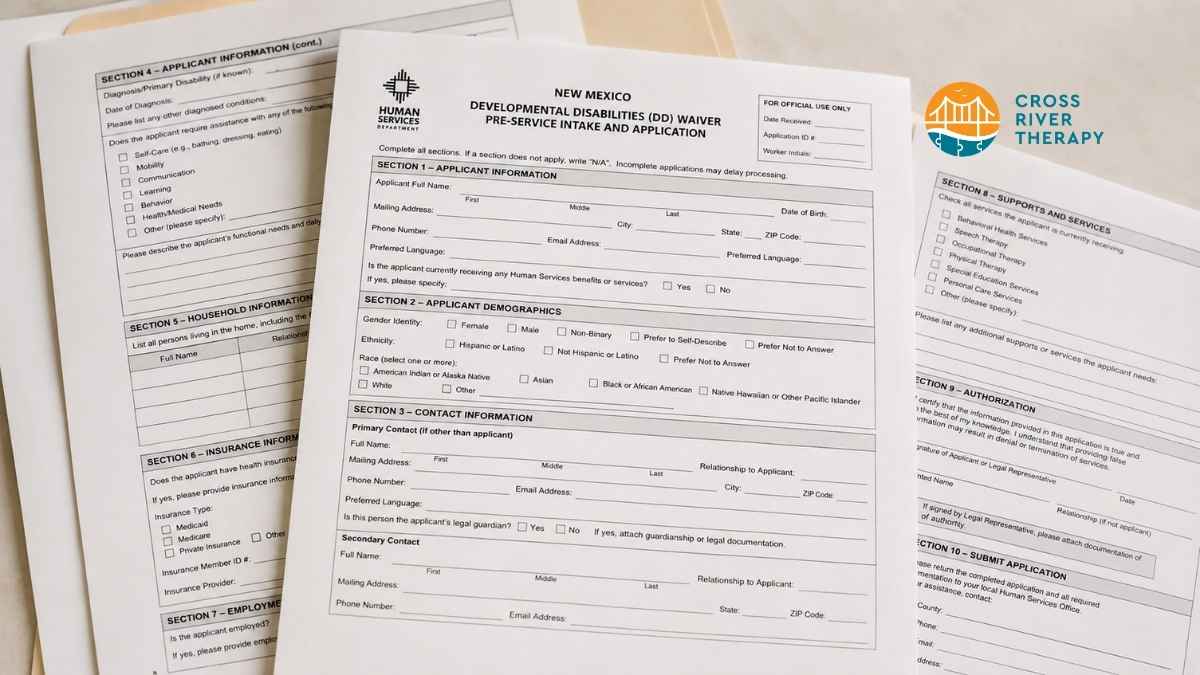
How to Apply for the New Mexico DD Waiver
Your NM DD waiver application starts with state intake. The steps cover records, submission, and enrollment.

Does Insurance Cover ABA Therapy in New Jersey?
ABA therapy insurance in New Jersey varies by plan. Learn what NJ FamilyCare covers and how to check costs.

How ABA Therapy Builds Communication for Nonverbal Children Without Forcing Speech
ABA therapy communication for nonverbal children starts with AAC, signs, and daily routines. See how kids ask, refuse, choose, and get help.

How to Start ABA Therapy in New Jersey With a Checklist
Your guide explains how to start ABA therapy in New Jersey. A first-call checklist covers records and next steps.

How to Get an Autism Evaluation in Arkansas Before Starting ABA Therapy
How to get an autism evaluation in Arkansas starts with a referral, provider choice, and key records. Use this parent checklist before ABA intake.