








Integrating ABA Therapy with Behavioral Sciences
Explore ABA therapy and behavioral sciences to boost your child's development and enhance their future!


Understanding ABA Therapy
Applied Behavior Analysis (ABA) therapy is a systematic approach that focuses on understanding and changing behavior. It is particularly beneficial for children diagnosed with autism, providing them with the tools they need for daily living and ensuring positive behavior change.
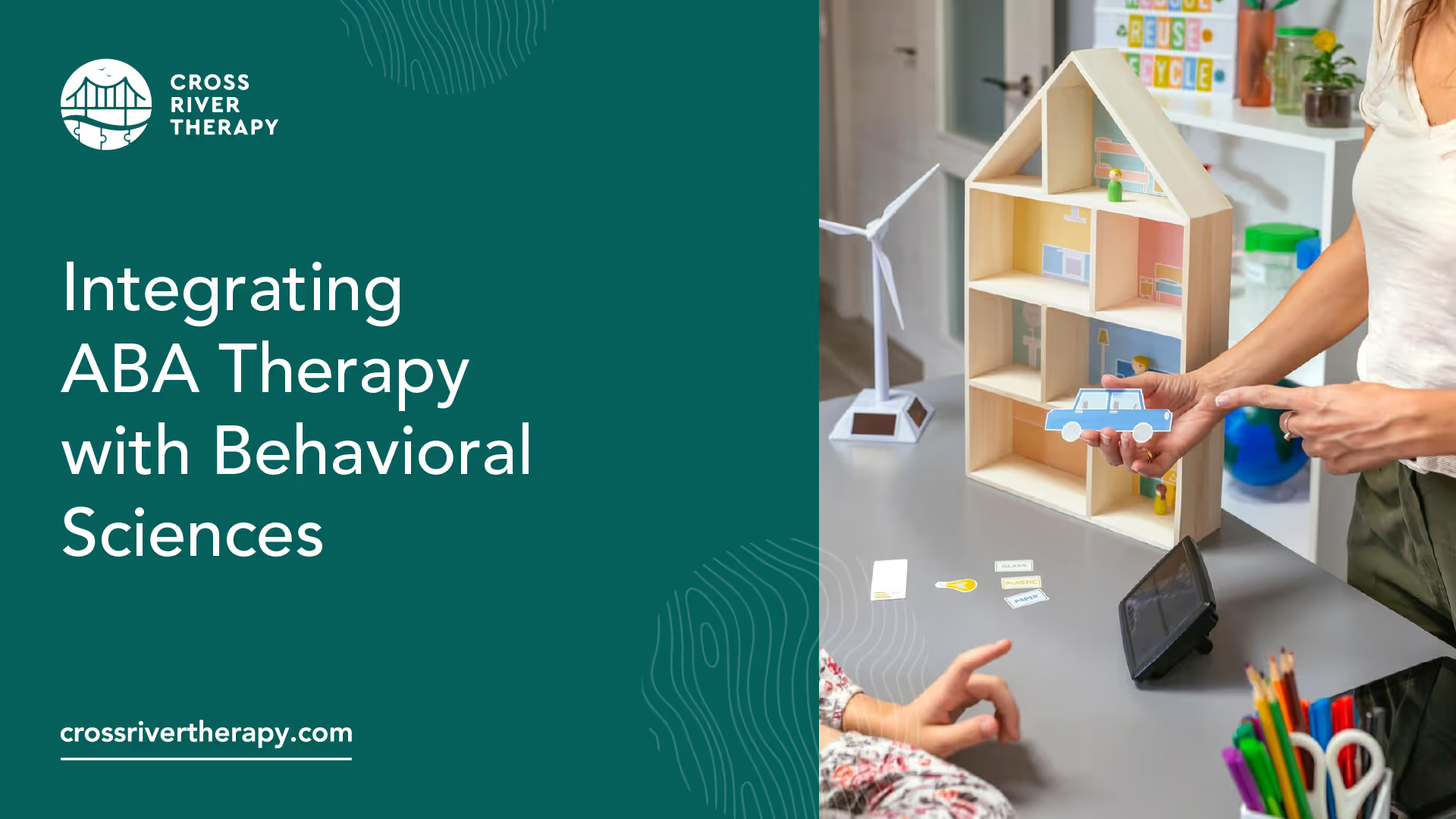
Fundamentals of ABA Therapy
ABA therapy is grounded in seven dimensions supported by scientific research, which encourages behavior modifications and improves daily living skills. The therapy utilizes various techniques for understanding behavior, including the application of positive reinforcement. This method involves rewarding desired behaviors, which gradually encourages more of these behaviors over time.
Some core principles of ABA include:
- Behavior Assessment: Identifying specific behaviors to be increased or decreased.
- Intervention Design: Creating tailored strategies to support the individual needs of each child.
- Data Collection: Monitoring progress and making adjustments to interventions as necessary.
Role of a BCBA Therapist
A Board Certified Behavior Analyst (BCBA) plays a crucial role in ABA therapy. This specialist is trained to assess, analyze, and develop interventions specifically designed to address behavioral challenges in children. The BCBA customizes ABA programs to fit each child’s unique skills, needs, interests, preferences, and family dynamics.
Responsibilities of a BCBA Therapist
- Assessing behavior to determine intervention needs
- Designing personalized ABA programs
- Monitoring and overseeing the implementation of those programs
- Training parents and caregivers in effective strategies
The BCBA therapist also ensures the methods used are scientifically-based and effective, promoting significant developmental enhancements for children receiving ABA therapy.
By understanding the fundamentals of ABA therapy and the significant role of a BCBA therapist, parents can make informed decisions about their child's treatment plan. They can trust that with the right techniques and support, their child has a path towards meaningful behavior change and improved daily living skills.
Importance of Consistency
In ABA therapy, maintaining consistency throughout the intervention process is crucial. When programs are executed uniformly, the likelihood of achieving meaningful behavior changes increases significantly.
Implementing ABA Programs
ABA intervention programs are designed by a board-certified behavior analyst (BCBA) and must be administered consistently by all technicians or individuals involved in the process. This consistency ensures that the methods used are effective in modifying behavior [1]. For parents, understanding how these programs are implemented can empower them to support their children's learning at home.
Key Factors in Implementing ABA Programs
- Consistent administration by trained technicians
- Clear goals and objectives outlined by the BCBA
- Regular monitoring and adjustments based on progress
By actively participating in the implementation of ABA programs, parents can create a supportive environment that reinforces the lessons and strategies being taught.
Behavior Modification through ABA
Behavior modification is a central focus of ABA therapy, utilizing techniques such as positive reinforcement to encourage desired behaviors. In this approach, when a behavior is followed by a valued reward, the likelihood of that behavior being repeated increases. Over time, this leads to positive behavior changes.
Positive reinforcement can take many forms, including praise, tokens, or small rewards, making it a versatile and highly effective strategy. A large body of literature supports the success of ABA procedures in improving adaptive behavior, intellectual functioning, and language abilities in children diagnosed with autism spectrum disorder (ASD) [3].
Benefits of Behavior Modification in ABA Therapy
- Increased adaptive behaviors
- Improved language skills
- Reduced severity of symptoms
For parents seeking more information on specific techniques, exploring ABA therapy and behavior modification offers further insights on effective strategies tailored to their child's needs. Consistent implementation and behavior modification through ABA therapy can lead to significant, lasting improvements in children's lives.
Early Intervention Benefits
Early intervention through ABA therapy has proven to be beneficial for children diagnosed with autism. By starting ABA therapy at a young age, parents can help their children develop essential skills that are crucial for their growth and social interaction.
Impact of Starting ABA Early
Starting ABA therapy before the age of four can significantly enhance children's development. Research indicates that this early intervention improves social and communication skills, facilitating better interactions with peers. The earlier a child begins therapy, the more likely they are to experience positive outcomes across various development areas.
Below summarizes key improvements typically observed when children receive early ABA intervention:
- Social Skills: Significant Improvement
- Communication Skills: Significant Improvement
- Intellectual Functioning: Moderate Improvement
- Daily Living Skills: Moderate Improvement
Over 20 studies support the effectiveness of intensive and long-term therapy using ABA principles in enhancing numerous skills, including intellectual functioning, language development, and daily living activities [2].
Developmental Enhancements
ABA interventions implemented in early childhood have been shown to yield long-term benefits. A meta-analysis by Virués-Ortega in 2010 highlighted that comprehensive ABA interventions resulted in notable improvements across language development, social functioning, and daily living skills compared to a control group that did not receive such intervention.
Improvement in various outcome measures is crucial for children with autism spectrum disorders (ASD). ABA therapy enhances their adaptability and can ease the transition into educational settings and social environments.
However, while the evidence supports positive interventions, it is essential to approach ABA therapy with the consideration that not all studies have assessed quality of life (QoL) or measured improvements based on individualized goals [4].
Long-Term Effects of ABA Therapy
ABA therapy has been shown to have significant long-term effects on individuals diagnosed with autism. As parents consider the benefits of this therapy, it is essential to understand how the skills acquired can persist and produce positive outcomes as children transition into adulthood.
Skills Persistence
Longitudinal studies indicate that the skills and behaviors learned through ABA therapy are likely to endure over time. Once therapy concludes, individuals often maintain and even build upon their gains. According to Illuminate ABA, this persistence hints at the effectiveness of ABA in creating lasting behavioral change.
The following table summarizes the skills commonly retained by individuals who have undergone ABA therapy:
- Social Skills: 80%
- Daily Living Skills: 75%
- Communication Skills: 70%
- Adaptation Skills: 65%
The development of these enduring skills empowers individuals to face daily challenges confidently and fosters independence.
Positive Outcomes in Adulthood
Individuals who participated in ABA therapy during their childhood tend to show improved outcomes in adulthood. Research highlights better results, including higher employment rates, independent living situations, and overall life satisfaction for those who underwent ABA principles.
A significant number of studies support the effectiveness of intensive ABA programs, indicating substantial advancements in areas such as intellectual functioning, language development, and social capabilities Autism Speaks.
Employment Rates:
- Individuals with ABA Therapy: 55%
- General Population: 40%
Independent Living:
- Individuals with ABA Therapy: 50%
- General Population: 30%
Life Satisfaction:
- Individuals with ABA Therapy: 70%
- General Population: 50%
The positive patterns suggest that ABA therapy not only supports immediate behavioral change but also encourages a more fulfilling adult life. This understanding can help parents make informed decisions about embracing ABA therapy for their children and assisting them in achieving their fullest potential.
Effectiveness of ABA Interventions
Applied Behavior Analysis (ABA) interventions are widely recognized for their effectiveness in improving various aspects of life for children diagnosed with autism spectrum disorder (ASD). This section will delve into the improvements seen in adaptive behavior and intellectual and language development.
Improvements in Adaptive Behavior
Research has shown that comprehensive ABA-based interventions significantly enhance adaptive behavior in children with ASD. A meta-analysis of multiple studies found notable gains in areas such as social interactions, daily living skills, and overall functionality.
The following table highlights average improvements observed in adaptive behavior through ABA interventions:
- Socialization Skills: Moderate to Significant Improvement
- Problem Behavior Reduction: Moderate Improvement
- Communication Skills: Moderate Improvement
- Daily Living Skills: Lesser Improvements
ABA strategies such as discrete trial teaching and pivotal response training are effective methods utilized to promote adaptive behavior.
Intellectual and Language Development
In addition to adaptive behavior, ABA therapy is also linked to enhancements in intellectual functioning and language abilities. Studies indicate that ABA interventions lead to moderate to significant improvements in both expressive and receptive language skills as well as communication skills among children with autism.
A summary of outcomes related to language development through ABA interventions is presented in the following table:
- Expressive Language Skills: Moderate to Significant Improvement
- Receptive Language Skills: Moderate Improvement
- Communication Skills: Moderate Improvement
- Nonverbal IQ Scores: Moderate Improvement
These advancements are crucial as they significantly contribute to a child's ability to communicate effectively and engage socially, enhancing their overall quality of life.
For more insights into how ABA techniques can be utilized effectively, consider exploring ABA therapy and behavior modification and ABA therapy for autism diagnosis.
Criticisms and Concerns
ABA therapy, while beneficial for many, also faces several criticisms and concerns that are important for families to consider.
Lack of Individualization
One major criticism is the potential lack of individualization in some ABA therapy programs. It has been noted that these programs may not adequately address the unique needs and backgrounds of individuals and their families.
This is particularly significant given the diversity among children diagnosed with autism. Some autism rights and neurodiversity advocates express concerns about the rigid nature of traditional ABA interventions, arguing that they may not align with modern practices that emphasize a more personalized approach.
Moreover, misconceptions about the intensity of ABA therapy exist. There is a belief that participants should receive an exact duration of therapy—often cited as 40 hours a week—which can lead to further dissatisfaction with the therapy's structure.
Families should seek programs that genuinely cater to the needs of their children, adapting the interventions based on individual progress and responsiveness.
- Individualization: Programs may not always effectively address the unique needs of each individual.
- Intensity: There can be misconceptions about the required therapy hours, leading to concerns about intensity and feasibility.
- Rigidity: Traditional ABA approaches can sometimes be perceived as too formulaic, potentially lacking flexibility in adapting to individual differences.
Cultural Sensitivity Issues
Cultural sensitivity is another area of concern in ABA therapy. Some programs may not sufficiently consider the cultural context of the families they serve, potentially leading to misunderstandings or misapplications of behavioral techniques.
Autism rights groups have raised voices against certain practices within behavior analysis, emphasizing the need for culturally informed approaches that recognize the diverse backgrounds of families. These groups argue that interventions should incorporate the values, beliefs, and environments of the individuals they are helping.
By failing to do so, there is a risk of alienating families and not truly addressing their specific challenges and needs.
Finding programs that prioritize both individual and cultural considerations is crucial for effective ABA therapy and behavioral sciences interventions. Families should thoroughly evaluate potential therapy options, ensuring they align with personal values and cultural identities.
References
[1]: https://www.autismparentingmagazine.com/aba-principles/
[2]: https://www.autismspeaks.org/applied-behavior-analysis
[3]: https://www.ncbi.nlm.nih.gov/pmc/articles/PMC9114057/
[4]: https://www.ncbi.nlm.nih.gov/pmc/articles/PMC9458805/
[5]: https://illumtherapy.com/the-long-term-effects-of-aba-therapy-for-autistic-children/
Recent News
Related articles

6 Arkansas Medicaid ABA Therapy Rules Families Need to Know
Arkansas Medicaid ABA therapy has age, diagnosis and approval rules. Families can check six requirements before care.

Arizona Autism Laws for ABA Coverage and School Rights
Arizona autism laws for ABA coverage vary by plan. Families can check insurance, appeal options, and school rights.

ABA Therapist Salary in Arkansas for RBTs and BCBAs
Compare ABA therapist salary in Arkansas by role. See how paid hours and benefits affect earnings before applying.

5 Autism Support Groups and Family Resources in New Mexico
Autism support groups in New Mexico connect families. Local resources offer events, parent support, and school help.

Where to Get an Autism Evaluation in New Mexico
Autism evaluation options in New Mexico include UNM and NMSU. Age and referral details help parents prepare.

7 North Carolina Autism Resources to Contact Before ABA Therapy Starts
Autism resources North Carolina families can call for diagnosis, early intervention, rights, and parent support. Start ABA intake with Cross River.

Does Indiana Medicaid Cover ABA Therapy? A Parent Checklist
Indiana Medicaid ABA therapy may cover care for eligible children. The checklist covers coaching and renewals.

How to Apply for the New Mexico DD Waiver
Your NM DD waiver application starts with state intake. The steps cover records, submission, and enrollment.

Does Insurance Cover ABA Therapy in New Jersey?
ABA therapy insurance in New Jersey varies by plan. Learn what NJ FamilyCare covers and how to check costs.

How ABA Therapy Builds Communication for Nonverbal Children Without Forcing Speech
ABA therapy communication for nonverbal children starts with AAC, signs, and daily routines. See how kids ask, refuse, choose, and get help.

How to Start ABA Therapy in New Jersey With a Checklist
Your guide explains how to start ABA therapy in New Jersey. A first-call checklist covers records and next steps.

How to Get an Autism Evaluation in Arkansas Before Starting ABA Therapy
How to get an autism evaluation in Arkansas starts with a referral, provider choice, and key records. Use this parent checklist before ABA intake.