








Using Developmental Assessments in ABA Therapy
Discover how ABA therapy and developmental assessments support children with autism for a brighter future!


ABA Therapy for Young Children
ABA therapy has proven to be an effective approach for supporting the developmental needs of young children, particularly those on the autism spectrum. Early intervention is crucial and provides numerous benefits in enhancing children's skills.

Benefits of Early Intervention
Early intervention is effective when initiated before the age of four, particularly between 2 and 6 years old. Research has shown significant positive effects on language development, adaptive behaviors, and overall social and daily living skills. The impact of early intervention is substantial and can be sustained for up to 18 years later.
Here is a breakdown of the benefits gained through early intervention:
- Language Development: Increases vocabulary and improves overall communication skills.
- Adaptive Behaviors: Enhances daily living skills, making daily routines easier and more manageable.
- Social Skills: Helps children interact with peers and develop meaningful relationships.
- Long-Term Impact: Positive effects can be maintained years after the intervention has ended.
Early intervention can create a strong foundation for lifelong learning and development.
Early Start Denver Model (ESDM)
The Early Start Denver Model (ESDM) represents a specialized application of ABA therapy, specifically designed for infants and toddlers aged 6 to 15 months. This model emphasizes social communication and actively involves parents in administering the intervention. By integrating parents into the process, the ESDM helps create a nurturing environment conducive to targeted skill development.
Key components of the ESDM include:
- Parent Involvement: Parents learn techniques to support their child's development during daily interactions.
- Structured Play: Focuses on using play as a context for learning and skill acquisition.
- Individualized Goals: Tailored goals specific to the child's unique needs, strengths, and interests.
The ESDM has shown promising results in advancing behavioral and developmental outcomes for young children, reflecting the versatility of ABA therapy in various contexts.
ABA Therapy for Older Learners
ABA therapy is not limited to young children; it can also be highly effective for older learners. This segment discusses the benefits of ABA therapy beyond specific age groups and emphasizes practical skills development crucial for everyday life.
Benefits Beyond Specific Age Groups
Older learners, ages 7 and above, can significantly benefit from ABA therapy. Unlike earlier stages, where intensive hours are often necessary, older children and adolescents typically engage in shorter weekly sessions.
This structure allows them to participate in outside activities while still receiving quality support. The flexibility in hours enhances their engagement in social interactions and activities of daily living. Evidence suggests that ABA therapy effectively meets the needs of individuals across different age groups, demonstrating that therapeutic principles can apply at any stage of development [1].
- Ages 7+: 10 - 20 hours; Focus areas: Practical safety, social skills, life skills.
- Ages 3-6: 30 - 40 hours; Focus areas: Intensive foundational skills.
Focus on Practical Skills
The focus of ABA therapy for older learners is on developing practical skills essential for independent living. Treatment goals are tailored to each individual's needs and can include areas such as social skills, communication, and daily living skills.
This personalized approach ensures that the therapy addresses the specific challenges faced by older learners, helping them navigate social situations and develop vital skills that can facilitate smoother transitions into adulthood.
For example, a typical lesson might involve role-playing social scenarios to improve interaction skills or teaching self-care routines. Active, experiential learning is an effective method for instilling confidence and independence in older learners.
In summary, ABA therapy offers valuable support for older learners, focusing on practical applications and providing them with the essential skills needed for successful adult life. The ongoing support can empower them to achieve personalized goals while enhancing their overall quality of life.
ABA Therapy for Adults
ABA therapy is not just for children; it also offers significant benefits for adults, focusing on tailored goals and practical applications. This therapy can play an important role in enhancing the quality of life for individuals with autism.
Individualized Goals
One of the key features of ABA therapy for adults is its emphasis on individualized goals. This approach targets specific areas for improvement, such as:
- Social Skills: Enhancing interactions and relationships with others.
- Communication: Improving verbal and non-verbal communication abilities.
- Daily Living Skills: Supporting independence in activities like cooking, cleaning, and personal care.
By setting personalized objectives, adult learners can work towards meaningful outcomes that align with their personal interests and life situations. While access to formal ABA programs may sometimes be limited, the principles of ABA can be adapted for use in daily life, ensuring that progress is still achievable.
Application in Everyday Life
The principles of ABA therapy can significantly improve everyday life for adults. Techniques learned during therapy can be applied in various contexts, such as:
- At home: Establishing routines that promote independent living.
- At work: Enhancing job performance through effective communication and collaboration.
- In social settings: Practicing the social skills necessary to foster friendships and community engagement.
Integrating ABA techniques into daily activities helps reinforce learned skills, making them more effective and sustainable. Through ongoing practice, individuals can see improvements not only in specific skills but also in overall well-being.
By focusing on tailored goals and practical applications, adults can benefit greatly from ABA therapy, leading to enhanced quality of life and independence.
Phases of ABA Therapy
Applied Behavior Analysis (ABA) therapy is designed to provide a structured framework that supports individuals with autism and their families. This approach consists of several phases, including an intensive therapy phase that lays the groundwork for future learning.
Structured Approach Overview
The structured approach of ABA therapy embraces a systematic method that includes several key components. This structure not only enhances the effectiveness of the therapy but also provides parents with a clear understanding of their child's progress.
- Intensive Therapy Phase: This initial phase focuses on delivering comprehensive support tailored to the unique needs of the individual.
- Transition to a Focused Approach: As progress is made, the therapy shifts toward more specific goals, concentrating on areas where the individual requires additional support.
- Graduation from ABA Services: The final phase involves transitioning out of intensive therapy, where individuals confidently apply their learned skills in everyday situations.
The intensive therapy phase is critical and typically lasts for 2-3 years. Throughout this period, individuals receive between 30 to 40 hours of therapy each week. This significant exposure allows for a robust development of foundational skills, ultimately fostering greater independent functioning.
Intensive Therapy Phase
During the intensive therapy phase, the focus is on integrating practical skills into daily life. This phase has proven to be remarkably effective, especially when initiated before the age of four. Research indicates that early intervention, particularly between ages 2 and 6, results in substantial improvements in language development, adaptive behaviors, and social skills. Many of these positive effects are sustained for up to 18 years [1].
The following table provides a snapshot of the core components of the intensive therapy phase:
- Duration: 2-3 years
- Weekly Hours: 30-40 hours
- Focus Areas: Language development, social skills, daily living skills
- Long-term Benefits: Sustained improvements in functioning and skills
More than 20 studies have demonstrated that the combination of intensive and long-term ABA therapy yields significant advancements in various areas, such as intellectual functioning and social integration.
This structured approach is instrumental in guiding individuals through their learning journey while supporting parents with knowledge and tools to help their children thrive.
Effectiveness of ABA Therapy
Applied Behavior Analysis (ABA) has been utilized by therapists to assist children with autism and related developmental disorders since the 1960s [2]. Over the decades, ABA has evolved into a structured approach, emphasizing the importance of behavioral techniques and their impacts on learning and development.
The historical foundation of ABA therapy highlights its long-standing commitment to helping individuals. By systematically applying behavioral principles, practitioners have been able to observe and measure significant improvements in children's abilities. This legacy continues to inform contemporary practices and interventions in the field.
Evidence-Based Best Practice
ABA therapy is recognized as an evidence-based best practice treatment by the US Surgeon General and the American Psychological Association. More than 20 studies support its effectiveness in improving outcomes for children with autism through programs that offer between 25 to 40 hours a week of therapy for 1 to 3 years.
The following table summarizes key findings on the effectiveness of ABA therapy for children with autism:
- 1 Year: 25-40 Hours; Outcome: Significant Skill Improvement
- 2 Years: 25-40 Hours; Outcome: Enhanced Social Development
- 3 Years: 25-40 Hours; Outcome: Positive Behavioral Changes
The methodologies guided by ABA are considered the most effective interventions for individuals diagnosed with Autism Spectrum Disorder (ASD). Various research studies have demonstrated the effectiveness of these interventions, leading to endorsements from prominent organizations, including Autism Speaks and the American Psychological Association.
The robust body of evidence surrounding ABA therapy underscores its importance in addressing the diverse needs of children with autism.
ABA Therapy Techniques
ABA therapy incorporates various techniques designed to foster development and support learning in children with autism. Below are some key methods commonly employed in this therapeutic approach.
Positive Reinforcement
Positive reinforcement is a fundamental strategy within ABA therapy aimed at strengthening desired behaviors. This technique involves providing rewards, such as praise, access to preferred activities, or other positive consequences when the individual exhibits a targeted behavior.
This process encourages repetition of the behavior, making it more likely to occur again in the future. For more information on how these techniques can be applied, parents can refer to resources on aba therapy for childhood development.
Video Modeling
Video modeling is a widely used ABA teaching method particularly effective for visual learners, including many individuals with autism. This technique involves showing videos that depict specific skills or behaviors that the individual is expected to learn [4]. By providing a visual example, children can observe and repeat the behaviors they see, enhancing their understanding and ability to execute tasks.
Specialized Intervention Techniques
ABA therapy utilizes a range of specialized techniques to meet the unique needs of individuals. Some of the notable interventions include:
- Antecedent-based Interventions (ABI): Focuses on modifying the environment or triggers that lead to certain behaviors.
- Functional Behavior Assessment (FBA): Involves determining the reasons behind behaviors to inform intervention strategies.
- Parent-implemented Intervention (PII): Engages parents in providing support and reinforcement in everyday scenarios.
These specialized techniques empower parents and caregivers with tools to facilitate consistent learning at home, as detailed in other resources like aba therapy for special education and aba therapy for social development.
Through the use of these techniques, ABA therapy aims to create structured and effective learning environments that nurture the growth of children with autism.
References
[1]: https://www.abtaba.com/blog/aba-therapy-age-limit
[2]: https://www.autismspeaks.org/applied-behavior-analysis
[3]: https://www.ncbi.nlm.nih.gov/pmc/articles/PMC9114057/
[4]: https://www.brighterstridesaba.com/blog/aba-therapy-techniques
Recent News
Related articles

6 Arkansas Medicaid ABA Therapy Rules Families Need to Know
Arkansas Medicaid ABA therapy has age, diagnosis and approval rules. Families can check six requirements before care.

Arizona Autism Laws Every Parent Should Know Before Starting ABA Therapy
Autism laws Arizona parents should know cover ABA insurance, AHCCCS appeals, IEPs, and Section 504 rights. Check ABA coverage with Cross River.

ABA Therapist Salary in Arkansas: What BCBAs and RBTs Actually Earn in 2026
ABA therapist salary Arkansas figures compare RBT and BCBA rates, benefits, guaranteed hours, and contract terms. Explore careers at Cross River.

5 Autism Support Groups and Family Resources in New Mexico Alongside ABA Therapy
Autism support groups New Mexico families can use offer peer support, local events, and school help. Cross River can explain ABA therapy options.

Where to Get an Autism Evaluation in New Mexico Before Starting ABA Therapy
Autism evaluation New Mexico options include UNM, NMSU, FIT, and private providers. Compare providers, records, and ABA steps with Cross River.

7 North Carolina Autism Resources to Contact Before ABA Therapy Starts
Autism resources North Carolina families can call for diagnosis, early intervention, rights, and parent support. Start ABA intake with Cross River.

Does Indiana Medicaid Cover ABA Therapy? A Step-by-Step Eligibility Checklist for Parents
Medicaid ABA therapy Indiana covers eligible children under 21 with prior authorization. Your five-step coverage review can start with Cross River.
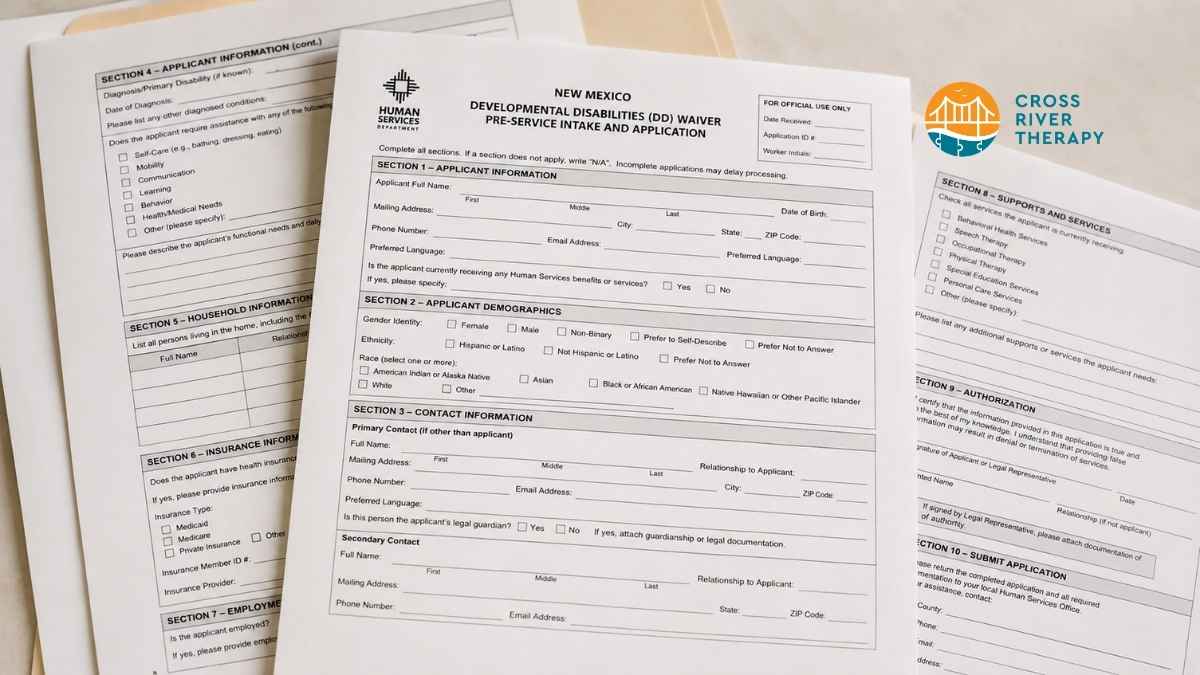
How to Apply for New Mexico’s DD Waiver While Starting ABA Therapy
Autism waiver New Mexico applications need DD Waiver records and proof of daily support needs. Your next step is to start ABA intake with Cross River.

Is ABA Therapy Covered by Insurance in New Jersey? What Every Parent Should Know
ABA therapy insurance New Jersey may cover medically necessary care based on plan type, network, and authorization. Verify benefits with Cross River.

How ABA Therapy Builds Communication for Nonverbal Children Without Forcing Speech
ABA therapy communication for nonverbal children starts with AAC, signs, and daily routines. See how kids ask, refuse, choose, and get help.

How to Start ABA Therapy in New Jersey With a First-Call Checklist
How to start ABA therapy in New Jersey begins with records, insurance details, and intake questions. Use this first-call checklist before you call.

How to Get an Autism Evaluation in Arkansas Before Starting ABA Therapy
How to get an autism evaluation in Arkansas starts with a referral, provider choice, and key records. Use this parent checklist before ABA intake.