








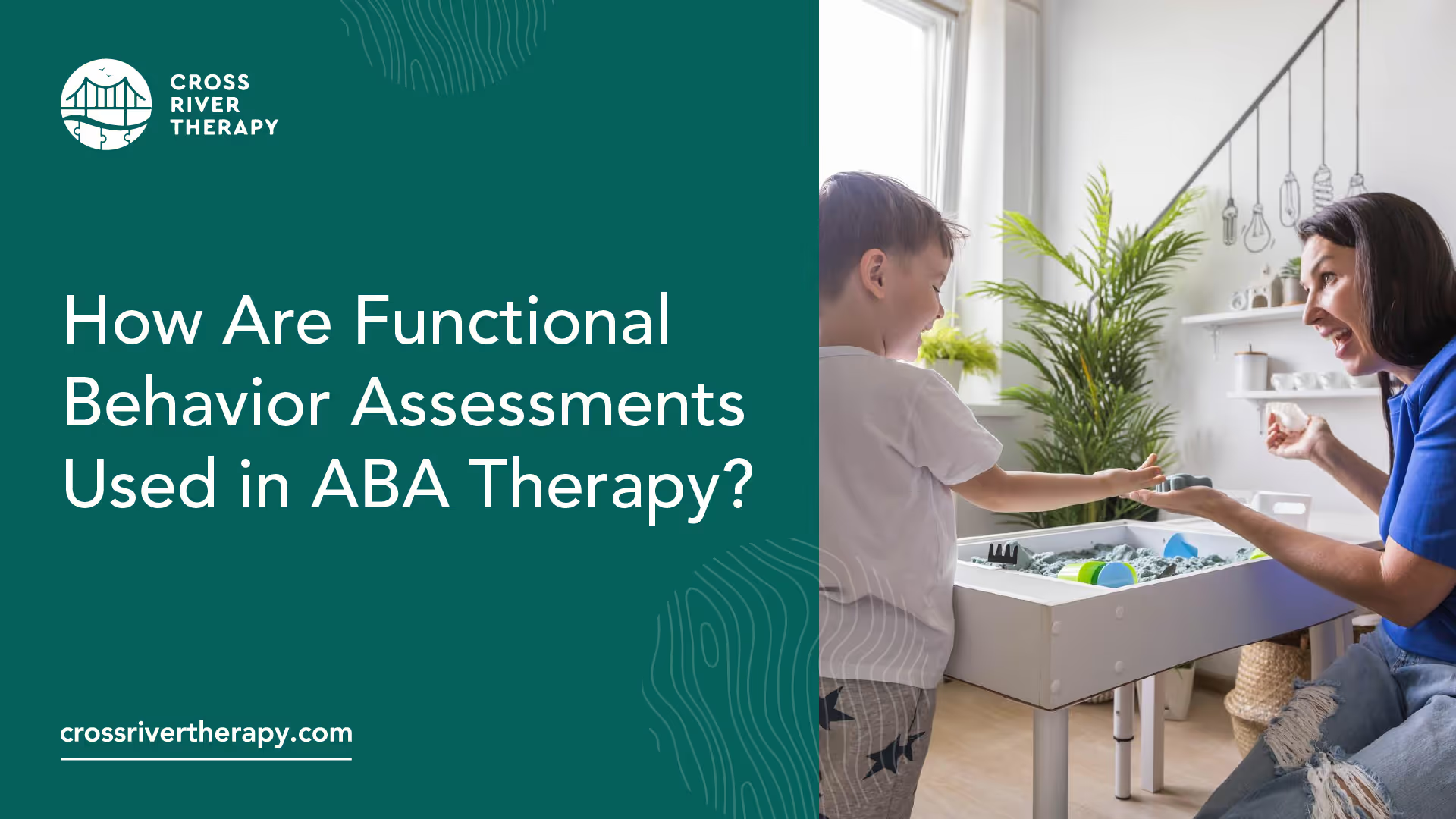
How Are Functional Behavior Assessments Used in ABA Therapy?
Discover how functional behavior assessments revolutionize ABA therapy for children with autism.


Understanding ABA Therapy
ABA Therapy, short for Applied Behavior Analysis Therapy, is a scientifically proven approach that focuses on modifying behavior through systematic interventions. It has been recognized as an effective treatment for individuals with autism spectrum disorder (ASD) and other developmental disorders. ABA Therapy involves the application of behavioral principles to teach and reinforce positive behaviors while reducing challenging behaviors, aiming to improve various areas of functioning such as communication, social skills, and daily living skills.
Basics of ABA Therapy
ABA Therapy follows a structured and individualized approach to address the unique needs of each individual. The therapy is based on the principles of behavior analysis, which involves breaking down complex skills into smaller, more manageable steps. These steps are then taught systematically, utilizing evidence-based strategies and techniques.
One of the key aspects of ABA Therapy is its focus on data collection and analysis. Therapists carefully measure and track progress, allowing for ongoing evaluation of the effectiveness of interventions. This data-driven approach enables therapists to make informed decisions and modify treatment plans as needed, ensuring that therapy remains tailored to the individual's needs.
Goals of ABA Therapy
Setting goals is a fundamental aspect of ABA Therapy. By establishing clear objectives, therapy sessions can be purposefully designed to target specific skills and behaviors. The goal-setting process is based on a thorough assessment of the individual's strengths, challenges, and areas of need.
ABA Therapy goals may include:
- Improving communication skills: This may involve increasing vocabulary, developing expressive language abilities, or enhancing nonverbal communication skills.
- Enhancing social interactions: ABA Therapy aims to teach individuals appropriate social behaviors, such as turn-taking, initiating and maintaining conversations, and understanding social cues.
- Increasing independence in daily activities: ABA Therapy focuses on teaching individuals the necessary skills to perform everyday tasks independently, such as dressing, grooming, and meal preparation.
- Reducing challenging behaviors: ABA Therapy utilizes strategies to decrease problematic behaviors, such as aggression, self-injury, or tantrums, while teaching alternative, more appropriate behaviors.
By setting specific and measurable goals, progress can be objectively measured and celebrated along the way. ABA Therapy goals typically fall into three common types: behavioral goals, communication goals, and social skills goals. Each goal is individualized to address the unique needs of the individual receiving therapy.
In the next sections, we will explore the effectiveness of ABA Therapy, the role of Board Certified Behavior Analysts (BCBAs), the therapy process, and the importance of Functional Behavior Assessments (FBAs) in ABA Therapy. The aim is to provide a comprehensive understanding of how ABA Therapy can support individuals with autism and other developmental disorders in reaching their full potential.
ABA Therapy Effectiveness
When it comes to ABA therapy, research has consistently shown its effectiveness in helping children with autism and related developmental disorders since the 1960s [2]. ABA therapy is an evidence-based best practice treatment, recognized by the US Surgeon General and the American Psychological Association. Let's explore the research behind ABA therapy and the role of a BCBA in its implementation.
Research on ABA Therapy
More than 20 studies have established that intensive and long-term therapy using ABA principles improves outcomes for many children with autism. These studies have demonstrated improvements in various areas, including intellectual functioning, language development, daily living skills, and social functioning. The individualized nature of ABA therapy allows for tailored interventions that address specific needs and goals of each child.
The effectiveness of ABA therapy lies in its focus on teaching skills and reducing challenging behaviors through systematic and data-driven techniques. By breaking down complex skills into smaller, more manageable components, ABA therapists can provide targeted instruction and reinforcement, leading to significant progress over time. The use of positive reinforcement is a key aspect of ABA therapy, as it motivates and rewards desired behaviors, facilitating learning and generalization.
Role of BCBA in ABA
A board-certified behavior analyst (BCBA) plays a crucial role in ABA therapy. The BCBA designs and directly oversees ABA programs, customizing them to each learner's skills, needs, interests, preferences, and family situation. They are highly trained professionals with expertise in behavior analysis, assessment, and intervention strategies. BCBA certification requires a master's degree in a relevant field, supervised experience, and passing a certification exam.
In ABA therapy, therapists, often registered behavior technicians (RBTs), work directly with individuals with autism under the supervision of the BCBA. These therapists are trained and supervised by the BCBA to implement ABA interventions, practice skills, and work toward individual goals set by the BCBA [2]. The BCBA provides ongoing guidance, monitors progress, and makes adjustments to the therapy program as needed.
The collaboration between the BCBA and therapists ensures that ABA therapy is tailored to the specific needs of each child. This individualized approach allows for the identification of effective strategies, continuous evaluation of progress, and adaptation of interventions when necessary. The BCBA's expertise helps ensure the highest quality of care and optimal outcomes for individuals undergoing ABA therapy.
By utilizing the principles of behavior analysis, ABA therapy has proven to be highly effective in improving outcomes for children with autism. The ongoing research and expertise of BCBA professionals contribute to the continued refinement and advancement of ABA therapy practices, leading to better outcomes for individuals with autism spectrum disorder.
ABA Therapy Process
In the ABA therapy process, there are key individuals involved in delivering the therapy and customizing the programs to meet the specific needs of each individual with autism. These individuals include therapists in ABA and the role they play in implementing the therapy, as well as the importance of customizing ABA programs for optimal effectiveness.
Therapists in ABA
ABA therapy programs involve therapists who work directly with individuals with autism under the guidance of a board-certified behavior analyst (BCBA). These therapists, also known as registered behavior technicians (RBTs), are trained and supervised by the BCBA to provide appropriate interventions and practice skills with individuals to help them work toward their individual goals. The BCBA designs and directly oversees the ABA programs, ensuring that they are tailored to each learner's skills, needs, interests, preferences, and family situation. The therapists play a crucial role in implementing the programs and working closely with individuals with autism to promote positive behavior changes.
Customizing ABA Programs
Customization is a key aspect of ABA therapy. The BCBA, as the primary therapist, designs and customizes the ABA programs to meet the specific needs of each individual with autism. This customization is essential because it allows the therapy to be personalized and tailored to address the unique challenges and goals of the individual.
The BCBA takes into account various factors when customizing ABA programs, including the individual's skills, needs, interests, preferences, and family situation. By considering these factors, the BCBA can create a program that is engaging, relevant, and meaningful for the individual. Customization also allows for the incorporation of specific teaching methods and strategies that are most effective for the individual.
Moreover, ABA programs written by the BCBA should be detailed and easily followed by anyone involved in the therapy, including parents. This ensures that behavior modifications can be maintained consistently at home, reinforcing the progress made during therapy sessions.
By customizing ABA programs, the therapy becomes individualized and tailored to the unique needs of each person with autism. This personalized approach maximizes the effectiveness of ABA therapy and increases the likelihood of achieving meaningful outcomes.
In the next section, we will explore the significance of functional behavior assessments (FBA) in the ABA therapy process and how they contribute to understanding and addressing challenging behaviors.
Functional Behavior Assessments
In the realm of ABA therapy for individuals with autism, one essential tool used by professionals is the Functional Behavior Assessment (FBA). FBAs play a crucial role in understanding and addressing challenging behaviors by identifying the function or purpose of those behaviors. Let's explore the importance of FBAs and the process of conducting one.
Importance of FBAs
Functional Behavior Assessments have proven to be effective across a wide range of settings and behaviors. They provide valuable insights into the underlying causes of challenging behaviors, helping teachers and therapists develop appropriate interventions. By understanding the function of a behavior, educators can design interventions that teach new, more acceptable methods of achieving desired outcomes [4].
By conducting an FBA, professionals can:
- Determine the factors that maintain the behavior.
- Identify triggers or antecedents that lead to the behavior.
- Gain insights into the consequences that reinforce the behavior.
- Develop targeted interventions to address the underlying function of the behavior.
- Create individualized behavior support plans.
Ultimately, the goal of an FBA is to improve the quality of life for individuals with autism by reducing challenging behaviors and promoting more adaptive skills.
Conducting an FBA
The process of conducting a Functional Behavior Assessment involves a team of education professionals, such as behavior analysts, school counselors, and special educators. These professionals follow specific steps to determine the function of the behavior and design appropriate interventions [4].
Here is a general overview of the steps involved in conducting an FBA:
- Identify the target behavior: Clearly define and describe the behavior that is of concern.
- Collect data: Gather information about the behavior by using various methods such as direct observation, interviews with individuals who interact with the individual, and reviewing existing records.
- Form a hypothesis: Analyze the data and develop a hypothesis about the function or purpose of the behavior.
- Test the hypothesis: Conduct further observations and experiments to confirm or refine the initial hypothesis.
- Develop interventions: Based on the information gathered, design appropriate interventions that address the underlying function of the behavior.
- Implement and monitor interventions: Put the interventions into practice and closely monitor the individual's response and progress.
- Evaluate the effectiveness: Continuously assess the effectiveness of the interventions and make adjustments as necessary.
Remember, conducting an FBA requires expertise and collaboration among professionals. It is essential to involve the individual's family and other team members to ensure a comprehensive understanding of the behavior and the development of effective interventions.
Functional Behavior Assessments are often part of multi-tiered systems of support, providing increasingly intensive and individualized levels of support for behavior, such as Positive Behavioral Interventions and Supports (PBIS). By using FBAs, educators can gain a deeper understanding of challenging behaviors and contribute to the overall success of individuals receiving ABA therapy.
In the next section, we will explore the specific use of FBAs in educational settings and their connection to multi-tiered support systems.
FBA in Educational Settings
In educational settings, Functional Behavior Assessments (FBAs) play a crucial role in understanding and addressing challenging behaviors. An FBA is a systematic process that involves gathering and analyzing data to determine the function or purpose of a specific behavior. It provides valuable insights into the underlying causes of challenging behaviors, helping teachers better understand the reasons behind a student's behavior and design interventions to teach new, more acceptable methods of achieving desired outcomes [5].
FBA Procedures
The process of conducting an FBA in educational settings involves education professionals such as behavior analysts, school counselors, and special educators. They follow specific steps to determine the function of the behavior and design appropriate interventions.
- Identify the behavior: The first step is to clearly define the behavior that needs assessment. This involves describing the behavior in observable and measurable terms to ensure consistency in data collection.
- Collect data: Data collection involves gathering information about the behavior, including when and where it occurs, its frequency, duration, and intensity. This data can be collected through direct observation, interviews with the student, parents, or teachers, and reviewing existing records.
- Analyze data: Once the data is collected, it is analyzed to identify patterns and potential functions of the behavior. This analysis helps determine if the behavior serves a specific purpose, such as escaping a task or seeking attention.
- Hypothesize function: Based on the data analysis, hypotheses are developed regarding the function of the behavior. These hypotheses serve as a starting point for designing interventions that address the underlying needs driving the behavior.
- Develop interventions: Using the information gathered during the FBA, interventions are developed to address the identified function of the behavior. These interventions are individualized and focus on teaching alternative, more appropriate behaviors that serve the same function.
Multi-Tiered Support Systems
Functional Behavior Assessments are often part of multi-tiered systems of support, providing increasingly intensive and individualized levels of support for behavior. These systems, such as Positive Behavioral Interventions and Supports (PBIS), aim to create a positive and supportive school environment that addresses the needs of all students.
In multi-tiered support systems, FBAs are typically conducted at Tier 3, which involves individualized interventions for students with significant behavioral challenges. However, the data and insights gained from FBAs can also inform interventions at Tier 2 and Tier 1, which provide more universal and targeted supports for all students.
By using a multi-tiered approach, schools can identify students' behavioral needs early on and provide appropriate interventions to support their success. FBAs play a crucial role in this process by providing valuable information that guides the development and implementation of effective interventions.
By conducting FBAs and utilizing multi-tiered support systems, educational professionals can better understand the function of behaviors, design targeted interventions, and create a positive learning environment that promotes the success and well-being of all students.
ABA and Behavior Analysis
Applied Behavior Analysis (ABA) is rooted in the principles and science of behavior analysis. Let's explore the science behind ABA and the ethical considerations associated with its practice.
Science Behind ABA
ABA is based on the understanding that behavior is influenced by environmental factors. It utilizes the principles of behavior analysis to design and implement interventions that bring about meaningful and positive changes in behavior. The science behind ABA is grounded in the principles of reinforcement, prompting, shaping, and generalization.
Reinforcement plays a crucial role in ABA. By providing positive reinforcement, such as praise or rewards, for desired behaviors, individuals are motivated to engage in those behaviors more frequently. Similarly, by implementing consequences for undesirable behaviors, such as ignoring or removing attention, ABA aims to decrease those behaviors over time.
Prompting techniques are used in ABA to help individuals learn and perform new skills. This involves providing cues or assistance to guide individuals towards the correct response. Over time, prompts are faded gradually to promote independent skill acquisition.
Shaping is another technique used in ABA to teach complex behaviors. It involves breaking down the target behavior into smaller, manageable steps and reinforcing each successive approximation towards the desired behavior. This gradual shaping process allows individuals to learn and master new skills at their own pace.
Generalization is an essential aspect of ABA. It involves teaching individuals to apply newly acquired skills across different settings, people, and situations. ABA programs aim to facilitate generalization to ensure that individuals can use their skills in various real-life contexts.
ABA Ethics and Best Practices
Ethical considerations are of utmost importance in the field of ABA. The Behavior Analyst Certification Board (BACB) has established ethical guidelines for behavior analysts to ensure ethical decision-making and professional conduct [6]. The BACB's Ethics Code describes required professional behavior specific to applied behavior analysts, emphasizing the importance of ethical practice within the field of ABA.
ABA practitioners adhere to evidence-based practice (EBP) guidelines, which align with the core tenets of ABA and the Ethics Code. EBP emphasizes the use of the best available evidence, consideration of client values and context, and application of clinical expertise to support ethical decision-making within the field of ABA. By following ethical guidelines and integrating EBP, behavior analysts strive to provide effective and ethical services to individuals receiving ABA therapy.
In conclusion, ABA is grounded in the science of behavior analysis, utilizing reinforcement, prompting, shaping, and generalization techniques to bring about positive behavior change. Ethical considerations play a crucial role in ABA practice, guided by the BACB's Ethics Code and the principles of evidence-based practice. By combining the science of behavior analysis with ethical practices, ABA professionals aim to make a meaningful impact on the lives of individuals with autism and other developmental disabilities.
References
[1]: https://www.adinaaba.com/post/aba-therapy-goals
[2]: https://www.autismspeaks.org/applied-behavior-analysis
[3]: https://www.autismparentingmagazine.com/aba-principles/
[4]: https://iris.peabody.vanderbilt.edu/module/fba/cresource/q2/p04/
[5]: https://howtoaba.com/how-to-do-a-functional-behaviour-assessment/
Recent News
Related articles

6 Arkansas Medicaid ABA Therapy Rules Families Need to Know
Arkansas Medicaid ABA therapy has age, diagnosis and approval rules. Families can check six requirements before care.

Arizona Autism Laws Every Parent Should Know Before Starting ABA Therapy
Autism laws Arizona parents should know cover ABA insurance, AHCCCS appeals, IEPs, and Section 504 rights. Check ABA coverage with Cross River.

ABA Therapist Salary in Arkansas: What BCBAs and RBTs Actually Earn in 2026
ABA therapist salary Arkansas figures compare RBT and BCBA rates, benefits, guaranteed hours, and contract terms. Explore careers at Cross River.

5 Autism Support Groups and Family Resources in New Mexico Alongside ABA Therapy
Autism support groups New Mexico families can use offer peer support, local events, and school help. Cross River can explain ABA therapy options.

Where to Get an Autism Evaluation in New Mexico Before Starting ABA Therapy
Autism evaluation New Mexico options include UNM, NMSU, FIT, and private providers. Compare providers, records, and ABA steps with Cross River.

7 North Carolina Autism Resources to Contact Before ABA Therapy Starts
Autism resources North Carolina families can call for diagnosis, early intervention, rights, and parent support. Start ABA intake with Cross River.

Does Indiana Medicaid Cover ABA Therapy? A Step-by-Step Eligibility Checklist for Parents
Medicaid ABA therapy Indiana covers eligible children under 21 with prior authorization. Your five-step coverage review can start with Cross River.

How to Apply for New Mexico’s DD Waiver While Starting ABA Therapy
Autism waiver New Mexico applications need DD Waiver records and proof of daily support needs. Your next step is to start ABA intake with Cross River.

Is ABA Therapy Covered by Insurance in New Jersey? What Every Parent Should Know
ABA therapy insurance New Jersey may cover medically necessary care based on plan type, network, and authorization. Verify benefits with Cross River.

How ABA Therapy Builds Communication for Nonverbal Children Without Forcing Speech
ABA therapy communication for nonverbal children starts with AAC, signs, and daily routines. See how kids ask, refuse, choose, and get help.

How to Start ABA Therapy in New Jersey With a First-Call Checklist
How to start ABA therapy in New Jersey begins with records, insurance details, and intake questions. Use this first-call checklist before you call.

How to Get an Autism Evaluation in Arkansas Before Starting ABA Therapy
How to get an autism evaluation in Arkansas starts with a referral, provider choice, and key records. Use this parent checklist before ABA intake.