








Effective Inclusion Strategies in ABA Therapy
Discover effective inclusion strategies in ABA therapy for children with autism.



Understanding ABA Therapy
ABA therapy, also known as Applied Behavior Analysis therapy, is a powerful and evidence-based therapeutic approach used to support individuals with autism and related developmental disorders. It focuses on understanding and modifying behavior through the application of behavioral principles. ABA therapy has been utilized since the 1960s and has been extensively studied and proven effective in improving outcomes for many children with autism.
Importance of Early Intervention
Early intervention is crucial in the effective treatment of autism spectrum disorder (ASD). Research consistently shows that children who receive ABA therapy at a younger age tend to have better outcomes [2]. By starting ABA therapy early, it is possible to minimize and, in some cases, prevent long-term difficulties associated with ASD. Early interventions with ABA therapy can help children develop communication skills, improve social interactions, and enhance their overall quality of life.
Integrating ABA in Education
ABA therapy plays a significant role in inclusive education, particularly for children with ASD and other developmental challenges. It is an evidence-based therapeutic approach that focuses on understanding and modifying behavior.
- Creating individualized learning plans: ABA therapists work closely with educators and families to develop individualized learning plans that address the specific needs of each child. These plans outline goals, strategies, and interventions to support the child's academic and social development.
- Promoting positive behavior support: ABA therapy emphasizes positive reinforcement techniques to encourage desired behaviors and reduce challenging behaviors. By implementing consistent and effective behavior management strategies, educators can create a positive and supportive learning environment for all students.
- Utilizing data-driven decision making: ABA therapy relies on data collection and analysis to track progress and make informed decisions about interventions. Educators use data-driven assessments to monitor the effectiveness of strategies and make adjustments as needed to ensure optimal outcomes for students.
- Fostering independence: ABA therapy aims to develop skills that promote independence and autonomy in children. By breaking down complex tasks into smaller, achievable steps and teaching these skills systematically, educators can empower students to become more self-reliant.
By integrating ABA therapy into education, schools can provide individualized support and create inclusive environments where all students can thrive. Through multidisciplinary collaboration and data-driven assessments, ABA therapy becomes a valuable tool for promoting the academic, social, and emotional growth of students with autism and other developmental challenges.
Implementing ABA in Schools
When it comes to implementing Applied Behavior Analysis (ABA) therapy in schools, two critical components for success are multidisciplinary collaboration and data-driven assessments. These strategies help create an inclusive environment that supports the individual needs of students with autism.
Multidisciplinary Collaboration
A collaborative approach involving educators, ABA therapists, parents, and sometimes the students themselves is crucial in implementing ABA therapy in schools. This multidisciplinary collaboration ensures that ABA methods align with the educational goals and objectives of each student. By combining their expertise and knowledge, educators and ABA therapists can develop individualized plans that address the unique needs of each student.
Effective collaboration between ABA therapists and teachers involves sharing ideas, collaborating on interventions, and fostering a team environment. By working together, they can seamlessly integrate the goals and objectives of ABA therapy into the school curriculum, providing consistent support for students with autism.
Data-Driven Assessments
Continuous data collection and analysis are essential for monitoring student progress and evaluating the effectiveness of ABA interventions in schools. By implementing data-driven assessments, educators and ABA therapists can gather information about the student's skills and behaviors, which guides the development of individualized educational plans. These assessments help identify areas of improvement and inform adjustments to intervention strategies, ensuring that each student receives the appropriate support and accommodations.
By using data to drive decision-making, educators and ABA therapists can track progress, identify trends, and make informed adjustments to individualized educational plans. This process allows for ongoing evaluation and refinement of interventions, promoting optimal outcomes for students with autism.
Incorporating multidisciplinary collaboration and data-driven assessments in schools is essential for the effective implementation of ABA therapy. By working together and utilizing objective data, educators and ABA therapists can create a supportive and inclusive environment that fosters the growth and development of students with autism.
Inclusive Strategies for Autism
When it comes to providing effective ABA therapy for individuals with autism, incorporating inclusive strategies is essential. In this section, we will explore two key strategies: visual support systems and positive reinforcement techniques.
Visual Support Systems
Visual support systems play a crucial role in supporting individuals with autism in inclusive settings. These systems can include visual schedules, social stories, and visual cues. By utilizing visual aids, individuals with autism can better understand and navigate their daily routines and expectations.
One effective tool is the use of visual schedules. These schedules provide a visual representation of the tasks and activities throughout the day. They can decrease confusion, support independence, manage anxiety, and prepare students for transitions. Visual schedules are particularly beneficial for individuals on the autism spectrum in full inclusion settings. For more information on visual support systems, refer to our article on ABA therapy and visual support systems.
Positive Reinforcement Techniques
Positive reinforcement techniques are powerful tools in promoting positive behaviors in individuals with autism. They can be used to encourage desired behaviors, such as completing tasks or following instructions, and to decrease challenging or undesirable behaviors. By focusing on positive reinforcement, individuals with autism can be motivated to engage in appropriate behaviors.
One effective positive reinforcement strategy is the First/Then strategy. This strategy involves presenting a preferred activity or item as a reward (the "Then") after the completion of a less preferred task (the "First"). Another useful technique is the use of a First Then Next chart, which visually outlines the sequence of tasks or activities. Additionally, implementing a Token Economy system, where individuals earn tokens for desired behaviors that can be exchanged for rewards, can be highly effective.
By utilizing positive reinforcement techniques, individuals with autism can be encouraged to develop and maintain positive behaviors in inclusive settings. For further information on positive reinforcement techniques, refer to our article on ABA therapy and positive reinforcement techniques.
Incorporating these inclusive strategies, such as visual support systems and positive reinforcement techniques, can greatly enhance the effectiveness of ABA therapy for individuals with autism. It is important to individualize these strategies based on the unique needs of each individual. By creating an inclusive environment, we promote the growth, development, and success of individuals with autism in various settings.
Managing Overstimulation
For individuals with autism, managing overstimulation is essential for creating a conducive learning environment. Inclusive classrooms strive to accommodate the sensory needs of students with autism, helping them regulate their responses to sensory stimuli. Two key strategies for managing overstimulation are calming strategies and supporting self-regulation.
Calming Strategies
Providing a calming area within the classroom can be highly beneficial for students with autism. This designated space allows them to take a break and engage in activities that help reduce stress and anxiety. Some effective calming strategies include:
- Noise-canceling headphones: These can help minimize auditory distractions and create a more peaceful environment.
- Break cards: Students can use break cards to request a short break from the classroom when they feel overwhelmed.
- Calming exercises: Teaching students deep breathing techniques or isometric exercises can help them regulate their emotions and promote relaxation.
- Rule of one during meltdowns: Following the rule of providing one direction or instruction during a meltdown can help prevent further escalation and allow the student to regain control.
By incorporating these calming strategies, teachers can create a supportive environment that promotes self-calming and reduces instances of overstimulation.
Supporting Self-Regulation
Supporting self-regulation skills is crucial for individuals with autism to manage their behavior and emotional responses effectively. Teachers can implement the following strategies to help students with self-regulation:
- Accommodating stimming behaviors: Stimming, or self-stimulatory behaviors, such as hand-flapping or rocking, can help individuals with autism self-soothe. Accommodating these behaviors in a respectful manner can contribute to their self-regulation.
- Providing discreet movement opportunities: Offering fidgets or wiggle seats allows students to engage in subtle movements that can help them focus and regulate their behavior.
- Allowing standing at desks: Allowing students to stand at their desks or providing standing workstations can provide an outlet for excess energy and improve attention and self-regulation.
Additionally, effective communication with the student's family or past staff members is essential. Understanding signs of frustration, practicing calming routines, and preparing ahead for emotional outbursts or meltdowns can contribute to successful inclusion of students with autism.
By implementing calming strategies and supporting self-regulation, teachers can create a supportive and inclusive environment that helps students with autism manage overstimulation and thrive in the classroom.
To learn more about ABA therapy and its role in supporting students with autism in inclusive settings, check out our articles on ABA therapy for behavioral interventions and ABA therapy for self-management skills.
Family Involvement and Support
When it comes to ABA therapy, the involvement and support of families play a crucial role in the success of the intervention. Active participation from family members reinforces learning and behaviors outside of therapy sessions, contributing to more comprehensive progress for individuals with autism. Let's explore the importance of family participation and how addressing therapist burnout is essential for maintaining a positive therapeutic environment.
Importance of Family Participation
Limited family involvement can hinder the effectiveness of ABA therapy. Collaborating with families and including them as active participants in the therapy process is vital. When families are engaged, they can provide valuable insights into the individual's daily routines, preferences, and challenges. This information helps therapists tailor interventions to the specific needs and goals of the individual.
By actively participating in therapy sessions, families learn techniques and strategies that they can implement at home. This allows for consistency in applying behavior management techniques and promoting skill generalization. Moreover, family involvement supports the transfer of learned skills and behaviors from the therapy setting to real-life situations, fostering greater independence and functional abilities [3].
Addressing Therapist Burnout
ABA therapy is an intensive and demanding profession, often requiring therapists to work with individuals who have complex needs. The nature of this work can lead to emotional and physical exhaustion, commonly known as therapist burnout. To ensure the well-being and retention of therapists, it is crucial to address and manage burnout effectively.
ABA therapy providers prioritize therapist well-being by implementing strategies such as manageable caseloads, professional development opportunities, and fostering a supportive work environment. By managing caseloads, therapists have the opportunity to provide quality care while avoiding excessive workloads that could contribute to burnout. Professional development opportunities, such as ongoing training and supervision, help therapists stay up-to-date with the latest research and techniques, enhancing their skills and confidence. A supportive work environment, where therapists feel valued and supported, promotes job satisfaction and reduces the risk of burnout.
Additionally, open communication channels between therapists and supervisors allow for regular check-ins, providing opportunities to discuss challenges, seek guidance, and offer support. Encouraging self-care practices and stress management techniques is also crucial to mitigate burnout. By addressing therapist burnout, ABA therapy providers can ensure the well-being of their therapists and maintain a positive therapeutic environment.
In conclusion, family involvement and support are integral to the success of ABA therapy. Active participation from families helps reinforce learning and behaviors outside of therapy sessions, promoting the generalization of skills. Furthermore, addressing therapist burnout through manageable caseloads, professional development opportunities, and a supportive work environment is essential for maintaining a positive therapeutic environment. By prioritizing the involvement of families and the well-being of therapists, ABA therapy can create meaningful and lasting impact for individuals with autism.
ABA Efficacy and Impact
When it comes to the effectiveness of Applied Behavior Analysis (ABA) therapy for individuals with autism, research has shown positive outcomes and long-term benefits. More than 20 studies have demonstrated that intensive and long-term therapy using ABA principles can lead to improvements in various areas of development for children with autism. These improvements include intellectual functioning, language development, daily living skills, and social functioning.
A comprehensive and long-term ABA-based intervention has been found to be beneficial for the lifelong development of children with autism. Studies have shown positive medium to large effects in intellectual functioning, language development, acquisition of daily living skills, and social functioning. Notably, language-related outcomes have been found to be superior to nonverbal IQ, social functioning, and daily living skills [4].
In a comprehensive review of ABA therapy, improvements were observed across various outcome measures. These measures included cognitive, language, social/communication, problem behavior, adaptive behavior, emotional, and autism symptoms outcomes. It's important to note that the studies did not specifically measure the quality of life of the subjects [5].
By implementing ABA therapy, individuals with autism can experience significant progress and improvement in their social and communication skills. ABA focuses on identifying and targeting specific behaviors to teach new skills and reduce challenging behaviors. Through individualized programs and strategies, ABA therapists work with individuals to enhance their social interactions, improve their communication abilities, and develop important life skills.
It is crucial to remember that every individual with autism is unique, and the progress made through ABA therapy may vary from person to person. However, the evidence consistently demonstrates the positive impact of ABA therapy in enhancing the overall development and well-being of individuals with autism.
To explore more strategies and interventions related to ABA therapy, you can refer to our articles on ABA therapy for community skills, ABA therapy for behavioral interventions, and ABA therapy for discrete trial training, among others.
References
[1]: https://www.autismspeaks.org/applied-behavior-analysis
[2]: https://www.rubyaba.com/autism-resources/inclusive-education-strategies-for-implementing-aba-therapy-in-schools-for-autistic-support
[3]: https://www.myteamaba.com/resources/collaborating-with-teachers-for-aba-success
Recent News
Related articles

6 Arkansas Medicaid ABA Therapy Rules Families Need to Know
Arkansas Medicaid ABA therapy has age, diagnosis and approval rules. Families can check six requirements before care.

Arizona Autism Laws for ABA Coverage and School Rights
Arizona autism laws for ABA coverage vary by plan. Families can check insurance, appeal options, and school rights.

ABA Therapist Salary in Arkansas for RBTs and BCBAs
Compare ABA therapist salary in Arkansas by role. See how paid hours and benefits affect earnings before applying.

5 Autism Support Groups and Family Resources in New Mexico
Autism support groups in New Mexico connect families. Local resources offer events, parent support, and school help.

Where to Get an Autism Evaluation in New Mexico
Autism evaluation options in New Mexico include UNM and NMSU. Age and referral details help parents prepare.

7 North Carolina Autism Resources to Contact Before ABA Therapy Starts
Autism resources North Carolina families can call for diagnosis, early intervention, rights, and parent support. Start ABA intake with Cross River.

Does Indiana Medicaid Cover ABA Therapy? A Parent Checklist
Indiana Medicaid ABA therapy may cover care for eligible children. The checklist covers coaching and renewals.
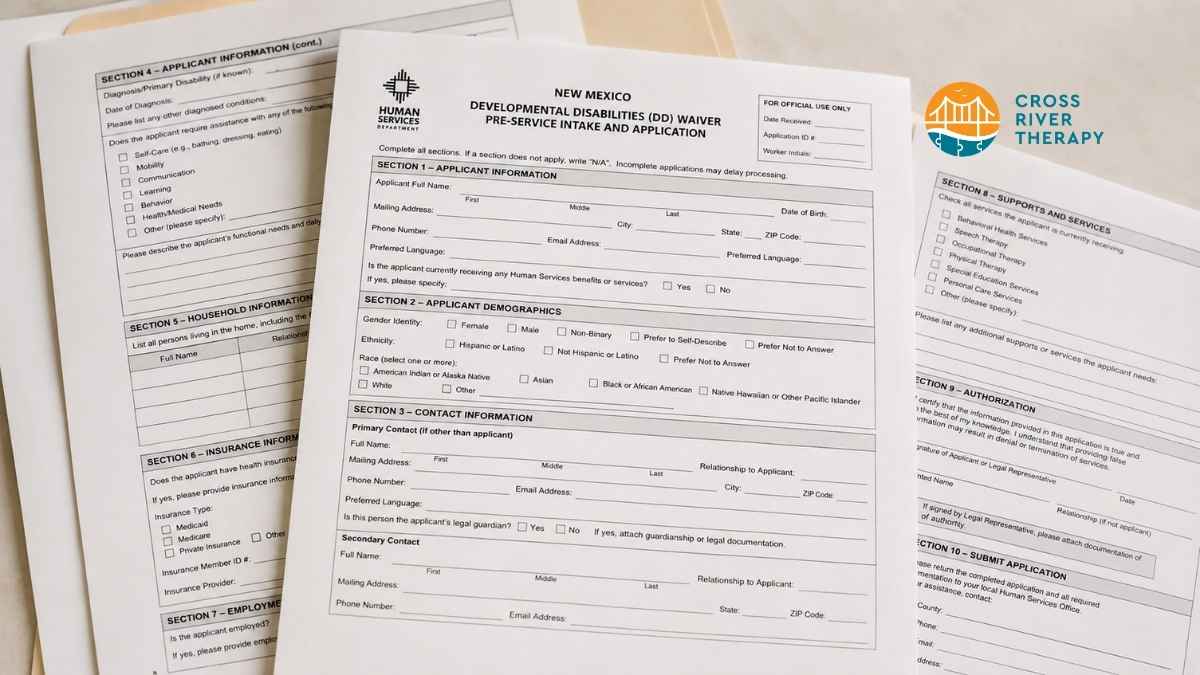
How to Apply for the New Mexico DD Waiver
Your NM DD waiver application starts with state intake. The steps cover records, submission, and enrollment.

Does Insurance Cover ABA Therapy in New Jersey?
ABA therapy insurance in New Jersey varies by plan. Learn what NJ FamilyCare covers and how to check costs.

How ABA Therapy Builds Communication for Nonverbal Children Without Forcing Speech
ABA therapy communication for nonverbal children starts with AAC, signs, and daily routines. See how kids ask, refuse, choose, and get help.

How to Start ABA Therapy in New Jersey With a Checklist
Your guide explains how to start ABA therapy in New Jersey. A first-call checklist covers records and next steps.

How to Get an Autism Evaluation in Arkansas Before Starting ABA Therapy
How to get an autism evaluation in Arkansas starts with a referral, provider choice, and key records. Use this parent checklist before ABA intake.