








How Parent Coaching Supports ABA Therapy Success?
Discover how ABA therapy and parent coaching can transform autism care, enhancing child development and family bonds.


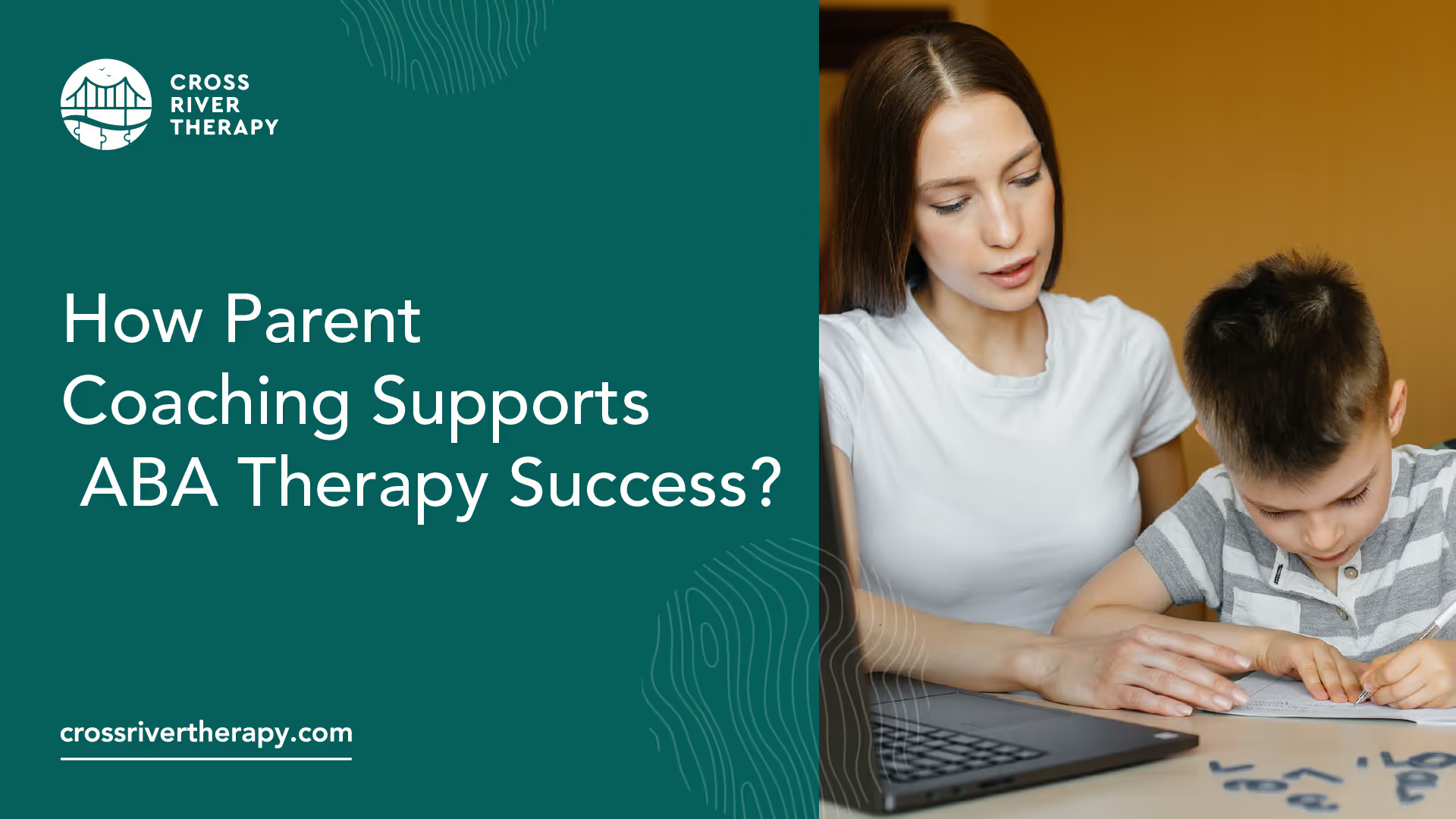
Understanding ABA Therapy
Applied Behavior Analysis (ABA) therapy is a widely recognized and effective approach for helping children with autism. It focuses on improving specific behaviors, skills, and social interactions through scientifically-backed methods. Understanding the core techniques and the importance of ABA therapy is crucial for parents looking to support their child's development.
Core Techniques in ABA Therapy
ABA therapy involves several foundational techniques designed to help children with autism thrive in various environments. These techniques include:
- Positive and Negative Reinforcement: Reinforcement is a key strategy where behaviors are encouraged or discouraged through rewards or consequences. Positive reinforcement involves presenting a rewarding stimulus after a desired behavior, making it more likely to be repeated [1]. Negative reinforcement involves removing an aversive stimulus to increase a desirable behavior.
- Video Modeling: This technique uses videos to demonstrate desired behaviors or skills, allowing children to learn by observing others.
- Prompting and Fading: Prompts are cues or hints given to help a child perform a desired behavior. Over time, these prompts are gradually faded to encourage independence.
- Natural Environment Teaching (NET): NET focuses on teaching skills in the child's natural environment, making learning more relevant and functional.
- Behavior Chain: This technique breaks down complex behaviors into smaller, manageable steps, teaching each step individually and then linking them together.
- Generalization: Generalization ensures that learned behaviors are applied across different settings, situations, and people.
- Behavior Contracts: These are written agreements between the child and therapist, outlining specific behaviors and the rewards for achieving them.
Importance of ABA Therapy for Children with Autism
ABA therapy plays a crucial role in supporting children with autism by focusing on enhancing behavior using principles from the science of behavior. It aims to make socially significant changes and help alter challenging behaviors over time into more functional and appropriate behaviors. Here are some key benefits:
- Behavior Modification: ABA therapy helps understand and modify challenging behaviors, promoting positive behavior change over time. This is essential for children with autism to develop functional behavior patterns.
- Skill Development: Different types of ABA, such as Discrete Trial Training (DTT), Early Start Denver Model (ESDM), Verbal Behavior Intervention (VBI), and Natural Environment Teaching (NET), focus on promoting skill development. These methods help children acquire language, social skills, and daily living skills [3].
- Long-Term Effectiveness: ABA therapy has been used since the 1960s and has a long history of success. The methods of behavior analysis have been studied and refined for decades, providing a solid foundation for effective intervention.
- Positive Reinforcement: One of the main strategies in ABA therapy is positive reinforcement, where a person is more likely to repeat a behavior if it is followed by something valued (a reward). This encourages positive behavior change over time.
To learn more about the specific techniques used in ABA therapy, visit our article on aba therapy and visual schedules and aba therapy and social skills groups. For parents interested in strategies for older children, check out aba therapy for adolescents with autism.
Parent Training in ABA Therapy
Parent training in ABA therapy plays a crucial role in the overall success of interventions for children with autism. By empowering parents through structured training, they can effectively support their child's development and progress. Let's explore how parent coaching enhances ABA therapy and the benefits of parent involvement.
Empowering Parents through Training
Parent training in ABA therapy is designed to equip caregivers with the necessary tools and knowledge to implement ABA strategies at home. This training is as critical as the therapy itself. Through structured sessions, parents learn to understand behavior principles and apply interventions tailored to their child's unique needs.
Training sessions typically cover:
- Basic principles of ABA
- Techniques for managing challenging behaviors
- Methods for promoting positive behaviors
- Strategies to support communication and social skills
One of the primary goals of parent training is to foster a deeper understanding of the child's behavior. This understanding enables parents to create a supportive and structured environment that encourages positive behavior changes.
Benefits of Parent Involvement in ABA

Parent involvement in ABA therapy offers numerous benefits for both the child and the family as a whole. When parents actively participate in their child's therapy, they can provide consistent support, which is essential for the child's progress. Here are some key benefits:
Consistency in Interventions
Consistent implementation of ABA strategies at home ensures that the child receives continuous support, reinforcing the skills learned during therapy sessions. This consistency is vital for generalizing skills across different settings.
Better Understanding of Child's Needs
Parent training allows caregivers to better understand their child's specific needs and strengths, leading to more individualized and tailored interventions. This personalized approach is crucial for the child's development.
Nurturing Independence
Equipped with ABA techniques, parents can foster independence in their children by teaching self-care skills and encouraging social interactions. This empowerment helps children become more self-sufficient and confident.
Strengthening Emotional Bonds
Implementing ABA strategies in everyday life not only brings about behavioral improvements but also strengthens the emotional bond between parents and their children. Positive interactions and successful interventions can lead to a more harmonious family dynamic.
For more information on specific ABA strategies, you can explore our articles on ABA therapy and visual schedules and ABA therapy and social skills groups.
In summary, parent training in ABA therapy is a powerful tool that empowers caregivers, enhances their understanding of their child's needs, and provides the skills necessary to support their child's development effectively.
ABA Strategies for Parents
When it comes to supporting children with autism, Applied Behavior Analysis (ABA) therapy offers a range of evidence-based strategies that parents can implement at home. These methods not only aid in skill development but also foster a stronger emotional bond between parents and their children [4].
Evidence-Based Parenting Methods
ABA strategies for parents are rooted in the scientific field of behavior analysis. These methods have been rigorously tested and proven to be effective in supporting children with autism spectrum disorder (ASD), attention deficit hyperactivity disorder (ADHD), and other behavioral challenges [4].
Some key evidence-based parenting methods include:
- Positive Reinforcement: Encouraging desirable behaviors by offering rewards or praise. This technique helps to increase the likelihood of the behavior being repeated.
- Prompting and Fading: Providing cues or prompts to help the child perform a desired behavior and gradually reducing these prompts as the child becomes more independent.
- Task Analysis: Breaking down complex tasks into smaller, manageable steps, making it easier for the child to learn and complete the task successfully.
- Modeling: Demonstrating a desired behavior for the child to observe and imitate.
These methods are designed to be practical and easy to incorporate into daily routines. Parents can use these strategies to reinforce skills learned during ABA therapy sessions, ensuring consistency and helping their child retain essential skills [4].
Nurturing Independence and Social Skills
One of the primary goals of ABA therapy is to promote independence and enhance social skills in children with autism. Parent training equips parents with the tools to nurture these important areas of development.
Some practical strategies for nurturing independence and social skills include:
- Daily Living Skills: Teaching children essential self-care tasks, such as dressing, grooming, and feeding themselves. This can be reinforced through visual schedules and consistent routines.
- Social Interactions: Encouraging children to engage in social activities, such as playdates and social skills groups, helps them practice and improve their social skills.
- Communication Skills: Using ABA techniques to teach children effective communication methods, whether through speech, sign language, or alternative communication devices.
- Problem-Solving Skills: Guiding children through problem-solving processes, helping them learn how to navigate challenges independently.
By incorporating these strategies into everyday life, parents can help their children develop the skills they need to become more independent and socially adept. This not only improves the child's quality of life but also enhances family communication and strengthens the parent-child relationship.
For more detailed tips and methods, parents can explore our articles on aba therapy for adolescents with autism and aba therapy and social skills groups.
Utilizing ABA strategies at home is a powerful way for parents to support their child's development, ensuring that the benefits of ABA therapy extend beyond the therapy sessions and into everyday life.
Role of BCBA in ABA Therapy
In the realm of Applied Behavior Analysis (ABA) therapy, the role of a Board Certified Behavior Analyst (BCBA) is pivotal. These professionals specialize in behavior analysis, creating and overseeing interventions to address behavioral issues and promote positive behavioral changes in children with autism [3].
Responsibilities of a BCBA
A BCBA carries out several key responsibilities that are essential to the success of ABA therapy. These include:
- Conducting Assessments: BCBAs perform detailed assessments to understand a child's current abilities, needs, and challenges. This involves direct observation, interviews, and standardized tests.
- Developing Treatment Plans: Based on the assessments, BCBAs design individualized treatment plans that outline specific goals and interventions tailored to the child's unique profile.
- Training and Supervising: BCBAs provide training and supervision to Registered Behavior Technicians (RBTs) and other support staff who implement the therapy. They ensure that the interventions are carried out effectively.
- Monitoring Progress: Continuous data collection and analysis are crucial. BCBAs monitor the child’s progress and make necessary adjustments to the treatment plan to ensure optimal outcomes.
- Parent Coaching: BCBAs also play a significant role in training and guiding parents. By involving parents, the therapy can be reinforced at home, leading to better generalization of skills.
For more on how parent involvement enhances ABA, explore our section on aba therapy and parent coaching.
Designing Individualized ABA Programs
The design of individualized ABA programs is a nuanced process that requires a thorough understanding of each child's specific needs, preferences, and family dynamics. According to Autism Speaks, the process involves several steps:
- Assessment: The BCBA conducts a comprehensive assessment to gather baseline data on the child's behavior. This includes identifying strengths, weaknesses, and areas for improvement.
- Goal Setting: Based on the assessment, the BCBA sets specific, measurable, achievable, relevant, and time-bound (SMART) goals. These goals are customized to the child's developmental level and individual needs.
- Intervention Strategies: The BCBA selects and designs intervention strategies that align with the child's goals. These strategies may include Discrete Trial Training (DTT), Early Start Denver Model (ESDM), Verbal Behavior Intervention (VBI), and Natural Environment Training (NET).
- Implementation Plan: The BCBA develops a detailed implementation plan outlining how the interventions will be carried out. This includes specifying the roles of various team members, including parents.
- Monitoring and Evaluation: Continuous monitoring through data collection and analysis is essential to evaluate the effectiveness of the interventions. Adjustments are made as needed to ensure that the child is making progress.
This individualized approach ensures that the ABA program is not only effective but also adaptable to the evolving needs of the child. For insights on different types of ABA programs, visit our section on early intervention with ABA therapy.
By understanding the role of a BCBA and the process of designing individualized ABA programs, parents can better appreciate how these professionals contribute to the success of ABA therapy and support their child's development.
Early Intervention with ABA Therapy
Importance of Early ABA Intervention
Early intervention in ABA (Applied Behavior Analysis) therapy is crucial for children diagnosed with autism. Studies show that beginning ABA therapy before the age of four can significantly enhance a child's development. Early intervention helps improve social and communication skills, making it easier for children to interact with peers.
Early ABA therapy utilizes positive reinforcement techniques, where behaviors followed by rewards are more likely to be repeated. This encourages positive behavior change over time. The methods used in early ABA therapy have been studied for decades and are tailored to meet the needs of individual learners, focusing on helping each child become more independent and successful.
Types of ABA Programs for Children with Autism
There are various types of ABA programs designed to cater to the diverse needs of children with autism. These programs use different techniques to understand behavior and implement science-backed strategies to modify or change behaviors. Some of the commonly used ABA programs include:
Each of these programs offers specific benefits in promoting the development of children with autism. For example, DTT is highly structured and effective for breaking down complex skills into manageable steps, while ESDM combines ABA principles with developmental approaches to create a more holistic learning experience.
ABA therapy is not "one size fits all." It is tailored to meet the needs of individual learners, focusing on helping each child work on skills that will make them more independent and successful.
By understanding the importance of early ABA intervention and exploring the various types of ABA programs available, parents can make informed decisions to support their child's growth and development.
Impact of Parent Coaching
Parent coaching is a vital component of ABA therapy that significantly contributes to the success of interventions for children with autism. By empowering parents with the necessary skills and knowledge, coaching enhances child development and improves family communication.
Enhancing Child Development
High-quality caregiver coaching leads to improved parent responsiveness and use of interventions to promote their child's communication and participation in daily activities. When parents are trained to implement ABA strategies effectively, they become active participants in their child's development.
Growing evidence suggests that coaching caregivers of young children on the autism spectrum to implement intervention strategies leads to improvements in children's cognitive ability, social functioning, functional behavior, and daily living skills. This holistic approach ensures that the child receives consistent support both during and outside of therapy sessions, maximizing the benefits of ABA therapy.
Parent training in ABA therapy allows parents to better understand their child's specific needs and strengths, leading to more individualized and tailored interventions [5]. This individualized approach is crucial for the child's progress and overall development.
Improving Family Communication
Effective communication between parents and ABA therapists is crucial for the success of therapy. Parent coaching helps bridge this communication gap by providing parents with the terminology and concepts used in ABA therapy, enabling better collaboration with professionals.
By understanding the principles of ABA therapy, parents can more effectively communicate their child's progress, challenges, and needs to the therapists. This collaborative approach ensures that everyone involved in the child's care is on the same page, leading to more cohesive and effective intervention plans.
Moreover, parent coaching equips parents with strategies to improve their communication with their child. Authentic learning experiences, collaborative decision-making, demonstration, in-vivo feedback, and reflection are the core elements of effective coaching. These strategies not only enhance the child's communication skills but also strengthen the parent-child bond.
For more on nurturing independence and social skills through ABA strategies, visit our article on ABA therapy and social skills groups.
By investing in parent coaching, families can create a supportive and well-informed environment that fosters the child's growth and development. The positive impact of such coaching extends beyond the therapy sessions, contributing to a more harmonious and communicative family dynamic. For further details on strategies and tips, explore our resources on aba therapy and visual schedules and aba therapy for adolescents with autism.
References
[1]: https://www.autismspeaks.org/applied-behavior-analysis
[2]: https://dreambigchildren.com/understanding-aba-techniques-7-strategies-you-need-to-know/
[3]: https://www.autismparentingmagazine.com/aba-principles/
[4]: https://behavioral-innovations.com/blog/importance-of-parent-training-aba-therapy/
[5]: https://www.thebehaviorplace.com/single-post/the-importance-of-parent-training-in-aba-therapy-empowering-families-for-success
[6]: https://www.ncbi.nlm.nih.gov/pmc/articles/PMC10469633/
Recent News
Related articles

6 Arkansas Medicaid ABA Therapy Rules Families Need to Know
Arkansas Medicaid ABA therapy has age, diagnosis and approval rules. Families can check six requirements before care.

Arizona Autism Laws Every Parent Should Know Before Starting ABA Therapy
Autism laws Arizona parents should know cover ABA insurance, AHCCCS appeals, IEPs, and Section 504 rights. Check ABA coverage with Cross River.

ABA Therapist Salary in Arkansas: What BCBAs and RBTs Actually Earn in 2026
ABA therapist salary Arkansas figures compare RBT and BCBA rates, benefits, guaranteed hours, and contract terms. Explore careers at Cross River.

5 Autism Support Groups and Family Resources in New Mexico Alongside ABA Therapy
Autism support groups New Mexico families can use offer peer support, local events, and school help. Cross River can explain ABA therapy options.

Where to Get an Autism Evaluation in New Mexico Before Starting ABA Therapy
Autism evaluation New Mexico options include UNM, NMSU, FIT, and private providers. Compare providers, records, and ABA steps with Cross River.

7 North Carolina Autism Resources to Contact Before ABA Therapy Starts
Autism resources North Carolina families can call for diagnosis, early intervention, rights, and parent support. Start ABA intake with Cross River.

Does Indiana Medicaid Cover ABA Therapy? A Step-by-Step Eligibility Checklist for Parents
Medicaid ABA therapy Indiana covers eligible children under 21 with prior authorization. Your five-step coverage review can start with Cross River.

How to Apply for New Mexico’s DD Waiver While Starting ABA Therapy
Autism waiver New Mexico applications need DD Waiver records and proof of daily support needs. Your next step is to start ABA intake with Cross River.

Is ABA Therapy Covered by Insurance in New Jersey? What Every Parent Should Know
ABA therapy insurance New Jersey may cover medically necessary care based on plan type, network, and authorization. Verify benefits with Cross River.

How ABA Therapy Builds Communication for Nonverbal Children Without Forcing Speech
ABA therapy communication for nonverbal children starts with AAC, signs, and daily routines. See how kids ask, refuse, choose, and get help.

How to Start ABA Therapy in New Jersey With a First-Call Checklist
How to start ABA therapy in New Jersey begins with records, insurance details, and intake questions. Use this first-call checklist before you call.

How to Get an Autism Evaluation in Arkansas Before Starting ABA Therapy
How to get an autism evaluation in Arkansas starts with a referral, provider choice, and key records. Use this parent checklist before ABA intake.