








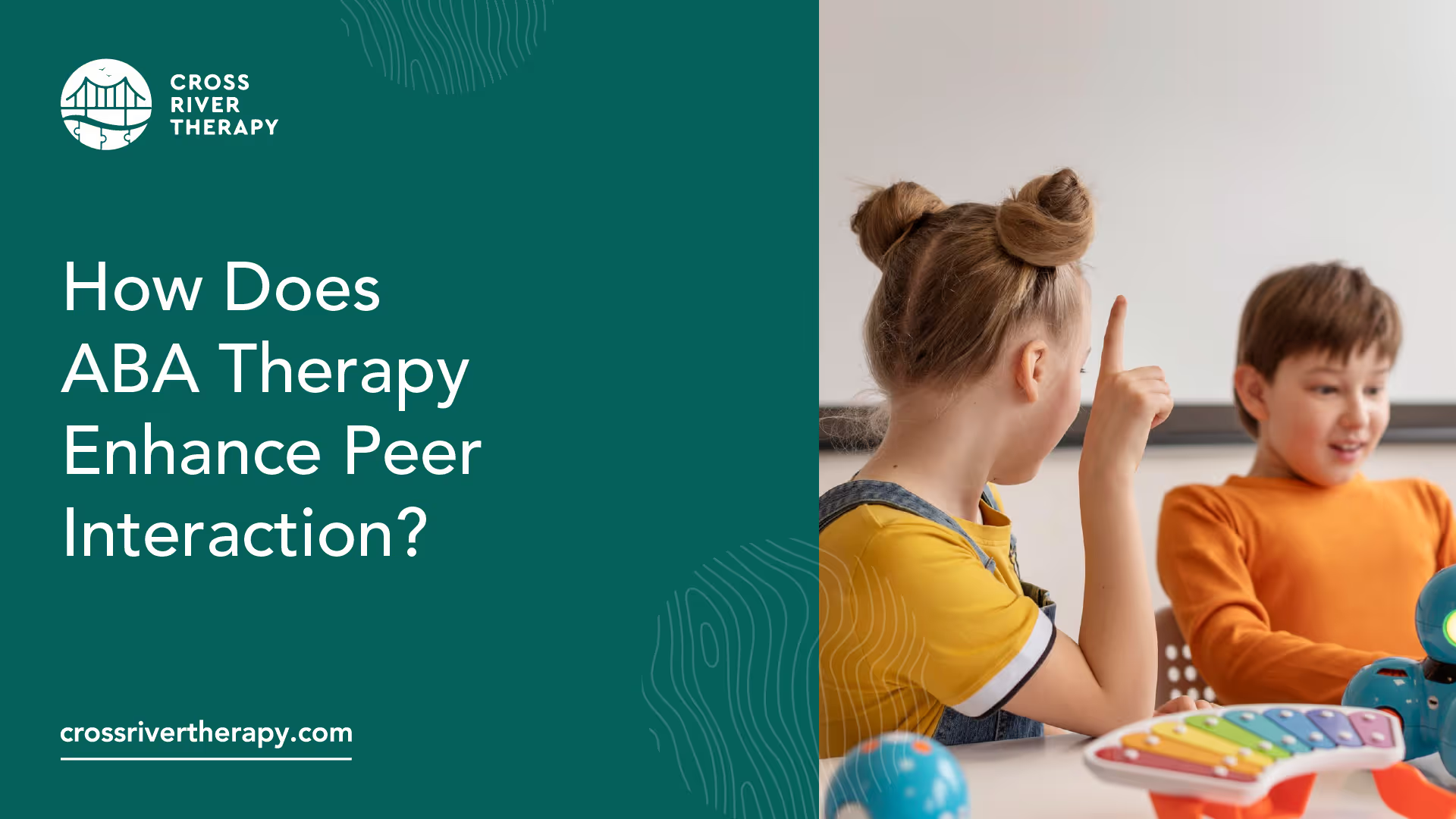
How Does ABA Therapy Enhance Peer Interaction?
Discover how peer interaction thrives with effective strategies and supportive environments.


Understanding ABA Therapy
In order to understand how ABA therapy enhances peer interaction, it is important to first have an overview of ABA therapy and recognize its benefits.
ABA Therapy Overview
ABA therapy, or Applied Behavior Analysis therapy, has been utilized to assist children diagnosed with autism and related developmental disorders since the 1960s. This evidence-based approach focuses on understanding and modifying behavior by using principles derived from behavioral science. The primary goal of ABA therapy is to improve socially significant behaviors while minimizing challenging behaviors. ABA therapy involves positive reinforcement as one of its main strategies, where individuals are more likely to repeat a behavior if it is followed by something valued, such as a reward.
For more information on specific applications of ABA therapy, refer to our articles on ABA therapy for impulse control, ABA therapy and language development, and ABA therapy and emotional regulation.
Benefits of ABA Therapy
Numerous studies have demonstrated the benefits of ABA therapy for individuals with autism. More than 20 studies have established that intensive and long-term therapy using ABA principles improves outcomes for many children with autism. These interventions have shown gains in intellectual functioning, language development, daily living skills, and social functioning. ABA therapy has been found to be particularly effective when started early and implemented consistently.
According to a study conducted by Lovaas in the 1970s, children who participated in ABA treatment reached normal intellectual and educational functioning at a significantly higher rate compared to a control group. In fact, 47% of the children in the ABA treatment group achieved normal functioning, compared to only 2% in the control group. This study highlights the significant positive impact of ABA therapy on individuals with autism.
Long-term, comprehensive ABA-based interventions have also been found to be beneficial for the lifelong development of children with Autism Spectrum Disorder (ASD). These interventions show positive effects on intellectual functioning, language development, acquisition of daily living skills, and social functioning.
To further explore the benefits of ABA therapy and its applications in different settings, refer to our articles on ABA therapy in public schools and ABA therapy for special needs.
By understanding the fundamentals of ABA therapy and recognizing its benefits, we can delve deeper into how this therapy enhances peer interaction for children diagnosed with autism.
Implementing ABA Therapy
ABA therapy is a highly individualized approach that focuses on promoting positive behaviors and reducing challenging behaviors in children with autism. In this section, we will explore the key components of implementing ABA therapy, including individualized strategies, the role of behavior analysts, and the importance of peer interaction.
Individualized Strategies
One of the fundamental aspects of ABA therapy is the development of individualized strategies for each child. These strategies are tailored to the specific needs and challenges of the child, taking into account their strengths, interests, and preferences. By creating personalized strategies, ABA therapists can foster a sense of pride in accomplishments, promote personal responsibility, and establish clear expectations. This individualized approach helps reduce anxiety and reactivity that may lead to aggression or other challenging behaviors [1].
Role of Behavior Analysts
Behavior analysts, often Board Certified Behavior Analysts (BCBAs), play a crucial role in the implementation of ABA therapy. These professionals are highly trained and qualified to design and oversee the ABA program for each child. They customize the therapy to address the unique needs, skills, interests, preferences, and family situation of the learner. Behavior analysts closely collaborate with families and other professionals to ensure a comprehensive and effective treatment plan. Their expertise and guidance are essential in maximizing the benefits of ABA therapy [2].
Peer Interaction in ABA
Peer interaction is an integral part of ABA therapy programs and plays a significant role in the learning process and skill development of children with autism. ABA therapists often incorporate opportunities for peer interactions as a form of reinforcement. These interactions can take place within structured activities or in natural environments, such as classrooms or social settings. Peer interactions provide children with autism the chance to practice and generalize their skills, such as communication, social engagement, and cooperation. By engaging with their peers, children with autism can develop important social skills and build meaningful relationships [3].
By implementing individualized strategies, involving skilled behavior analysts, and encouraging peer interaction, ABA therapy creates an environment that supports the growth and development of children with autism. This comprehensive approach helps children acquire essential skills and improve their overall quality of life.
ABA Therapy in School Settings
When it comes to supporting children with autism spectrum disorder (ASD) and other developmental disabilities, integrating ABA therapy into school settings plays a vital role in enhancing their overall development and improving peer interaction. In this section, we will explore the importance of integrating ABA therapy in schools, creating supportive environments, and promoting peer awareness and acceptance.
Integration in Schools
Integrating ABA therapy into schools provides consistent support for students with ASD, enabling them to generalize the skills they learn in therapy sessions to their school environment. This integration is essential for promoting academic success and social inclusion. By incorporating ABA techniques and strategies into the daily routines and activities of the classroom, educators can create a more inclusive and supportive learning environment for all students.
Creating Supportive Environments
When implementing ABA therapy in schools, creating supportive learning environments is crucial. These environments aim to promote engagement, independence, and success for all students, including those with ASD. Strategies for creating supportive environments include:
- Designing classrooms with clear expectations and visual supports to help students understand and follow routines.
- Minimizing distractions in the classroom to help students focus and maintain attention.
- Providing sensory-friendly accommodations for students with sensory sensitivities, such as designated quiet spaces or noise-canceling headphones.
- Offering individualized supports and modifications based on each student's needs and abilities.
By implementing these strategies, educators can create an environment that fosters learning, independence, and positive peer interactions.
Peer Awareness and Acceptance
Integrating ABA therapy into schools also presents an opportunity to promote peer awareness and acceptance of individual differences, including those related to ASD. Educators can facilitate discussions and activities that promote empathy, respect, and inclusion among all students. By educating peers about autism and related disabilities, students can develop a better understanding and appreciation of their classmates' unique strengths and challenges. This awareness and acceptance can foster positive peer interactions, reduce stigma, and create a more inclusive school community.
By integrating ABA therapy into school settings, creating supportive environments, and promoting peer awareness and acceptance, educators can empower students with ASD to thrive academically and socially. This collaborative approach helps to build a more inclusive and supportive school community, benefiting all students involved.
Center-Based ABA Therapy

Center-based Applied Behavior Analysis (ABA) therapy offers a structured learning environment that enhances social skills development for children diagnosed with autism. This approach focuses on creating a supportive setting where children can engage in peer interaction and practice social skills. Let's explore the key components of center-based ABA therapy: structured learning environment, social interaction enhancement, and a data-driven approach.
Structured Learning Environment
Center-based ABA therapy provides a structured learning environment with designated play areas, group activities, and structured routines. This environment allows therapists to systematically teach and reinforce social behaviors in a controlled setting. By creating a predictable and consistent environment, children with autism can better understand and engage in social interactions.
Social Interaction Enhancement
Peer interaction and social play sessions are integral components of center-based ABA therapy. These sessions provide opportunities for children to practice social skills in a supportive setting. Therapists facilitate social exchanges and encourage cooperative play among children, fostering developmentally appropriate peer interactions. Through guided activities and prompts, children learn to initiate and respond to social cues, share toys, take turns, and engage in reciprocal communication.
Data-Driven Approach
A data-driven approach is a hallmark of ABA therapy, including center-based therapy. Therapists collect detailed data on client responses and behaviors to track progress toward social goals objectively. This data collection allows therapists to measure and analyze specific skills, identify areas for improvement, and make informed decisions about treatment modifications. By monitoring progress through data analysis, therapists can tailor interventions to meet the unique needs of each child, ensuring effective social skills development [5].
In summary, center-based ABA therapy provides a structured and supportive learning environment for children with autism. Through a combination of structured routines, peer interaction opportunities, and a data-driven approach, this therapy enhances social skills development. By participating in center-based ABA therapy, children can learn and practice essential social skills in a controlled and nurturing setting, setting a foundation for successful peer interactions in various environments.
Research on ABA Therapy
When it comes to understanding the effectiveness and long-term benefits of ABA therapy for enhancing peer interaction in children with autism, research provides valuable insights. Let's delve into the research findings on ABA therapy.
Effectiveness of ABA Therapy
Numerous studies have demonstrated the effectiveness of ABA therapy in improving outcomes for children with autism. Intensive and long-term therapy using ABA principles has shown significant improvements in various areas, including intellectual functioning, language development, daily living skills, and social functioning.
A meta-analysis of 14 randomized control trials involving 555 participants found that ABA-based interventions had significant effects on socialization, communication, and expressive language outcomes in children with autism spectrum disorder (ASD) [6]. However, no significant effects were observed for general symptoms of ASD, receptive language, adaptive behavior, daily living skills, IQ, verbal IQ, nonverbal IQ, restricted and repetitive behavior, motor, and cognition.
The study concluded that ABA-based interventions may be particularly promising for improving socialization, communication, and expressive language skills in children with ASD. However, further research is needed to explore the impact of ABA therapy on other areas of development [6].
Long-Term Benefits
Long-term, comprehensive ABA-based interventions have been found to be beneficial for the lifelong development of children with ASD. These interventions have shown positive effects on intellectual functioning, language development, acquisition of daily living skills, and social functioning. This highlights the potential of ABA therapy to contribute to the overall well-being and progress of individuals with autism.
Areas of Improvement Needed
While ABA therapy has shown promising results, there are areas that require further investigation and improvement. For example, parental synchrony and sensitivity have been noted as important factors in enhancing communication and social interaction in children with ASD, but these aspects were not specifically considered in the mentioned study. More methodologically rigorous research is necessary to explore the full potential of ABA-based interventions and to identify ways to further enhance their effectiveness.
The research on ABA therapy provides valuable insights into its effectiveness and long-term benefits for enhancing peer interaction in children with autism. These findings support the use of ABA therapy as a valuable intervention for promoting socialization and communication skills in individuals with ASD. However, there is ongoing research to further refine and improve the effectiveness of ABA-based interventions.
References
[1]: https://www.autismspeaks.org/tool-kit-excerpt/helpful-strategies-promote-positive-behavior
[2]: https://www.autismspeaks.org/applied-behavior-analysis
[3]: https://wellspringlearningcenters.com/the-principles-of-aba/
[4]: https://aimhigheraba.com/integrating-aba-therapy-in-schools-strategies-for-success/
[5]: https://www.advancedautism.com/post/how-center-based-aba-therapy-enhances-social-skills-development
Recent News
Related articles

6 Arkansas Medicaid ABA Therapy Rules Families Need to Know
Arkansas Medicaid ABA therapy has age, diagnosis and approval rules. Families can check six requirements before care.

Arizona Autism Laws for ABA Coverage and School Rights
Arizona autism laws for ABA coverage vary by plan. Families can check insurance, appeal options, and school rights.

ABA Therapist Salary in Arkansas for RBTs and BCBAs
Compare ABA therapist salary in Arkansas by role. See how paid hours and benefits affect earnings before applying.

5 Autism Support Groups and Family Resources in New Mexico
Autism support groups in New Mexico connect families. Local resources offer events, parent support, and school help.

Where to Get an Autism Evaluation in New Mexico
Autism evaluation options in New Mexico include UNM and NMSU. Age and referral details help parents prepare.

7 North Carolina Autism Resources to Contact Before ABA Therapy Starts
Autism resources North Carolina families can call for diagnosis, early intervention, rights, and parent support. Start ABA intake with Cross River.

Does Indiana Medicaid Cover ABA Therapy? A Parent Checklist
Indiana Medicaid ABA therapy may cover care for eligible children. The checklist covers coaching and renewals.
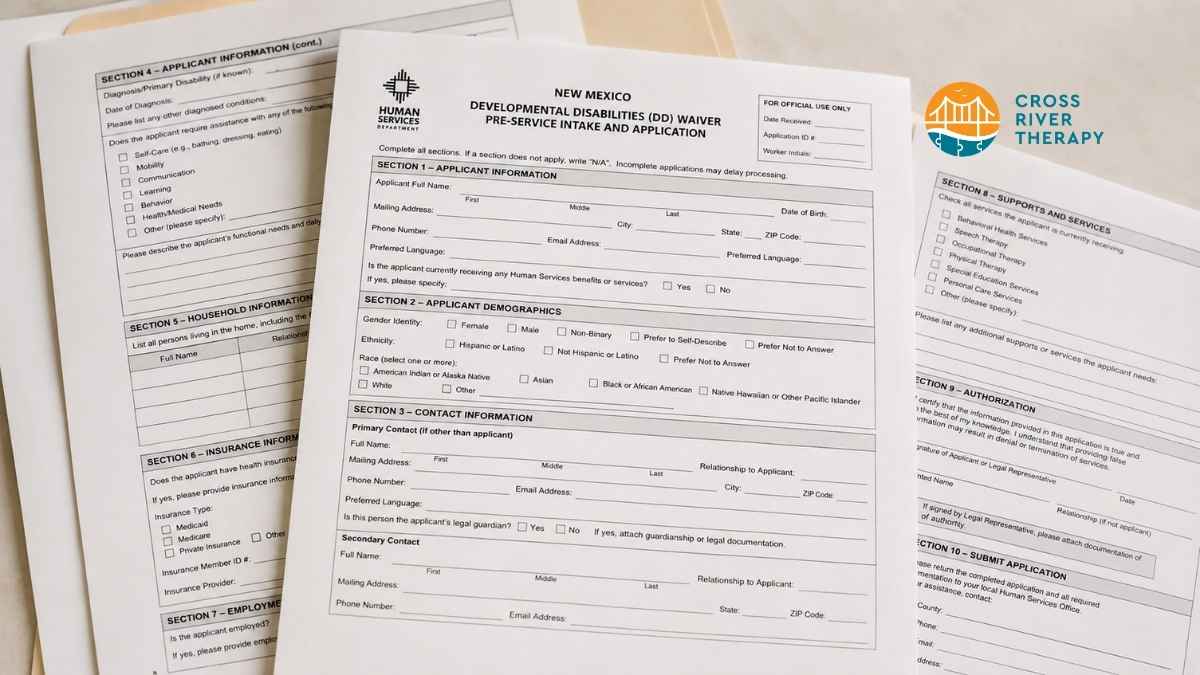
How to Apply for the New Mexico DD Waiver
Your NM DD waiver application starts with state intake. The steps cover records, submission, and enrollment.

Does Insurance Cover ABA Therapy in New Jersey?
ABA therapy insurance in New Jersey varies by plan. Learn what NJ FamilyCare covers and how to check costs.

How ABA Therapy Builds Communication for Nonverbal Children Without Forcing Speech
ABA therapy communication for nonverbal children starts with AAC, signs, and daily routines. See how kids ask, refuse, choose, and get help.

How to Start ABA Therapy in New Jersey With a Checklist
Your guide explains how to start ABA therapy in New Jersey. A first-call checklist covers records and next steps.

How to Get an Autism Evaluation in Arkansas Before Starting ABA Therapy
How to get an autism evaluation in Arkansas starts with a referral, provider choice, and key records. Use this parent checklist before ABA intake.