







Enhancing Social Communication with ABA Therapy
ABA therapy boosts social communication skills, helping individuals connect and interact more effectively with others.


Understanding ABA Therapy
History of ABA Therapy
Applied Behavior Analysis (ABA) therapy has been utilized since the 1960s to assist children with autism and related developmental disorders. The approach focuses on understanding and modifying behavior through various techniques and principles.
Over the years, ABA has gained recognition as a significant treatment method for children with Autism Spectrum Disorder (ASD). Research has consistently shown its effectiveness in promoting positive behavior changes and enhancing social communication skills.
A landmark study conducted by Lovaas in the 1970s revealed that 47% of children with ASD who underwent ABA treatment achieved normal intellectual and educational functioning, compared to only 2% of those in a control group. This pivotal research contributed to ABA being considered a "best practice" treatment, endorsed by both the US and Canadian governments for children and youth with ASD [1].
Benefits of ABA Therapy
ABA therapy is recognized as an evidence-based best practice treatment by the US Surgeon General and the American Psychological Association. It has passed rigorous scientific tests demonstrating its quality and effectiveness.
Numerous studies have established that intensive and long-term therapy using ABA principles leads to significant improvements in various areas of development.
The following table summarizes the key benefits associated with ABA therapy:
- Intellectual Functioning: Enhancements in cognitive skills and academic performance.
- Language Development: Improvements in communication skills, including speech and language.
- Daily Living Skills: Development of self-care and independent living skills.
- Social Functioning: Enhanced ability to interact socially and build relationships.
More than 20 studies have documented these gains, affirming the positive impact of ABA on children with autism. This therapy not only supports behavioral changes but also encourages emotional growth.
By focusing on individualized goals and utilizing various techniques, ABA therapy effectively addresses the unique challenges faced by children with autism, making it a vital component of their developmental journey.
ABA Therapy Process
Understanding the ABA therapy process is essential for parents of children diagnosed with autism. This section covers the crucial roles played by behavior analysts and the importance of positive reinforcement in ABA therapy.
Role of Behavior Analysts
A qualified and trained behavior analyst, known as a Board-Certified Behavior Analyst (BCBA), designs and directly oversees the ABA program. They customize the program to suit each learner's skills, needs, interests, preferences, and family situation.
The BCBA conducts a detailed assessment to establish specific treatment goals based on the individual's age and ability level. This tailored approach ensures that the therapy is relevant and effective for the child. The BCBA also supervises registered behavior technicians (RBTs), who assist in implementing the therapy under the guidance of the BCBA.
- BCBA: Designs, oversees, and customizes the ABA program.
- RBT: Implements therapy under the supervision of the BCBA.
Positive Reinforcement in ABA
Positive reinforcement is a fundamental component of ABA therapy, which enhances the likelihood of a behavior being repeated when it is followed by something valued, known as a reward. Rewards can take various forms, including praise, toys, books, or activities such as watching videos and playing on playgrounds.
This strategy not only encourages desired behaviors but also helps in building a positive learning environment. Parents can support this process by recognizing and celebrating their child's achievements, no matter how small.
Understanding the roles and strategies within ABA therapy can empower parents to actively participate in their child's development and enhance their social communication skills effectively.
Implementing ABA Therapy
ABA therapy is a structured approach designed to enhance social communication and other skills in children diagnosed with autism. The successful implementation of this therapy relies heavily on the professionals involved and the customization of the programs to meet individual needs.
Therapists in ABA Programs
In ABA programs, a board-certified behavior analyst (BCBA) plays a pivotal role. This qualified professional designs and directly oversees the therapy, ensuring that it is tailored to each child’s unique skills, needs, interests, preferences, and family circumstances. A BCBA conducts detailed assessments to establish specific treatment goals based on the child’s age and ability level [2].
The ABA therapy programs also involve registered behavior technicians (RBTs) who are trained and supervised by the BCBA. These technicians work directly with the children, implementing the strategies and interventions designed by the BCBA. This collaboration ensures that the therapy is consistent and effective across different settings, including home and school environments.
Customization of ABA Programs
Customization is a fundamental aspect of ABA therapy. Each program is designed to meet the specific needs of the child. The BCBA uses the initial assessment results to create tailored interventions. This approach ensures that the therapy is relevant and effective, addressing the child’s strengths and challenges.
The customization process takes into consideration various factors, including the child’s interests, family dynamics, and any co-occurring challenges, such as self-regulation or emotional support needs. This personalized approach not only enhances engagement but also improves the likelihood of achieving positive outcomes.
For instance, if a child shows an affinity for certain activities or toys, these can be incorporated as rewards within the ABA framework, motivating the child to participate and learn.
By focusing on each child's unique context and requirements, ABA therapy can effectively contribute to developing essential social communication skills.
ABA Therapy and Social Skills
Importance of Social Skills
Social skills are essential for fostering positive relationships and effective communication. Children who develop strong social skills can engage better with their peers, understand non-verbal cues, and learn appropriate manners. For children on the autism spectrum, these skills can be particularly challenging due to difficulties in interpreting social cues and understanding others' intentions [3].
- Improved Relationships: Helps children form and maintain friendships.
- Effective Communication: Enhances verbal and non-verbal interaction with others.
- Better Social Understanding: Aids in interpreting social cues and responding appropriately.
- Learning Manners: Teaches appropriate behavior in various social settings.
Social Skills Training in ABA
ABA therapy incorporates targeted social skills training to assist children on the autism spectrum in improving their interactions. This training focuses on various aspects of social communication, such as appropriate body language, initiating conversations, and taking turns during play [3].
During these training sessions, children may engage in activities like parallel play, role-playing, and interactive games to practice their skills in a supportive environment. These strategies help them learn how to communicate effectively, understand social norms, and build confidence in social settings.
Some key areas of focus in social skills training include:
- Intrapersonal Conversation: Encourages children to express their thoughts and feelings.
- Body Language: Teaches the importance of non-verbal communication.
- Turn-Taking: Practices sharing and waiting for their turn in activities.
- Peer Interaction: Engages with others in play and conversation to build friendships.
By incorporating social skills training into ABA therapy, families can support their child's development in a comprehensive manner. Family involvement is crucial as it enhances the learning process, allowing parents to reinforce these skills at home, leading to better overall outcomes.
ABA Therapy for Autism Spectrum
ABA for ASD Individuals
Applied Behavior Analysis (ABA) is widely recognized as one of the most effective interventions for individuals with Autism Spectrum Disorder (ASD). It focuses on enhancing communication, developing essential life skills, and managing challenging behaviors.
ABA therapy is supported by a wealth of research demonstrating its efficacy in improving various outcomes for children diagnosed with autism. According to Autism Speaks, more than 20 studies have shown that intensive, long-term ABA therapy can lead to significant improvements in intellectual functioning, language development, daily living skills, and social functioning.
A notable study by Lovaas in the 1970s revealed that 47% of children with ASD who underwent ABA treatment achieved normal intellectual and educational functioning, compared to only 2% of those in a control group. This evidence highlights the potential of ABA therapy to make a meaningful difference in the lives of children with ASD.
Effectiveness of ABA for ASD
ABA therapy has been endorsed as a "best practice" for treating children and youth with ASD by the governments of both Canada and the United States. Its effectiveness is further underscored by its role in helping children develop crucial skills necessary for daily life.
In addition to improving communication abilities, ABA can help children with ASD become more adept at interacting with peers and adults, thereby enhancing their overall social skills. ABA therapy can integrate various therapeutic strategies, such as occupational therapy and speech therapy integration, to address sensory challenges and speech delays often faced by children with ASD.
The table below summarizes the outcomes associated with ABA therapy for children with ASD:
- Intellectual Functioning: 47% improvement (Lovaas Study)
- Language Development: Significant gains
- Daily Living Skills: Significant gains
- Social Functioning: Significant gains
As parents consider interventions for their children diagnosed with autism, ABA therapy stands out as a leading, evidence-based approach that can provide personalized care tailored to the specific needs of each child.
ABA Techniques and Strategies
ABA therapy employs a variety of techniques and strategies to enhance learning and communication skills in children diagnosed with autism. Understanding these methods can help parents make informed decisions about their child’s therapy.
Behavioral Analysis Methods
Behavioral analysis methods in ABA therapy include several strategies designed to teach new skills and modify behavior. Some of the commonly used techniques are:
- Prompting: Providing cues or hints to help the child perform a desired behavior.
- Shaping: Gradually reinforcing behaviors that are closer to the target behavior, helping the child progress step by step.
- Task Analysis: Breaking down complex skills into smaller, manageable parts to facilitate learning.
- Functional Behavior Analysis/Assessment: Assessing the reasons behind specific behaviors to develop effective interventions.
- Antecedent Interventions: Modifying the environment or circumstances before a behavior occurs to prevent challenging behaviors.
- Functional Communication Training: Teaching children to communicate their needs effectively, reducing frustration and challenging behaviors.
These methods are critical in helping children with Autism Spectrum Disorder (ASD) learn and adapt to various situations, both in structured settings like classrooms and in everyday scenarios such as playtime or mealtime.
Intervention Approaches in ABA
Several intervention approaches within ABA therapy are specifically tailored to meet the needs of children with autism. One notable method is:
Overall, ABA techniques have shown significant improvements in various domains for children with ASD. Research indicates that improvements were noted across seven of the eight outcome measures, including cognitive, language, social/communication, and adaptive behavior.
For parents seeking to integrate ABA with other therapies, there are options available such as ABA therapy and speech therapy integration and ABA therapy for self-regulation. By understanding these techniques and strategies, parents can better support their child's development and communication skills.
References
[1]: https://www.ncbi.nlm.nih.gov/pmc/articles/PMC9458805/
[2]: https://www.autismspeaks.org/applied-behavior-analysis
[3]: https://www.pediaplex.net/blog/how-aba-therapy-helps-with-social-skills
[4]: https://chicagoabatherapy.com/resources/articles/social-communication-disorder-vs-autism-spectrum-disorder-in-aba-therapy/
[5]: https://vcuautismcenter.org/resources/factsheets/printView.cfm/982
Recent News
Related articles

6 Arkansas Medicaid ABA Therapy Rules Families Need to Know
Arkansas Medicaid ABA therapy has age, diagnosis and approval rules. Families can check six requirements before care.
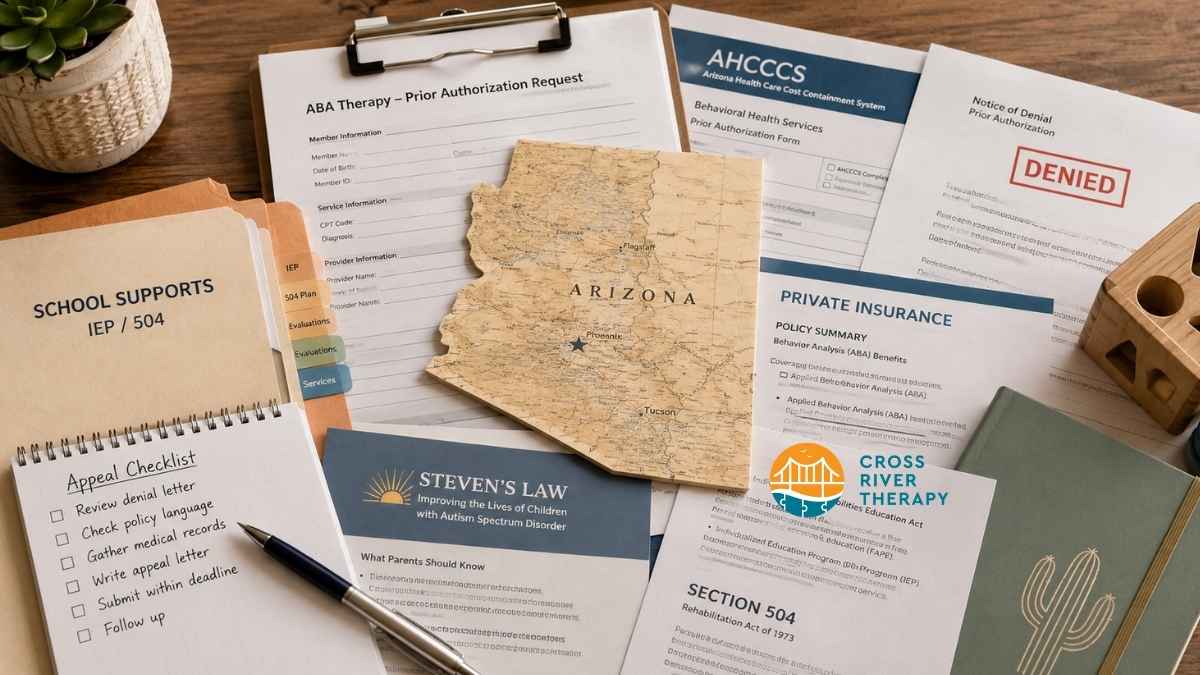
Arizona Autism Laws Every Parent Should Know Before Starting ABA Therapy
Autism laws Arizona parents should know cover ABA insurance, AHCCCS appeals, IEPs, and Section 504 rights. Check ABA coverage with Cross River.

ABA Therapist Salary in Arkansas: What BCBAs and RBTs Actually Earn in 2026
ABA therapist salary Arkansas figures compare RBT and BCBA rates, benefits, guaranteed hours, and contract terms. Explore careers at Cross River.

5 Autism Support Groups and Family Resources in New Mexico Alongside ABA Therapy
Autism support groups New Mexico families can use offer peer support, local events, and school help. Cross River can explain ABA therapy options.

Where to Get an Autism Evaluation in New Mexico Before Starting ABA Therapy
Autism evaluation New Mexico options include UNM, NMSU, FIT, and private providers. Compare providers, records, and ABA steps with Cross River.

7 North Carolina Autism Resources to Contact Before ABA Therapy Starts
Autism resources North Carolina families can call for diagnosis, early intervention, rights, and parent support. Start ABA intake with Cross River.

Does Indiana Medicaid Cover ABA Therapy? A Step-by-Step Eligibility Checklist for Parents
Medicaid ABA therapy Indiana covers eligible children under 21 with prior authorization. Your five-step coverage review can start with Cross River.
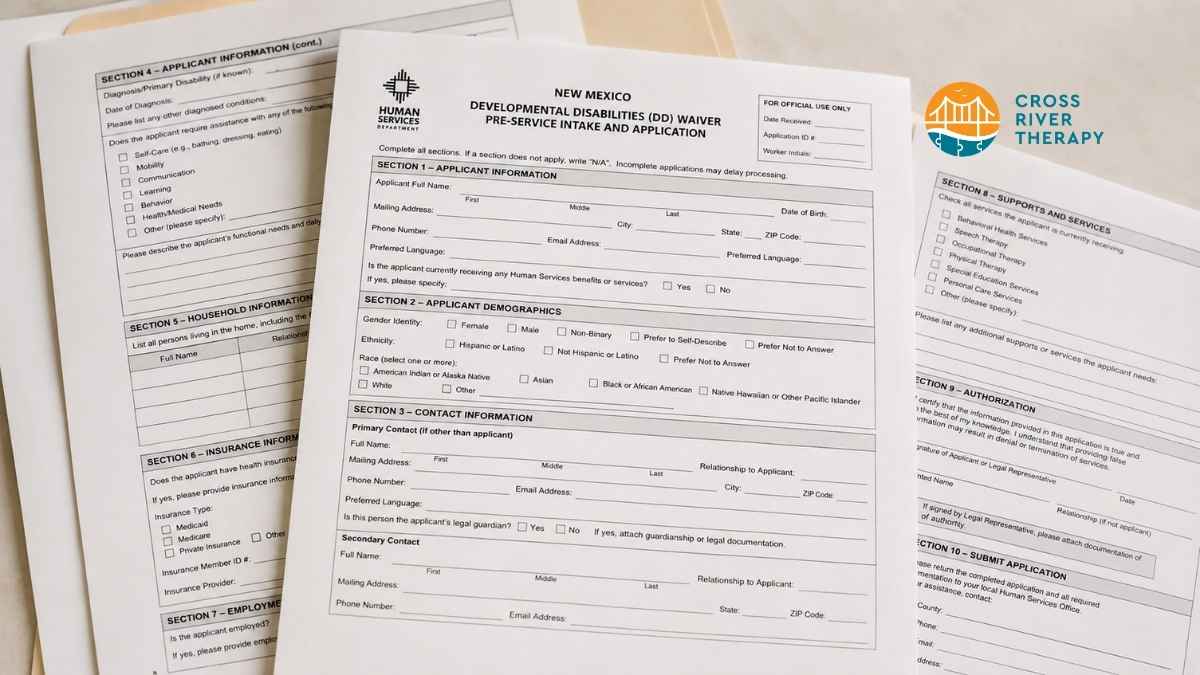
How to Apply for New Mexico’s DD Waiver While Starting ABA Therapy
Autism waiver New Mexico applications need DD Waiver records and proof of daily support needs. Your next step is to start ABA intake with Cross River.

Is ABA Therapy Covered by Insurance in New Jersey? What Every Parent Should Know
ABA therapy insurance New Jersey may cover medically necessary care based on plan type, network, and authorization. Verify benefits with Cross River.

How ABA Therapy Builds Communication for Nonverbal Children Without Forcing Speech
ABA therapy communication for nonverbal children starts with AAC, signs, and daily routines. See how kids ask, refuse, choose, and get help.

How to Start ABA Therapy in New Jersey With a First-Call Checklist
How to start ABA therapy in New Jersey begins with records, insurance details, and intake questions. Use this first-call checklist before you call.

How to Get an Autism Evaluation in Arkansas Before Starting ABA Therapy
How to get an autism evaluation in Arkansas starts with a referral, provider choice, and key records. Use this parent checklist before ABA intake.