








Behavioral Health Support Through ABA Therapy
Discover how ABA therapy for behavioral health supports children with autism through tailored techniques and goals.


Understanding ABA Therapy
ABA therapy, or Applied Behavior Analysis, is a therapeutic approach designed to improve specific behaviors in children diagnosed with autism. This method has been a vital resource for parents seeking effective interventions for their children.
History of ABA Therapy
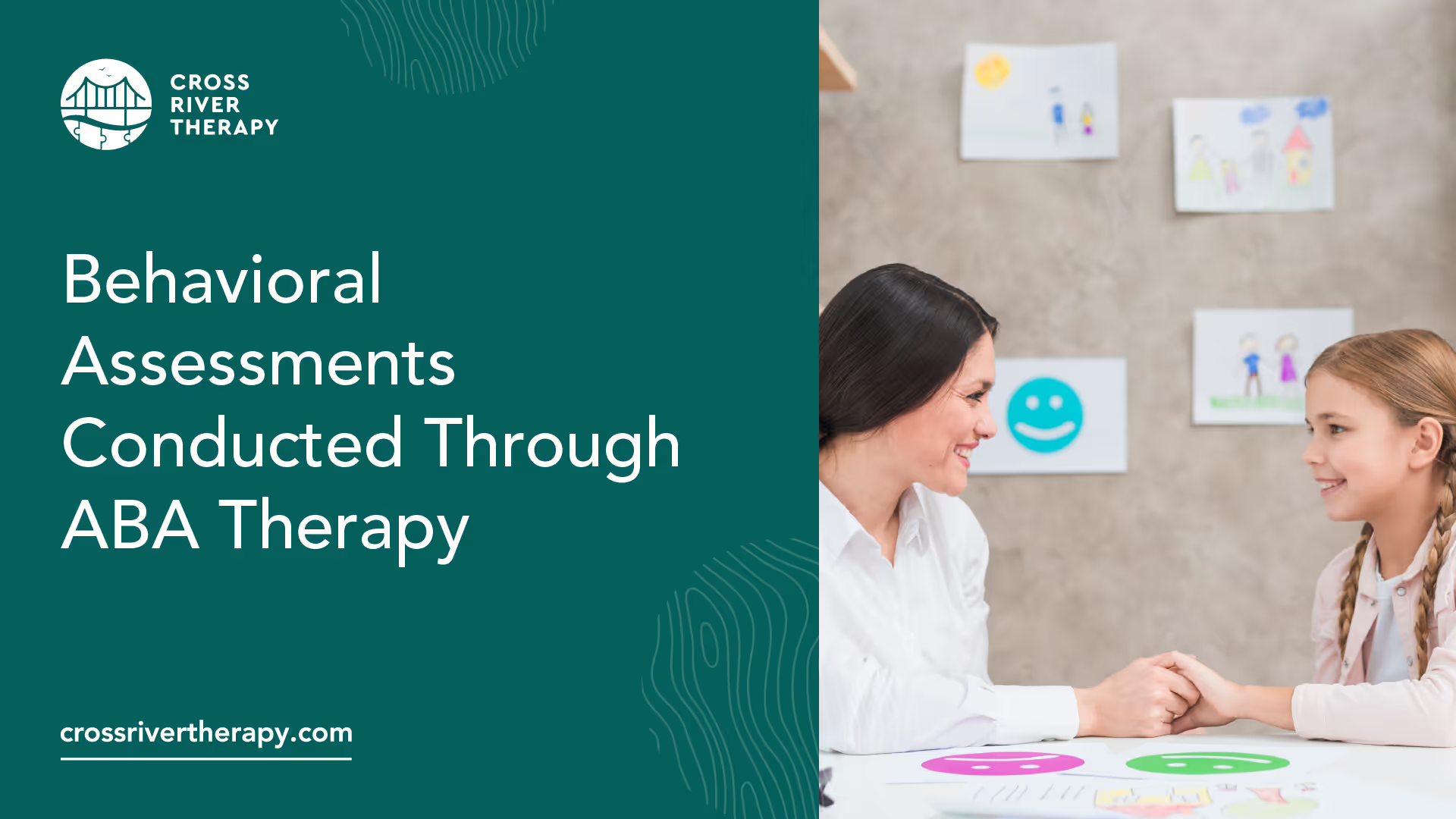
ABA therapy has been utilized since the 1960s to assist children with autism and related developmental disorders. Therapists have employed various principles of behavior analysis during these decades to create a structured and supportive environment for learning.The development of this therapy stems from a desire to understand and positively influence behaviors, paving the way for numerous techniques that have evolved over time.
Benefits of ABA Therapy
The benefits of ABA therapy for behavioral health are well-documented and substantial. More than 20 studies confirm that intensive and long-term application of ABA principles can significantly enhance outcomes for many children on the autism spectrum.
Typically, this approach consists of providing 25 to 40 hours a week of therapy over a span of 1 to 3 years. The gains observed in those who participate in ABA therapy can be profound, including improvements in:
- Intellectual Functioning: Enhancements in cognitive abilities.
- Language Development: Improvements in verbal communication.
- Daily Living Skills: Increases in self-care and independence.
- Social Functioning: Better interaction with peers.
The therapy approach emphasizes play and daily activities that are integral to the child's life. By leveraging the child’s interests, ABA therapy guides learning through methods such as Pivotal Response Treatment (PRT).
In recent years, there has been a shift away from punitive measures in favor of reinforcement and functional communication techniques. These include prompting and reinforcement to help children learn effectively [2].
One of the significant advantages of ABA therapy is its focus on training parents and caregivers. A collaborative approach ensures that strategies learned during therapy sessions are consistently applied at home and in other environments.
Equipping parents with the tools and techniques of ABA therapy allows them to actively engage in their child’s development, leading to more sustained positive outcomes.

ABA Therapy Techniques
ABA therapy utilizes a variety of techniques designed to promote positive behavioral change in children, particularly those diagnosed with autism. Understanding these techniques can help parents make informed decisions regarding their child's therapy.
Positive Reinforcement
Positive reinforcement is a primary strategy in ABA therapy. It involves rewarding a behavior with a valued stimulus, which encourages positive behavior change over time.
ABA therapists use this technique to enhance socially significant behaviors, such as adaptive communication skills and self-help skills, by adding a reinforcement following specific behaviors. This leads to an increase in those behaviors in the future.
For example, children may learn to complete daily tasks like getting dressed or brushing their teeth independently, with reinforcement being faded as they maintain these skills without further prompts.
- Getting Dressed: Praise or small reward.
- Brushing Teeth: Stickers on a chart.
- Eating Meals: Extra playtime.
- Using the Bathroom: Special treats.
Negative Reinforcement
Negative reinforcement in ABA therapy helps individuals avoid unpleasant situations by removing or reducing aversive stimuli. This technique increases the likelihood of specific behaviors in the future, as removing something undesirable can encourage positive actions.
For example, if a child is less anxious in a classroom setting after being allowed to use a fidget toy, the removal of the anxiety-inducing situation reinforces the behavior of staying calm.
A-B-C Analysis
A-B-C Analysis is a vital component of behavior analysis within ABA therapy. It involves examining the Antecedent, Behavior, and Consequence of specific behaviors to identify patterns and trends. This analysis helps therapists develop effective behavior intervention strategies tailored to the child's needs [3]. Understanding what occurs before and after a behavior provides insights into how to modify those behaviors positively.
Discrete Trial Training
Discrete Trial Training (DTT) is a structured approach used in ABA therapy to teach new skills through clear learning opportunities. Each trial includes a specific instruction, the child's response, and an immediate consequence, whether praise or correction [3]. This method emphasizes repetition and consistency, allowing children to acquire and refine skills over time.
- Instruction: Clear and concise prompt given to the child.
- Response: Child's action or answer to the prompt.
- Consequence: Immediate feedback (praise or correction).
Natural Environment Teaching
Natural Environment Teaching (NET) is an ABA technique focusing on learning within the child's natural surroundings. This approach emphasizes the child's motivation and incorporates learning opportunities into play and day-to-day activities. By targeting functional skills, NET aims to ensure that the skills learned are easily generalized and maintained outside of structured therapy settings.
Through a combination of these techniques, ABA therapy effectively supports behavioral health, making it a valuable resource for parents of children with autism.
Components of ABA Therapy
In understanding ABA therapy for behavioral health, it's essential to recognize the key components involved in delivering effective treatment. Each component plays a significant role in tailoring the therapy to meet the needs of children diagnosed with autism.
Role of BCBA
A Board Certified Behavior Analyst (BCBA) is at the forefront of designing and overseeing ABA programs. They customize these programs based on each child's skills, needs, interests, preferences, and family situation. The BCBA utilizes assessments and data collection to ensure that the intervention is effective and progresses toward meaningful outcomes.
Responsibilities of BCBA
- Design individualized ABA programs
- Supervise therapists and other personnel
- Monitor the child's progress and modify goals as needed
- Collaborate with families for better understanding and implementation
Therapist Involvement
Therapists, often registered behavior technicians (RBTs), deliver the interventions laid out by the BCBA. They are trained under the guidance of the BCBA, ensuring a consistent approach to the treatment. The involvement of therapists is vital for executing daily interventions that promote skill acquisition and behavioral improvement in children.
Roles of Therapists (RBTs)
- Provide one-on-one therapy sessions
- Implement strategies designed by the BCBA
- Collect data on the child's progress
- Communicate with families regarding improvements and challenges
Individualized Treatment Plans
Individualized treatment plans are pivotal in ABA therapy. These plans are developed collaboratively between the BCBA, therapists, and caregivers.
They encompass specific and measurable treatment goals focused on behavior changes and skill development tailored to each child's unique needs. The goals are designed to enhance various skills, including reducing challenging behaviors, teaching new skills, and promoting prosocial behaviors.
Components of Individualized Plans
- Collaboration with caregivers for input
- Specific and measurable targets for progress
- Focus on achieving meaningful outcomes in natural environments
In creating a comprehensive ABA program, the collaboration among BCBA, therapists, and families is key to its effectiveness. This cohesive approach aids in nurturing the child's development through structured, evidence-based strategies.
Setting Goals in ABA Therapy
Setting clear and purposeful goals is crucial in ABA therapy, particularly for children diagnosed with autism. This structured approach helps to define the path toward meaningful outcomes and facilitates effective progress monitoring.
Collaborative Goal Setting
In ABA therapy, collaborative goal setting involves parents, caregivers, and a Board Certified Behavior Analyst (BCBA) working together to identify specific objectives for the child. This cooperative process ensures that the goals are relevant and tailored to the individual needs of the child, making the treatment more effective. Discussions and assessments guide the formulation of these goals, focusing on behavior change and skill development.
This approach fosters a supportive environment where caregivers are encouraged to share their insights about the child's unique challenges and strengths. By involving parents in goal-setting, the therapy becomes a shared journey, reinforcing the commitment to achieve the desired outcomes.
Specific and Measurable Targets
The goals developed during ABA therapy are broken down into specific and measurable targets. This structure allows for clear tracking of progress over time.
These targets are designed to decrease challenging behaviors, teach new skills, and encourage prosocial behaviors within a natural environment. Each target acts as a building block toward larger skill sets that promote overall development [5].
An example of a measurable target could be improving independence in daily routines, such as dressing or tooth brushing. Additionally, goals may focus on enhancing expressive communication skills (like engaging in conversations) or developing social skills necessary for interaction with peers. Tracking these measurable targets enables caregivers and therapists to assess progress effectively.
- Communication: Increase expressive speech by engaging in a 3-turn conversation.
- Independence: Complete dressing with minimal help, aiming to dress independently in 7 out of 10 trials.
- Social Skills: Initiate play with peers, targeting starting play with peers in 5 out of 10 opportunities.
Community Skills Development
ABA therapy also emphasizes community skills development, focusing on behaviors necessary for success in public settings. These skills are built upon the foundations of social, expressive, receptive, and daily living skills [5]. Teaching these skills involves simulating real-world situations, such as grocery shopping or visiting a doctor, where children can practice their skills in context.
For instance, children may practice communication by ordering food at a restaurant or learn to follow social cues while interacting with others in a community setting. By gradually introducing these community skills and ensuring the child understands them before generalization, they enhance their ability to navigate various environments confidently.
In summary, setting goals in ABA therapy offers a targeted and structured approach to support children with autism, enabling them to thrive both socially and independently.
ABA Therapy Implementation
Implementing ABA therapy effectively is essential for maximizing its benefits for children diagnosed with autism. Key aspects of this implementation include recommended therapy hours, the importance of early intervention, and the involvement of parents and caregivers.
Recommended Therapy Hours
The amount of ABA therapy a child receives plays a crucial role in their progress. Generally, it is recommended that children engage in at least 15 hours of ABA therapy per week for noticeable progress, with some children benefiting from up to 40 hours weekly.
Factors such as the child’s individual abilities, the severity of behaviors, and parental involvement can influence the rate of improvement. Studies also indicate that when therapy is utilized for more than 20 hours per week during the early years (before age 4), it can lead to significant developmental gains and reduce the need for additional services later in life.
Effectiveness of Early Intervention
Early intervention is key in ABA therapy, with benefits prominently seen when therapy begins during early childhood, ideally around 2 years of age. The brain's heightened ability to adapt during these formative years allows for more effective behavioral adjustments and learning experiences. Research confirms that starting ABA therapy early leads to improved outcomes and may enhance overall development for children with autism.
Involvement of Parents and Caregivers
A significant advantage of ABA therapy is the focus on training and involving parents and caregivers in the therapy process. A collaborative approach ensures that strategies and techniques learned during therapy sessions are consistently implemented at home and in other settings.
By equipping parents with the necessary tools, they become active participants in their child's development, which fosters sustainable positive outcomes. It is typically recommended that caregivers participate in 30 minutes to one hour of collaboration each week to align their efforts with the therapy goals.
Outcomes of ABA Therapy
ABA therapy plays a vital role in helping children with autism develop essential life skills and improve their overall quality of life. By employing various techniques tailored to each child's unique needs, significant advancements can be observed in several areas.
Socialization and Communication
Applied Behavior Analysis (ABA) therapy significantly impacts socialization and communication skills. Children undergoing ABA therapy typically experience improvements in their ability to communicate effectively with others.
They learn to understand and use language more appropriately, engage in meaningful interactions, and develop alternative communication methods such as Augmentative and Alternative Communication (AAC) devices, sign language, and Picture Exchange Communication Systems (PECS), depending on individual needs.
A summary of the effects of ABA therapy on social skills includes:
- Social Interactions: Enhanced ability to engage with peers.
- Understanding Cues: Better interpretation of social cues.
- Relationship Building: Development of healthier relationships.
Children learn through play-based methods and natural environment teaching to navigate social situations, making friends, and forming nurturing relationships with their peers.
Independent Living Skills
ABA therapy also helps in developing independent living skills, preparing children for greater autonomy in their daily lives. These skills include:
- Personal Car: Brushing teeth, dressing, grooming.
- Household Tasks: Cleaning, cooking simple meals.
- Safety Awareness: Recognizing dangers, emergency procedures.
By focusing on these essential life skills, children learn to manage themselves more effectively and confidently in various environments.
Behavioral Changes
A key outcome of ABA therapy is the positive behavioral changes that can occur. By teaching children appropriate behaviors that serve the same purposes as their negative behaviors, ABA methods address challenging behaviors such as aggression, self-injury, and tantrums. Techniques such as Differential Reinforcement of Alternative behavior (DRA), prompting and fading, and video modeling are commonly used to facilitate this learning.
The following table summarizes typical behavioral changes expected through ABA therapy:
- Aggression: Reduced incidents of aggressive actions.
- Self-Injury: Decreased occurrences of self-harm behaviors.
- Tantrums: Fewer emotional outbursts.
Moreover, a significant advantage of ABA therapy is its collaborative approach; it actively involves parents and caregivers, ensuring they are equipped with tools and strategies to reinforce positive behaviors consistently at home. Engaging parents in the therapeutic process fosters sustainable positive outcomes for children and contributes to their overall success in achieving behavioral goals.
Parents seeking further knowledge about resources can explore topics like ABA therapy and autism services or ABA therapy and child development centers for comprehensive support options.
References
[1]: https://www.autismspeaks.org/applied-behavior-analysis
[2]: https://my.clevelandclinic.org/health/treatments/25197-applied-behavior-analysis
[3]: https://blueabatherapy.com/aba/common-aba-therapy-techniques/
[4]: https://www.empowerbh.com/blog/benefits-of-aba-therapy/
[5]: https://blueabatherapy.com/aba/aba-therapy-goals/
[6]: https://abacustherapies.com/understanding-aba-therapy-pros-and-cons-explained/
Recent News
Related articles

6 Arkansas Medicaid ABA Therapy Rules Families Need to Know
Arkansas Medicaid ABA therapy has age, diagnosis and approval rules. Families can check six requirements before care.

Arizona Autism Laws for ABA Coverage and School Rights
Arizona autism laws for ABA coverage vary by plan. Families can check insurance, appeal options, and school rights.

ABA Therapist Salary in Arkansas for RBTs and BCBAs
Compare ABA therapist salary in Arkansas by role. See how paid hours and benefits affect earnings before applying.

5 Autism Support Groups and Family Resources in New Mexico
Autism support groups in New Mexico connect families. Local resources offer events, parent support, and school help.

Where to Get an Autism Evaluation in New Mexico
Autism evaluation options in New Mexico include UNM and NMSU. Age and referral details help parents prepare.

7 North Carolina Autism Resources to Contact Before ABA Therapy Starts
Autism resources North Carolina families can call for diagnosis, early intervention, rights, and parent support. Start ABA intake with Cross River.

Does Indiana Medicaid Cover ABA Therapy? A Parent Checklist
Indiana Medicaid ABA therapy may cover care for eligible children. The checklist covers coaching and renewals.
How to Apply for the New Mexico DD Waiver
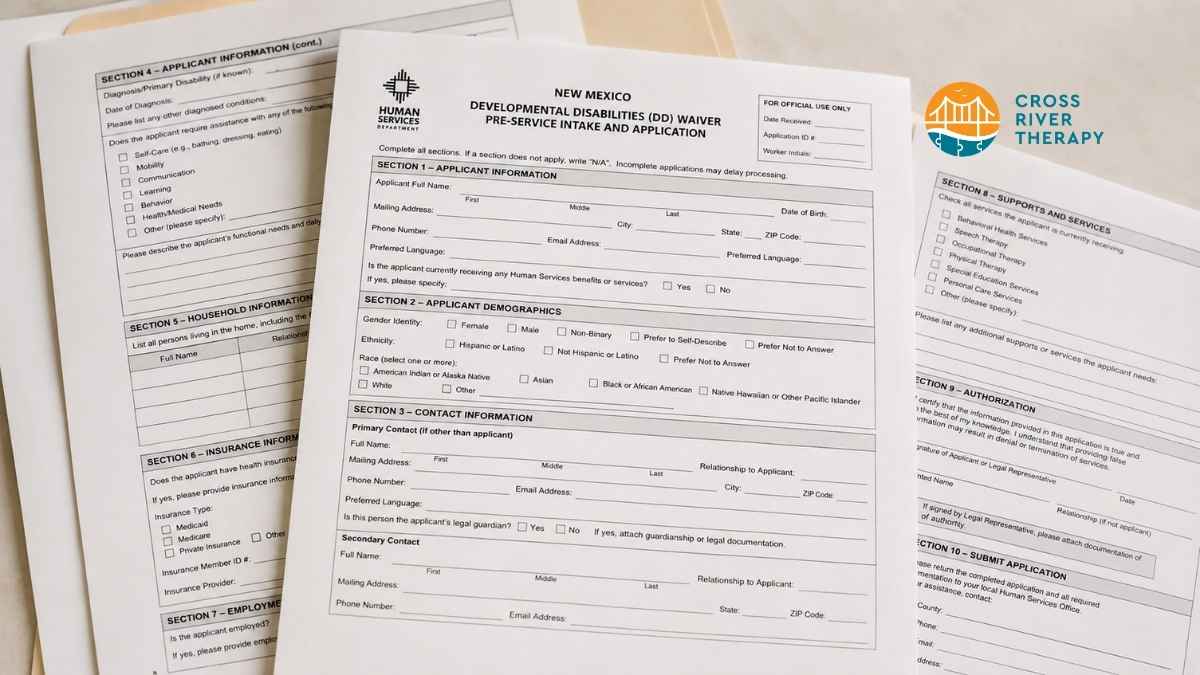
Your NM DD waiver application starts with state intake. The steps cover records, submission, and enrollment.

Does Insurance Cover ABA Therapy in New Jersey?
ABA therapy insurance in New Jersey varies by plan. Learn what NJ FamilyCare covers and how to check costs.

How ABA Therapy Builds Communication for Nonverbal Children Without Forcing Speech
ABA therapy communication for nonverbal children starts with AAC, signs, and daily routines. See how kids ask, refuse, choose, and get help.

How to Start ABA Therapy in New Jersey With a Checklist
Your guide explains how to start ABA therapy in New Jersey. A first-call checklist covers records and next steps.

How to Get an Autism Evaluation in Arkansas Before Starting ABA Therapy
How to get an autism evaluation in Arkansas starts with a referral, provider choice, and key records. Use this parent checklist before ABA intake.