








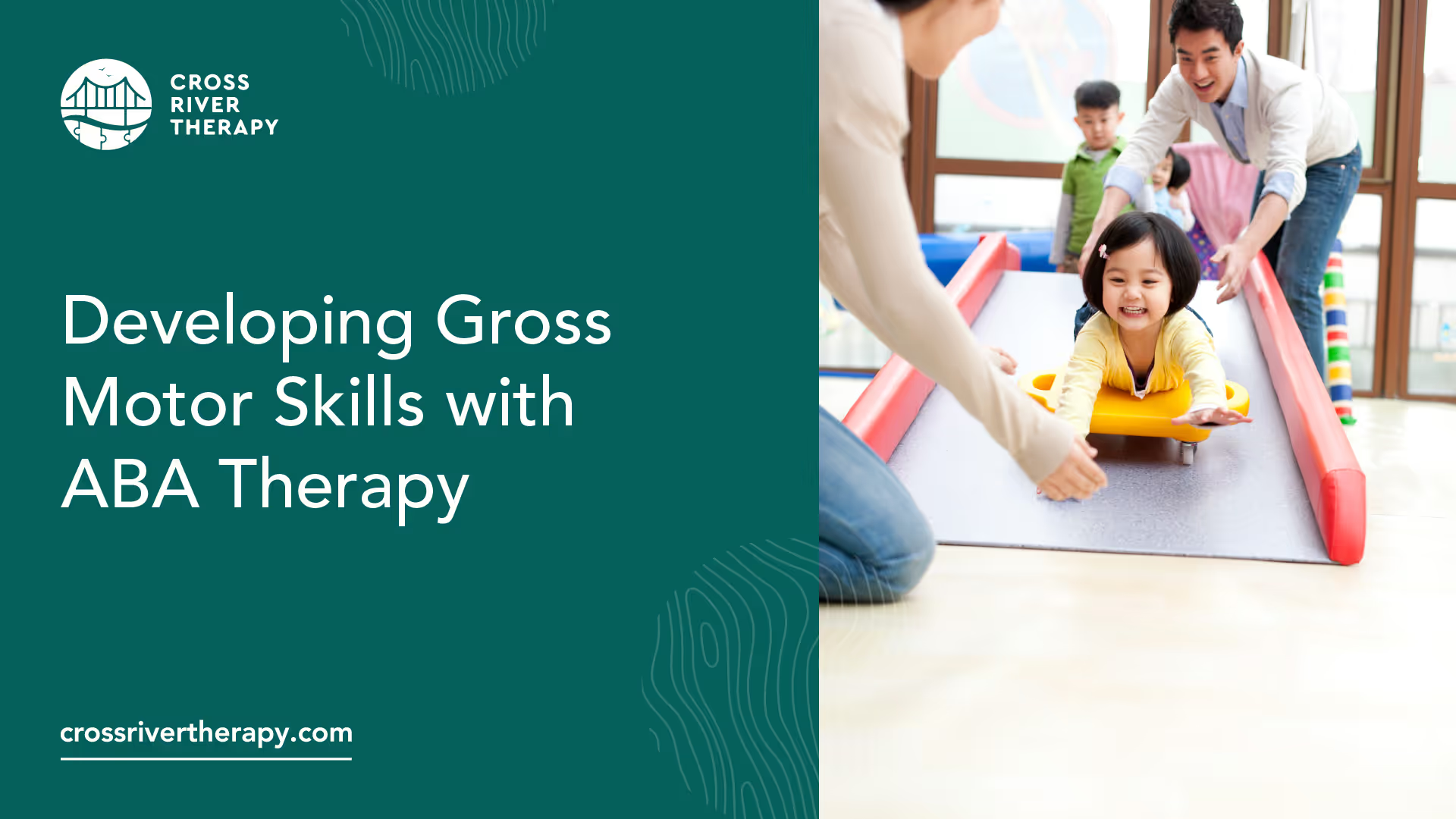
Developing Gross Motor Skills with ABA Therapy
Discover how ABA therapy for gross motor skills helps children thrive with fun activities and supportive strategies!


Understanding ABA Therapy
History and Development
ABA therapy, or Applied Behavior Analysis, has been utilized to assist children with autism and related developmental disorders since the 1960s. Its roots can be traced back to behaviorism, a psychological approach that emphasizes observable behaviors over internal thoughts or feelings.
Over the years, ABA has evolved into a structured intervention method that focuses on improving specific skills through systematic reinforcement and support. More than 20 studies have shown that long-term therapy using ABA principles leads to significant improvements in intellectual functioning, language development, daily living skills, and social functioning for many children with autism [1].
Core Principles
At the heart of ABA therapy are several core principles that guide its implementation. These principles include:
- Positive Reinforcement: This strategy suggests that behaviors are more likely to be repeated if they are followed by something valued, such as praise or rewards. This encourages children to engage in desired behaviors more often.
- Individualized Programs: Each ABA program is customized to meet the unique needs, skills, interests, and family situations of the child. A qualified behavior analyst (BCBA) designs and oversees these tailored interventions.
- Data-Driven Approach: ABA relies on continuous data collection and analysis to monitor progress and adjust strategies as needed. This ensures that the therapy is effective and responsive to the child's development.
- Focus on Functional Skills: The goal of ABA therapy is to teach functional skills that can be applied to everyday life, enhancing the child’s independence and quality of life.
- Long-Term Development: Comprehensive and long-term ABA-based interventions have been proven beneficial for the lifelong development of children with autism, promoting positive effects on various developmental domains.
Understanding these foundational elements of ABA therapy can help parents recognize its effectiveness, especially in supporting gross motor skills. For more information on how ABA therapy can aid in early childhood development, check out our article on aba therapy for early childhood development.
Importance of Gross Motor Skills
Definition and Examples
Gross motor skills are the abilities that allow individuals to use and control the large muscles of the body for coordinated movements. These skills are essential for activities such as running, jumping, climbing, and throwing.
They involve the large muscle groups in the arms, legs, and torso, and are fundamental for children's overall physical development.
Examples of gross motor skills include:
- Running: Moving quickly on foot.
- Jumping: Propelling oneself off the ground.
- Climbing: Ascending or descending structures like playground equipment.
- Throwing: Propelling an object from the hand.
Developing these skills is particularly important for children with autism as they contribute significantly to their physical, cognitive, and social well-being.
- Rolling: Moving from a lying position to sitting or standing.
- Crawling: Moving on hands and knees.
- Standing: Balancing on two feet.
- Dancing: Moving rhythmically to music.
- Hiking: Walking on trails or uneven surfaces.
Impact on Daily Life
Gross motor skills serve as building blocks for various aspects of a child's development. By cultivating these skills, children with autism can experience positive impacts in multiple areas including physical health, self-confidence, and social interactions.
These skills are crucial for participation in daily activities and help children engage more fully with their environment [4].
The impact of gross motor skills on daily life includes:
- Physical Development: Enhances overall strength, coordination, and balance.
- Social Interaction: Enables participation in group activities like sports and games, fostering friendships.
- Independence: Assists in daily tasks such as dressing, feeding, and personal hygiene.
- Confidence Building: Mastering physical tasks boosts self-esteem and encourages further exploration.
Developing these skills is essential for survival and thriving, starting from basic movements like rolling and crawling to more complex activities like dancing and sports. ABA therapy is a valuable approach for fostering gross motor skills in children, creating pathways for improved functionality in everyday life.
How ABA Supports Motor Skills?
ABA therapy is a powerful tool for helping children with autism develop essential gross motor skills. This approach is tailored to each child's unique needs and is overseen by trained professionals, ensuring that every child receives the support they require to thrive.
Tailored Interventions
One of the key strengths of ABA therapy is its ability to provide tailored interventions. Each program is designed by a qualified behavior analyst (BCBA) who customizes it based on the child’s individual skills, needs, interests, preferences, and family situation.
This individualized approach ensures that children are engaged and motivated during therapy sessions, which can enhance their learning experiences.
In terms of gross motor skills, ABA therapy helps children acquire necessary skills for functioning in various settings, including home and school. Some common skills that may be targeted include:
- Balancing: Learning to maintain stability while standing or moving.
- Jumping: Developing the ability to push off the ground and land safely.
- Throwing: Improving hand-eye coordination by practicing throwing objects.
- Catching: Enhancing coordination through catching balls or other items.
- Climbing: Gaining strength and confidence to climb stairs or playground equipment.
Through systematic training approaches, children can independently perform tasks that are crucial for their daily lives, such as participating in physical activities and social interactions [6].
Role of Behavior Analysts
Behavior analysts play a vital role in the success of ABA therapy for gross motor skills. They assess each child’s current abilities and create structured plans to address specific challenges. These professionals also monitor progress, making adjustments as needed to ensure continued growth.
In addition to designing programs, behavior analysts implement various evidence-based techniques and strategies that specifically target gross motor development. Techniques may include task analysis, prompting, and reinforcement to motivate children in their skill acquisition.
While ABA therapy focuses on gross motor skills, it can also be integrated with other therapies, such as occupational and physical therapy. These complementary approaches can further enhance a child's overall development.
For example, occupational therapy focuses on fine motor skills, while physical therapy targets larger movements and coordination.
Parents can also support their child's progress by incorporating these skills into daily routines and play. For additional insights, parents may find valuable information in related resources, including aba therapy for fine motor skills and aba therapy and play therapy.
Activities to Enhance Skills
Engaging in activities that enhance gross motor skills is vital for children diagnosed with autism. These activities not only promote physical development but also foster social interaction and enjoyment. Here are some fun and engaging activities as well as ways to incorporate therapy into play.
Fun and Engaging Activities
Children can develop their gross motor skills through a variety of enjoyable activities. These activities can include:
- Playing with Balls: Tossing, catching, and kicking balls can improve coordination and strength.
- Using Walls for Activities: Leaning against walls for support while performing exercises can enhance balance.
- Riding on Toys: Riding tricycles or scooters helps develop leg strength and coordination.
- Taking Wild Walks: Exploring different terrains encourages movement and stability.
- Feeling the Rhythm: Dancing to music can boost timing and body awareness.
- Building Structures for the Body: Using soft blocks to create structures can improve spatial awareness and balance.
- Engaging in Yoga: Simple yoga poses can promote flexibility and body control.
- Jumping: Activities like jumping on a trampoline enhance leg strength and coordination.
- Getting Wet: Water activities, like playing with a hose or swimming, can be both fun and beneficial for motor skills.
These activities should focus on fun, consistency, and safety, as they are essential for effective learning and development.
Incorporating Therapy into Play
Integrating therapy into play is a powerful way to support gross motor development. Parents and caregivers can create playful environments that encourage movement and exploration. Here are some strategies:
- Make Activities Interactive: Encourage children to participate in games that require running, jumping, or climbing, making it a fun and collaborative experience.
- Use Play Equipment: Incorporate slides, swings, and climbing structures to promote physical activity in a playful manner.
- Set Up Obstacle Courses: Design simple obstacle courses at home or in the park that require crawling, jumping, and balancing. This not only engages children but also challenges their motor skills.
- Incorporate Music and Dance: Use music to encourage dancing, which can develop rhythm and coordination while being enjoyable.
- Utilize Therapeutic Play: Engage in activities that are designed to improve motor skills, such as therapeutic ball games or yoga sessions tailored for children with autism. For more insights, explore aba therapy and play therapy.
By fostering an environment where play and therapy coexist, children can develop their gross motor skills in a natural and enjoyable way. These activities not only enhance physical abilities but also support emotional growth and social interaction, contributing to overall development.
Early Intervention Strategies
Recognizing Delays
Recognizing delays in gross motor skills is essential for parents of children diagnosed with autism. Early signs of motor difficulties can often be observed as early as 14 months. These difficulties may appear before social-communication challenges, making it vital to monitor a child's physical development closely.
Common indicators that may suggest a delay in gross motor skills include:
12-15 Months:
- Expected Skills: Crawling, pulling up to stand.
- Signs of Delay: Limited mobility, not attempting to stand.
16-24 Months:
- Expected Skills: Walking independently.
- Signs of Delay: Frequent falls, reluctance to walk.
2-3 Years:
- Expected Skills: Running, climbing stairs.
- Signs of Delay: Difficulty running, climbing, or jumping.
3-4 Years:
- Expected Skills: Hopping, balancing on one foot.
- Signs of Delay: Inability to hop or balance, clumsiness.
Identifying these signs allows for timely intervention, which can lead to improved outcomes in motor skills and overall development.
Importance of Timely Support
Timely support plays a crucial role in enhancing motor skills for children with autism. Early intervention can significantly improve motor skills and prevent complications such as social isolation and academic difficulties.
The benefits of early intervention include:
- Enhanced Skill Development: Early identification and support improve the likelihood of acquiring essential motor skills.
- Prevention of Secondary Issues: Addressing delays early can help minimize risks of associated social and academic challenges.
- Increased Independence: Focused therapy and interventions can lead to greater independence in daily activities.
- Family Support: Empowering parents and caregivers to provide effective support at home enhances the overall developmental process.
By recognizing delays early and seeking timely interventions, parents can pave the way for their children to develop essential gross motor skills. Involving parents and caregivers in this process is crucial, as they can create opportunities for practice and engage in activities that reinforce skills learned during therapy.
Involving Parents and Caregivers
Parents and caregivers are essential in fostering the development of gross motor skills in children diagnosed with autism. Their involvement can significantly enhance the effectiveness of ABA therapy for gross motor skills.
Supporting Skill Development
To support skill development, parents and caregivers can create opportunities for physical activities that encourage movement. Incorporating daily routines that allow for practice of fine motor skills can also play a crucial role. For instance, activities such as:
- Climbing Stairs: Enhances leg strength and coordination.
- Playing Catch: Improves hand-eye coordination.
- Dancing: Boosts balance and rhythm.
- Drawing or Coloring: Develops fine motor skills and dexterity.
Additionally, providing sensory input through various textures and movements can help children feel more comfortable and confident while developing their skills. Using assistive technology can also assist in overcoming specific motor skill challenges, allowing children to engage more effectively in their activities.
Creating a Positive Environment
Creating a positive environment is vital for children with autism to thrive. A supportive and encouraging atmosphere can significantly influence their ability to develop gross motor skills. Parents and caregivers can achieve this by:
- Celebrating small achievements to boost confidence
- Establishing consistent routines that make practice predictable and safe
- Using positive reinforcement to motivate children during activities
Engaging in playful interactions can also foster skill development. Activities that blend therapy and play, such as those outlined in our article on ABA therapy and play therapy, can make learning enjoyable and effective.
Furthermore, collaboration with professionals, such as occupational and physical therapists, can provide targeted strategies to enhance gross motor skills.
By actively participating in their child's development and creating a nurturing environment, parents and caregivers can make a significant impact on their child's ability to acquire and refine gross motor skills, ultimately contributing to their overall growth and well-being.
FAQs
What role do visual supports play?
They help understand and practice gross motor movements.
How are activities adapted?
By modifying tasks and gradually increasing complexity.
Can ABA Therapy be customized?
Yes, it can be tailored to individual needs.
How can parents support at home?
By practicing skills, using reinforcement, and creating movement opportunities.
Are additional strategies used?
Yes, including physical therapy, motor skill games, and environmental modifications.
References
[1]: https://www.autismspeaks.org/applied-behavior-analysis
[2]: https://www.ncbi.nlm.nih.gov/pmc/articles/PMC7265021/
[4]: https://chicagoabatherapy.com/resources/glossary/gross-motor-skills/
[5]: https://blog.stageslearning.com/blog/10-gross-motor-skills-for-your-child-with-autism
[6]: https://www.ncbi.nlm.nih.gov/pmc/articles/PMC10169625/
Recent News
Related articles

6 Arkansas Medicaid ABA Therapy Rules Families Need to Know
Arkansas Medicaid ABA therapy has age, diagnosis and approval rules. Families can check six requirements before care.

Arizona Autism Laws Every Parent Should Know Before Starting ABA Therapy
Autism laws Arizona parents should know cover ABA insurance, AHCCCS appeals, IEPs, and Section 504 rights. Check ABA coverage with Cross River.

ABA Therapist Salary in Arkansas: What BCBAs and RBTs Actually Earn in 2026
ABA therapist salary Arkansas figures compare RBT and BCBA rates, benefits, guaranteed hours, and contract terms. Explore careers at Cross River.

5 Autism Support Groups and Family Resources in New Mexico Alongside ABA Therapy
Autism support groups New Mexico families can use offer peer support, local events, and school help. Cross River can explain ABA therapy options.

Where to Get an Autism Evaluation in New Mexico Before Starting ABA Therapy
Autism evaluation New Mexico options include UNM, NMSU, FIT, and private providers. Compare providers, records, and ABA steps with Cross River.

7 North Carolina Autism Resources to Contact Before ABA Therapy Starts
Autism resources North Carolina families can call for diagnosis, early intervention, rights, and parent support. Start ABA intake with Cross River.

Does Indiana Medicaid Cover ABA Therapy? A Step-by-Step Eligibility Checklist for Parents
Medicaid ABA therapy Indiana covers eligible children under 21 with prior authorization. Your five-step coverage review can start with Cross River.
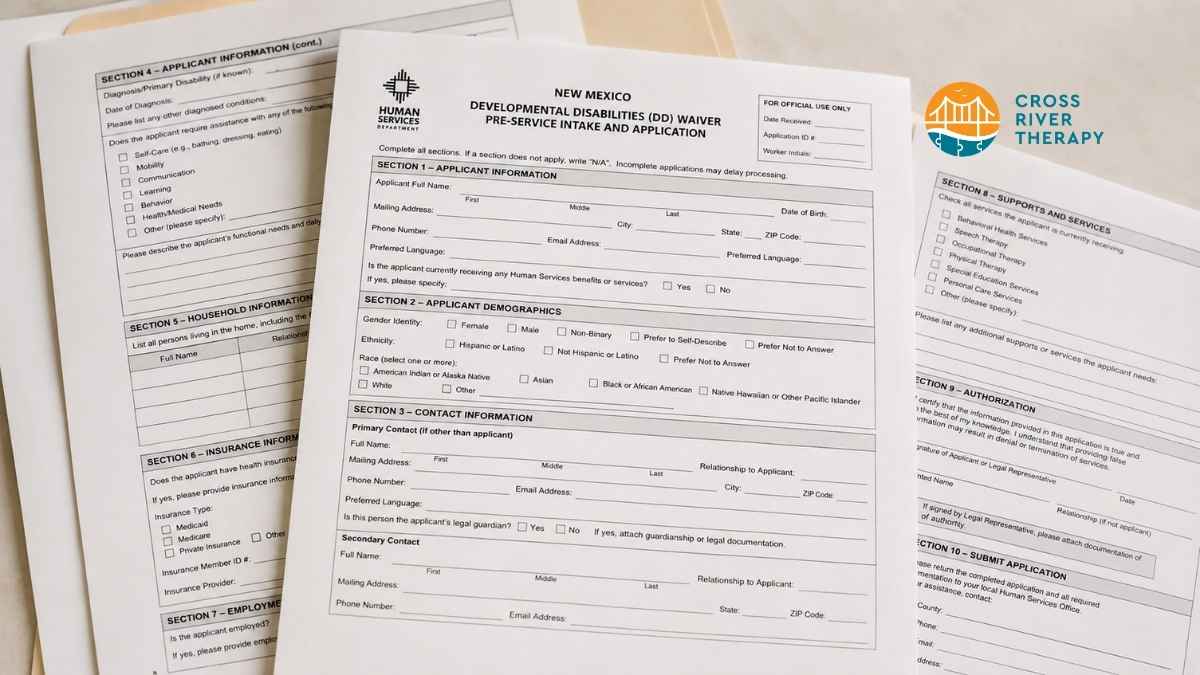
How to Apply for New Mexico’s DD Waiver While Starting ABA Therapy
Autism waiver New Mexico applications need DD Waiver records and proof of daily support needs. Your next step is to start ABA intake with Cross River.

Is ABA Therapy Covered by Insurance in New Jersey? What Every Parent Should Know
ABA therapy insurance New Jersey may cover medically necessary care based on plan type, network, and authorization. Verify benefits with Cross River.

How ABA Therapy Builds Communication for Nonverbal Children Without Forcing Speech
ABA therapy communication for nonverbal children starts with AAC, signs, and daily routines. See how kids ask, refuse, choose, and get help.

How to Start ABA Therapy in New Jersey With a First-Call Checklist
How to start ABA therapy in New Jersey begins with records, insurance details, and intake questions. Use this first-call checklist before you call.

How to Get an Autism Evaluation in Arkansas Before Starting ABA Therapy
How to get an autism evaluation in Arkansas starts with a referral, provider choice, and key records. Use this parent checklist before ABA intake.