








Enhancing Social Development with ABA Therapy
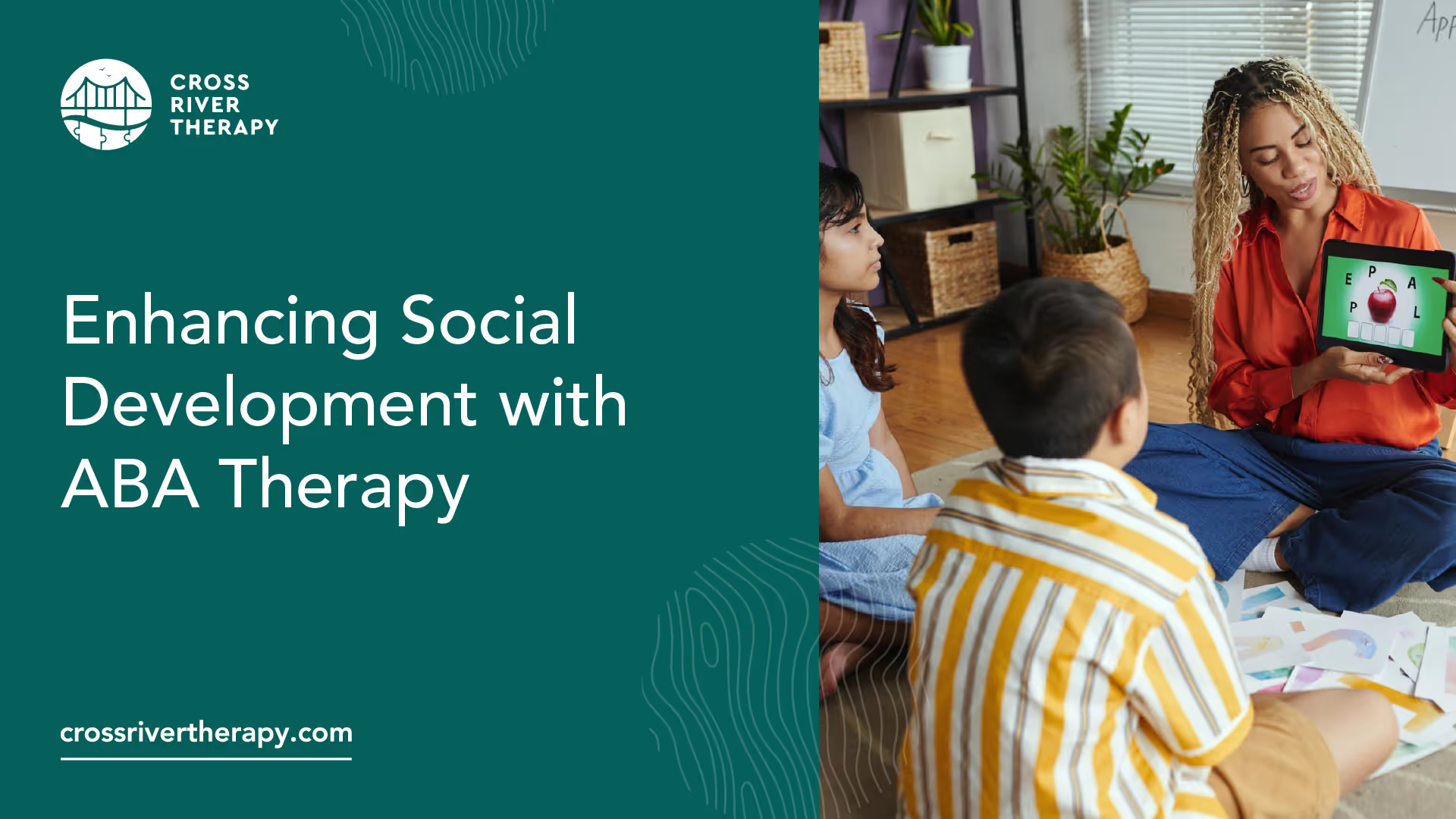
Discover how ABA therapy for social development can enhance your child's skills and boost their confidence!


Understanding ABA Therapy
ABA therapy, or Applied Behavior Analysis, is a widely recognized methodology designed to support children with autism. This therapy focuses on teaching essential skills and managing behaviors by utilizing evidence-based strategies.
Basics of ABA Therapy
ABA therapy is an effective early intervention approach for children with autism. It aids them in learning and developing skills to enhance communication, social interaction, and independence. By concentrating on observable behaviors and utilizing positive reinforcement, ABA therapy helps children develop strategies that contribute to their overall growth and well-being.
Key aspects of ABA therapy include:
- Evidence-Based Techniques: The application of proven strategies tailored to meet the individual needs of each child.
- Positive Reinforcement: Encouraging desired behaviors by rewarding them, thereby increasing the likelihood these behaviors will occur in the future.
- Experimentation: Adjusting approaches based on what effectively supports the child’s learning and behavior.
Seven Dimensions of ABA
ABA therapy for autism is underpinned by seven important dimensions, which ensure the approach is structured and comprehensive. These dimensions include:
- Generalization: Skills learned must be applied across different settings and situations.
- Effectiveness: The interventions should demonstrate significant positive outcomes for the child.
- Technological: Techniques used should be defined clearly and replicable.
- Application: Skills learned must be functional and meaningful within the child's daily life.
- Conceptual Systematic: Techniques should be grounded in theory and consistently applied.
- Analytics: Data should be collected and analyzed to assess the effectiveness of interventions.
- Behavioral Observation and Measurement: Ongoing assessment of behaviors to inform treatment decisions.
By integrating these dimensions, ABA therapy provides a holistic and personalized approach to support children on the autism spectrum.
Benefits of ABA Therapy
ABA therapy offers many advantages, particularly for parents of children with autism. It is an evidence-based treatment approach that focuses on skill development and managing behaviors effectively.
Skill Development
One of the primary benefits of ABA therapy is its ability to enhance various skills in individuals with Autism Spectrum Disorder (ASD). Through targeted interventions, ABA therapy improves communication, social interaction, daily living skills, and academic abilities. The therapy breaks down complex skills into manageable steps, making it easier for children to learn and generalize these skills across different settings.
- Communication: Increased verbal and non-verbal communication skills
- Social Interaction: Enhanced understanding of social cues and improved peer interactions
- Daily Living Skills: Greater independence in personal care and daily tasks
- Academic Skills: Better performance and engagement in academic activities
ABA techniques, such as modeling and prompting, are instrumental in developing essential social skills, including taking turns, sharing, and understanding facial expressions and tone of voice. A structured approach to social skills learning can lead to the formation of meaningful connections with others, benefiting social development greatly [1].
Managing Behaviors
ABA therapy is highly effective in managing behaviors, focusing on increasing desired behaviors while decreasing challenging or maladaptive behaviors. This process involves systematic assessment and intervention tailored to each child's unique needs.
ABA can help children replace challenging behaviors, such as aggression or tantrums, with more appropriate alternatives. By addressing the root causes of these behaviors, children can learn better ways to cope with their emotions and social situations.
- Aggression: Reduce incidents through replacement strategies
- Self-injury: Address underlying triggers and teach coping skills
- Tantrums: Implement calming strategies and reinforce positive behavior
As a result, children experience a significant reduction in challenging behaviors, leading to a more positive learning environment. This aids overall development and allows for smoother interactions in both home and school settings.

Implementing ABA Therapy
Implementing Applied Behavior Analysis (ABA) therapy involves careful planning and execution. This section will cover the essential aspects of designing ABA programs tailored for individual children and the role of positive reinforcement in encouraging desirable behaviors.
Designing ABA Programs
Designing an ABA program is a dynamic process that requires the expertise of a qualified behavior analyst, or BCBA. The BCBA customizes programs based on each child's unique skills, needs, interests, preferences, and family dynamics. Treatment objectives are developed according to the child's age and ability level, targeting skills across various domains such as communication, social skills, self-help skills, and academics.
A structured approach typically covers the following steps in designing an ABA program:
- Assessment: Initial evaluations help identify strengths, weaknesses, and specific needs.
- Goal Setting: Define clear, measurable, and attainable objectives tailored to the child's developmental level.
- Intervention Planning: Outline specific strategies and interventions to achieve the goals, using data-driven methods.
- Implementation: Carry out the program consistently across different settings, including home and school.
- Progress Monitoring: Regularly evaluate performance against the goals and adjust the program as necessary.
Effective ABA therapy usually recommends a minimum of 15 hours per week, with some children benefiting from up to 40 hours weekly. The pace of progress depends on various factors including the hours of therapy, the child's existing abilities, and the engagement of parents and caregivers in reinforcing learned skills in daily life.
Positive Reinforcement
Positive reinforcement is a cornerstone strategy within ABA therapy. This method involves providing meaningful rewards to individuals when they successfully demonstrate a desired behavior or skill, thereby encouraging its recurrence [3]. Rewards can range from verbal praise to tangible items or privileges.
To implement positive reinforcement effectively, caregivers can follow this table outlining various reinforcement types that might resonate with different children:
- Verbal Praise: Simple affirmations like "Great job!" or "Well done!" after the child exhibits a target behavior.
- Tangible Rewards: Items such as toys, books, or stickers that the child enjoys receiving after completing a task.
- Activity Access: Allowing the child to participate in a preferred activity, such as playing a game or going outside.
By consistently applying positive reinforcement, caregivers create a supportive environment that encourages children to achieve their developmental goals. This approach not only improves behavior but also builds confidence and self-esteem in children undergoing ABA therapy.
Components of ABA Therapy
ABA therapy encompasses various essential components, particularly behavior analysis and the roles played by therapists. These elements work together to create effective treatment plans tailored to the needs of individuals with autism.
Behavior Analysis
Behavior analysis is at the heart of ABA therapy, focusing on the understanding and modification of behavior. It involves techniques that look at antecedents (what happens before a behavior occurs) and consequences (what happens after the behavior) to identify patterns in behavior. Through this approach, ABA empowers individuals with autism to make meaningful progress in their development and quality of life.
ABA emphasizes the use of detailed behavior assessments. By identifying the functions and triggers of specific behaviors, therapists can create strategies that help children with autism develop new skills and modify challenging behaviors. Age is a crucial factor, as professionals typically diagnose Autism Spectrum Disorder (ASD) around age 2, ensuring a consistent pattern and history of behaviors aligns with diagnostic criteria for the initiation of ABA therapy services.
- Antecedents: Events or triggers that occur before a behavior.
- Consequences: Results or outcomes that follow a behavior.
- Behavior Assessment: Process of evaluating behaviors to inform treatment goals and strategies.
Therapist Roles
The effectiveness of ABA therapy relies heavily on the roles of trained professionals in the field. A Board Certified Behavior Analyst (BCBA) plays a crucial role in designing and overseeing ABA programs, customizing them to fit the skills, needs, interests, preferences, and family situations of each learner [3].
A primary responsibility of the BCBA is the development of specific, measurable treatment goals tailored to the unique requirements of the child. This collaborative approach between caregivers and BCBAs is vital for achieving meaningful behavior changes in children with ASD.
Additionally, therapy programs often involve therapists or registered behavior technicians (RBTs). These professionals work directly with individuals with autism, implementing the strategies outlined by the BCBA to ensure effective treatment [3].
By understanding the components of ABA therapy, parents of children with autism can better appreciate how these elements come together to foster social development and improve overall well-being.
ABA Therapy for Social Skills
ABA therapy plays a crucial role in enhancing social skills among children with autism. Through structured methodologies, children can learn valuable interpersonal skills that facilitate effective communication and interaction within their communities.
Teaching Social Skills
One effective method utilized in ABA therapy for teaching social skills is Behavioral Skills Training (BST). This comprehensive approach comprises several steps to ensure that skills are effectively learned and retained.
- Explaining the Importance: The first step involves explaining why the social skill being taught is significant.
- Modeling the Skill: Next, the therapist demonstrates the desired behavior, providing a clear example.
- Practicing Together: Children then practice the skill with the therapist, allowing for interactive learning.
- Providing Feedback: Finally, constructive feedback is offered, helping the child improve and understand the nuances of the social interaction.
By utilizing BST, children are better equipped to handle real-life social situations, cultivating confidence and independence in their interactions.
Social Skills Programs
ABA social skills programs are tailored specifically to address the diverse needs of children with Autism Spectrum Disorder (ASD). These programs break down complex social skills into manageable, smaller components that can be taught systematically. Skills such as taking turns, initiating conversations, sharing, and recognizing facial expressions are included in the curriculum.
- Taking Turns: Learning to wait and share during activities.
- Conversation: Developing skills for starting and maintaining a dialogue.
- Sharing: Understanding the importance of giving and receiving.
- Working with Others: Collaborating effectively in group settings.
- Understanding Facial Expressions: Recognizing and interpreting non-verbal cues.
Group settings play a vital role in these programs. Teaching in small groups not only helps children practice these skills but also fosters friendships and promotes inclusion in various settings. This approach encourages collaborative play and social interaction, which are fundamental aspects of developing meaningful relationships in school and community environments.
For parents seeking more information on how ABA can aid in this critical area, resources on ABA therapy and developmental assessments provide additional insights into effective strategies and structured programs.
Optimizing ABA Therapy
Optimizing ABA therapy for social development involves a focused approach that includes setting individual goals and monitoring progress effectively.
Setting Individual Goals
A crucial step in ABA therapy is developing specific treatment goals that are measurable and tailored to each child’s unique needs. These goals should focus on achievable outcomes that promote meaningful behavior change in children with autism spectrum disorder. Collaboration between caregivers and Board Certified Behavior Analysts (BCBAs) is essential in this process [4].
The goals should be regularly reviewed and adjusted as necessary to ensure they remain relevant and effective. This flexible approach fosters progress and builds confidence in the child’s developing skills.
Progress Monitoring
Progress monitoring is a vital component of ABA therapy. It typically recommends at least 15 hours of therapy weekly, with some children benefiting from up to 40 hours per week. The speed of progress can vary significantly due to several factors, including the number of therapy hours, the child’s current abilities, the severity of problem behaviors, and the level of parent involvement.
To effectively track progress, therapists and caregivers can utilize a structured data collection system that records the frequency of target behaviors, skill mastery, and overall growth.
The more engaged parents are in integrating learned skills into everyday life, the more successful the outcomes will be. Continuous assessment and communication enhance the effectiveness of ABA therapy for childhood development and support the child’s ongoing growth in social skills and behaviors.
References
[1]: https://howtoaba.com/teach-social-skills/
[2]: https://www.rainbowtherapy.org/blogs-how-aba-therapy-transforms-the-lives-of-children-with-autism/
[3]: https://www.autismspeaks.org/applied-behavior-analysis
[4]: https://blueabatherapy.com/aba/aba-therapy-goals/
[5]: https://www.bluesprigautism.com/blog/what-age-aba-therapy-most-effective/
Recent News
Related articles

6 Arkansas Medicaid ABA Therapy Rules Families Need to Know
Arkansas Medicaid ABA therapy has age, diagnosis and approval rules. Families can check six requirements before care.

Arizona Autism Laws for ABA Coverage and School Rights
Arizona autism laws for ABA coverage vary by plan. Families can check insurance, appeal options, and school rights.

ABA Therapist Salary in Arkansas for RBTs and BCBAs
Compare ABA therapist salary in Arkansas by role. See how paid hours and benefits affect earnings before applying.

5 Autism Support Groups and Family Resources in New Mexico
Autism support groups in New Mexico connect families. Local resources offer events, parent support, and school help.

Where to Get an Autism Evaluation in New Mexico
Autism evaluation options in New Mexico include UNM and NMSU. Age and referral details help parents prepare.

7 North Carolina Autism Resources to Contact Before ABA Therapy Starts
Autism resources North Carolina families can call for diagnosis, early intervention, rights, and parent support. Start ABA intake with Cross River.

Does Indiana Medicaid Cover ABA Therapy? A Parent Checklist
Indiana Medicaid ABA therapy may cover care for eligible children. The checklist covers coaching and renewals.
How to Apply for the New Mexico DD Waiver
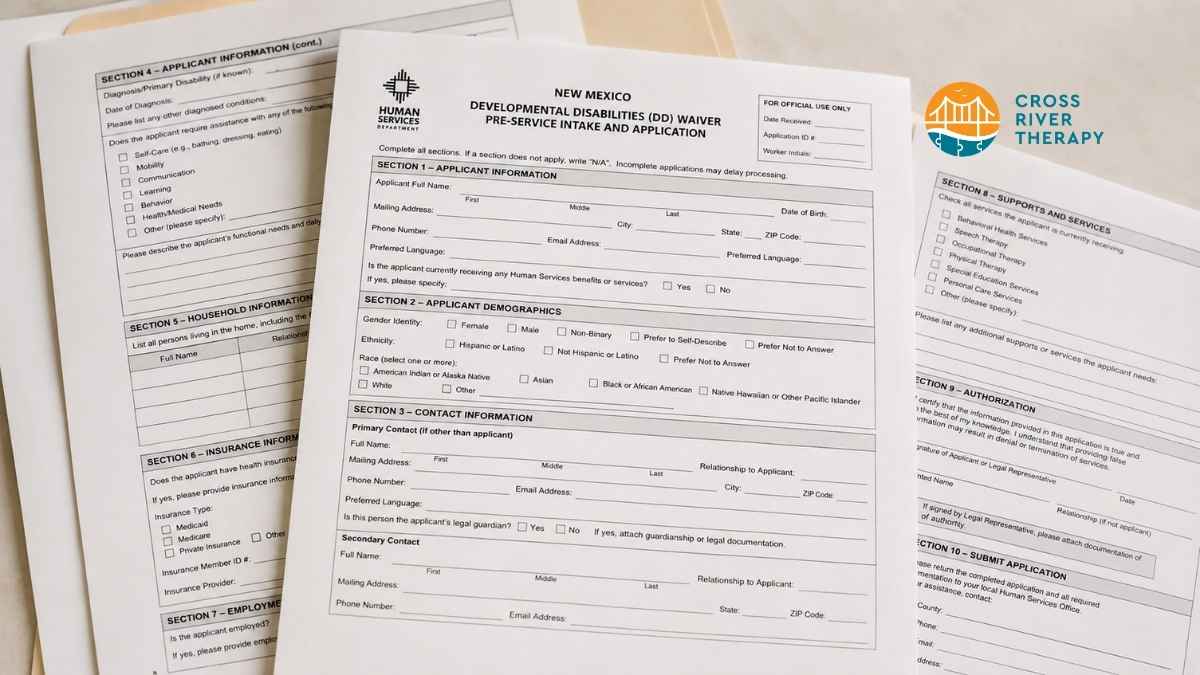
Your NM DD waiver application starts with state intake. The steps cover records, submission, and enrollment.

Does Insurance Cover ABA Therapy in New Jersey?
ABA therapy insurance in New Jersey varies by plan. Learn what NJ FamilyCare covers and how to check costs.

How ABA Therapy Builds Communication for Nonverbal Children Without Forcing Speech
ABA therapy communication for nonverbal children starts with AAC, signs, and daily routines. See how kids ask, refuse, choose, and get help.

How to Start ABA Therapy in New Jersey With a Checklist
Your guide explains how to start ABA therapy in New Jersey. A first-call checklist covers records and next steps.

How to Get an Autism Evaluation in Arkansas Before Starting ABA Therapy
How to get an autism evaluation in Arkansas starts with a referral, provider choice, and key records. Use this parent checklist before ABA intake.