








ABA Therapy for Special Needs
Exploring the Impact and Accessibility of ABA Therapy for Special Needs


Introduction to ABA Therapy
Applied Behavior Analysis (ABA) therapy is a well-established approach for aiding individuals with special needs, particularly those with Autism Spectrum Disorder (ASD). This therapy focuses on understanding and altering behaviors through environmental factors and interventions, offering customized support to improve a child's ability to interact socially and communicate effectively. Recognized as a scientifically validated treatment, ABA therapy has been instrumental in improving the quality of life for countless individuals by fostering positive behavioral changes and skill development.
Understanding ABA Therapy and Its Core Principles

Foundations of ABA therapy
ABA therapy, or Applied Behavior Analysis, is a data-driven intervention method established to assist individuals, particularly children with autism, in developing socially significant behaviors. At its core, ABA utilizes principles of learning to identify and reinforce desirable behaviors while reducing problematic ones. This is often achieved through positive reinforcement, where valued rewards such as praise or preferred items encourage the repetition of good behavior.
How behavior is analyzed and modified
The analysis and modification of behavior in ABA therapy primarily employs the ABC model:
- Antecedent: identifies what happens before a behavior occurs.
- Behavior: the action or response of the individual.
- Consequence: the outcome or response that follows the behavior.
By modifying antecedents and consequences, therapists can effectively guide children towards adaptive behaviors while teaching appropriate skills as replacements for harmful actions.
The role of a Board Certified Behavior Analyst
A Board Certified Behavior Analyst (BCBA) plays a crucial role in ABA by conducting initial assessments and crafting individualized treatment plans. They customize interventions based on the unique skills, interests, and family situations of each child. The BCBA oversees the implementation of these plans, ensuring that therapy remains focused and aligned with the child’s specific progress and goals, thus enhancing the effectiveness of ABA therapy.
Implementing ABA: Techniques and Methodologies
Overview of common ABA techniques
Applied Behavior Analysis (ABA) employs various techniques to facilitate skill development and behavior modification in children, particularly those on the autism spectrum. Notable methods include:
- Positive Reinforcement: Rewarding desired behaviors to encourage their repetition. This can involve verbal praise, tokens, or tangible rewards.
- Discrete Trial Training (DTT): A structured approach where skills are broken down into smaller tasks. Each task is taught through repetition and reinforcement.
- Functional Communication Training (FCT): Teaching appropriate communication methods to replace challenging behaviors, promoting better interaction.
- Antecedent-based Interventions (ABI): Modifying environmental triggers to prevent undesirable behaviors, helping children manage their responses.
- Natural Environment Training (NET): Facilitating learning in everyday settings to promote generalization of skills.
How positive reinforcement is applied
In ABA, positive reinforcement plays a vital role in achieving desired behaviors. When a child successfully completes a target task, they receive immediate praise or a reward, reinforcing the behavior. This technique not only helps in skill acquisition but also fosters a positive learning environment, ensuring that interactions remain encouraging and supportive.
Examples of successful behavior modification strategies
Successful strategies in ABA therapy include using the Picture Exchange Communication System (PECS) for non-verbal children, enhancing their ability to express needs. Modeling desired behaviors allows children to imitate and grasp new skills effectively, while Redirection helps shift attention from problem behaviors to more appropriate actions, providing alternatives for expression. Additionally, the combination of these techniques results in significant improvements in communication, social interaction, and academic skills among children with Autism Spectrum Disorder (ASD).
Effectiveness of ABA Therapy in Autism Treatment
Is ABA therapy effective for autism?
There is substantial evidence supporting the effectiveness of Applied Behavior Analysis (ABA) therapy for children with Autism Spectrum Disorder (ASD). Numerous studies indicate that early and intensive ABA interventions lead to small to moderate improvements in adaptive behavior, including vital areas like communication, socialization, and expressive language.
What is the impact of ABA on skill development?
ABA therapy not only focuses on decreasing problematic behaviors but also emphasizes encouraging essential skill development. Children engaged in individualized ABA programs show significant gains in areas such as:
- Communication skills: Enhancements in verbal and non-verbal communication are often noted.
- Social skills: Interaction with peers and adults improves.
- Daily living skills: Children learn self-care and independence.
What are the long-term outcomes for children with autism?
Long-term, intensive ABA therapy has been associated with substantial improvements in cognitive skills, daily living abilities, and social interactions in children with autism. Research suggests that about 90% of children receiving ABA therapy demonstrate significant progress in these areas, with many maintaining these gains even after therapy ends. Accessing appropriate and ongoing treatment, however, is crucial for ensuring lasting benefits.
In summary, while ABA therapy offers promising outcomes for children with autism, factors such as service continuity and financial accessibility can influence overall effectiveness.
Emotional Management Benefits in ABA Therapy
Does ABA Help with Managing Emotions?
Yes, ABA can significantly help with managing emotions in children with Autism Spectrum Disorder (ASD). Many children with ASD struggle to recognize and regulate their emotions, leading to behavioral challenges. ABA therapy provides a structured approach that teaches emotional recognition and regulation skills.
Role of ABA in Emotion Regulation
Through various ABA techniques, children learn how to identify their emotions and understand the appropriate responses. Key strategies include:
- Discrete Trial Training (DTT): Breaking down emotional concepts into manageable parts, helping children grasp complex feelings.
- Modeling: Adults demonstrate emotional responses, allowing children to observe and imitate appropriate behaviors.
- Role-Playing: Practicing social scenarios to build confidence in managing emotions in real-life situations.
Teaching Emotional Skills through ABA
Interventions focus not only on reducing negative behaviors but also on developing positive emotional skills. Visual supports, like emotion charts, can guide children in identifying their feelings. Over time, these techniques lead to enhanced social interactions and better emotional health.
Interventions for Behavioral and Emotional Challenges
By addressing both emotional recognition and behavioral responses, ABA therapy equips children with the tools they need to navigate social situations, ultimately fostering independence and emotional stability in their everyday lives.
Criticisms and Evolving Perspectives on ABA

Why are there criticisms of ABA therapy?
Criticisms of ABA therapy have emerged for several reasons. Historically, earlier forms of ABA relied on punishment to modify behavior, which raised significant ethical concerns regarding the treatment of autistic individuals. Critics argue that this approach can lead to distress and anxiety, even resulting in symptoms resembling PTSD.
Moreover, some critics assert that ABA can prioritize conformity to neurotypical standards, potentially overshadowing the unique needs and strengths of autistic individuals. This rigidity in approach may not adequately address individual differences, risking harm rather than fostering genuine development.
Ethical considerations in ABA practice
As the field has progressed, ethical considerations in ABA practice have become central to discussions. There is an increasing emphasis on a child-centered approach that incorporates the perspectives and preferences of autistic individuals. Supporters of modern ABA emphasize building on strengths rather than purely suppressing unwanted behaviors. This balance is crucial to ensure that the therapy respects the individual’s identity and promotes positive growth.
Evolutions in ABA to address criticisms
In response to criticisms, contemporary ABA has undergone significant evolutions. The focus has shifted primarily towards positive reinforcement strategies, enhancing the learning experience without the negative impacts associated with aversive methods. Today's practitioners work diligently to create tailored approaches, ensuring that each child's therapy is personalized and engaging. These adaptations aim to uphold ethical practices while maximizing the benefits of ABA for each individual child, promoting a more respectful and effective treatment framework.
Diverse Applications of ABA Beyond Autism
Use of ABA in Various Developmental Conditions
ABA therapy extends beyond autism, effectively addressing a range of developmental and behavioral issues. Conditions such as Attention Deficit Hyperactivity Disorder (ADHD), Obsessive-Compulsive Disorder (OCD), Oppositional Defiant Disorder (ODD), Post-Traumatic Stress Disorder (PTSD), panic disorder, and traumatic brain injuries can benefit from ABA principles. This broader applicability highlights the versatility of ABA in supporting individuals who may struggle with cognitive or behavioral challenges.
Customized Interventions for Diverse Needs in ABA
A significant strength of ABA lies in its ability to offer tailored interventions. Each individual receives a personalized treatment plan designed by a Board Certified Behavior Analyst (BCBA), which takes into account their unique skills, interests, and needs. This customization ensures that ABA is engaging and relevant, promoting skill development across various life domains while respecting the individual’s neurodiversity. Programs may utilize diverse methodologies, such as Discrete Trial Training (DTT) and Pivotal Response Treatment (PRT), making it adaptable to various contexts.
Barriers to Accessing ABA for Non-ASD Conditions
Despite its potential, accessing ABA therapy for conditions other than autism can be challenging. Insurance coverage for ABA often mandates an autism diagnosis, limiting availability for individuals with other developmental disorders. Furthermore, misconceptions about ABA’s suitability exclusively for autism may deter wider recognition of its beneficial applications. Enhancing awareness of ABA's broader uses could lead to improved accessibility and support for various populations needing behavioral interventions.
Accessing ABA Services and Understanding Legal Rights
Funding Options for ABA Therapy
Families seeking ABA therapy have multiple funding avenues available. Options include health insurance coverage, school district services, and regional center resources. Many health insurance plans, such as Medi-Cal in California, are mandated to cover ABA therapy for individuals under 21 years of age, as long as it's deemed medically necessary. Notably, Medi-Cal allows for coverage without requiring an autism diagnosis, emphasizing treatment necessity instead.
Legal Rights Under IDEA and Other Laws
The Individuals with Disabilities Education Act (IDEA) ensures eligible students receive a free appropriate public education (FAPE), which can include ABA therapy when specified in an Individualized Education Program (IEP). This law highlights the importance of tailoring education and support services to meet the unique needs of children with disabilities, including those on the autism spectrum.
Healthcare Coverage for ABA Services
With growing recognition of ABA as a best practice for treating autism, many health insurance providers are aligning their coverage with ABA therapy recommendations from respected organizations like the US Surgeon General and the American Psychological Association. It's crucial for families to understand their rights and explore their insurance policy for specific coverage details related to ABA services.
The Role of ABA in Special Education
How is ABA therapy used in special education?
Applied Behavioral Analysis (ABA) therapy plays a pivotal role in special education by addressing behaviors that impede learning and social interaction. It operates on the principle of positive reinforcement, which means it rewards desired behaviors, thus encouraging students to repeatedly exhibit those behaviors.
ABA is particularly effective in helping children with Autism Spectrum Disorder (ASD) enhance their communication skills and engage socially with their peers. Techniques such as Discrete Trial Training (DTT) and Natural Environment Training (NET) are often employed to tailor learning experiences to each child's unique needs.
Benefits for skill development and behavior management
The integration of ABA in educational contexts provides multiple benefits:
- Skill Development: ABA focuses on fostering essential skills like language, social interaction, and daily living abilities. This structured approach leads to significant improvements in communication and academic performance.
- Behavior Management: It effectively reduces challenging behaviors that can disrupt learning environments or social interactions, making the classroom more conducive for all students.
Studies indicate that more than 90% of children who receive ABA therapy show noticeable improvements across various developmental domains, underscoring effectiveness in skill acquisition.
Collaborations between ABA specialists and educators
Collaboration between ABA specialists—in particular, Board Certified Behavior Analysts (BCBAs)—and educators is crucial. Often, BCBAs work closely with teachers to develop and implement personalized education programs in line with each student's Individualized Education Program (IEP). This partnership ensures that the strategies used in the classroom reinforce the skills being taught during therapy sessions.
Ultimately, ABA therapy enhances educational experiences for children with special needs, aiding them to achieve greater independence and social integration within their communities.
Successful Implementation and Long-Term Outcomes Linked to ABA
Factors influencing successful ABA outcomes
Several factors contribute to the successful outcomes of Applied Behavior Analysis (ABA) therapy. The expertise of the Board Certified Behavior Analyst (BCBA) in designing tailored treatment plans is crucial. Their ability to adapt the interventions according to the child's unique needs, interests, and family circumstances allows for more effective learning experiences. Collaborative efforts involving parents and caregivers enhance consistency, ensuring that techniques learned in therapy are reinforced in everyday settings.
Role of early intervention
Research highlights that the earlier a child begins ABA therapy, the more significant their improvements tend to be. Those who engage in intensive ABA interventions before age four often show notable enhancement in social skills and language abilities. This early intervention is vital in providing a foundation for successful educational experiences, reducing the likelihood of needing additional special services later in life.
Importance of treatment consistency and collaboration
Consistency in treatment delivery and collaboration among service providers creates a supportive framework for children. Through the unwavering application of learned skills across various environments, children are more likely to internalize and generalize their behavior modifications. Programs involving teamwork between educators, therapists, and families not only foster a holistic approach to each child's development, but they also sustain improvements in behavior and skills over the long term.
ABA Practice Standards and Professional Qualifications
Credentials and Training of ABA Professionals
To ensure the highest standards of care, Applied Behavior Analysis (ABA) practitioners typically hold specific credentials. The primary professional is a Board Certified Behavior Analyst (BCBA), who has completed advanced training in behavior analysis and passed a certification exam. Moreover, Registered Behavior Technicians (RBTs) can assist in delivering therapy under the supervision of BCBAs, following established protocols to promote effective skill development in children.
Ensuring Ethical and Effective Delivery of ABA
Ethics play a crucial role in ABA therapy. The Behavior Analyst Certification Board (BACB) provides a code of ethics that professionals must adhere to, ensuring the welfare of clients is prioritized. This includes obtaining consent, maintaining client confidentiality, and implementing evidence-based practices as recommended by organizations like the US Surgeon General and the American Psychological Association.
Evaluating Providers Based on Methods and Experience
Families looking for ABA services should carefully evaluate potential providers. Key considerations include the therapist's experience with specific ABA strategies such as Discrete Trial Training (DTT) or Pivotal Response Treatment (PRT). It's important to assess the compatibility of the provider's treatment philosophy with family goals to ensure a successful intervention tailored to each child's unique needs.
Conclusion: Embracing ABA for a Better Future
ABA therapy has proven to be a transformative tool in enhancing the lives of individuals with special needs by promoting positive behaviors and reducing challenges. As research continues to support its efficacy, the field of ABA therapy evolves, prioritizing personalized approaches that respect the diversity of neurology and individual needs. By understanding the scope and application of ABA therapy, alongside recognizing legal rights and access avenues, caregivers and educators can make informed decisions to support the developmental journeys of those in their care. With ongoing advancements, ABA therapy holds significant promise in unlocking potential and fostering independence for individuals with autism and beyond.
References
- Applied Behavior Analysis (ABA) | Autism Speaks
- Applied Behavior Analysis Therapy: Helping Children With Special
- Access to ABA Therapy | Disability Rights California
- The Connection Between ABA and Special Education: A Guide
- The Controversy Around ABA - Child Mind Institute
- Applied Behavior Analysis (ABA) - Cleveland Clinic
- The Role of ABA Therapy in Empowering Autistic Children and Their ...
- What is ABA Therapy? - Special Learning
- ABA Therapy vs School: Making the Right Choice For Your Child
Recent News
Related articles

6 Arkansas Medicaid ABA Therapy Rules Families Need to Know
Arkansas Medicaid ABA therapy has age, diagnosis and approval rules. Families can check six requirements before care.

Arizona Autism Laws Every Parent Should Know Before Starting ABA Therapy
Autism laws Arizona parents should know cover ABA insurance, AHCCCS appeals, IEPs, and Section 504 rights. Check ABA coverage with Cross River.

ABA Therapist Salary in Arkansas: What BCBAs and RBTs Actually Earn in 2026
ABA therapist salary Arkansas figures compare RBT and BCBA rates, benefits, guaranteed hours, and contract terms. Explore careers at Cross River.

5 Autism Support Groups and Family Resources in New Mexico Alongside ABA Therapy
Autism support groups New Mexico families can use offer peer support, local events, and school help. Cross River can explain ABA therapy options.

Where to Get an Autism Evaluation in New Mexico Before Starting ABA Therapy
Autism evaluation New Mexico options include UNM, NMSU, FIT, and private providers. Compare providers, records, and ABA steps with Cross River.

7 North Carolina Autism Resources to Contact Before ABA Therapy Starts
Autism resources North Carolina families can call for diagnosis, early intervention, rights, and parent support. Start ABA intake with Cross River.

Does Indiana Medicaid Cover ABA Therapy? A Step-by-Step Eligibility Checklist for Parents
Medicaid ABA therapy Indiana covers eligible children under 21 with prior authorization. Your five-step coverage review can start with Cross River.
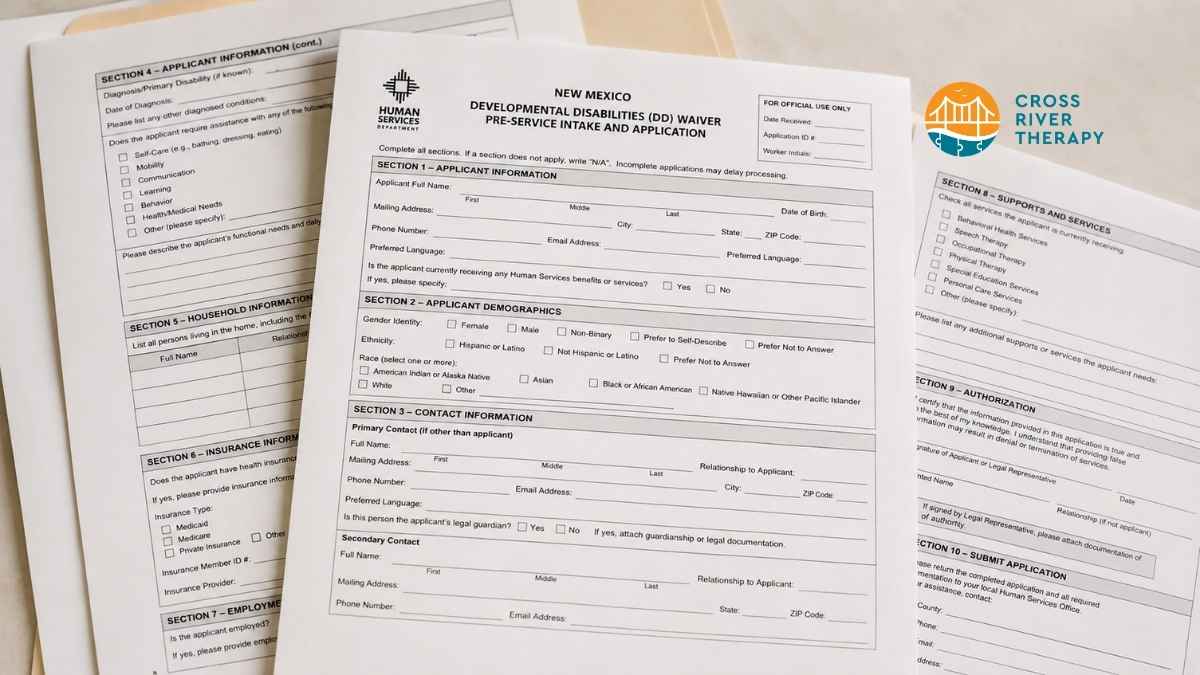
How to Apply for New Mexico’s DD Waiver While Starting ABA Therapy
Autism waiver New Mexico applications need DD Waiver records and proof of daily support needs. Your next step is to start ABA intake with Cross River.

Is ABA Therapy Covered by Insurance in New Jersey? What Every Parent Should Know
ABA therapy insurance New Jersey may cover medically necessary care based on plan type, network, and authorization. Verify benefits with Cross River.

How ABA Therapy Builds Communication for Nonverbal Children Without Forcing Speech
ABA therapy communication for nonverbal children starts with AAC, signs, and daily routines. See how kids ask, refuse, choose, and get help.

How to Start ABA Therapy in New Jersey With a First-Call Checklist
How to start ABA therapy in New Jersey begins with records, insurance details, and intake questions. Use this first-call checklist before you call.

How to Get an Autism Evaluation in Arkansas Before Starting ABA Therapy
How to get an autism evaluation in Arkansas starts with a referral, provider choice, and key records. Use this parent checklist before ABA intake.