








ABA Therapy for Teens: Addressing the Unique Needs of Adolescents with Autism
Customized ABA Therapy Solutions for Teenagers on the Autism Spectrum


Understanding the Importance of Tailored Approaches
As adolescents with autism navigate the complexities of teenage life, the implementation of Applied Behavior Analysis (ABA) therapy becomes increasingly crucial. Unlike younger children, teenagers require therapeutic interventions that address their evolving developmental needs, focusing on promoting independence and fostering essential life skills. This article delves into the unique approaches needed for effective ABA therapy in teenagers, the strategies tailored for them, and how these efforts can align with their personal growth and future goals.
ABA Therapy Adaptations for Teenagers
How is ABA therapy adapted for teenagers with autism?
ABA therapy for teenagers with autism is tailored to their specific developmental requirements. During adolescence, the focus shifts towards promoting independence and enhancing critical skills necessary for adult life. This adaptation recognizes that teens face unique challenges, such as navigating social dynamics and planning for future academic or vocational pursuits.
One of the main goals of ABA therapy at this stage is to develop cognitive and adaptive behavior outcomes. Therapists implement strategies that include goal-setting and critical thinking exercises. Teens learn to manage daily responsibilities, such as cooking and grocery shopping, through a method called 'task analysis,' breaking down complex tasks into simpler, manageable steps.
Techniques and real-life practice scenarios
To bridge the gap between therapy and real-life application, ABA therapy employs various techniques. Role-playing and scenario planning help teens practice social interactions. For instance, mock interviews prepare them for job seeking, emphasizing skills needed in real workplace environments.
Communication enhancement is also essential. Therapists focus on improving skills like understanding body language, initiating conversations, and managing emotions through mindfulness techniques. Many of these exercises ensure that teens develop the self-care routines, time management, and organizational skills critical for their independence.
Furthermore, individualized assessments, such as Functional Behavior Assessments (FBA), help uncover the underlying causes of challenging behaviors, ensuring that therapy is responsive to each adolescent's unique challenges. This comprehensive approach enables teenagers with autism to replace challenging behaviors with socially appropriate alternatives, paving the way for fulfilling and independent lives.
Effective Strategies and Challenges in ABA for Adolescents
What are effective strategies and challenges of applying ABA therapy in adolescents?
ABA therapy for teenagers is designed with effective strategies that emphasize independence and adaptability to their unique developmental needs. One crucial strategy involves fostering self-sufficiency by teaching practical life skills, such as cooking and time management. These skills are broken down into manageable tasks through task analysis, allowing teens to gradually take on daily responsibilities.
Social communication is another focal point. Therapists utilize social skills training to teach teens how to navigate peer interactions, identify body language cues, and engage in conversations, which aids in building meaningful relationships.
Skill-building and adaptive techniques
Additionally, emotional regulation techniques such as mindfulness and scenario planning are implemented. This helps adolescents identify triggers and effectively cope with their feelings, reinforcing their ability to manage stressors in social situations.
However, several challenges can complicate the implementation of ABA therapy during adolescence. The changing dynamics of adolescent social environments mean that transferring learned skills to real-life situations can be difficult. Furthermore, if the therapy's focus leans too heavily on behavior modification, essential communication skills—especially for nonverbal individuals—may not receive adequate attention.
A shortage of certified ABA practitioners can also impede accessibility to therapy, as can the intensive time commitment required from families. Together, these factors highlight the need for customized therapy plans that address each teen's specific challenges while promoting their autonomy and social integration.
Empowering Parents and Caregivers in the ABA Journey

How should parents and caregivers select and implement effective ABA therapy for their adolescents?
Selecting effective ABA therapy for teens requires careful consideration. Parents and caregivers should prioritize providers who employ qualified professionals, like Board Certified Behavior Analysts (BCBAs). These specialists can create individualized treatment plans tailored to their adolescent's unique developmental needs.
Involving teenagers in the goal-setting process is essential. This engagement helps the adolescent feel empowered and invested in their own treatment.
Importance of Open Communication with Therapists
Maintaining open communication with therapists is critical for progress. Parents should regularly discuss treatment objectives and share insights about their teen's daily experiences and challenges. Programs emphasizing evidence-based techniques, particularly those that integrate positive reinforcement, are highly effective. This method encourages appropriate behaviors by rewarding desired actions, fostering a supportive environment for change.
Family Involvement and Monitoring Progress
Training for parents can enhance family involvement, enabling them to reinforce learned skills in everyday life. Choosing a therapy environment conducive to learning, one that exhibits cultural competency and continuity of care, can further improve outcomes. Regular monitoring of therapy progress through data collection keeps parents informed, allowing them to make necessary adjustments to the treatment plan as their adolescent grows and develops.
Individualized Approaches in ABA Therapy for Teens
What are the individualized approaches used in ABA therapy for teenagers?
Individualized approaches in ABA therapy for teenagers focus on meeting their unique developmental needs. As teens mature, their therapy must adapt to emphasize vocational training, social skills development, and self-management techniques.
Key Components of Individualized Treatment Plans:
- Vocational Training: Tailored programs prepare teens for future employment. By addressing skills like resume building and interview practices, therapists equip teens with the tools for successful job hunting.
- Social Skills Development: Through structured methods, teens learn to navigate social interactions. Techniques such as role-playing and social stories help improve initiation of conversations, understanding body language, and fostering peer relationships.
- Self-Management Techniques: Therapists use task analysis to break down daily living skills into manageable steps. Skills like self-care, time management, and organization are taught to cultivate independence and confidence.
Emotional Regulation Strategies: Incorporating mindfulness and scenario planning helps teens manage frustration and anxiety effectively, addressing emotional triggers with coping mechanisms.
Family Involvement: Active participation of family members enhances support, reinforcing the learned skills at home and creating a nurturing environment for continued growth during these formative years.
These individualized approaches ensure that teens with autism acquire essential life skills, improving their ability to deal with both academic and social challenges as they transition into adulthood.
Adaptive Skills for Future Independence

What adaptive skills are taught in ABA therapy for teenagers, and why are they important?
ABA therapy for teenagers emphasizes the development of a wide range of adaptive skills. These include essential social communication skills, daily living skills, and problem-solving abilities, all of which play a crucial role in successfully transitioning into adulthood.
- Social Communication Skills: Teens learn to effectively express themselves and understand social cues, which help build and maintain friendships.
- Daily Living Skills: Programs focus on practical tasks such as personal hygiene, cooking, and grocery shopping, promoting their independence and self-care.
- Problem-Solving Abilities: Teaching teens to analyze situations and navigate challenges enables them to respond appropriately in various life scenarios.
Mastering these skills significantly enhances the quality of life for adolescents with autism. Research shows that a striking 86% of teenagers undergoing ABA therapy report noticeable improvements in adaptive behaviors. These outcomes suggest that tailored interventions effectively meet individual needs, helping teens to navigate diverse environments and challenges vast with confidence.
Additionally, ABA therapy supports the growth of strong interpersonal relationships, which are essential during the formative teenage years. By fostering effective communication and social interaction skills, teens can establish deeper connections with their peers, setting a solid foundation for future independence.
The Future of ABA Therapy for Teens
ABA therapy for teenagers with autism plays a pivotal role in preparing them for the next stages of life. By focusing on individualized approaches and addressing specific developmental needs, ABA therapy equips adolescents with the skills necessary for fostering independence and achieving personal goals. As parents, caregivers, and professionals continue to support and adapt these therapeutic techniques, the positive impact on teens' lives will likely continue to grow, helping bridge the gap between adolescence and adulthood for those on the autism spectrum.
References
- Adapting ABA Therapy Strategies for Teens and Older Children
- Teen ABA Therapy | ABA Centers of Florida
- All About ABA Therapy for Teens - BM Behavioral Center
- Applied Behavior Analysis in Children and Youth with Autism ...
- ABA Therapy Age Limits & Age Range Based on Evidence - Blue ABA
- What is ABA Therapy for Teens Really Like?
- Adapting ABA Therapy Strategies for Teens and Older Children
- ABA Therapy for Teens: Adapting Techniques for Adolescents
Recent News
Related articles

6 Arkansas Medicaid ABA Therapy Rules Families Need to Know
Arkansas Medicaid ABA therapy has age, diagnosis and approval rules. Families can check six requirements before care.

Arizona Autism Laws Every Parent Should Know Before Starting ABA Therapy
Autism laws Arizona parents should know cover ABA insurance, AHCCCS appeals, IEPs, and Section 504 rights. Check ABA coverage with Cross River.

ABA Therapist Salary in Arkansas: What BCBAs and RBTs Actually Earn in 2026
ABA therapist salary Arkansas figures compare RBT and BCBA rates, benefits, guaranteed hours, and contract terms. Explore careers at Cross River.

5 Autism Support Groups and Family Resources in New Mexico Alongside ABA Therapy
Autism support groups New Mexico families can use offer peer support, local events, and school help. Cross River can explain ABA therapy options.

Where to Get an Autism Evaluation in New Mexico Before Starting ABA Therapy
Autism evaluation New Mexico options include UNM, NMSU, FIT, and private providers. Compare providers, records, and ABA steps with Cross River.

7 North Carolina Autism Resources to Contact Before ABA Therapy Starts
Autism resources North Carolina families can call for diagnosis, early intervention, rights, and parent support. Start ABA intake with Cross River.

Does Indiana Medicaid Cover ABA Therapy? A Step-by-Step Eligibility Checklist for Parents
Medicaid ABA therapy Indiana covers eligible children under 21 with prior authorization. Your five-step coverage review can start with Cross River.
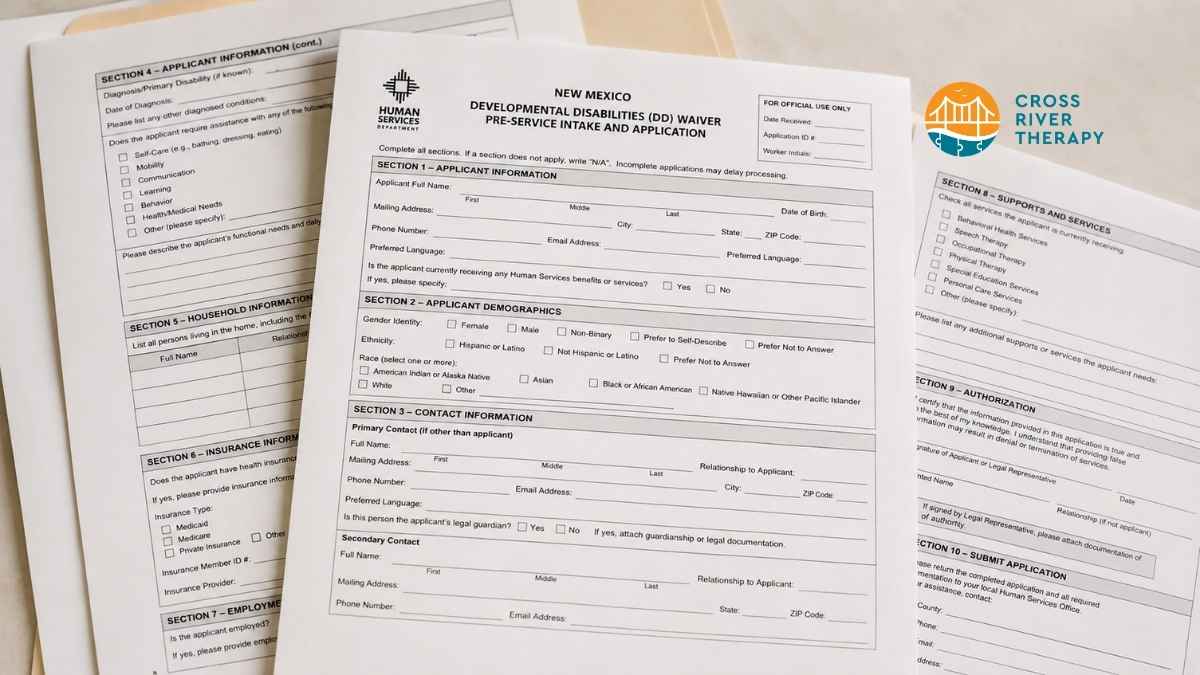
How to Apply for New Mexico’s DD Waiver While Starting ABA Therapy
Autism waiver New Mexico applications need DD Waiver records and proof of daily support needs. Your next step is to start ABA intake with Cross River.

Is ABA Therapy Covered by Insurance in New Jersey? What Every Parent Should Know
ABA therapy insurance New Jersey may cover medically necessary care based on plan type, network, and authorization. Verify benefits with Cross River.

How ABA Therapy Builds Communication for Nonverbal Children Without Forcing Speech
ABA therapy communication for nonverbal children starts with AAC, signs, and daily routines. See how kids ask, refuse, choose, and get help.

How to Start ABA Therapy in New Jersey With a First-Call Checklist
How to start ABA therapy in New Jersey begins with records, insurance details, and intake questions. Use this first-call checklist before you call.

How to Get an Autism Evaluation in Arkansas Before Starting ABA Therapy
How to get an autism evaluation in Arkansas starts with a referral, provider choice, and key records. Use this parent checklist before ABA intake.