








ABA therapy strategies for improving self-help skills
Empowering Independence: Effective ABA Techniques for Enhancing Self-Help Skills in Children with Autism


Unlocking Potential Through Structured Interventions
Applied Behavior Analysis (ABA) therapy is a scientifically supported approach that focuses on teaching children with autism essential self-help skills. By utilizing evidence-based strategies, ABA facilitates the development of independence in daily routines such as dressing, grooming, toileting, and household chores. This article explores core ABA techniques, their practical applications, and the benefits they offer in fostering self-management and self-care abilities.
Core ABA Strategies for Developing Self-Help Skills
What are some core ABA therapy strategies for improving self-help skills in children with autism?
A variety of evidence-based approaches underlie ABA therapy, all aimed at fostering independence and daily living skills in children with autism. One fundamental technique is task analysis, which involves breaking down complex activities into small, manageable steps. For example, brushing teeth can be divided into turning on the tap, applying toothpaste, brushing, rinsing, and drying. This step-by-step breakdown makes learning more approachable.
Visual supports play a crucial role in enhancing understanding and engagement. Visual schedules, picture sequences, and choice boards provide clear, concrete cues that help children follow routines and understand expectations. These tools are especially useful for children who thrive with visual learning styles, making daily tasks more predictable and manageable.
Prompting techniques, such as physical guidance, verbal cues, or gestures, are employed to initiate desired behaviors. Over time, prompt fading—reducing assistance gradually—encourages independence. For instance, a therapist might physically guide a child’s hand to put on a shirt but then gradually remove the prompt as the child gains confidence.
Reinforcement is another core element. Positive reinforcement involves praise, tokens, or treats to reward correct behaviors, increasing their likelihood. Negative reinforcement, which involves removing an unpleasant stimulus when the child performs the desired action, can also reinforce self-help routines. For example, stopping a loud noise after a child completes a task can serve as negative reinforcement.
To ensure these skills are truly learned and can be applied across different settings, generalization strategies are used. Practicing skills in various environments—such as at home, school, or in community settings—and with different people helps children transfer learned behaviors to real-world situations.
Natural Environment Training (NET), which uses real-life contexts, further encourages spontaneous use of skills. Adaptive and interest-based activities tailored to each child’s preferences promote motivation and mastery.
In summary, core ABA strategies for self-help skills include task analysis, visual supports, prompting with prompt fading, reinforcement techniques, and generalization practices. These approaches, combined with personalized interventions, support children in becoming more independent and confident in their daily routines.
Enhancing Self-Help and Independence via ABA Therapy
 ABA therapy plays a vital role in helping children with autism develop essential self-help and independence skills. Therapists systematically teach daily routines such as dressing, grooming, toileting, and preparing simple meals using structured methods like task analysis, which breaks complex activities into smaller, manageable steps. This approach makes learning new skills achievable and less overwhelming for the child.
To motivate and reinforce progress, ABA utilizes positive reinforcement—rewarding desired behaviors with praise or tangible items like tokens or favorite treats. These rewards encourage children to practice and retain new skills, gradually increasing their independence.
A cornerstone of effective ABA programs is goal-setting and regular progress tracking. Personalized objectives are tailored to each child's abilities and interests, ensuring the activities are relevant and motivating. Consistent data collection helps therapists monitor improvement, identify skill gaps, and adjust interventions as needed to promote mastery and generalization of skills across different environments.
Visual supports such as picture schedules, social stories, and choice boards are used extensively to teach routines and expectations. These visual tools help reduce anxiety, enhance comprehension, and promote independence by providing clear cues for the child to follow daily activities.
Overall, ABA's structured, individualized approach empowers children with autism to acquire vital self-care skills. By focusing on measurable goals, employing visual supports, and continuously assessing progress, ABA fosters greater autonomy and enhances quality of life for children and their families.
Practical Applications of ABA in Developing Self-Help Skills
ABA therapy offers a variety of practical tools for helping children develop vital self-help skills that foster independence. These methods include teaching daily activities such as dressing, grooming, and toileting. Therapists break down these complex tasks into smaller, manageable steps using task analysis, making each step clear and achievable. Visual supports like picture schedules and checklists serve as cues to guide children through routines, promoting understanding and retention.
In addition to personal care, ABA strategies are applied to household chores and academic tasks. Children learn responsibilities like cleaning, organizing, or simple cooking activities through step-by-step instructions combined with positive reinforcement like praise or small rewards, which motivate their continued effort.
Video modeling and role-playing are effective techniques that simulate real-life situations, allowing children to observe desired behaviors and practice them in safe, controlled environments. These methods enhance learning by providing visual and experiential understanding.
Incorporating self-monitoring tools, such as charts or checklists, also encourages children to recognize their progress and self-regulate their behaviors. Visual cues and timers help children understand expected routines and manage their time effectively.
Ensuring skills transfer across different settings is crucial. ABA emphasizes generalization, teaching children to apply what they learn in natural environments like home, school, or the community. This might include practicing social interactions, requesting assistance, or engaging in daily routines outside of therapy sessions.
Overall, structured, individualized ABA plans systematically build self-help skills using evidence-based strategies, resulting in greater independence and improved quality of life for children with autism.
Benefits of ABA in Fostering Self-Management and Self-Care

What are the benefits of ABA therapy in fostering self-management and self-care abilities?
ABA therapy plays a vital role in helping children and individuals develop skills necessary for self-management and self-care. Through structured techniques, it teaches goal setting, self-monitoring, and self-reinforcement strategies that promote independence.
One of the fundamental advantages is its focus on teaching individuals to recognize their emotional triggers and develop coping skills. This emotional regulation helps reduce anxiety and challenging behaviors, enabling better self-control.
ABA employs systematic instruction, breaking complex skills into smaller, manageable steps. This approach facilitates mastery of important daily routines like dressing, grooming, toileting, and preparing simple meals.
Communication improvement is another significant benefit. Enhanced expressive and receptive skills allow individuals to communicate their needs effectively, advocating for themselves in various settings.
Self-reinforcement techniques, such as rewarding oneself with praise or small treats after achieving a target, boost motivation and foster intrinsic responsibility for one's actions.
The cumulative effect of these skills encourages greater confidence and autonomy. Individuals become more capable of managing their personal needs, participating actively in learning and daily activities, and navigating social situations.
Long-term, ABA-supported development results in sustainable progress, with many individuals maintaining and generalizing their learned skills across different environments.
Overall, ABA offers an evidence-based pathway to increased independence, improved daily living skills, and emotional well-being, vital for a fulfilling and self-sufficient life.
Effective ABA Methods to Support Self-Help Development
What are effective ABA methods to support self-help skill development?
Applied Behavior Analysis (ABA) utilizes a variety of structured strategies to promote independence in children with autism. Among the most essential techniques are task analysis and chaining procedures.
Task analysis involves breaking down complex self-care skills, like brushing teeth or dressing, into small, manageable steps. This makes learning less overwhelming and allows children to master each component progressively.
Chaining techniques build on task analysis by teaching each step in sequence, often using prompts that are gradually faded to foster independence.
To reinforce desired behaviors, positive reinforcement—such as praise or tangible rewards—is widely employed. This encourages children to repeat successful behaviors.
Visual supports—like picture schedules, checklists, and visual cues—are crucial tools that help children understand routines and expectations. These supports increase their engagement and accuracy during activities like toileting or grooming.
Assistive technology, including apps and electronic checklists, further aids children with processing or memory challenges, enabling them to follow routines with less adult aid.
Role-playing, modeling, and social skills training are used to develop communication and social interaction abilities crucial for daily activities. These methods involve children practicing real-life scenarios in structured settings.
Self-monitoring strategies, such as checklists and journals, empower children to track their progress. Combining this with clear goal-setting fosters motivation and a sense of accomplishment.
Self-instruction techniques teach children to guide themselves through routines, using visual cues or prompts, which enhances autonomy.
Customization of interventions according to each child's unique abilities, interests, and sensory sensitivities is fundamental. Regular progress monitoring ensures goals are met and adjustments are made for continued growth.
Finally, implementing these methods across different environments—home, school, and community—helps promote skill generalization, ensuring children carry over learned self-help routines into everyday settings for lasting independence.
The Role of Data and Parental Involvement in ABA Success

How can ABA therapy support self-help and independence at home?
Parental involvement is a vital aspect of successful ABA therapy. Therapists train parents on how to apply reinforcement strategies, incorporate visual supports, and maintain structured routines tailored to the child's needs. Caregivers learn to prompt and model skills such as dressing, grooming, and toileting, enabling children to practice these activities in familiar environments.
Structured routines create predictable patterns, reducing anxiety and reinforcing learned behaviors. Consistent implementation of these routines encourages independence by helping children understand expectations and develop self-management skills.
Data collection plays a crucial role, with parents and therapists tracking progress through checklists, visual aids, and electronic tools. This ongoing monitoring allows for timely adjustments to interventions, ensuring they remain effective and aligned with the child's evolving needs.
Tools like visual schedules, token boards, and progress charts empower caregivers to observe incremental improvements and identify areas requiring additional focus. When caregivers are actively involved, they help generalize skills across different settings, ensuring that children can apply their new abilities during daily routines and activities.
By fostering an environment of support and consistency, parents can significantly enhance their child's self-help and independence, making ABA therapy more effective and sustainable in the long term.
Structured Routines and Behavioral Strategies that Promote Self-Reliance
What are some behavioral strategies used in ABA to promote self-reliance?
ABA therapists utilize various behavioral techniques to foster independence in children with autism. A core component is establishing structured routines, which provide consistent, predictable patterns throughout the day. These routines help children understand what to expect, reduce anxiety, and reinforce learning by creating clear expectations.
Visual supports, such as visual schedules and checklists, play a vital role. These tools serve as visual cues, guiding children through daily tasks like dressing, grooming, or preparing simple meals. For example, a visual schedule with pictures representing each step allows a child to follow a routine independently, building confidence.
Timers are also used to manage transitions and help children stay focused on tasks for designated periods. This approach supports self-monitoring and time management skills, encouraging children to complete activities without constant adult prompts.
Reinforcement practices are central to ABA’s success. Positive reinforcement—like praise, tokens, or preferred items—is used to motivate children to perform desired behaviors independently. Conversely, negative reinforcement involves removing an unpleasant stimulus when the correct behavior occurs, which encourages repeated independence.
Furthermore, naturalistic teaching strategies like Natural Environment Training (NET) promote generalization by teaching skills in real-world contexts. These methods help children apply learned skills outside of therapy sessions, making independence more sustainable.
Together, these behavioral strategies cultivate self-reliance by providing structure, visual guidance, motivation, and opportunities for skill transfer into everyday life. This comprehensive approach supports children in developing essential daily living skills with increased confidence and autonomy.
Fostering Independence Through Tailored ABA Interventions
Incorporating core ABA strategies such as task analysis, prompting, reinforcement, and naturalistic teaching plays a vital role in developing self-help skills for children with autism. These evidence-based approaches systematically build independence in daily routines and personal care, ultimately enhancing quality of life. With individualized goals, consistent routines, and active parental involvement, ABA therapy empowers children to achieve greater self-management and self-care abilities. As research continues to validate its effectiveness, ABA remains a cornerstone in supporting children with autism toward a more autonomous and fulfilling life.
References
- Top 7 Benefits Of ABA Therapy For Autistic Children
- Building Confidence in Kids with ABA Therapy
- Effective ABA Therapy Techniques for Autism
- The effectiveness of applied behavior analysis program ...
- 7 Surprising Benefits of ABA Therapy for Kids You Need to ...
- Effective Self-Management Skills in ABA
- Real-Life Ways ABA Therapy Teaches Self-Help Skills for ...
- How ABA Therapy Helps with Daily Living Skills
- Benefits of ABA therapy: 4 benefits you should know
Recent News
Related articles

5 Autism Support Groups and Family Resources in New Mexico Alongside ABA Therapy
Autism support groups New Mexico families can use offer peer support, local events, and school help. Cross River can explain ABA therapy options.

Where to Get an Autism Evaluation in New Mexico Before Starting ABA Therapy
Autism evaluation New Mexico options include UNM, NMSU, FIT, and private providers. Compare providers, records, and ABA steps with Cross River.

7 North Carolina Autism Resources to Contact Before ABA Therapy Starts
Autism resources North Carolina families can call for diagnosis, early intervention, rights, and parent support. Start ABA intake with Cross River.

Does Indiana Medicaid Cover ABA Therapy? A Step-by-Step Eligibility Checklist for Parents
Medicaid ABA therapy Indiana covers eligible children under 21 with prior authorization. Your five-step coverage review can start with Cross River.
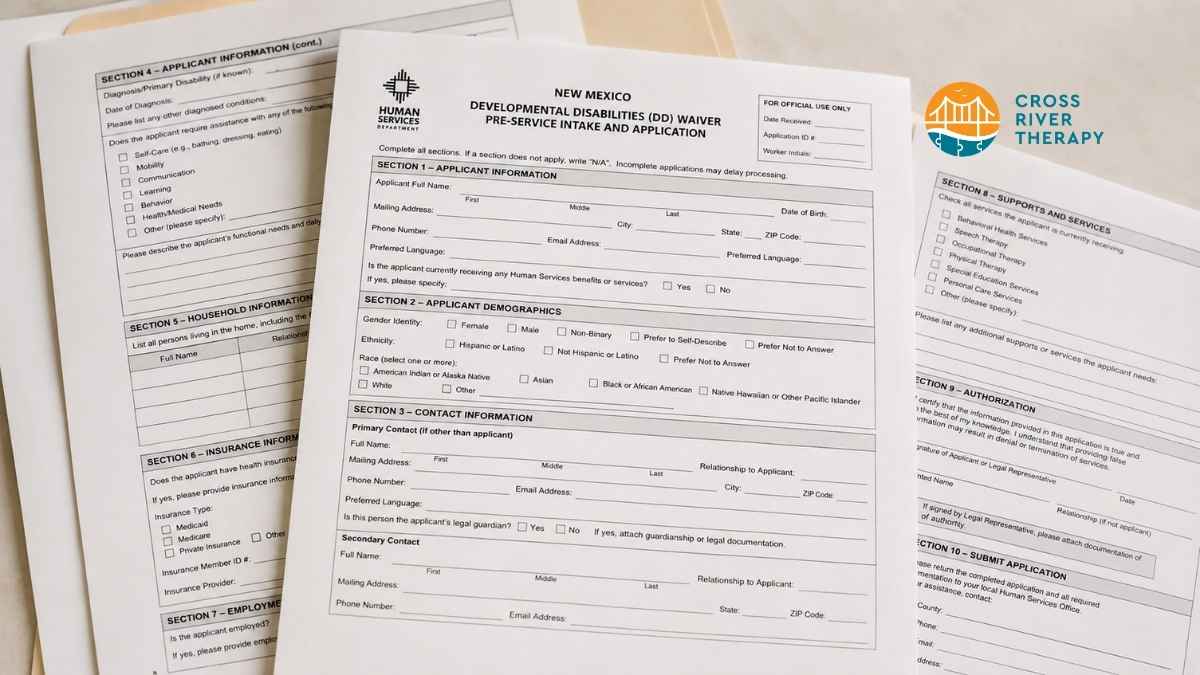
How to Apply for New Mexico’s DD Waiver While Starting ABA Therapy
Autism waiver New Mexico applications need DD Waiver records and proof of daily support needs. Your next step is to start ABA intake with Cross River.

Is ABA Therapy Covered by Insurance in New Jersey? What Every Parent Should Know
ABA therapy insurance New Jersey may cover medically necessary care based on plan type, network, and authorization. Verify benefits with Cross River.

How ABA Therapy Builds Communication for Nonverbal Children Without Forcing Speech
ABA therapy communication for nonverbal children starts with AAC, signs, and daily routines. See how kids ask, refuse, choose, and get help.

How to Start ABA Therapy in New Jersey With a First-Call Checklist
How to start ABA therapy in New Jersey begins with records, insurance details, and intake questions. Use this first-call checklist before you call.

How to Get an Autism Evaluation in Arkansas Before Starting ABA Therapy
How to get an autism evaluation in Arkansas starts with a referral, provider choice, and key records. Use this parent checklist before ABA intake.

Center-Based vs In-Home vs School-Based ABA Therapy and How to Choose the Right Fit
Center-based, in-home, and school-based ABA therapy each fit different goals, routines, and settings. Compare options before your intake call.

Early Signs of Autism: A Guide for North Carolina Parents
Early signs of autism North Carolina parents notice can include speech, play, sensory, or skill loss patterns. See what to track before screening.

Early Intervention ABA Therapy in Albuquerque, NM: Why Starting Early Matters
Early intervention ABA therapy in Albuquerque, NM helps toddlers practice communication, play, and routines. Spot signs and care options sooner.