








Addressing Behavioral Challenges in At-Home ABA Therapy
Mastering At-Home ABA Therapy Challenges


Understanding Home-Based ABA Therapy
In-home Applied Behavior Analysis (ABA) therapy is a personalized and effective approach for children with autism and other developmental challenges, conducted within the familiar settings of their home. This format allows for interventions that reflect the child's environment, making it easier for them to generalize skills across various situations. With active participation from family members, particularly parents, this setting promotes better outcomes as therapy is integrated into daily routines and activities.
The Essentials of In-Home ABA Therapy

What is in-home ABA therapy like?
In-home ABA therapy is a tailored approach aimed specifically at children with autism, conducted in the familiar surroundings of their own homes. This setup allows therapists to develop individualized treatment plans focusing on specific developmental goals, such as enhancing social skills, personal hygiene, and fostering independent living abilities.
Sessions are typically a blend of structured activities and play, making them engaging and relevant. Therapists utilize familiar toys and routines from the child’s daily life, enhancing the learning experience. Importantly, the involvement of family members is a focal point, as it significantly boosts treatment effectiveness.
By incorporating caregivers in the process, skills learned are reinforced during daily interactions. This supports skill generalization, as children learn to apply learned concepts across different scenarios, both at home and in other environments.
However, in-home therapy may come with challenges; while it offers convenience and comfort, it can also restrict opportunities for peer interaction and is susceptible to distractions in the household environment.
AspectBenefitConsiderations Personalized interventions Tailored plans addressing unique strengths Requires active family involvement Skill generalization Application of skills in various contexts May have limited peer interactions Family involvement Enhances engagement and accountability Caregiver training is essential Familiar environment benefits Reduces anxiety and increases comfort Potential distractions can impact sessions
Overall, in-home ABA therapy fosters a supportive environment where children can thrive, encouraging growth through structured activities and consistent family support.
Implementing ABA Therapy Techniques at Home

How can ABA therapy be implemented effectively at home?
Effective implementation of ABA therapy at home hinges on several factors that contribute to a structured and supportive environment. First, creating a designated area for therapy sessions helps establish consistency and signals the child that it’s time to engage in learning.
Structured Environment
A structured environment includes clear routines and schedules, which can significantly enhance a child's ability to learn and adapt. Visual supports, such as schedules and charts, can be utilized to remind children of what to expect, reducing anxiety and improving their focus.
Reinforcement Strategies
Positive reinforcement is essential in ABA therapy. This involves rewarding desired behaviors, which strengthens the likelihood of these behaviors being repeated. Some effective reinforcement strategies include:
- Token Economies: Rewarding children with tokens for good behavior that can be exchanged for privileges or treats.
- Praise: Offering verbal affirmations to enhance motivation and self-esteem.
- Natural Reinforcers: Allowing the child to engage in preferred activities contingent upon positive behavior.
Additionally, techniques such as Discrete Trial Training (DTT) and Natural Environment Teaching (NET) ensure skills are taught in engaging ways and across contexts.
Role of Family
Family involvement is pivotal in the success of home-based ABA therapy. Caregivers should actively participate in sessions while also implementing strategies throughout daily routines. Training caregivers in techniques like Pivotal Response Training (PRT) and Incidental Teaching empowers them to encourage beneficial behaviors seamlessly. By fostering open communication with therapists, families can gain insights into their child’s unique challenges and progress, enhancing the therapeutic effectiveness at home.
Addressing Problem Behaviors in ABA
What are effective interventions for problem behavior in ABA?
Effective interventions for problem behaviors in Applied Behavior Analysis (ABA) include a variety of strategic approaches tailored to individual needs.
First and foremost, reinforcement techniques play a crucial role. By providing rewards for appropriate behaviors, caregivers can effectively encourage positive actions in children. This fundamental principle of behaviorism helps in building a repertoire of desirable behaviors.
Establishing boundaries is another essential element. Caregivers can manage problem behaviors by withholding preferred items or activities when undesirable behaviors occur. This method reinforces the importance of adhering to appropriate behaviors, thus helping children understand the consequences of their actions.
Visual supports add significant value in ABA therapy. These tools assist in clearly communicating rules and expectations, making it easier for children on the autism spectrum to grasp limits and desired behaviors. Visual aids can range from charts and schedules to image prompts, which enhance understanding and retention.
Lastly, consistency in routines and individualized support is vital. By providing a structured environment, caregivers can drastically reduce instances of problem behaviors, allowing for more focus on developmental progress. With the combination of these strategies, caregivers can foster positive outcomes while effectively managing challenges.
Parental Participation in ABA Therapy
Training for Parents
An essential element of home-based ABA therapy is the training parents receive to effectively implement therapeutic strategies. This training enables caregivers to apply ABA techniques consistently, ensuring that behavior management aligns closely with what the child is learning in sessions.
Skill Reinforcement
Caregivers are trained to actively reinforce skills in real-life situations, such as during daily routines. By embedding these strategies into everyday interactions, parents can enhance the retention of learned behaviors significantly. This real-world application not only supports the child’s development but also promotes their independence.
Communication with Therapists
Open lines of communication between parents and therapists are crucial for success in ABA therapy. Regular discussions regarding progress, challenges, and strategies foster a collaborative environment. Additionally, staying in touch allows caregivers to adjust techniques as needed, ensuring they address the child's evolving needs effectively.
Managing Problematic Behaviors
For families dealing with challenging behaviors, Behavioral Parent Training (BPT) provides a structured approach. This method trains parents to consistently apply strategies for managing and responding to misbehaviors. BPT aims to reduce behavior problems and improve family dynamics by equipping caregivers with the tools needed for effective behavioral management.
Comprehensive Behavioral Techniques
What behavioral techniques can address children’s behavioral and psychological issues?
Behavioral techniques play a significant role in addressing the behavioral and psychological challenges faced by children, particularly those with autism or other developmental conditions. Among these, Cognitive Behavioral Therapy (CBT) stands out. CBT typically spans 16 to 20 weeks and helps children make connections between their thoughts, feelings, and behaviors, equipping them with tools to manage their difficulties effectively.
Another effective strategy is Parent–Child Interaction Training. This technique targets parents of young children, enhancing their ability to foster positive interactions and compliance through direct coaching sessions. This not only strengthens the parent-child bond but also creates a supportive learning environment.
Parent Management Training is another vital approach. It focuses on equipping parents with strategies that encourage joint efforts in managing disruptive behaviors. This method is particularly beneficial for children diagnosed with conditions like ADHD (Attention Deficit Hyperactivity Disorder), ODD (Oppositional Defiant Disorder), and CD (Conduct Disorder). By collaborating, parents and children work together to tackle challenges in behavior.
While these behavioral techniques are effective, medication could also be considered. However, it is most beneficial when integrated with therapeutic approaches to create a comprehensive treatment plan.
Understanding Behavioral Challenges
Common challenges in ABA therapy
ABA therapy can be incredibly beneficial, yet caregivers often face several hurdles. Understanding these challenges can facilitate better outcomes. Common issues include managing expectations, as progress may be slow and not always linear.
Managing Expectations
It's important for caregivers to have realistic expectations about the therapy's timeline. Changes may not be immediately visible, and patience is essential for maintaining motivation and commitment.
Role of Consistency
Maintaining consistency across different environments, such as home and school, is crucial. When parents and caregivers apply the same behavioral strategies learned in therapy sessions, it reinforces learning and helps in achieving significant progress.
Challenges can be alleviated through open communication with therapists and by actively participating in sessions. This involvement not only aids in understanding the techniques but also promotes a cohesive approach to behavior management at home.
Strategies for Overcoming Challenges
Role of Patience in ABA
Patience plays a vital role in the success of home-based ABA therapy. Progress can be slow, and understanding that learning new skills takes time helps caregivers maintain a positive outlook. Staying patient fosters a supportive environment where children feel secure to experiment and learn.
Utilizing Effective Communication
Open communication between caregivers and therapists is essential. Discussing challenges, sharing updates, and receiving feedback allows for adjustments in strategy. This collaboration enhances the effectiveness of interventions, ensuring all parties are aligned on goals and methods.
Active Caregiver Involvement
Parents and caregivers must be directly involved in therapy sessions. Training provided by therapists enables them to implement strategies consistently at home. Their active participation not only reinforces learned behaviors but also builds a collaborative partnership with therapists that enhances the overall effectiveness of the therapy.
The Role of Data Collection in ABA Therapy

Monitoring Progress
Data collection is a vital part of Applied Behavior Analysis (ABA) therapy, enabling therapists and caregivers to track and evaluate a child’s progress over time. By systematically recording data, they gain insights into behavioral trends, allowing for informed decision-making about interventions.
Frequency and Duration Recording
Key techniques in data collection include frequency and duration recording. Frequency involves counting how often a behavior occurs, while duration tracks how long a behavior lasts. This detailed monitoring aids therapists in identifying behaviors that require attention and how effectively strategies are being implemented.
Assessing Intervention Effectiveness
Effective assessments rely heavily on precise data collection. By analyzing this data, therapists can ascertain the impact of interventions, adjusting strategies as needed to enhance outcomes. This evidence-based approach ensures that therapy remains responsive and tailored to each child's unique needs, fostering the best possible development.
Promoting Positive Reinforcement

Reward Systems
Positive reinforcement is a fundamental component of ABA therapy, widely known for its effectiveness in increasing desired behaviors. At its core, this strategy revolves around rewarding positive actions. By establishing a structured reward system, caregivers can create an environment where a child feels motivated to exhibit appropriate behaviors.
Encouraging Desired Behaviors
In home-based ABA therapy, caregivers often identify specific behaviors they want to reinforce. These might include completing chores, practicing social skills, or effectively communicating needs. Implementing a reward system—such as verbal praise, small treats, or token rewards—encourages children to repeat these positive actions, enhancing their developmental progress.
Types of Reinforcements Used
Common types of positive reinforcements used in ABA therapy include:
Type of ReinforcementDescriptionExample Verbal Praise Encouragement through kind words "Great job! You did it!" Tangible Rewards Physical objects or tokens Stickers or small toys Privileges Allowing access to special activities Extra playtime or favorite snack Social Reinforcement Engaging with peers or family positively High-fives or fun interactions
These varied reinforcement methods cater to different preferences and can be tailored to fit each child's unique motivations.
Significance of Structured Routines
Establishing Consistent Routines
Structured routines play a significant role in the effectiveness of home-based ABA therapy. Consistency in daily activities helps children with autism feel secure and understand expectations, which can reduce anxiety and improve focus during therapy sessions. Moreover, establishing specific times for therapy and practice reinforces the learning process within a familiar setting.
Role in Behavior Management
Maintaining a structured routine is crucial for behavior management. It allows caregivers to implement ABA techniques more effectively, as predictable patterns facilitate easier reinforcement of positive behaviors. When children know what to expect, they are less likely to exhibit challenging behaviors, as structured environments minimize stressors that can lead to outbursts.
Impact on Developmental Progress
Routines contribute significantly to the developmental progress of children engaged in ABA therapy. They provide opportunities to practice learned skills consistently, fostering generalization to different contexts—such as social interactions and daily living activities. This approach not only enhances the retention of skills but also supports children in achieving greater independence.
Self-Care for Caregivers
Importance of self-care
Caregivers play a vital role in home-based ABA therapy, and prioritizing self-care is essential for their well-being. When caregivers are emotionally and physically healthy, they can more effectively support their children through the challenges of therapy. This not only enhances the therapeutic experience but also fosters a positive environment for learning and development.
Creating a supportive environment
An organized and structured setting helps both the child and caregiver thrive. Caregivers should establish routines that incorporate ABA strategies seamlessly into daily life. Creating a calm atmosphere can help minimize stress, making it easier to implement behavioral techniques and manage challenges that arise during sessions.
Managing caregiver stress
Recognizing signs of caregiver stress is crucial. Joining support groups or seeking professional counseling can offer valuable relief and coping strategies. Techniques such as mindfulness, exercise, and scheduling personal time are effective methods for caregivers to recharge, ensuring they remain engaged and effective in their support roles.
Embracing Success in Home-Based ABA Therapy
Home-based ABA therapy stands as a transformative approach that not only addresses the unique needs of children with autism but also empowers families to become active participants in their child's developmental journey. By fostering a nurturing environment focused on consistent reinforcement and solid routines, both therapists and caregivers can make significant strides in developmental progress. Emphasizing self-care and patient practice for caregivers, along with understanding the challenges and techniques of ABA, ensures that families can meet these challenges head-on, yielding successful outcomes for their children.
References
- Home-based ABA Therapy: A Comprehensive Guide
- Overcoming Common Challenges in ABA Therapy: Tips for Caregivers
- Implementing In-Home ABA Therapy
- Behavior Management in ABA Therapy: A Guide for Parents
- A Parent's Guide To In-home ABA Therapy - Bluesprig Autism
- What To Expect From In-Home ABA Therapy - Bluesprig Autism
- ABA Therapy at Home Benefits and What to Expect - Achieve Beyond
Recent News
Related articles

6 Arkansas Medicaid ABA Therapy Rules Families Need to Know
Arkansas Medicaid ABA therapy has age, diagnosis and approval rules. Families can check six requirements before care.

Arizona Autism Laws Every Parent Should Know Before Starting ABA Therapy
Autism laws Arizona parents should know cover ABA insurance, AHCCCS appeals, IEPs, and Section 504 rights. Check ABA coverage with Cross River.

ABA Therapist Salary in Arkansas: What BCBAs and RBTs Actually Earn in 2026
ABA therapist salary Arkansas figures compare RBT and BCBA rates, benefits, guaranteed hours, and contract terms. Explore careers at Cross River.

5 Autism Support Groups and Family Resources in New Mexico Alongside ABA Therapy
Autism support groups New Mexico families can use offer peer support, local events, and school help. Cross River can explain ABA therapy options.

Where to Get an Autism Evaluation in New Mexico Before Starting ABA Therapy
Autism evaluation New Mexico options include UNM, NMSU, FIT, and private providers. Compare providers, records, and ABA steps with Cross River.

7 North Carolina Autism Resources to Contact Before ABA Therapy Starts
Autism resources North Carolina families can call for diagnosis, early intervention, rights, and parent support. Start ABA intake with Cross River.

Does Indiana Medicaid Cover ABA Therapy? A Step-by-Step Eligibility Checklist for Parents
Medicaid ABA therapy Indiana covers eligible children under 21 with prior authorization. Your five-step coverage review can start with Cross River.
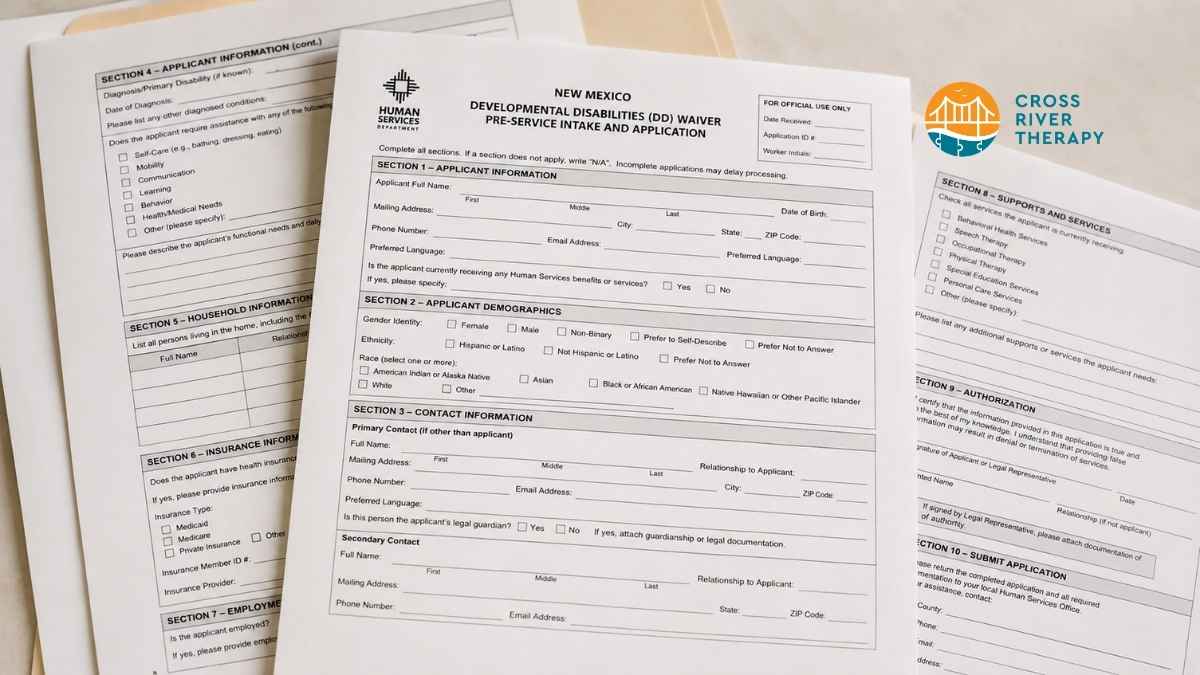
How to Apply for New Mexico’s DD Waiver While Starting ABA Therapy
Autism waiver New Mexico applications need DD Waiver records and proof of daily support needs. Your next step is to start ABA intake with Cross River.

Is ABA Therapy Covered by Insurance in New Jersey? What Every Parent Should Know
ABA therapy insurance New Jersey may cover medically necessary care based on plan type, network, and authorization. Verify benefits with Cross River.

How ABA Therapy Builds Communication for Nonverbal Children Without Forcing Speech
ABA therapy communication for nonverbal children starts with AAC, signs, and daily routines. See how kids ask, refuse, choose, and get help.

How to Start ABA Therapy in New Jersey With a First-Call Checklist
How to start ABA therapy in New Jersey begins with records, insurance details, and intake questions. Use this first-call checklist before you call.

How to Get an Autism Evaluation in Arkansas Before Starting ABA Therapy
How to get an autism evaluation in Arkansas starts with a referral, provider choice, and key records. Use this parent checklist before ABA intake.