








Addressing sleep issues in autistic children through ABA
Transforming Sleep Patterns in Autism


The Power of ABA in Sleep Management for Children with Autism
Sleep difficulties are common among children with autism, significantly impacting their daily functioning and family life. Addressing these challenges requires tailored approaches that consider behavioral, sensory, and environmental factors. Applied Behavior Analysis (ABA) offers a research-backed, individualized strategy that can substantially improve sleep quality. This article explores how ABA techniques and parent training can be effectively employed to resolve sleep issues in autistic children, emphasizing practical strategies, benefits, and the importance of early intervention.
Understanding Sleep Difficulties in Children with Autism
What are the common sleep issues faced by children with autism?
Children with autism often struggle with various sleep challenges that can significantly impact their daily life. Common problems include difficulty falling asleep, staying asleep through the night, frequent night wakings, and early morning awakenings. Many children experience long periods of wakefulness during the night, fragmented sleep cycles, and irregular sleep patterns. These disruptions can lead to daytime fatigue, behavioral difficulties, and increased stress for families.
What factors contribute to sleep difficulties in children with autism?
Several factors can cause or worsen sleep problems in autistic children. Sensory sensitivities play a major role—noise, light, and textures can disrupt their ability to settle down. Anxiety and worry are common, making it harder for them to relax at bedtime. Additionally, irregular melatonin production, a hormone critical for sleep regulation, often influences sleep patterns. Co-occurring conditions such as Attention Deficit Hyperactivity Disorder (ADHD) can further complicate sleep issues, creating a complex web of contributing factors.
How can understanding these issues help improve interventions?
Recognizing the specific sleep challenges and their underlying causes allows clinicians and parents to tailor effective strategies. Addressing sensory sensitivities by creating sensory-friendly environments or using calming tools can ease the transition to sleep. Managing anxiety through communication, comfort items, and relaxation techniques helps reduce bedtime resistance. Correcting irregular melatonin levels or providing appropriate supplements, under medical supervision, may also enhance sleep quality.
| Sleep Problems | Contributing Factors | Potential Solutions |
|---|---|---|
| Trouble falling asleep | Sensory sensitivities, anxiety | Sensory-friendly environment, relaxation techniques |
| Frequent night wakings | Melatonin irregularities, anxiety | Consistent bedtime routines, melatonin management |
| Fragmented sleep | Co-occurring conditions, environmental disturbances | Environmental modifications, behavioral interventions |
| Early awakening | Sleep cycle disturbances | Gradual schedule adjustments, behavioral strategies |
What strategies can help manage sleep difficulties?
Interventions like establishing predictable and calming bedtime routines—such as reading or white noise—signal the body to prepare for sleep. Creating a sensory-friendly room with dim lighting, weighted blankets, and minimal noise fosters relaxation. Visual schedules and cues help children understand what to expect and promote independence. For children with irregular sleep schedules, gradual adjustments—shifting bedtime incrementally—can normalize sleep patterns. Positive reinforcement encourages adherence to routines and independent sleep habits.
How does early intervention via behavioral strategies make a difference?
Starting sleep interventions early can significantly improve sleep quality and daytime functioning. Behavioral techniques, particularly those based on Applied Behavior Analysis (ABA), focus on reinforcing healthy sleep behaviors and reducing problematic ones. Tailored routines, environmental modifications, relaxation techniques, and ABA-based tools like visual schedules contribute to establishing consistent sleep habits. Early intervention not only enhances sleep but also supports emotional regulation, social skills, and overall development.
How prevalent are sleep challenges among children with autism?
Research indicates that up to 80% of children with autism face sleep difficulties. These sleep problems don't only affect the child—they also impact families, causing stress and fatigue. Addressing these challenges is essential for improving quality of life for children and creating a more manageable routine for caregivers.
How do ABA therapy and assessments support sleep improvements?
ABA therapy offers a structured, individualized approach to tackling sleep issues. Therapists conduct comprehensive assessments, including functional behavior analysis, to identify behavioral and environmental triggers of sleep disturbances. Based on these insights, they develop tailored sleep plans that incorporate visual supports, calming activities, environmental adjustments, and behavioral reinforcement strategies.
What are some effective ABA techniques for sleep?
ABA strategies for sleep include establishing consistent bedtime routines, implementing visual schedules, and using calming sensory inputs like weighted blankets or calming music. Techniques such as bedtime fading—gradually aligning bedtime with natural sleep time—positive reinforcement, and systematic extinction help children develop healthier sleep habits. Addressing specific challenges, such as sensory sensitivities or bedtime refusal, with individualized interventions improves sleep duration and quality.
How can parents be equipped to support their child's sleep through ABA?
Parents play a critical role in managing sleep difficulties. Through structured training programs, they learn how to implement sleep routines, use visual supports, and apply reinforcement techniques. Ongoing coaching and monitoring help parents adjust strategies based on their child's progress. Empowering parents with ABA skills ensures consistency at home and enhances the effectiveness of sleep interventions.
In summary, understanding these common sleep problems and their underlying causes is crucial for developing effective interventions. Using behavioral strategies rooted in ABA, creating sensory-friendly environments, and involving families in the process can significantly improve sleep outcomes for children with autism, contributing to better overall well-being.
Enhancing Sleep and Well-Being in Autism
Implementing ABA techniques for sleep issues in children with autism offers a promising path toward better sleep patterns, which are essential for overall development and daily functioning. Early assessment and intervention, combined with parent training, can lead to significant improvements. Creating sensory-friendly environments, establishing predictable routines, and applying reinforcement strategies tailor-made for each child ensure sustainable progress. Collaboration between families and professionals maximizes the effectiveness of these interventions, ultimately enhancing the child's quality of life and easing family stress. Continued research and personalized approaches remain vital as we deepen our understanding of how ABA can address sleep challenges, fostering healthier, more restful nights for children with autism.
References
- Sleep Tips for Children with Autism - Early Intervention
- Ways ABA Therapy Can Assist With Sleep Issues
- Using ABA Techniques to Improve Sleep in Children with ...
- Training Kids with Autism to Sleep Alone: Expert Guide
- ATN/AIR-P Strategies to Improve Sleep in Children with ...
- Treating Sleep Disorders
- Improving Sleep Quality Among Children With Autism ...
Recent News
Related articles

ABA Therapist Salary in Arkansas: What BCBAs and RBTs Actually Earn in 2026
ABA therapist salary Arkansas figures compare RBT and BCBA rates, benefits, guaranteed hours, and contract terms. Explore careers at Cross River.

5 Autism Support Groups and Family Resources in New Mexico Alongside ABA Therapy
Autism support groups New Mexico families can use offer peer support, local events, and school help. Cross River can explain ABA therapy options.

Where to Get an Autism Evaluation in New Mexico Before Starting ABA Therapy
Autism evaluation New Mexico options include UNM, NMSU, FIT, and private providers. Compare providers, records, and ABA steps with Cross River.

7 North Carolina Autism Resources to Contact Before ABA Therapy Starts
Autism resources North Carolina families can call for diagnosis, early intervention, rights, and parent support. Start ABA intake with Cross River.

Does Indiana Medicaid Cover ABA Therapy? A Step-by-Step Eligibility Checklist for Parents
Medicaid ABA therapy Indiana covers eligible children under 21 with prior authorization. Your five-step coverage review can start with Cross River.
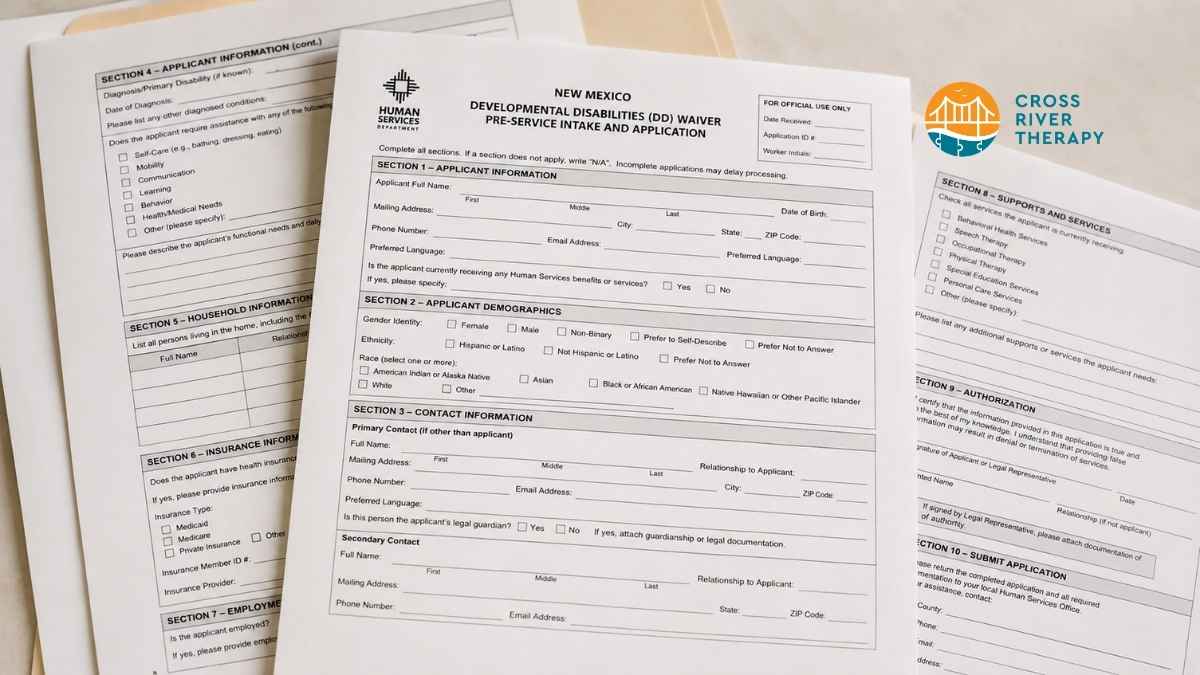
How to Apply for New Mexico’s DD Waiver While Starting ABA Therapy
Autism waiver New Mexico applications need DD Waiver records and proof of daily support needs. Your next step is to start ABA intake with Cross River.

Is ABA Therapy Covered by Insurance in New Jersey? What Every Parent Should Know
ABA therapy insurance New Jersey may cover medically necessary care based on plan type, network, and authorization. Verify benefits with Cross River.

How ABA Therapy Builds Communication for Nonverbal Children Without Forcing Speech
ABA therapy communication for nonverbal children starts with AAC, signs, and daily routines. See how kids ask, refuse, choose, and get help.

How to Start ABA Therapy in New Jersey With a First-Call Checklist
How to start ABA therapy in New Jersey begins with records, insurance details, and intake questions. Use this first-call checklist before you call.

How to Get an Autism Evaluation in Arkansas Before Starting ABA Therapy
How to get an autism evaluation in Arkansas starts with a referral, provider choice, and key records. Use this parent checklist before ABA intake.

Center-Based vs In-Home vs School-Based ABA Therapy and How to Choose the Right Fit
Center-based, in-home, and school-based ABA therapy each fit different goals, routines, and settings. Compare options before your intake call.

Early Signs of Autism: A Guide for North Carolina Parents
Early signs of autism North Carolina parents notice can include speech, play, sensory, or skill loss patterns. See what to track before screening.