








Addressing Social Anxiety Through School-Based ABA Therapy
Unlocking School-Based Solutions for Social Anxiety in Children with Autism


Exploring ABA Therapy's Role in Education
Social anxiety is a substantial challenge for many children, particularly those with Autism Spectrum Disorder (ASD). Within school environments, this anxiety can interfere with learning and social interactions, crucial components of a child's development. Applied Behavior Analysis (ABA) therapy offers unique, evidence-based methods to address these challenges. This narrative outlines how ABA therapy functions in schools to manage social anxiety among children with autism, the significance of recognizing anxiety triggers, individualized strategies for coping, and the critical role of family support in therapeutic success.
Understanding the Connection Between Autism and Social Anxiety
What is the relationship between autism and social anxiety?
The connection between autism and social anxiety is marked by a significantly higher prevalence of social anxiety in autistic individuals. Studies indicate that as many as 50% of individuals on the autism spectrum may face social anxiety disorder, in stark contrast to the 7-13% observed in the general population. This co-occurrence is particularly pronounced in high-masking individuals, who often suppress their symptoms, leading to potential misdiagnosis.
Social anxiety among those with autism typically manifests as hypervigilance and an intense fear of judgment during social interactions. Notably, while autistic individuals may feel more comfortable engaging with peers who also have autism, those experiencing social anxiety often find their discomfort persisting across various social contexts.
Differentiating anxiety in autism and general population
Understanding the differences in anxiety experiences between autistic individuals and the general population is crucial. For instance, individuals with autism might experience anxiety responses that are tied to sensory overstimulation, which can further heighten feelings of social inadequacy. On the other hand, typical developmental pathways for anxiety may not align with the unique challenges faced by these children.
Impact on social interactions
The implications of social anxiety in autistic individuals can substantially inhibit their social interactions and relationships. Many experience challenges in forming connections, leading to increased isolation and frustration. Interventions, such as cognitive-behavioral therapy and social skills training, play a vital role in addressing both autism-specific challenges and social anxiety symptoms, helping to foster healthier social interactions and improving overall well-being.
How ABA Therapy Manages Social Anxiety
How does ABA therapy help manage social anxiety in children with autism?
ABA therapy effectively manages social anxiety in children with autism through structured techniques designed to enhance essential communication and social skills. One major aspect of this therapy is the use of positive reinforcement, which encourages children to engage in appropriate social behaviors. This method helps them learn how to navigate everyday social situations more confidently, thereby reducing their anxiety levels.
Additionally, ABA therapy incorporates desensitization techniques. This involves gradually exposing children to anxiety-provoking social scenarios in a controlled environment. This step-by-step approach aims to lessen their feelings of fear and discomfort associated with social interactions, enabling them to cope better over time.
Furthermore, the therapy instructs children on valuable coping skills tailored to their unique anxiety triggers. This empowers them to manage anxiety effectively when it arises. Thus, by combining skill enhancement with practical strategies for anxiety management, ABA therapy substantially boosts the emotional well-being and social competence of autistic children.
Integration of social skill advancements
As part of ABA therapy, progress in social skills is systematically integrated into the treatment plan. Therapists conduct thorough assessments to identify specific social deficits in each child. This allows for the development of personalized interventions that target these challenges directly.
For instance, role-play exercises can be employed to simulate social situations. This practice not only reinforces learned skills but also familiarizes children with various social dynamics, helping them feel more at ease in such interactions.
Role of desensitization
Desensitization plays a crucial role in the therapy process. It provides a framework for children to face their fears progressively. By starting with less intimidating scenarios and gradually increasing their complexity, children can experience a reduction in their stress response over time.
This approach also includes teaching mindfulness techniques, like deep breathing and cognitive restructuring, to assist children in managing the anxiety that arises during these exposures. Overall, the combination of direct skill acquisition and gradual desensitization together results in effective management of social anxiety in autistic children, enabling them to enjoy happier social experiences.
ABA Therapy Within School Environments
How effective is ABA therapy in school settings for children with social anxiety?
ABA therapy is particularly effective for children with social anxiety, especially those diagnosed with Autism Spectrum Disorder (ASD). The therapy provides structured interventions that enhance essential social skills and reduce anxiety, making the school environment more manageable. Through individualized plans, ABA therapy targets critical behaviors necessary for academic and social success, such as communication and self-regulation.
The consistent application of ABA strategies helps children navigate new experiences and routines confidently. A predictable learning environment combined with clear coping strategies significantly lowers anxiety levels for these children. Techniques such as cognitive restructuring, which helps shift negative thoughts to calming ones, contribute to improving the overall learning experience.
Benefits of ABA in schools
School settings serve as excellent platforms for mental health support. With over 70% of youth receiving mental health treatment within schools, integrating ABA therapy can be incredibly beneficial. Some key advantages include:
- Direct application: Children can practice skills in real-time within their academic and social gatherings.
- Peer reinforcement: Social reinforcement techniques utilized in ABA encourage and maintain appropriate social interactions, boosting confidence.
- Family involvement: Including parents in the therapeutic process assists in transferring learned behaviors across various environments.
Enhancing school readiness in children
ABA therapy promotes school readiness by systematically addressing areas of need. Interventions are tailored based on thorough assessments of individual challenges, allowing children to build skills progressively. Elements like structured role-play and systematic desensitization help children face social situations with reduced stress.
Addressing educational and social challenges
With specific programs like the Cool Kids program, ABA therapy integrates psychoeducation and graduated exposure strategies to help children confront anxiety. This approach directly addresses both educational and social challenges, enabling autistic children to develop the tools necessary for successful interactions. As a result, the therapy not only enhances academic outcomes but also fosters a positive social experience for children in school settings.
Strategies for Coping with Social Anxiety Using ABA
Developing Anxiety Coping Mechanisms
In the realm of Applied Behavior Analysis (ABA) therapy, a variety of strategies are implemented to help children with autism manage social anxiety effectively. Tailoring these strategies to each child’s specific needs is crucial.
- Individualized Treatment Plans
- Focus on identifying unique anxiety triggers through data-driven assessments.
- Personalize coping mechanisms, such as deep breathing exercises, cognitive restructuring, and systematic desensitization.
- Cognitive-Behavioral Techniques
- Techniques, like changing negative thought patterns, empower children to approach anxiety-inducing situations with a calm mindset.
- Gradual exposure to social stimuli helps to desensitize children, thereby reducing their stress response.
Application of School-Based ABA Strategies
School settings are ideal for implementing ABA strategies to address social anxiety, as they provide a familiar environment for the child while offering direct therapeutic interventions.
- Social Skills Training
- Focus on developing effective communication skills through structured role-play and peer interactions.
- Programs Like Cool Kids
- Integrate psychoeducation, cognitive restructuring, and gradual exposure to help children confront anxiety-provoking situations in an approachable way.
- Engagement of Parents and Teachers
- Involvement from family and educators is essential for reinforcing skills across different settings, promoting confidence and successful anxiety management.
Examples of Treatment Programs
Several empirically supported school-based treatment programs exemplify successful ABA strategies for managing social anxiety:
Program Description Key Focus Areas Cool Kids A cognitive-behavioral program that includes psychoeducation, cognitive restructuring, and graduated exposure. Coping with bullying, social skills, understanding anxiety triggers. Skills for Social and Academic Success Focuses on enhancing social competence while integrating academic support. Role-playing social interactions, improving communication skills.
Through structured ABA therapy, children can build resilience against social anxiety, enhance their social skills, and foster emotional well-being in school environments.
Recognizing and Addressing Anxiety Triggers
Importance of identifying anxiety triggers
Understanding anxiety triggers is vital in Applied Behavior Analysis (ABA) therapy. Children with autism often encounter unique anxiety-inducing situations that can disrupt their daily activities. By observing and identifying these triggers, therapists can pinpoint the underlying causes of anxiety, which is essential in developing effective interventions.
Techniques to mitigate anxiety
ABA therapy employs various techniques to help children with autism manage their anxiety symptoms. Some effective strategies include:
- Cognitive restructuring: This method aids children in changing negative thoughts into more calming, positive ones, reducing anxiety's hold on them.
- Deep breathing exercises: Simple breathing techniques can help children calm down when they recognize early signs of anxiety.
- Desensitization: Gradually exposing children to anxiety-inducing stimuli allows them to build resilience over time, decreasing their stress response.
Tailoring interventions to individual needs
Each child with autism is unique; therefore, interventions in ABA therapy must be individualized. Recognizing anxiety triggers enables therapists to create personalized strategies that consider a child’s learning style and stress tolerance. For instance, interventions can incorporate family involvement to further solidify lessons learned in therapy, thereby enhancing the child’s ability to respond to anxiety triggers effectively across different settings like school and home.
By addressing these factors, ABA therapy equips autistic children with the tools necessary to navigate their anxiety, ultimately fostering better social interactions and overall empowerment.
The Critical Role of Family in ABA Therapy
What role does family play in the treatment of social anxiety in children using ABA therapy?
Family involvement is integral to the success of ABA therapy for children facing social anxiety. Parents and guardians not only provide emotional support but also help establish consistency in applying the techniques learned in therapy sessions. This reinforcement of positive behaviors outside of structured environments allows the child to better manage their anxiety in daily life.
Parents can take an active role by participating in strategies like cognitive restructuring, which helps shift negative perceptions into calming thoughts. This is particularly effective when parents model these techniques at home, creating a familiar framework for the child to practice.
Addressing Parental Anxiety
It's important to recognize that parental anxiety can ripple through family dynamics and potentially affect the child's experience with therapy. Parents who actively address their own anxiety issues often contribute to more favorable outcomes in their child's treatment. A supportive and less anxious home environment can promote better engagement and receptivity to learning new coping skills.
Generalizing Skills Learned in Therapy
The ability to generalize skills learned during therapy to different contexts is crucial in overcoming social anxiety. ABA therapy encourages parents to incorporate exposure exercises into everyday routines, whether at home or in social settings. This practice not only reinforces the skills learned but also helps children face anxiety-provoking situations directly within their familiar surroundings, enhancing their comfort and capability in real-life interactions.
Evidenced-Based Strategies in ABA for Autism and Anxiety
What are some of the evidenced-based strategies used in ABA therapy for autism and social anxiety?
ABA therapy employs several targeted strategies to address autism and associated social anxiety. These techniques are underpinned by evidence demonstrating their effectiveness in real-world settings.
Reinforcement and Behavior Change
One of the primary strategies in ABA therapy is the use of positive reinforcement. This method encourages desirable behaviors by rewarding them, which can significantly enhance a child's confidence and lead to greater engagement in social situations. Social reinforcement also plays an essential role, as it fosters appropriate social behaviors through interactions with peers and adults.
Cognitive and Behavioral Techniques
ABA therapy integrates cognitive restructuring techniques. This approach helps children transform negative thought patterns into more positive, calming thoughts. Techniques such as identifying anxiety triggers empower both the child and therapist to develop tailored coping strategies to manage anxiety symptoms effectively.
Desensitization and Structured Interventions
Systematic desensitization is another key strategy. It involves gradually exposing children to anxiety-provoking situations in a controlled manner, reducing their stress response over time. Role-playing scenarios are often used to prepare children for real-life social interactions, making them more comfortable when they occur.
Ongoing assessment ensures these strategies are personalized, adapting to the child's evolving needs and abilities as they progress.
Developing Social Competence Through ABA
How does ABA therapy develop social competence to address social anxiety in autistic children?
ABA therapy plays a crucial role in enhancing social competence among autistic children, particularly to alleviate social anxiety. It achieves this by systematically breaking down social skills into bite-sized components. Each skill is taught through a step-by-step approach, ensuring that children can understand and practice them in a structured manner.
This teaching method not only helps children learn effectively but also empowers them to engage more confidently in social interactions. Through structured role-play exercises, children are encouraged to practice responses to various social scenarios. For example, they learn to recognize social cues, initiate conversations, and respond appropriately—all essential skills in social environments.
Key Elements of ABA Therapy for Social Skills
Some of the foundational strategies employed in ABA therapy include:
- Positive Reinforcement: Encouraging desirable behaviors by rewarding children when they successfully engage in social interactions.
- Cognitive Restructuring: Helping children replace negative thoughts about social situations with calming and positive thoughts.
- Gradual Exposure: Slowly introducing children to anxiety-provoking social situations, allowing them to adapt without overwhelming stress.
Enhancing Social Engagement
By focusing on these strategies, ABA therapy not only fosters the acquisition of social skills but also enhances engagement in social settings. The individualized approach considers each child's unique challenges and learning styles, further optimizing the process. Through parental involvement and ongoing assessment, the skills learned are effectively generalized across different contexts, promoting overall social competence and reducing anxiety in various social scenarios.
The Unique Benefits of ABA for Social Anxiety in Autism
What are the unique benefits of ABA therapy for children with autism dealing with social anxiety?
ABA therapy shines in providing tailored interventions specifically for children with autism who face social anxiety. One of the fundamental strengths of this approach is its ability to identify individual anxiety triggers through comprehensive assessments. This personalized focus allows therapists to create interventions that meet each child's unique needs.
Tailored interventions for autism
ABA techniques systematically break down social interactions into manageable steps. This structure not only promotes understanding but also helps children to gradually adapt to social environments. Through methods like role-play and positive reinforcement, autistic children can experience social skills training in a safe setting, reducing their anxiety when faced with real-life situations.
Managing anxiety with ABA
Coping strategies introduced in ABA therapy, such as deep breathing exercises and cognitive restructuring, equip children with practical tools to manage their anxiety. Techniques like systematic desensitization gradually expose children to their anxiety-inducing triggers, minimizing stress responses over time.
Comprehensive skill development
Moreover, ABA therapy addresses not only social skills but also empowers children to reshape negative thought patterns into more calming ones. Parental involvement throughout this process ensures that learned skills can be generalized across various contexts, thus fostering confidence and enhancing interactions with peers. By focusing on the development of social skills within the comforting environment of familiar settings, ABA therapy significantly boosts the social functioning of children with autism.
School-Based Systems as Platforms for Mental Health Interventions
How do school-based systems facilitate mental health interventions for children with social anxiety?
School-based systems play a vital role in facilitating mental health interventions, especially for children grappling with social anxiety. These institutions act as primary points for care, where therapeutic strategies can be implemented effectively in an environment the child is already familiar with. This familiarity can reduce the stress often associated with mental health treatments.
Educational settings present unique opportunities for early detection of anxiety disorders. Through direct engagement with students, teachers and staff can recognize signs of anxiety much earlier than they might at home. This recognition opens the door for timely interventions, which can drastically change a child's trajectory regarding mental health management.
An effective approach to managing anxiety in schools includes the implementation of tailored behavioral strategies like Applied Behavior Analysis (ABA) therapy. ABA utilizes structured techniques to directly address anxiety triggers, helping children learn coping mechanisms in real-time as they face academic and social scenarios. However, it should be noted that a significant barrier exists: many clinically anxious youth remain unidentified due to lapses in recognition by teachers and parents. By enhancing awareness and training staff to identify anxiety symptoms, schools can better integrate mental health interventions into their daily routines.
Therapeutic opportunities in educational settings
The integration of school-based interventions, such as the Cool Kids program, enables a comprehensive treatment approach. This program incorporates psychoeducation, cognitive restructuring, graduated exposure, and skills for coping with bullying. The overlap between learning and therapeutic intervention makes classrooms ideal venues for fostering emotional and social resilience among students.
Barriers to identifying anxiety in schools
Despite the promise that school settings hold for mental health services, challenges in identification persist. Clinically anxious youth often go unnoticed, which underscores the need for ongoing training and support for educators. Awareness programs aimed at teaching staff about anxiety disorders can bridge this gap, ensuring that mental health support becomes a core component of the school environment.
In sum, schools as platforms for mental health interventions provide vital resources in addressing social anxiety. By harnessing these opportunities and overcoming barriers, educational institutions can fundamentally transform the landscape of mental health care for youth.
Addressing Social Anxiety Through School-Based Programs
Overview of school-based anxiety programs
Anxiety disorders are increasingly recognized in school settings, particularly among children and adolescents with autism. These school-based programs aim to provide necessary support through structured interventions tailored to students' unique needs. Programs like ‘Cool Kids’ exemplify effective strategies in addressing social anxiety specifically.
What are the components of effective school-based programs for social anxiety?
Effective school-based programs for social anxiety include several critical components:
- Psychoeducation: Helping students understand anxiety and its physiological responses raises awareness and fosters acceptance.
- Cognitive Restructuring: This technique guides children to transform negative thought patterns into calming ones, promoting a healthier outlook.
- Graduated Exposure: Students are gradually exposed to anxiety-inducing scenarios within a supportive environment, allowing them to confront and manage their fears effectively.
- Coping Strategies: Sessions focused on equipping children with coping mechanisms provide them with tools to handle stress.
- Social Skills Training: Direct instruction in social skills enhances children's interaction abilities and decreases feelings of isolation or anxiety in social situations.
Advantages of integrated environments
Integrating these interventions within school settings offers distinct advantages:
- Natural Contexts: Students practice skills in their academic and social environment, making the lessons more relevant and actionable.
- Immediate Support: Teachers and school counselors can provide timely interventions as situations arise.
- Peer Interaction: Engaging with peers during these programs fosters a sense of community, promoting social reinforcement and assistance in overcoming challenges.
In summary, the structured yet flexible nature of school-based anxiety programs empowers students to address their social anxiety effectively while being supported in a familiar environment.
Creating Sustainable Support Systems for Social Anxiety in Education
How can sustainable support systems for managing social anxiety be developed in schools?
Sustainable support systems for managing social anxiety in schools hinge on an integrated approach tailored to individual student needs. This includes continuous assessment to adapt strategies as necessary. Implementing structured programs, such as the Cool Kids program, can provide a roadmap for addressing anxiety effectively. These interventions must be supported by ongoing training for educators, enabling them to recognize and manage anxiety symptoms among students.
Collaboration is essential. By fostering strong partnerships between ABA therapists, teachers, and families, schools can ensure that interventions are consistently applied across different environments. This collective effort allows for the sharing of insights and strategies that can enhance a student’s ability to cope with anxiety.
Building Long-term Strategies
Building long-term strategies requires a focus on developing coping mechanisms that are uniquely suited to each child. For instance, ABA therapy employs techniques like cognitive restructuring and systematic desensitization, equipping children with the tools to manage anxiety triggers. These techniques promote confidence and reinforce positive peer interactions, directly addressing issues of social anxiety in children with autism.
Continuous Assessment and Adaptation
Ongoing assessment is pivotal to evaluate the effectiveness of implemented strategies. Regular check-ins with educators and therapists help in recognizing areas needing adjustment. This data-driven approach ensures that interventions remain relevant and effective as children progress through their educational journeys.
Collaboration between Therapists, Teachers, and Families
The collaboration between therapists, teachers, and families enhances the support system for children facing social anxiety. Parental involvement plays a crucial role in generalizing learned skills, enabling children to navigate their environments more effectively. As such, consistent communication among all parties is key to fostering an environment where children feel safe and supported in dealing with their anxiety.
Towards a More Inclusive Educational Experience
Managing social anxiety in children with autism within school settings demands a concerted effort that intertwines therapeutic expertise with educational resources. ABA therapy provides the tools and methods necessary for addressing the unique challenges faced by autistic children, helping them navigate social complexities and reducing anxiety. As schools increasingly become centers for mental health support, leveraging ABA therapy with active family involvement promises a holistic approach that benefits not just the child but the broader educational community. The ultimate goal is to create inclusive, nurturing environments where all children can thrive both academically and socially, laying the foundation for lifelong success and emotional well-being.
References
- ABA Therapy And Anxiety: What You Need to Know
- School-Based Anxiety Treatments for Children and Adolescents - PMC
- Mastering Social Skills: ABA Therapy for Autism
- Can ABA Therapy Help with Anxiety? In Many Cases, Yes
- ABA Therapy And Anxiety: What You Need to Know
- School-Based Anxiety Treatments for Children and Adolescents - PMC
- Autism and Anxiety: A Comprehensive Guide to How ABA Helps
Recent News
Related articles

6 Arkansas Medicaid ABA Therapy Rules Families Need to Know
Arkansas Medicaid ABA therapy has age, diagnosis and approval rules. Families can check six requirements before care.

Arizona Autism Laws Every Parent Should Know Before Starting ABA Therapy
Autism laws Arizona parents should know cover ABA insurance, AHCCCS appeals, IEPs, and Section 504 rights. Check ABA coverage with Cross River.

ABA Therapist Salary in Arkansas: What BCBAs and RBTs Actually Earn in 2026
ABA therapist salary Arkansas figures compare RBT and BCBA rates, benefits, guaranteed hours, and contract terms. Explore careers at Cross River.

5 Autism Support Groups and Family Resources in New Mexico Alongside ABA Therapy
Autism support groups New Mexico families can use offer peer support, local events, and school help. Cross River can explain ABA therapy options.

Where to Get an Autism Evaluation in New Mexico Before Starting ABA Therapy
Autism evaluation New Mexico options include UNM, NMSU, FIT, and private providers. Compare providers, records, and ABA steps with Cross River.

7 North Carolina Autism Resources to Contact Before ABA Therapy Starts
Autism resources North Carolina families can call for diagnosis, early intervention, rights, and parent support. Start ABA intake with Cross River.

Does Indiana Medicaid Cover ABA Therapy? A Step-by-Step Eligibility Checklist for Parents
Medicaid ABA therapy Indiana covers eligible children under 21 with prior authorization. Your five-step coverage review can start with Cross River.
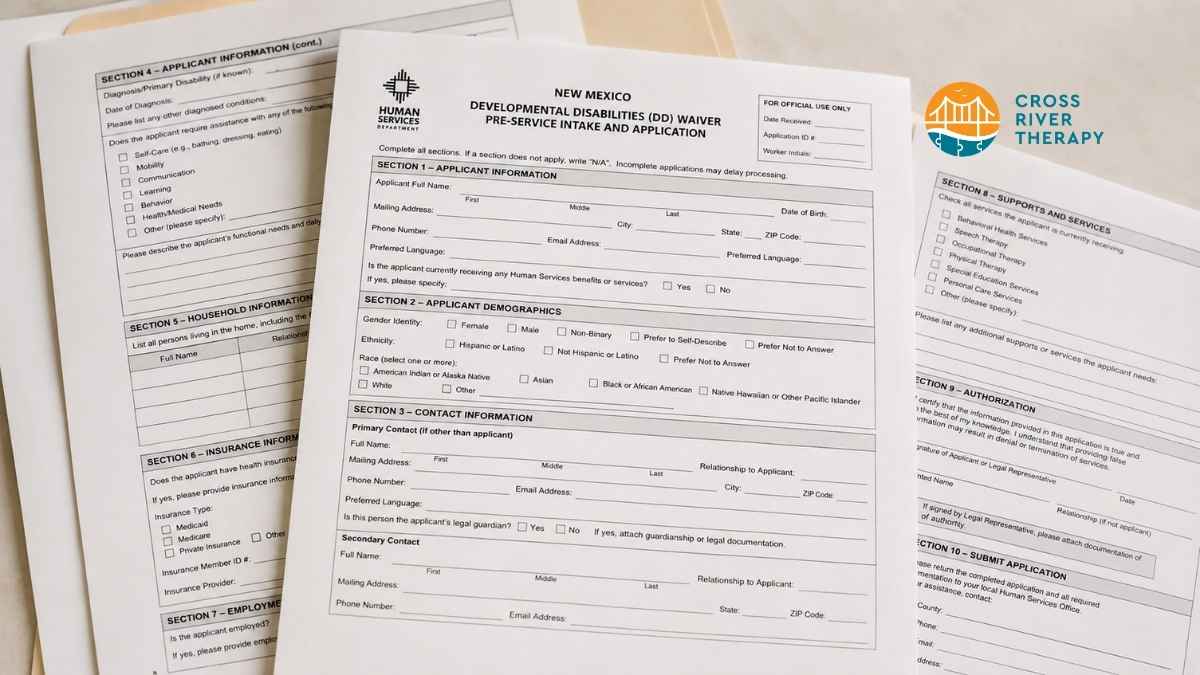
How to Apply for New Mexico’s DD Waiver While Starting ABA Therapy
Autism waiver New Mexico applications need DD Waiver records and proof of daily support needs. Your next step is to start ABA intake with Cross River.

Is ABA Therapy Covered by Insurance in New Jersey? What Every Parent Should Know
ABA therapy insurance New Jersey may cover medically necessary care based on plan type, network, and authorization. Verify benefits with Cross River.

How ABA Therapy Builds Communication for Nonverbal Children Without Forcing Speech
ABA therapy communication for nonverbal children starts with AAC, signs, and daily routines. See how kids ask, refuse, choose, and get help.

How to Start ABA Therapy in New Jersey With a First-Call Checklist
How to start ABA therapy in New Jersey begins with records, insurance details, and intake questions. Use this first-call checklist before you call.

How to Get an Autism Evaluation in Arkansas Before Starting ABA Therapy
How to get an autism evaluation in Arkansas starts with a referral, provider choice, and key records. Use this parent checklist before ABA intake.