








Behavior Intervention Plan Template for Children with Disabilities
Discover a behavior intervention plan template for creating effective strategies for children with disabilities.

Understanding Behavior Intervention Plans
A Behavior Intervention Plan (BIP) is a crucial tool in managing challenging behaviors, especially in children with disabilities. This section will delve into the purpose and importance of a BIP, as well as its key components.
Purpose and Importance
A BIP is a formal document that outlines strategies and techniques to help individuals with challenging behaviors. The goal of a BIP is to identify the root causes of the behavior and develop a plan to address it. BIPs are commonly used in schools, but they can also be used in other settings, such as homes and workplaces.
The importance of a BIP lies in its ability to provide a structured approach to managing behaviors that may interfere with learning or daily functioning. It allows for a proactive and consistent response to these behaviors, with the ultimate goal of promoting positive behavioural change. A well-structured BIP, specifically tailored to the individual's needs, can greatly enhance their ability to engage and succeed in their environment.
For more information and examples of how a BIP can be implemented, visit our page on behavior intervention plan examples.
Components of a BIP
A BIP typically includes several key components:
- Functional Behavior Assessment (FBA): This is an analytical process that identifies the function or purpose of the target behavior.
- Target Behaviors: These are the specific behaviors that the BIP aims to address.
- Replacement Behaviors: These are positive behaviors that are taught and reinforced to replace the target behaviors.
- Strategies and Techniques: These are the specific methods used to address the target behaviors and teach the replacement behaviors.
- Data Collection: A plan for monitoring progress, which includes the methods and frequency of collecting and reviewing data.
Writing a BIP involves conducting a Functional Behavior Assessment (FBA) to identify the function of target behaviors, developing strategies and techniques to address behaviors and teach replacement behaviors, creating a data collection plan for monitoring progress, and ensuring collaboration among team members for successful implementation.
For more information on developing strategies and techniques, visit our page on behavior intervention strategies.
Using a behavior intervention plan template can streamline the process of creating a BIP, ensuring all essential components are included and presented in a clear, structured manner. Regular review and updates of the BIP, based on new information or changes in circumstances, are also crucial to ensure the use of effective strategies and techniques tailored to meet individual needs.
Creating an Effective BIP
The creation of an effective behavior intervention plan (BIP) is a multi-step process that starts with a thorough assessment and ends with the development of targeted strategies and techniques.
Conducting a Functional Behavior Assessment
At the heart of every BIP is a Functional Behavior Assessment (FBA). This is a crucial step in understanding the function of the target behaviors, which informs the subsequent development of the BIP. The goal of the BIP is to teach adaptive ways to access reinforcers maintaining the behavior (Master ABA).
The FBA collects a variety of data about an identified behavior to evaluate the conditions in the context within which it's already occurring. It requires collecting data from a variety of sources, such as observation, interviews, and data collected by collaterals without manipulating any existing variables (Master ABA).
In addition to the FBA, a more comprehensive Functional Analysis (FA) or a Practical Functional Assessment (PFA) might be conducted to gather further insights. The FA provides more reliable results but is more intrusive compared to FBA. On the other hand, PFA combines aspects of both FA and FBA in an effective and ethical practice (Master ABA).
Developing Strategies and Techniques
Once the FBA has been conducted, the next step in creating an effective BIP is developing strategies and techniques to address the identified behaviors and teach replacement behaviors. These strategies can vary widely depending on the specific needs of the child and the findings of the FBA. For examples of how this might look in practice, see our page on behavior intervention strategies.
The strategies and techniques used in a BIP should be tailored to the individual child. This might include teaching the child new skills to replace the problematic behavior, modifying the environment to reduce the likelihood of the behavior occurring, or changing the way adults respond to the behavior to decrease reinforcement.
Remember, the goal of a BIP is not to eliminate the behavior entirely, but rather to replace it with more adaptive behaviors that meet the same function for the child. For more information on creating a BIP, see our behavior intervention plan template.
Implementing a BIP
After creating a comprehensive Behavior Intervention Plan (BIP), the next phase is implementation. This process involves data collection and monitoring, as well as collaboration and teamwork among the involved parties.
Data Collection and Monitoring
Data collection is a critical aspect of the BIP implementation. It involves tracking the child's progress to ensure that the behavior intervention strategies are effective. This can be done through various methods, such as direct observation, interviews, or surveys.
Monitoring enables the team to evaluate the effectiveness of the BIP and to make necessary modifications based on the child's progress. This process should be systematic and consistent, with clear indicators of success defined from the outset.
The data collected should include information about the occurrence of the target behaviors and the effectiveness of the replacement behaviors. It should also reflect the child's response to the strategies and techniques implemented.
The information gathered through data collection and monitoring should be reviewed regularly to ensure that the BIP remains relevant and effective. This process is crucial for adapting the intervention plan to the child's changing needs and circumstances.
Collaboration and Teamwork
A successful BIP implementation requires effective collaboration and teamwork among all the parties involved. This includes the child, family members, teachers, and other relevant professionals. Each team member brings a unique perspective and set of skills, contributing to a more holistic approach to behavior intervention.
Regular communication is vital to ensure all team members are on the same page regarding the child's progress and any adjustments needed in the BIP. This can be facilitated through meetings, progress reports, and ongoing discussions.
Schools play a significant role in the BIP implementation. They form a team to create a BIP by interviewing the student, teacher, and other staff, observing the student, talking to the family, conducting tests, and reviewing past report cards or incidents. The BIP should be periodically reviewed and adjusted based on new information or the student's changing needs.
Implementing a BIP is a dynamic process that requires continuous evaluation and adaptation. Successful implementation relies heavily on systematic data collection, regular monitoring, and effective collaboration among all parties involved. For more information and examples of successful BIPs, check out our articles on behavior intervention plan examples, behavior intervention strategies, behavior intervention plan for autism, and positive behavior intervention plan.
Review and Updates
A Behavior Intervention Plan (BIP) is a living document that evolves with the children it serves. Regular review and updates are therefore a vital part of maintaining an effective BIP.
Importance of Regular Review
The effectiveness of a BIP is closely tied to the regularity of its review and updates. This process, based on new information or changes in circumstances, ensures the use of effective strategies and techniques tailored to meet individual needs.
Without regular review, behavior plans may falter due to mismatches between the children's behavior and the strategies employed, or if the plans become outdated. This highlights the crucial role of teachers and families in communicating about the student's behavior to assess the effectiveness of the plan. For more insights on this topic, you can read our article on behavior intervention strategies.
Adapting to Individual Needs
The BIP is a fluid and dynamic part of treatment that requires multiple revisions over time. Professionals monitor the learner's response to interventions and adjust the plan based on progress or lack of progress.
These adaptations are necessary to keep the BIP relevant and effective for the individual child. For example, a BIP includes both proactive and reactive strategies based on the function(s) of the child's problem behavior. Proactive strategies aim to prevent behaviors, such as using visual schedules for transitions, while reactive strategies manage behaviors when they occur. Specific rewards are included in the BIP to motivate the child, such as earning stickers for on-task behavior.
Adapting the BIP to the individual needs of the child is crucial to its success. For instance, a behavior intervention plan for autism may look quite different from a BIP designed for a child with ADHD. This further emphasizes the importance of regular reviews and updates, which allow for the fine-tuning of the plan and the implementation of the most effective strategies for the individual child. For more examples of BIPs designed for various needs, you can check out our article on behavior intervention plan examples.
School Involvement in BIPs
Schools play a vital role in the creation, application, and review of Behavior Intervention Plans (BIPs). This process involves assembling a team, fostering collaboration, and ensuring periodic reviews and adjustments are made to cater to the evolving needs of the student.
Team Formation and Collaboration
The first step in creating a BIP is forming a team that includes the student, teacher, other staff, and the student's family. This team collaborates to gain a comprehensive understanding of the student's behavior. They do so by conducting interviews, observing the student in various settings, reviewing past report cards or incidents, and consulting with the family.
This collaborative approach ensures that the BIP is tailored to the student's specific needs and circumstances. Different members of the team bring unique insights and perspectives, resulting in a more holistic and effective behavior intervention plan template. For instance, parents can provide information on the child's behavior at home, while teachers can offer insights into classroom behavior. For specific examples of BIPs, refer to our article on behavior intervention plan examples.
Periodic Reviews and Adjustments
Once the BIP is implemented, it's crucial to conduct periodic reviews to ensure it remains effective and relevant to the student's current needs. As students grow and change, their behavior and needs can also evolve. Therefore, the BIP should be flexible and adaptable to accommodate these changes (Understood).
These reviews involve reassessing the student's behavior, discussing progress or setbacks with the team, and making necessary adjustments to the BIP. Any changes should be communicated to all parties involved to ensure consistency in the implementation of the modified plan.
Regular communication between schools and families is critical to the success of the BIP. By engaging in ongoing discussions, both parties can work together to ensure that the BIP remains an effective tool in managing and improving the student's behavior. For more information on effective strategies for behavior intervention, refer to our article on behavior intervention strategies.
References
[1]: https://www.understood.org/en/articles/behavior-intervention-plans-what-you-need-to-know
Recent News
Related articles

6 Arkansas Medicaid ABA Therapy Rules Families Need to Know
Arkansas Medicaid ABA therapy has age, diagnosis and approval rules. Families can check six requirements before care.

Arizona Autism Laws Every Parent Should Know Before Starting ABA Therapy
Autism laws Arizona parents should know cover ABA insurance, AHCCCS appeals, IEPs, and Section 504 rights. Check ABA coverage with Cross River.

ABA Therapist Salary in Arkansas: What BCBAs and RBTs Actually Earn in 2026
ABA therapist salary Arkansas figures compare RBT and BCBA rates, benefits, guaranteed hours, and contract terms. Explore careers at Cross River.

5 Autism Support Groups and Family Resources in New Mexico Alongside ABA Therapy
Autism support groups New Mexico families can use offer peer support, local events, and school help. Cross River can explain ABA therapy options.

Where to Get an Autism Evaluation in New Mexico Before Starting ABA Therapy
Autism evaluation New Mexico options include UNM, NMSU, FIT, and private providers. Compare providers, records, and ABA steps with Cross River.

7 North Carolina Autism Resources to Contact Before ABA Therapy Starts
Autism resources North Carolina families can call for diagnosis, early intervention, rights, and parent support. Start ABA intake with Cross River.

Does Indiana Medicaid Cover ABA Therapy? A Step-by-Step Eligibility Checklist for Parents
Medicaid ABA therapy Indiana covers eligible children under 21 with prior authorization. Your five-step coverage review can start with Cross River.
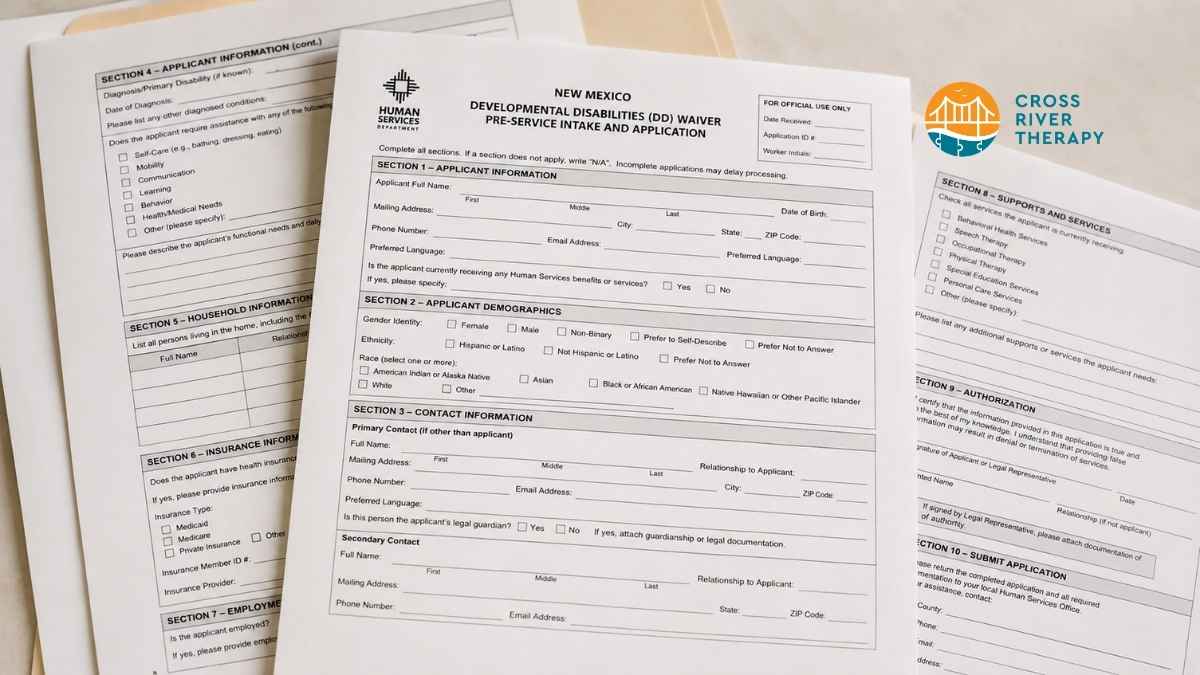
How to Apply for New Mexico’s DD Waiver While Starting ABA Therapy
Autism waiver New Mexico applications need DD Waiver records and proof of daily support needs. Your next step is to start ABA intake with Cross River.

Is ABA Therapy Covered by Insurance in New Jersey? What Every Parent Should Know
ABA therapy insurance New Jersey may cover medically necessary care based on plan type, network, and authorization. Verify benefits with Cross River.

How ABA Therapy Builds Communication for Nonverbal Children Without Forcing Speech
ABA therapy communication for nonverbal children starts with AAC, signs, and daily routines. See how kids ask, refuse, choose, and get help.

How to Start ABA Therapy in New Jersey With a First-Call Checklist
How to start ABA therapy in New Jersey begins with records, insurance details, and intake questions. Use this first-call checklist before you call.

How to Get an Autism Evaluation in Arkansas Before Starting ABA Therapy
How to get an autism evaluation in Arkansas starts with a referral, provider choice, and key records. Use this parent checklist before ABA intake.