








Challenging Autism Behavior Problems To Be Aware Of
Here are the most common autism behavior problems your child might have on the spectrum.


Challenging Behavior Problems In Children And Teens
It's typical for children that are on the spectrum to act out in ways that challenge the authority figures watching over them. For instance, many of them might do the following actions on many an occasion:
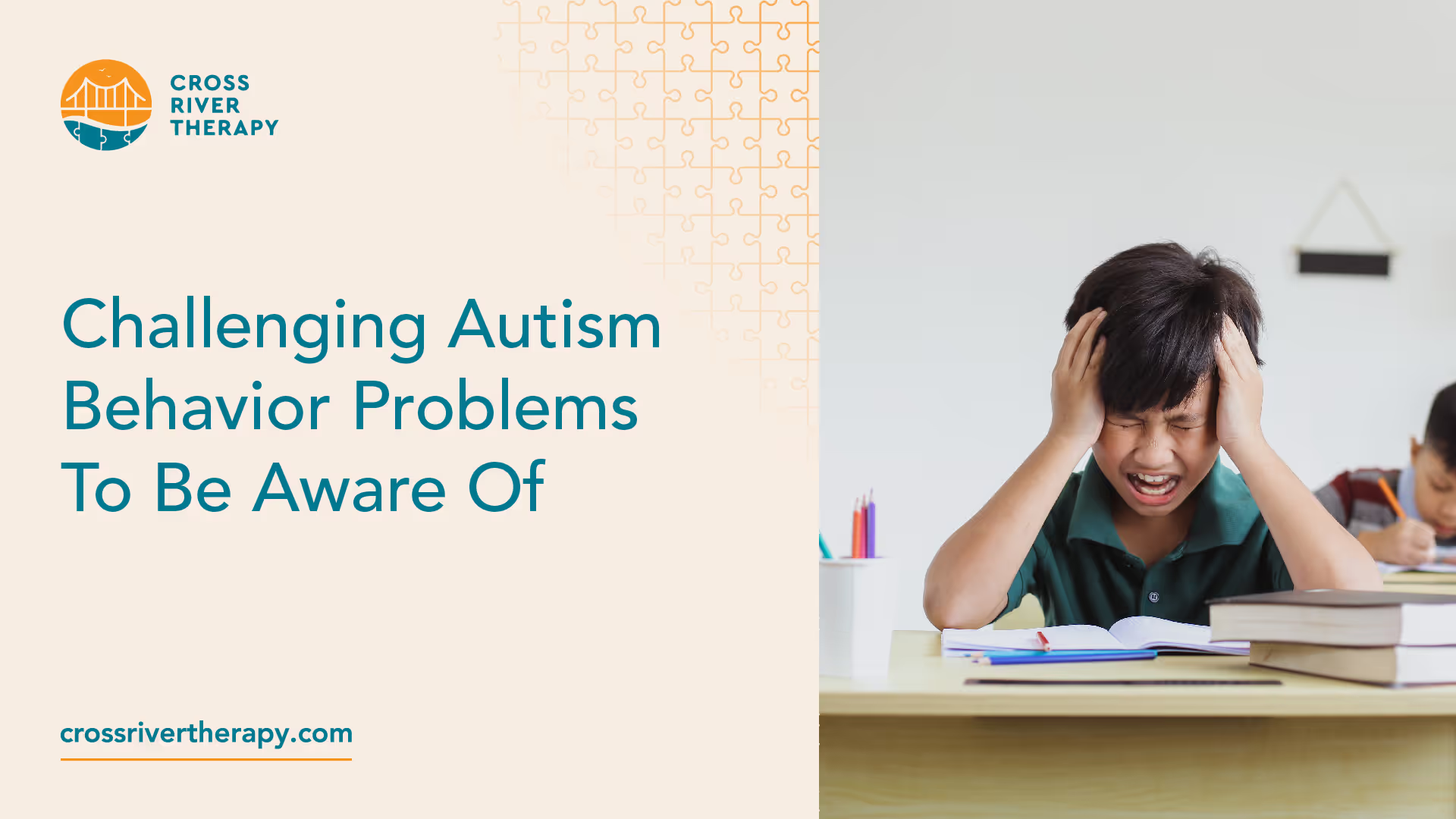
- Will outright ignore or refuse requests that are told or given
- Can behave in socially inappropriate ways, such as taking off clothing when in a public setting.
- Aggressive behavioral tendencies
- Self-harm by hurting themselves with objects and obstacles. Can venture into hurting other children and siblings that are nearby. Headbanging is a common one.
Why Autistic Children Behave In Challenging Ways
Autistic preteens and adolescents may also behave in difficult ways due to the following reasons:
- Misunderstanding - Has difficulty in trying to understand what's going on in their presence, like when people say something or make nonverbal communication.
- Communication problems - Shows trouble in communication, especially when it pertains to something they need or want, leading to irritability.
- High-stress levels - Feels highly stressed and anxious all the time.
Their behavior can sometimes be triggered by certain events such as:
- Ritualistic behavior - Children on the spectrum prefer being in situations and settings where they know what's going to happen. As a result, they can become extremely upset when they don't abide by a routine that they know and have adjusted to. For instance, a kind might be angry because of a routine change when driving them away from school.
- Transitions - Children with ASD often won't understand when the time comes for them to move toward doing another activity. Something, like all children, they may simply refuse out of not wanting to stop what's going on.
- Sensory issues - Autistic kids show different sensory reactions, much of which are negative. They probably like the feeling or touching sensation of certain surfaces over others. When they aren't allowed to touch the thing they want, anger is likely to ensue.
- Sensory overstimulation - A child could become angry when there are too many things going on in their vicinity. Trying to take it all in can cause anxiety and real fear. Even a bright light may be the cause of their irritability.
- Unrealistic expectations - They can become very frustrated when they're ordered to take part in an activity they show no interest in or don't possess the necessary skills to accomplish.
- Feeling tired - Young people with autism can become agitated by an inability to make themselves relax. Sleep problems can lead to bad grades and problems at school from them taking cat naps. Parents that have an autistic child with sleeping issues may not get them to eat properly also.
- Pain and general discomfort - Discomfort can be felt by wearing specific clothes. They may not like tags rubbing against their skin, the feel of a certain shirt, and even the sensation of wearing specific gloves.
- Other underlying disorders - An autistic child could maintain other disorders that are hidden among the parents who know that they have. Some common underlying disorders are ADHD, social anxiety disorder, and OCD. If another is suspected, parents can ask their child's psychologist or pediatrician to do a checkup.
Changing Challenging Behavior In Children And Teens
Difficulty Responding To Kindness
Children with autism can have a troubling effort in dealing with the way they respond to people being kind to them. Here are some examples that parents with autistic children might be familiar with:
- Family visits - Things like cousins, grandparents, and uncles coming to visit may see a child with autism and reach out for a hug. The child may run away from them and breakneck speed. If they're followed around, the child might enter fight or flight mode and attempt to hit the family member that only wanted a hug.
- Gift-giving - An extended member of one's family could present a gift to an autistic child. The child exclaims loudly that they don't want the gift and didn't ask for what was given.
- Ignored unexpectedly - A schoolmate agreeing with a child having autism. The agreement is to go on a play date yet they end up getting ignored for hours on end while the autistic child sits quietly and plays with themselves.
These are only basic examples of ways that a young person with autism can end up hurting the feelings of people around them without realizing it. But they're very typical and emerge from sensory overload, communication deficiencies, and changes in behavior changes.
Noise-Making
Children often make noise during playtime, but a young person with ASD might do it randomly. They may leave the room they're in and begin making noise in front of their parents.
Children with no disorder often engage in the same thing to annoy their parents, like an act of rebellion. But with autism, it's done for various purposes that typically have nothing to do with annoying anyone.
They may screech, shout, and make humming sounds that they hear from birds just to calm themselves down a bit. Bolting into another part of the house may occur with frequency.
Lack Of Eye Contact
One of the foundational characteristics of autism is an inability to look people in the eyes. Not only is it difficult for them but can cause intense stress and displeasure.
It can also make the person attempting to engage with them annoyed or offended, especially if they don't know that they're autistic. However, this skill is possible to be taught and isn't considered to be an element of misbehavior by therapists.
Stimming
Self-stimulation, or stimming, is when autistic people conduct behaviors that include rocking back and forth, pacing around a room or object, flicking fingers and hands, and humming to themselves. These behaviors serve to settle them down to prevent feelings of anxiety and helplessness.
Other common stims include hair twirling, drumming on various objects to see how they sound, and picking at the skin. Of course, skin picking isn't considered to be a habit that shouldn't be done. Not all stims are safe. For instance, hair twirling could end up with hair pulling when the twirling doesn't work for them anymore. But in most instances, stimming isn't a major problem.
Self-Abuse
Self-abuse or self-harm occurs when autistic people try to hurt themselves or other people to get a feeling of calm, or numbness. It can happen when they're faced with situations they find too overwhelming to cope with.
Banging their head against a hard wall may not hurt them initially, and create a distraction that temporarily takes them out of the unwanted situation.
Lack Of Focus Or Attention
An inability to focus on things or pay attention is caused when they're made to observe or take part in too many events occurring all at once.
Inattentiveness can happen when they're having a hard time keeping their focus. The result may be speech that's fast and spoken at a rapid pace, or even abstract racing thoughts flooding their heads.
Addressing Autistic Behaviors
The best way to address autistic behaviors is by understanding how to best keep them out of positions where they're most likely to engage in such behavior in the first place.
Doing this isn't easy, but possible. Sometimes, doing nothing at all and letting them calm down is the best remedy, particularly if no one, including themselves, is getting hurt by it.
Addressing Real Misbehavior
When real misbehavior does occur, such as self-abuse, parents and guardians should try and remove the sound, environment, or visuals that cause it. Again, the best thing could be to act normal and allow them to see how calm everyone is. This is how self-discipline in children is best learned.
References
- https://www.verywellhealth.com/autistic-behavior-or-misbehavior-4047387
- https://raisingchildren.net.au/autism/behaviour/understanding-behaviour/challenging-behaviour-asd
- https://www.autismspeaks.org/behavioral-resources
- https://www.risingaboveaba.com/autism-blog/challenging-autism-behavior-problems
- https://www.helpguide.org/harvard/autism-behavior-problems.htm
Recent News
Related articles

6 Arkansas Medicaid ABA Therapy Rules Families Need to Know
Arkansas Medicaid ABA therapy has age, diagnosis and approval rules. Families can check six requirements before care.

Arizona Autism Laws for ABA Coverage and School Rights
Arizona autism laws for ABA coverage vary by plan. Families can check insurance, appeal options, and school rights.

ABA Therapist Salary in Arkansas for RBTs and BCBAs
Compare ABA therapist salary in Arkansas by role. See how paid hours and benefits affect earnings before applying.

5 Autism Support Groups and Family Resources in New Mexico
Autism support groups in New Mexico connect families. Local resources offer events, parent support, and school help.

Where to Get an Autism Evaluation in New Mexico
Autism evaluation options in New Mexico include UNM and NMSU. Age and referral details help parents prepare.

7 North Carolina Autism Resources to Contact Before ABA Therapy Starts
Autism resources North Carolina families can call for diagnosis, early intervention, rights, and parent support. Start ABA intake with Cross River.

Does Indiana Medicaid Cover ABA Therapy? A Parent Checklist
Indiana Medicaid ABA therapy may cover care for eligible children. The checklist covers coaching and renewals.
How to Apply for the New Mexico DD Waiver
Your NM DD waiver application starts with state intake. The steps cover records, submission, and enrollment.

Does Insurance Cover ABA Therapy in New Jersey?
ABA therapy insurance in New Jersey varies by plan. Learn what NJ FamilyCare covers and how to check costs.

How ABA Therapy Builds Communication for Nonverbal Children Without Forcing Speech
ABA therapy communication for nonverbal children starts with AAC, signs, and daily routines. See how kids ask, refuse, choose, and get help.

How to Start ABA Therapy in New Jersey With a Checklist
Your guide explains how to start ABA therapy in New Jersey. A first-call checklist covers records and next steps.

How to Get an Autism Evaluation in Arkansas Before Starting ABA Therapy
How to get an autism evaluation in Arkansas starts with a referral, provider choice, and key records. Use this parent checklist before ABA intake.