








Best practices for generalizing ABA skills at home
Maximizing ABA Therapy Effectiveness Through Home-Based Skill Generalization


Understanding the Role of ABA Therapy in Autism Support
Applied Behavior Analysis (ABA) therapy stands as a cornerstone intervention for children with autism spectrum disorder (ASD). Grounded in behavioral science principles, ABA helps teach essential social, communication, and daily living skills using structured, evidence-based approaches tailored to each individual's unique needs. This article explores how families can effectively generalize ABA-acquired skills within the home environment to reinforce learning and promote independence.
Foundations of ABA Therapy: Science and Individualization
What is Applied Behavior Analysis (ABA) therapy?
Applied Behavior Analysis (ABA) therapy is a science-based approach focused on understanding and shaping behavior using principles of learning, especially positive reinforcement. It is widely recognized as an effective intervention for children with autism spectrum disorder (ASD).
Definition and core principles of ABA therapy
ABA therapy involves breaking down skills into small, achievable steps and teaching them systematically. Therapists use techniques like reinforcement to encourage the repetition of desired behaviors such as social interactions or communication skills. Data collection and continuous assessment play a crucial role in monitoring progress and modifying strategies when needed.
Individualized treatment planning
ABA programs are tailored to each child's unique needs following comprehensive assessments. This personalization ensures that therapy targets specific areas for development, whether social skills, self-care, or communication, making interventions more effective.
Role of reinforcement and data-driven progress
Positive reinforcement, such as praise or rewards, motivates children to practice and consolidate new behaviors. Progress is carefully tracked through data, allowing therapists to adapt plans and maximize learning outcomes. This evidence-based approach supports sustained improvements across various behavioral domains.
Therapist Roles and Delivery Settings in ABA

Who provides ABA therapy and how is it delivered?
ABA therapy is provided by trained professionals including Board Certified Behavior Analysts (BCBAs), licensed therapists, and ABA therapists working under supervision. These qualified providers create individualized treatment plans tailored to each child’s unique needs, developed after comprehensive assessments such as functional behavior evaluations.
Therapy delivery is flexible and occurs in multiple settings based on the child's circumstances and goals. Common environments include the child’s home, school, community centers, or specialized clinics. In-home ABA therapy is particularly valuable because it allows learning in a natural context, promoting independence and social skill development in everyday situations.
Collaboration with families and caregivers
Collaboration with families and caregivers is a cornerstone of effective ABA therapy. Therapists actively involve parents and caregivers in setting goals and teaching them ABA strategies to reinforce social skills outside therapy sessions. This involvement helps generalize learned behaviors across different environments.
In-home sessions encourage parents and family members to participate directly, observe techniques, and practice them consistently. Including siblings and familiar peers during sessions can improve social interactions and familial bonds while supporting broader skill generalization.
Settings for therapy delivery including home
ABA therapy's adaptable nature allows delivery in various structured and naturalistic settings. At home, therapists often use dedicated spaces, tailored routines, and visual supports like social stories and charts to facilitate learning. School and community settings offer opportunities for practicing social behaviors in peer groups and real-world scenarios.
This comprehensive approach to delivering ABA therapy ensures that children receive support suited to their needs while engaging their support network, enhancing the effectiveness of the intervention.
Enhancing Social Skills Through Structured ABA Techniques
What types of behaviors or skills are targeted in ABA therapy?
ABA therapy targets essential behaviors and skills that support social interaction, communication, and daily living. It focuses on social behaviors such as making eye contact, turn-taking, and sharing while developing communication abilities and functional independence. These therapies are highly individualized, designed after comprehensive assessments to address each child's unique needs.
How does ABA teach social behaviors like eye contact, turn-taking, and sharing?
ABA uses positive reinforcement to encourage children to practice and strengthen social behaviors. Therapists create structured environments where skills like eye contact and sharing are repeatedly modeled and practiced. Reinforcing attempts and successes helps these behaviors become consistent habits.
What roles do role-play, social stories, and visual supports play in ABA therapy?
Role-playing scenarios provide children with safe, guided experiences to practice social interactions. Social stories simplify complex social situations into understandable narratives, helping children grasp social norms and expectations. Visual supports, including charts and video modeling, assist comprehension and retention by illustrating both verbal and non-verbal communication cues.
How does ABA address non-verbal communication?
Non-verbal communication, such as body language and facial expressions, is emphasized in ABA therapy. Video modeling enables children to observe and imitate appropriate non-verbal cues. Therapists incorporate activities that teach children to both recognize and use these important social signals, enhancing their overall social competence.
By combining these structured techniques, ABA therapy offers a comprehensive approach to developing practical social skills that children can use in everyday settings.
Role of Family in Generalizing ABA Skills at Home

How does parental involvement support ABA therapy?
Parents play a crucial role in reinforcing and modeling social and daily living skills taught during ABA sessions. They are encouraged to practice techniques such as positive reinforcement and behavior modeling consistently at home, which helps the child internalize and generalize these behaviors beyond therapy.
What home environment supports skill practice?
Creating a structured, supportive environment is vital for practicing ABA skills. Parents can designate specific areas for therapy activities, establish consistent routines, and use visual supports like charts or social stories to clarify expectations. This setting promotes comfort and predictability, making it easier for children to practice new skills.
How do siblings and peers enhance social learning?
Involving siblings and familiar peers in therapy provides natural opportunities for children to develop social interactions like turn-taking, sharing, and communication in a relaxed setting. This group dynamic fosters collaboration, problem-solving, and helps generalize social skills to everyday life.
Family involvement transforms ABA therapy from isolated sessions into a continuous learning process. Collaborating with therapists, families build an engaging home atmosphere that encourages practice, supports independence, and improves social competence for individuals with autism.
Utilizing In-Home ABA Therapy to Support Natural Learning
What Are the Advantages of the Home Setting for ABA Therapy?
In-home ABA therapy creates a natural and familiar environment, making it easier for children to learn and practice new skills. This setting supports greater comfort and reduces distractions compared to clinical spaces. It also allows therapists to incorporate family members, siblings, and even neighborhood or school friends into sessions. Engaging familiar peers promotes social skill practice in real-life contexts, enhancing skill generalization. Collaboration with parents and caregivers in this space fosters consistent reinforcement and modeling of appropriate behaviors throughout daily routines.
How Does In-Home ABA Support Independence and Life Skills Across Different Age Groups?
ABA therapy in the home adapts to the developmental needs of various age groups. For toddlers, early intervention focuses on building fundamental skills such as toileting, dressing, and eating independently. School-age children benefit from practicing social skills like turn-taking and communication with family and friends, which transfers smoothly to school and community settings. For teens and adolescents, sessions emphasize essential life skills including meal preparation, managing appointments, and interview techniques, all aimed at fostering greater independence.
How Can Families Prepare for Successful In-Home ABA Sessions?
Creating a structured and dedicated space within the home is vital for effective sessions. Selecting areas free from distractions helps the child focus on learning activities. Sharing the child’s interests with the therapist allows for personalized and engaging teaching approaches. Establishing consistent routines ensures predictability, which helps children feel secure and ready to participate. Adult supervision during sessions provides safety and encouragement, while also enabling caregivers to observe and learn ABA strategies they can apply throughout daily life to reinforce progress.
Promoting Peer Interaction and Conflict Resolution Within ABA
Facilitating group social skills training
ABA therapy uses group settings like social skills training groups to encourage peer interaction. In these settings, children learn vital collaboration and communication skills by engaging with peers in structured activities. These groups provide a supportive environment where children can practice sharing, turn-taking, and listening to others.
Problem-solving and managing social conflicts
Conflict resolution is an integral part of ABA. Therapists teach children strategies to handle social conflicts effectively by incorporating role-playing and social stories. These methods help children understand different perspectives and develop problem-solving skills essential for navigating everyday social challenges.
Incorporation of neighborhood and school friends
Involving familiar peers such as neighborhood or school friends in ABA sessions fosters the natural generalization of social skills. Practicing with known friends during therapy helps children transfer learned behaviors to real-world settings, ensuring that skills like communication and cooperation are solidified beyond the therapy environment.
Visual Supports and Tools to Strengthen Skill Retention
How are visual supports used in ABA therapy?
Visual supports like social stories, charts, and video modeling play a vital role in Applied Behavior Analysis (ABA) therapy. Social stories and charts help children understand social norms and expectations by breaking down behaviors into clear, manageable steps. Video modeling allows children to observe body language, facial expressions, and social interactions, making non-verbal communication easier to grasp.
How do visual tools support understanding of social norms?
These tools support comprehension by offering visual cues and structured examples that illustrate appropriate social behaviors. For instance, social stories depict scenarios such as sharing or turn-taking, helping children anticipate what is expected in various social settings.
How is consistent practice encouraged across different environments?
ABA therapy emphasizes generalizing skills beyond therapy sessions. Visual supports are used not only in clinical or home settings but also incorporated by parents, teachers, and caregivers to encourage consistent practice. This fosters smooth transitions of learned social skills across classrooms, homes, and community settings, enhancing retention and real-life application.
Sustaining Progress: Integrating ABA Skills Throughout Daily Life
Successfully generalizing ABA-acquired skills at home is vital for lasting therapeutic success and enhanced independence for individuals with autism. By leveraging structured teaching methods, fostering active family participation, and utilizing naturalistic settings, ABA therapy transcends the clinical environment into everyday routines and interactions. Visual supports and collaborative peer involvement further enrich this learning process, ensuring children develop practical, functional skills that carry into school and community contexts. Ultimately, a coordinated approach among therapists, families, and social networks empowers children to thrive across all areas of life.
References
- Developing Social Skills Through ABA Therapy for Autism
- A Parent's Guide To In-home ABA Therapy
- Applied Behavior Analysis (ABA)
- 6 Benefits of ABA Therapy for Children with Autism
- Treatment and Intervention for Autism Spectrum Disorder
- Applied Behavior Analysis (ABA) for Children With Autism
- Applied Behavior Analysis (ABA)
- Applied Behavior Analysis (ABA)
- What Is Applied Behavior Analysis (ABA)?
Recent News
Related articles

6 Arkansas Medicaid ABA Therapy Rules Families Need to Know
Arkansas Medicaid ABA therapy has age, diagnosis and approval rules. Families can check six requirements before care.
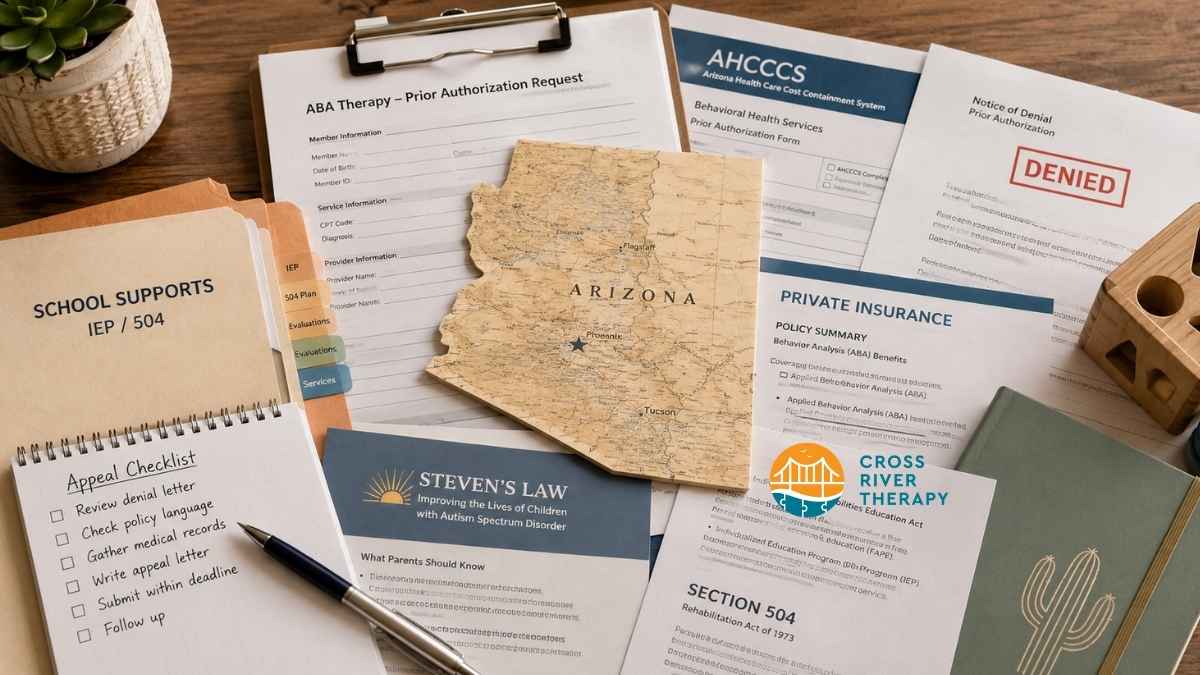
Arizona Autism Laws for ABA Coverage and School Rights
Arizona autism laws for ABA coverage vary by plan. Families can check insurance, appeal options, and school rights.

ABA Therapist Salary in Arkansas for RBTs and BCBAs
Compare ABA therapist salary in Arkansas by role. See how paid hours and benefits affect earnings before applying.

5 Autism Support Groups and Family Resources in New Mexico
Autism support groups in New Mexico connect families. Local resources offer events, parent support, and school help.

Where to Get an Autism Evaluation in New Mexico
Autism evaluation options in New Mexico include UNM and NMSU. Age and referral details help parents prepare.

7 North Carolina Autism Resources to Contact Before ABA Therapy Starts
Autism resources North Carolina families can call for diagnosis, early intervention, rights, and parent support. Start ABA intake with Cross River.

Does Indiana Medicaid Cover ABA Therapy? A Parent Checklist
Indiana Medicaid ABA therapy may cover care for eligible children. The checklist covers coaching and renewals.

How to Apply for the New Mexico DD Waiver
Your NM DD waiver application starts with state intake. The steps cover records, submission, and enrollment.

Does Insurance Cover ABA Therapy in New Jersey?
ABA therapy insurance in New Jersey varies by plan. Learn what NJ FamilyCare covers and how to check costs.

How ABA Therapy Builds Communication for Nonverbal Children Without Forcing Speech
ABA therapy communication for nonverbal children starts with AAC, signs, and daily routines. See how kids ask, refuse, choose, and get help.

How to Start ABA Therapy in New Jersey With a Checklist
Your guide explains how to start ABA therapy in New Jersey. A first-call checklist covers records and next steps.

How to Get an Autism Evaluation in Arkansas Before Starting ABA Therapy
How to get an autism evaluation in Arkansas starts with a referral, provider choice, and key records. Use this parent checklist before ABA intake.