








Best ways to support therapy generalization in public settings
Strategies for Effective Generalization of Therapy Skills in Daily Life


Understanding Therapy Generalization in Real-World Contexts
Therapy success is often measured by a client’s ability to apply learned skills beyond the clinical setting. Ensuring this transfer, known as generalization, requires specific strategies that promote skill use across diverse environments and situations. This article explores effective methods and best practices to support therapy generalization, helping individuals lead more independent and fulfilling lives.
Methods to Promote Transfer of Skills in Natural Environments
What educational methods promote the transfer of therapy skills in real-world situations?
Promoting the transfer of therapy skills requires a strategic approach that emphasizes real-life applicability. Natural Environment Training (NET) stands out as a primary method. This approach involves teaching skills in the actual settings where individuals typically perform daily activities, making learning more relevant and easier to generalize.
Incorporating visual supports, such as picture schedules or cue cards, helps reinforce skills in diverse situations. Engaging activities like play therapy not only motivate learners but also create opportunities for practicing skills in dynamic, natural contexts.
Technology, including mobile apps and tablets, offers flexible tools for practice and reinforcement outside therapy sessions. These digital resources can track progress, provide prompts, and encourage independent use of skills in various environments.
Explicitly teaching the principles of transfer is essential. This includes broadening responses and stimuli so skills are not linked to specific cues or settings. Training caregivers and educators is especially important; they can facilitate opportunities for practice and reinforce skills across multiple contexts.
Regular assessment and personalized strategies help determine the most effective techniques for each individual. Using models like the Four-Quadrant Model of Facilitated Learning can guide professionals in selecting specific, targeted activities that support healthy skill transfer. Collaboration with families and educational staff ensures consistency and reinforces the importance of practicing skills in everyday life.
By combining structured training with flexible, varied practice and involving key stakeholders, practitioners can significantly enhance the likelihood that individuals will apply their newly acquired skills broadly and confidently in real-world situations.
Techniques to Facilitate Skill Application Outside Clinical Settings
What techniques facilitate the application of therapeutic gains outside clinical environments?
Helping individuals apply their new skills in everyday life is a vital part of successful therapy. Several strategies can be employed to ensure that the benefits of therapy transfer beyond the controlled environment of the clinic.
Explicit instruction about transfer concepts is essential. Clients should be taught about the idea of transfer — understanding when and how to use their skills in different situations. This awareness helps them recognize real-world opportunities for applying what they have learned.
Practicing skills in varied settings is another effective approach. Therapists encourage clients to try their skills in different real-life contexts or simulated environments that resemble everyday situations. This approach broadens the client’s experience and reinforces the versatility of their skills.
Incorporating prompts, cues, and homework assignments also assists in generalization. Visual cues, reminders, or specific tasks to complete outside therapy sessions help clients remember and practice their skills regularly. These tools act as nudges that prompt application when needed.
Fostering self-awareness and feedback mechanisms plays a crucial role. Clients are guided to observe their own performance and recognize successful attempts or areas needing improvement. Receiving constructive feedback enhances their confidence and ability to adapt skills across scenarios.
Core to these strategies is explicit training and reinforcement. Initially, structured and controlled training builds foundational skills. Over time, increasing flexibility in practice and reducing reinforcement frequency encourages independence, guiding clients toward performing skills reliably on their own.
Ultimately, teaching how to generalize skills is vital, especially for individuals with special needs. It supports their ability to adapt to various challenges and succeed in multiple settings. By combining these methods — explicit teaching, varied practice, prompts, self-awareness, and thoughtful reinforcement — therapists equip clients with the tools to thrive outside the therapy room.
Helping Individuals Apply Skills in Everyday Public Settings
How can therapy practitioners help individuals apply therapeutic skills to everyday public settings?
Therapists play a vital role in guiding individuals to transfer their learned skills from therapy sessions to real-world environments. They do this by customizing interventions based on each person's specific needs and life goals, ensuring that the strategies are relevant and practical.
One effective approach is using cognitive-behavioral therapy (CBT), acceptance and commitment therapy (ACT), or behavioral activation (BA) to develop concrete coping mechanisms that clients can use outside therapy. These strategies are reinforced through gradual exposure, allowing individuals to face real-life situations step-by-step, building confidence while maintaining a sense of safety.
Integrating techniques such as role-playing helps simulate public scenarios, giving clients a safe way to practice responses before encountering these situations in daily life. Homework assignments encourage ongoing practice, while self-monitoring tools help clients track their progress and identify areas needing improvement.
Involving family members or caregivers ensures consistent support and reinforces the use of skills across various settings. The collaboration among all involved promotes more successful generalization.
Therapists also provide ongoing feedback, adjusting strategies as needed and maintaining flexible treatment plans. This dynamic approach helps keep interventions relevant and effective for navigating complex, unpredictable environments.
Ultimately, the goal is to equip individuals with the confidence and skills necessary to manage their anxiety and other issues independently across different public settings.
| Strategy | Description | Focus Area |
|---|---|---|
| Tailoring interventions | Personalizing therapy methods to individual needs | Customized coping strategies |
| Gradual exposure | Small steps toward feared situations to boost confidence | Building resilience in real contexts |
| Role-playing, homework, self-monitoring | Practice and reinforcement outside therapy sessions | Skill transfer, accountability |
| Family and caregiver involvement | Encouraging consistent support across all environments | Skill generalization, support network |
| Ongoing feedback and flexibility | Adjusting plans based on progress and challenges | Adaptation to changing needs |
Providing these layered strategies promotes the effective application of therapeutic skills, making a lasting impact in real-world scenarios for individuals with anxiety or other challenges.
Supporting and Sustaining Skill Generalization in Various Environments
Practicing Skills Across Different Environments with Various Partners
To effectively generalize skills learned in therapy, individuals need opportunities to practice them across diverse settings. This includes different public places, community settings, and with various people such as family, teachers, and peers. By exposing individuals to a range of stimuli and social partners, they learn to adapt skills beyond the structured therapy environment, encouraging greater independence.
Incorporating Real-World Activities and Routines
Engaging in everyday activities helps learners see the relevance of their skills. Integrating therapy practices into routines such as grocery shopping, visiting parks, or attending community events fosters natural learning. This real-world application encourages the transfer of skills into everyday life, making them more meaningful and sustainable.
Engaging Family and Community for Reinforcement
Family members and community caregivers play a vital role in reinforcing skills across settings. Training them to implement consistent strategies ensures ongoing support outside therapy sessions. This collective approach helps maintain skill development and enhances the likelihood of behavior generalization.
Use of Technology Like Apps and Interactive Tools
Modern technology offers valuable tools for promoting generalization. Apps, digital games, and interactive programs can simulate real-life scenarios, providing additional practice opportunities. These tools often include prompts and feedback, aiding learners in applying skills accurately in varied contexts.
Teaching Self-Monitoring and Visual Supports
Encouraging individuals to self-monitor their progress builds independence. Visual supports such as checklists, social stories, and cue cards serve as reminders and guides in unfamiliar situations. Teaching self-evaluation strategies helps individuals recognize when and how to use their skills independently.
| Strategy | Purpose | Example | Additional Notes |
|---|---|---|---|
| Varying settings and partners | Promote stimulus and response generalization | Practice shopping with different people | Ensures skills transfer across environments |
| Incorporating daily routines | Embeds skills into everyday life | Using a list during grocery shopping | Makes skills contextually relevant |
| Involving family and community | Reinforces learning and consistency | Family practicing social interactions | Strengthens support system |
| Using technology | Enhances practice and engagement | Educational apps simulating public places | Provides additional feedback |
| Visual supports and self-monitoring | Promotes independence | Using visual checklists for tasks | Builds self-efficacy and independence |
Effective skill generalization requires intentional strategies that extend learning beyond controlled settings. Progression from structured training to flexible, real-world application enables individuals, especially those with special needs, to adapt their skills in various situations, fostering greater independence and success.
Best Practices for Ensuring Lasting Skill Generalization
What are best practices for supporting the generalization of therapy skills across various environments?
Supporting the transfer of learned skills from therapy to everyday life is crucial for lasting improvement, especially for individuals with anxiety disorders or special needs. One of the most effective approaches involves practicing skills in multiple settings and with different partners. This variety helps individuals adapt their skills to different social and environmental contexts, making the behaviors more flexible and reliable.
Incorporating real-world activities, daily routines, and natural social situations during training enhances the relevance and meaningful application of skills. For example, practicing social interactions during community outings or role-playing common scenarios at home prepares individuals for similar situations outside therapy.
Involving significant others, such as family members and support networks, creates ongoing opportunities for practice and reinforcement outside structured sessions. Family members can model behaviors, provide encouragement, and reinforce skills as part of daily life.
Using technology and visual supports can also boost generalization. Apps, videos, and interactive tools engage clients and help them recall skills in different settings. Visual supports like charts or gestures serve as cues that aid recognition and remember routines or responses when faced with new situations.
Gradually introducing a variety of contexts helps foster natural generalization. Initial training should be structured and controlled, focusing on mastering fundamental skills, then progressively include more diverse environments to encourage autonomous application.
Adjusting reinforcement schedules is a vital part of this process. Initially, frequent praise or rewards motivate learning. As skills become more consistent, reinforcement can be made less frequent to support independent performance.
By combining these strategies—practice in varied settings, involvement of support persons, technological tools, visual cues, and gradually increasing complexity—therapists can promote durable and flexible skill use. This approach encourages individuals, especially those with special needs, to adapt successfully across different environments and social situations, ultimately leading to greater independence and a broader capacity to handle life’s challenges.
Fostering Sustainable Skill Use in Everyday Life
Sustaining the generalization of therapy skills requires a comprehensive approach that combines varied practice, caregiver involvement, naturalistic teaching, and supportive tools. By systematically implementing these strategies, practitioners and caregivers can significantly increase the likelihood that individuals will perform skills effectively and independently across diverse real-world settings, ultimately leading to greater autonomy and improved quality of life.
References
- How psychologists help with anxiety disorders
- Expert Columns: Generalization
- Types of Generalization in ABA
- How Generalization is Used to Teach in ABA Therapy
- Programming for generalization: Confronting known ...
- Generalization in ABA Therapy: an Overview
- Response Generalization in ABA: What You Should Know
Recent News
Related articles

ABA Therapist Salary in Arkansas: What BCBAs and RBTs Actually Earn in 2026
ABA therapist salary Arkansas figures compare RBT and BCBA rates, benefits, guaranteed hours, and contract terms. Explore careers at Cross River.

5 Autism Support Groups and Family Resources in New Mexico Alongside ABA Therapy
Autism support groups New Mexico families can use offer peer support, local events, and school help. Cross River can explain ABA therapy options.

Where to Get an Autism Evaluation in New Mexico Before Starting ABA Therapy
Autism evaluation New Mexico options include UNM, NMSU, FIT, and private providers. Compare providers, records, and ABA steps with Cross River.

7 North Carolina Autism Resources to Contact Before ABA Therapy Starts
Autism resources North Carolina families can call for diagnosis, early intervention, rights, and parent support. Start ABA intake with Cross River.

Does Indiana Medicaid Cover ABA Therapy? A Step-by-Step Eligibility Checklist for Parents
Medicaid ABA therapy Indiana covers eligible children under 21 with prior authorization. Your five-step coverage review can start with Cross River.

How to Apply for New Mexico’s DD Waiver While Starting ABA Therapy
Autism waiver New Mexico applications need DD Waiver records and proof of daily support needs. Your next step is to start ABA intake with Cross River.

Is ABA Therapy Covered by Insurance in New Jersey? What Every Parent Should Know
ABA therapy insurance New Jersey may cover medically necessary care based on plan type, network, and authorization. Verify benefits with Cross River.

How ABA Therapy Builds Communication for Nonverbal Children Without Forcing Speech
ABA therapy communication for nonverbal children starts with AAC, signs, and daily routines. See how kids ask, refuse, choose, and get help.

How to Start ABA Therapy in New Jersey With a First-Call Checklist
How to start ABA therapy in New Jersey begins with records, insurance details, and intake questions. Use this first-call checklist before you call.

How to Get an Autism Evaluation in Arkansas Before Starting ABA Therapy
How to get an autism evaluation in Arkansas starts with a referral, provider choice, and key records. Use this parent checklist before ABA intake.
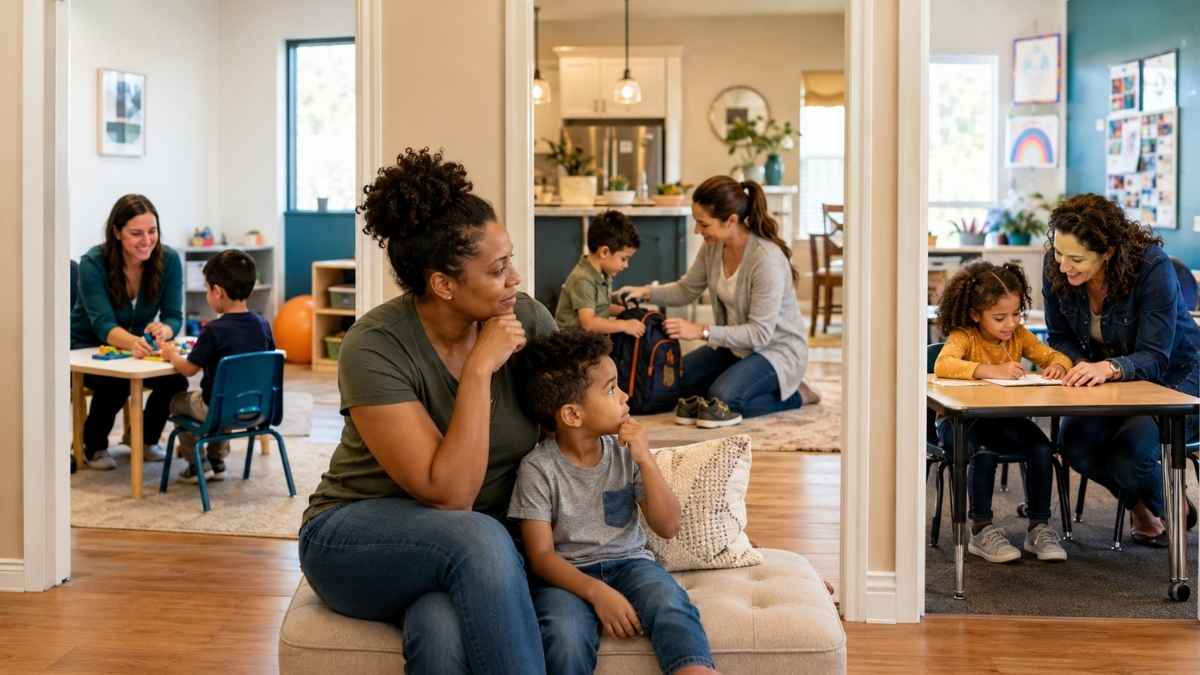
Center-Based vs In-Home vs School-Based ABA Therapy and How to Choose the Right Fit
Center-based, in-home, and school-based ABA therapy each fit different goals, routines, and settings. Compare options before your intake call.

Early Signs of Autism: A Guide for North Carolina Parents
Early signs of autism North Carolina parents notice can include speech, play, sensory, or skill loss patterns. See what to track before screening.