







Can Cats Have Autism? Signs Of Autism In Cats
In a nutshell, cats can't have autism, but they can be diagnosed with other conditions.


Can cats have autism? This is a commonly asked question that might have crossed your mind as you try to understand your cat's unique behaviors. Many pet lovers and experts have discovered similarities between special-needs cats and people with autism.
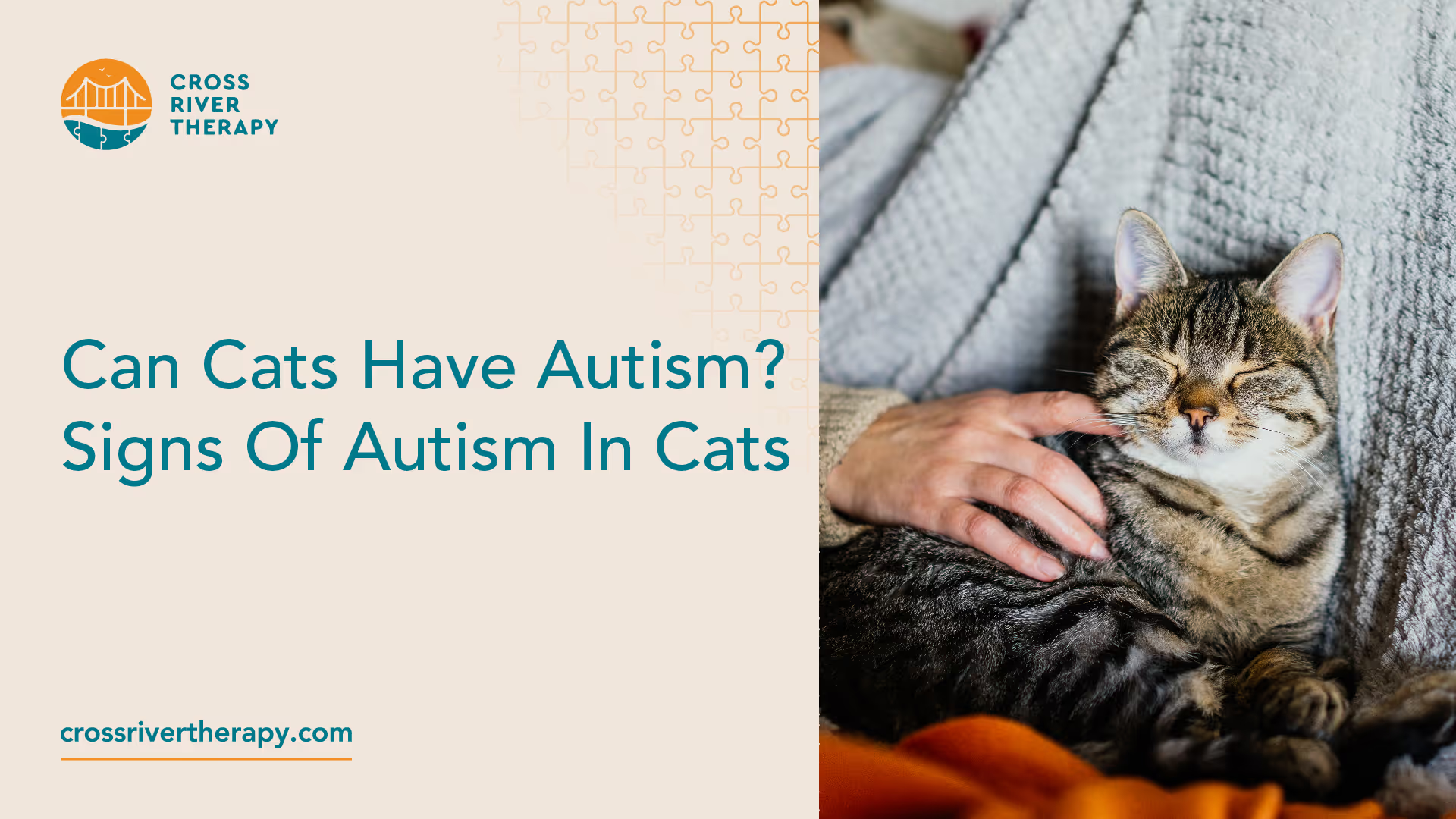
There are several behaviors in cats that are similar to those found in humans with autism, including:
- Avoiding eye contact
- Repeating the same actions
- Not wanting to be touched or held
Can Cats Have Autism?
Cats can't have autism, but they can be diagnosed with other conditions, and like humans and other animals, some cats have special needs.
Some special-needs cats have mental impairments which may result from birth defects, illness, or accidents. Some cats even have Down syndrome-type symptoms.
You should check in with your veterinarian to find the exact causes and learn how to properly care for your cat.
Can Cats Have ADHD?
Some vets and animal experts agree that cats can have ADHD. However, the condition isn't recognized by all.
Can Cats Have Special Needs?
Yes, cats can have special needs. You might see cats with special needs if you visit at animal shelter. Some cats require additional attention due to a variety of ailments such as amputation, deafness, and blindness.
Can Cats Have Asperger's Syndrome?
No, cats can't have asperger's syndrome.
Why Do Cats Act Autistic?
Cats with autistic behaviors usually have anxiety or OCD. This disorder often occurs in indoor cats and can be related to environmental changes or stress.
Recent News
Related articles

ABA Therapist Salary in Arkansas: What BCBAs and RBTs Actually Earn in 2026
ABA therapist salary Arkansas figures compare RBT and BCBA rates, benefits, guaranteed hours, and contract terms. Explore careers at Cross River.

5 Autism Support Groups and Family Resources in New Mexico Alongside ABA Therapy
Autism support groups New Mexico families can use offer peer support, local events, and school help. Cross River can explain ABA therapy options.

Where to Get an Autism Evaluation in New Mexico Before Starting ABA Therapy
Autism evaluation New Mexico options include UNM, NMSU, FIT, and private providers. Compare providers, records, and ABA steps with Cross River.

7 North Carolina Autism Resources to Contact Before ABA Therapy Starts
Autism resources North Carolina families can call for diagnosis, early intervention, rights, and parent support. Start ABA intake with Cross River.
Does Indiana Medicaid Cover ABA Therapy? A Step-by-Step Eligibility Checklist for Parents
Medicaid ABA therapy Indiana covers eligible children under 21 with prior authorization. Your five-step coverage review can start with Cross River.
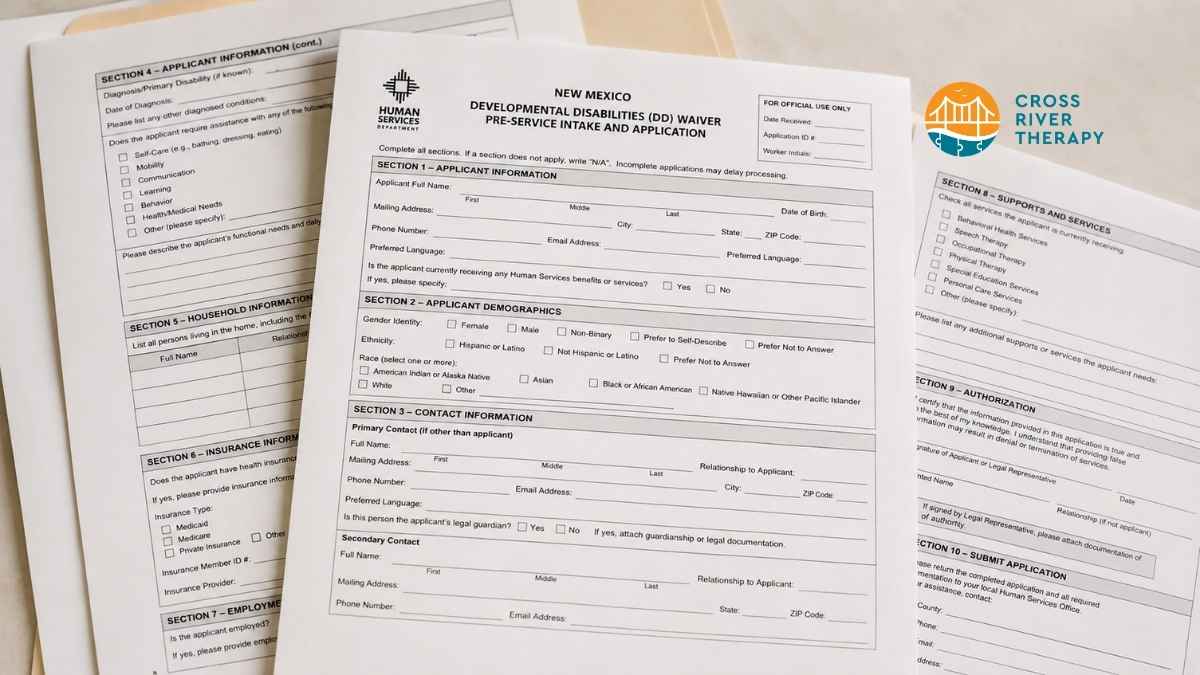
How to Apply for New Mexico’s DD Waiver While Starting ABA Therapy
Autism waiver New Mexico applications need DD Waiver records and proof of daily support needs. Your next step is to start ABA intake with Cross River.

Is ABA Therapy Covered by Insurance in New Jersey? What Every Parent Should Know
ABA therapy insurance New Jersey may cover medically necessary care based on plan type, network, and authorization. Verify benefits with Cross River.

How ABA Therapy Builds Communication for Nonverbal Children Without Forcing Speech
ABA therapy communication for nonverbal children starts with AAC, signs, and daily routines. See how kids ask, refuse, choose, and get help.

How to Start ABA Therapy in New Jersey With a First-Call Checklist
How to start ABA therapy in New Jersey begins with records, insurance details, and intake questions. Use this first-call checklist before you call.

How to Get an Autism Evaluation in Arkansas Before Starting ABA Therapy
How to get an autism evaluation in Arkansas starts with a referral, provider choice, and key records. Use this parent checklist before ABA intake.

Center-Based vs In-Home vs School-Based ABA Therapy and How to Choose the Right Fit
Center-based, in-home, and school-based ABA therapy each fit different goals, routines, and settings. Compare options before your intake call.

Early Signs of Autism: A Guide for North Carolina Parents
Early signs of autism North Carolina parents notice can include speech, play, sensory, or skill loss patterns. See what to track before screening.