



Clean energy for neurodiverse families
Exploring Sustainable Solutions for Autism Communities

Understanding Clean Energy for Neurodiverse Families
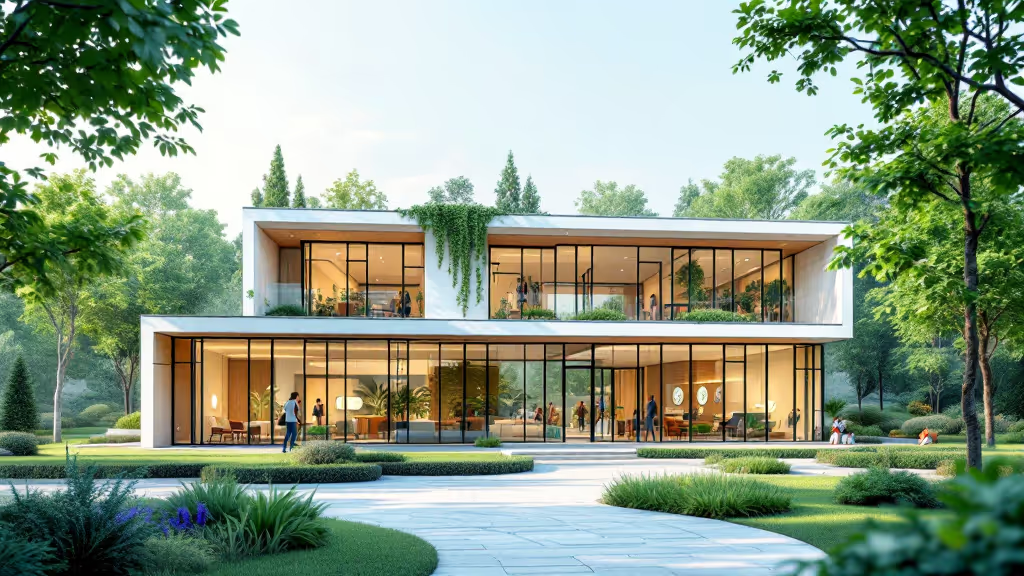
As families with neurodiverse members, particularly those affected by autism, strive for better living conditions and well-being, clean energy solutions present a promising path. By reducing pollutants, decreasing costs, and enhancing sensory-friendly home environments, renewable energy can play a crucial role in supporting the unique needs of neurodiverse families.
The Basics of Clean Energy and Its Benefits

What is clean energy and how does it benefit neurodiverse families?
Clean energy, often referred to as renewable energy or green power, comes from natural sources that are continuously replenished, such as sunlight, wind, and water. This type of energy plays a vital role in creating healthier living environments, especially for neurodiverse families who may have heightened sensitivities to air quality and other environmental factors.
Benefits of Clean Energy for Neurodiverse Families:
- Improved Air Quality: Utilizing clean energy sources significantly reduces air pollution, which is particularly beneficial for individuals with respiratory issues or sensitivities often found in those on the autism spectrum.
- Economic Savings: Families can save on utility bills—up to $150 monthly—allowing them to redirect these funds towards essential services like therapy and educational resources. Over time, these savings can lead to an annual reduction of up to $500.
- Enhanced Comfort and Safety: Smart technologies, such as programmable lighting and temperature control systems, can create sensory-friendly environments that minimize discomfort and promote emotional well-being in autistic individuals.
Investment in renewable energy sources not only fosters sustainability but also cultivates inclusivity and emotional security for families managing autism care. Access to cleaner energy can ease financial pressures and improve overall quality of life, making it a transformative choice for neurodiverse communities.
Sustainable Practices to Support Neurodiverse Households

What are sustainable practices and how can they support neurodiverse households?
Sustainable practices are strategies that prioritize the efficient use of resources to cater to today's needs while safeguarding the ability of future generations to do the same. For neurodiverse households, adopting clean energy solutions plays a crucial role in enhancing living conditions.
By integrating renewable energy sources like solar power, families can experience significant improvements in air quality. This is particularly important for neurodivergent individuals who are often sensitive to environmental factors. Cleaner air contributes to better health and overall well-being, fostering a nurturing space for those on the autism spectrum.
Moreover, transitioning to energy-efficient appliances and smart home technologies allows for significant savings on utility bills, averaging $50 to $150 per month. This financial relief can be redirected towards vital services, such as therapy and educational resources essential for individuals with autism.
Energy efficiency and cost savings
The implementation of energy conservation measures, such as utilizing programmable lighting and smart thermostats, further enhances comfort in the home. These technologies help regulate sensory stimuli, creating a calming environment that is crucial for reducing overload in neurodiverse individuals.
The potential for long-term cost savings from renewable energy can amount to thousands of dollars over the years. For example, autism care facilities may save over $40,000 annually by adopting solar technologies. Such investments not only support sustainable practices but also improve the quality of life for families navigating autism-related challenges.
By embedding these green strategies into their homes, neurodiverse families pave the way for a healthier, more inclusive living space, providing both economic and emotional support for their loved ones.
Implementing Clean Energy for Sensory and Emotional Needs
How can clean energy solutions be implemented to cater to the sensory and emotional needs of neurodiverse individuals?
Implementing clean energy solutions for neurodiverse individuals involves crafting environments that bolster comfort and curb sensory overload. By taking advantage of renewable energy technologies like solar power, we can markedly enhance air quality and minimize environmental pollutants. This is particularly beneficial for individuals with autism, who may exhibit heightened sensitivities to these factors.
Integrating smart technologies plays a crucial role in creating a soothing atmosphere. Features such as adjustable lighting and temperature control cater to specific sensory needs. For instance, using LED bulbs can provide soft, gentle lighting that fosters tranquility, while smart thermostats maintain stable and comfortable room temperatures.
What are the cost implications and strategies for neurodiverse families?
Transitioning to clean energy yields substantial financial benefits for families. On average, families can save between $50 and $150 monthly on utility bills, which can be redirected towards crucial therapies and educational resources that enhance the lives of individuals with autism.
Financial incentives, including government grants and tax credits, make the adoption of renewable energy technologies more accessible, allowing families to implement these strategies without overwhelming financial strain. As these eco-friendly solutions reduce living costs, families can foster supportive, sensory-friendly environments that prioritize both emotional well-being and sensory comfort.
Guidance and Resources for Clean Energy Transitions

What resources are available for guidance on clean energy solutions for neurodiverse communities?
Several resources exist to support neurodiverse communities in transitioning to clean energy solutions. Understanding energy efficiency is crucial, as it can lead to lower utility costs and improved living conditions. For instance, renewable technologies, especially solar power, create environments that enhance comfort and cater to sensory sensitivities.
Community colleges play a pivotal role by offering specialized training programs. These initiatives empower neurodiverse individuals, allowing them to gain advocacy skills and pursue careers within the renewable energy sector. They not only learn about energy solutions but also contribute to their communities by promoting sustainable practices.
Furthermore, numerous financial incentives are available to ease the financial burden of clean energy installations. State and federal programs can provide rebates and tax credits, helping to lower the upfront costs of transitioning to renewable technologies, ensuring these solutions are more attainable for neurodiverse families.
What education and financial support options are available for clean energy adoption?
In addition to training programs, education regarding the benefits and maintenance of clean energy systems is crucial. Workshops and community seminars can provide families with information on energy-efficient practices, along with updates on financial aid programs that support the transition to clean energy.
Financial support programs are also vital. They can include grants and subsidies specifically aimed at families with neurodiverse members. These initiatives help facilitate access to essential services while promoting sustainability. Together, education and financial resources create a comprehensive support system that encourages and facilitates clean energy adoption in neurodiverse communities.
Clean Energy's Economic Impact on Neurodiverse Families
How does investing in renewable energy impact the economic stability of neurodiverse families?
Investing in renewable energy significantly enhances the economic stability of neurodiverse families through various avenues. Firstly, families often see substantial reductions in their energy bills—reporting savings between $50 to $150 monthly—allowing them to redirect these funds towards essential services like therapy and educational resources for their members on the autism spectrum.
Enhanced Well-being Through Clean Air
Furthermore, renewable energy solutions improve air quality by lowering pollutants, which is beneficial for individuals with autism who may have heightened sensitivities to environmental factors. Better air quality has been linked to improved cognitive function and overall well-being, creating a nurturing atmosphere less prone to triggering anxiety or sensory overload.
Job Creation and Community Support
The expansion of clean energy projects fosters local economic growth by creating jobs, providing employment opportunities that directly benefit neurodiverse families. These jobs not only contribute to household incomes but also promote community engagement in sustainability initiatives.
Creating Supportive Environments
By integrating smart technologies that enhance sensory-friendly environments, families can cultivate homes that promote comfort and stability. Features like adjustable lighting and climate controls help mitigate sensory overload, which is crucial for individuals with autism, thereby further supporting their emotional and economic well-being.
In conclusion, renewable energy serves as a powerful catalyst for improved economic conditions and community resilience for families navigating the complexities of autism care.
Creating Sensory-Friendly Living Environments
Design Principles for Autism-Friendly Spaces
Creating an autism-friendly environment involves careful consideration of sensory stimuli. Key design principles include:
- Adjustable Lighting: Using programmable lighting systems helps manage brightness levels, minimizing glare and creating a soothing atmosphere.
- Noise Reduction: Incorporating acoustic panels and soft flooring can significantly reduce noise, which is essential for individuals with sound sensitivities.
- Natural Elements: Integrating natural light through large windows promotes well-being, as exposure to sunlight is linked to improved mood and cognitive function.
Smart Technologies in Home Environments
Smart technologies play a vital role in enhancing comfort for neurodiverse individuals.
- Temperature Control: Smart thermostats allow for precise regulation of indoor climate, accommodating individual preferences and reducing sensory overload.
- Energy-Efficient Appliances: Using appliances that support clean energy not only lowers utility costs but also contributes to a healthier living environment.
- Customizable Features: Home automation systems can adjust lighting and temperature according to personal needs, creating a calming sanctuary for autistic family members.
Indoor Air Quality and Health Benefits
Impact of clean energy on air quality
Clean energy sources like solar and wind power significantly improve indoor air quality by reducing reliance on fossil fuels, which emit harmful pollutants. Transitioning to renewable energy can lead to a notable drop in greenhouse gas emissions. For autistic individuals, who may have heightened sensitivities to environmental factors, cleaner air is essential for maintaining a calm and supportive environment.
Health improvements for neurodiverse individuals
Better air quality directly correlates with improved respiratory health and cognitive function. Neurodiverse individuals, particularly those with Autism Spectrum Disorder (ASD), often experience exacerbated symptoms due to poor air quality. By adopting clean energy solutions, families can create healthier living spaces that enhance emotional regulation and overall well-being, fostering an environment conducive to effective therapies and daily activities.
Economic and Health Advantages of Solar Energy
Solar Energy Cost Savings
Transitioning to solar energy can lead to substantial financial benefits for families in the autism community. In fact, families can save anywhere from $50 to $150 monthly on their utility bills after adopting solar power technologies. Over the course of a year, these savings can amount to a significant $600 to $1,200—a budget that can be redirected towards essential therapies and educational resources for autistic family members. Furthermore, the installation of solar panels can reduce monthly utility expenses by 20-40%, translating into savings of $20,000 to $40,000 over 20 years for autism care facilities.
Health Benefits for Neurodiverse Communities
The impact of solar energy extends beyond finances; it also improves health outcomes, particularly for neurodiverse individuals sensitive to environmental factors. Utilizing clean energy sources like solar power enhances air quality by cutting down on pollutants and greenhouse gas emissions. These improvements correlate with better respiratory health and cognitive function, creating a calmer and healthier living environment for those on the autism spectrum. Cleaner air leads to reduced anxiety and improved overall well-being, fostering a supportive space for skill development and therapy.
Smart Technologies for Increased Comfort
Use of Smart Thermostats and Lighting
Smart home technologies play a crucial role in improving comfort for individuals on the autism spectrum. By integrating smart thermostats, families can maintain optimal temperature levels, which is vital in managing sensory sensitivities. These devices allow for adjustments that cater to personal comfort preferences, thus creating a more conducive living environment.
Adjustable lighting systems can also be implemented to enhance sensory experiences. With programmable smart lighting, families can regulate brightness and reduce glare, easing potential discomfort from harsh lighting. Such tailored adjustments support emotional well-being by minimizing sensory overload, especially in shared living spaces.
Enhancing Comfort for Individuals with Autism
The use of these smart technologies fosters a calm and stable indoor atmosphere, crucial for individuals who may struggle with anxiety or sensory overload. Additionally, features such as automated lighting schedules contribute to a predictable routine, further supporting the unique needs of neurodiverse households. Overall, the investment in smart technologies not only promotes comfort but also enhances the quality of life for families navigating challenges associated with autism.
Community Initiatives Supporting Sustainability
Community Solar and Educational Programs
Community solar initiatives provide a fantastic opportunity for neurodiverse families. These programs allow multiple households to share the benefits of a single solar installation, reducing costs by streamlining energy access. Families can save significantly on their utility bills, typically between $50 to $150 each month, and redirect those funds towards essential autism-related therapies and educational resources.
Moreover, educational programs associated with these initiatives equip neurodiverse individuals with the knowledge and skills needed to engage in the renewable energy sector. This involvement not only fosters a sense of empowerment but also nurtures inclusivity within the community.
Benefits for Neurodiverse Families
Transitioning to community-renewable energy solutions promotes financial sustainability and comfort in living environments. These clean energy options improve indoor air quality and reduce noise pollution, addressing specific sensory sensitivities often experienced by individuals with autism. This way, the resulting calming environments contribute to improved well-being and emotional regulation.
Financial Aid and Incentives for Renewable Energy
Grants and Tax Credits for Installation
Renewable energy solutions, such as solar panels, can be a significant investment for families. Fortunately, many grants and tax credits are available to ease this burden. Programs like the federal solar tax credit can cover a substantial fraction of installation costs, effectively lowering the financial barrier to transition to clean energy. State-specific rebates also contribute to making renewable energy technologies more accessible for families in need, especially those managing autism care, enabling them to utilize funds for crucial services.
Economic Resilience for Neurodiverse Families
The integration of clean energy fosters economic resilience among neurodiverse families. Families can save between $600 and $1,200 annually from reduced energy bills, allowing them to allocate additional resources toward essential therapies and educational support. These savings, powered by financial aid, not only ease economic stress but also promote long-term investment in healthier environments for their autistic family members.
Long-Term Savings Through Clean Energy Adoption
Cost savings over time
Transitioning to clean energy significantly impacts the finances of neurodiverse families. On average, families can save between $50 to $150 monthly on their utility bills, leading to an annual savings of approximately $600 to $1,200. Such savings can alleviate financial burdens that typically accompany autism care, allowing families to redirect resources towards therapy and education, which often cost around $60,000 annually.
Investments in sustainable practices
Investing in solar panels and energy-efficient systems not only reduces utility costs but can lead to long-term savings of $20,000 to $40,000 over a 20-year period. This financial relief supports the operational sustainability of autism care facilities, enabling them to allocate more funds towards essential services. Furthermore, community solar projects empower families, fostering economic resilience while promoting green practices that benefit both the individuals served and the broader environment.
Embracing Clean Energy for a Supportive Future
Adopting clean energy solutions presents a significant opportunity for neurodiverse families to thrive. These environmental advancements not only facilitate healthier and more comfortable living spaces but also enable considerable economic benefits. With the right resources, guidance, and community support, clean energy can pave the way for a more inclusive and sustainable future, ensuring that neurodiverse families flourish by reducing financial pressures and improving overall quality of life.
References
- Clean Energy for Neurodiverse Families | Discovery ABA
- Clean Energy for Neurodiverse Families - At-Home ABA Therapy ...
- Clean Energy Positive Impact on Neurodiverse Communities
- Brighter Tomorrows: Clean Energy Strategies for Neurodiverse ...
- Harnessing Clean Energy Strategies - B Above Services
- Clean Energy for Neurodiverse Families - At-Home ABA Therapy ...
- Clean Energy for Neurodiverse Families - Total Care ABA Therapy
Recent News
Related articles

6 Arkansas Medicaid ABA Therapy Rules Families Need to Know
Arkansas Medicaid ABA therapy has age, diagnosis and approval rules. Families can check six requirements before care.

Arizona Autism Laws Every Parent Should Know Before Starting ABA Therapy
Autism laws Arizona parents should know cover ABA insurance, AHCCCS appeals, IEPs, and Section 504 rights. Check ABA coverage with Cross River.

ABA Therapist Salary in Arkansas: What BCBAs and RBTs Actually Earn in 2026
ABA therapist salary Arkansas figures compare RBT and BCBA rates, benefits, guaranteed hours, and contract terms. Explore careers at Cross River.

5 Autism Support Groups and Family Resources in New Mexico Alongside ABA Therapy
Autism support groups New Mexico families can use offer peer support, local events, and school help. Cross River can explain ABA therapy options.

Where to Get an Autism Evaluation in New Mexico Before Starting ABA Therapy
Autism evaluation New Mexico options include UNM, NMSU, FIT, and private providers. Compare providers, records, and ABA steps with Cross River.
7 North Carolina Autism Resources to Contact Before ABA Therapy Starts
Autism resources North Carolina families can call for diagnosis, early intervention, rights, and parent support. Start ABA intake with Cross River.
Does Indiana Medicaid Cover ABA Therapy? A Step-by-Step Eligibility Checklist for Parents
Medicaid ABA therapy Indiana covers eligible children under 21 with prior authorization. Your five-step coverage review can start with Cross River.
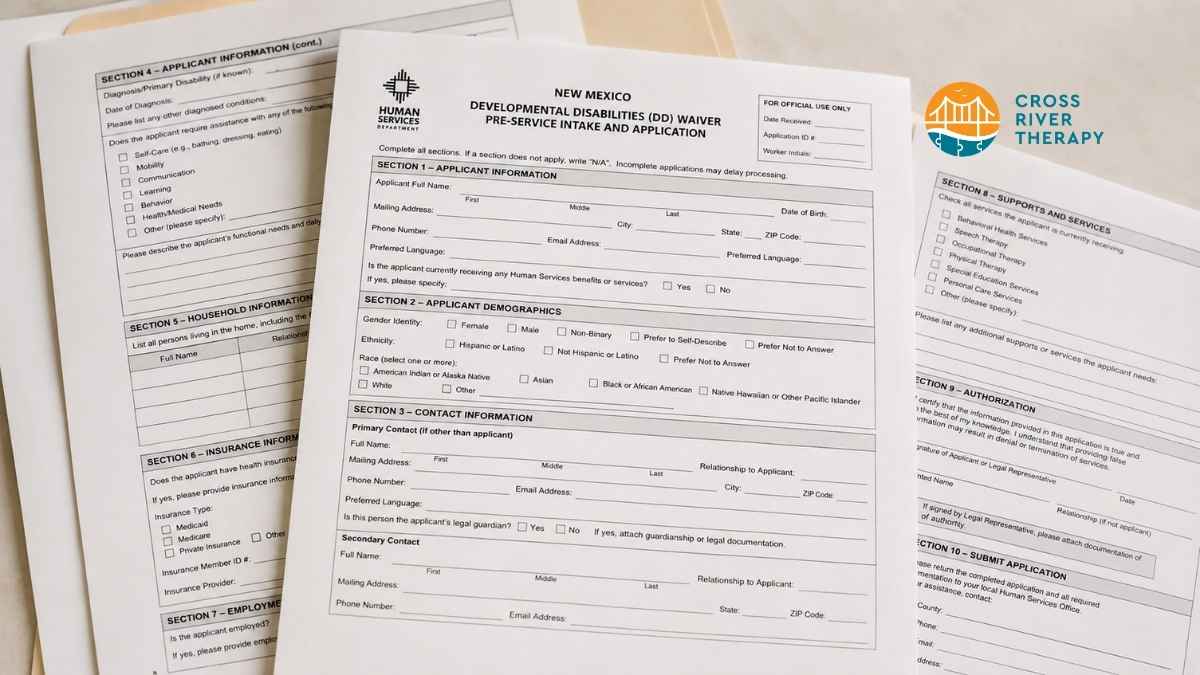
How to Apply for New Mexico’s DD Waiver While Starting ABA Therapy
Autism waiver New Mexico applications need DD Waiver records and proof of daily support needs. Your next step is to start ABA intake with Cross River.

Is ABA Therapy Covered by Insurance in New Jersey? What Every Parent Should Know
ABA therapy insurance New Jersey may cover medically necessary care based on plan type, network, and authorization. Verify benefits with Cross River.

How ABA Therapy Builds Communication for Nonverbal Children Without Forcing Speech
ABA therapy communication for nonverbal children starts with AAC, signs, and daily routines. See how kids ask, refuse, choose, and get help.

How to Start ABA Therapy in New Jersey With a First-Call Checklist
How to start ABA therapy in New Jersey begins with records, insurance details, and intake questions. Use this first-call checklist before you call.

How to Get an Autism Evaluation in Arkansas Before Starting ABA Therapy
How to get an autism evaluation in Arkansas starts with a referral, provider choice, and key records. Use this parent checklist before ABA intake.