








Common questions about ABA therapy answered
Exploring the Foundations and Facts of ABA Therapy


Understanding ABA Therapy: A Comprehensive Overview
Applied Behavior Analysis (ABA) is a scientifically supported approach primarily used to improve behaviors and skills in individuals with autism spectrum disorder (ASD) and other developmental challenges. This article addresses common questions, misconceptions, benefits, and methods of ABA therapy to equip families, caregivers, and interested individuals with a thorough understanding of this versatile intervention.
What is ABA therapy and how does it work?
What is ABA therapy and how does it work?
ABA, or Applied Behavioral Analysis, is a scientifically supported approach used to understand and improve behavior. It examines how our environment influences actions and focuses on creating positive changes through specific techniques.
This therapy helps individuals develop essential skills such as communication, social interactions, self-care, and academic abilities. It also aims to reduce behaviors that are harmful or disruptive by understanding their triggers and teaching safer or more functional alternatives.
At its core, ABA relies on proven methods like positive reinforcement, where desirable behaviors are rewarded to encourage repetition. Therapists analyze what comes before and after a behavior—known as antecedents and consequences—to understand and shape behavior effectively.
Every person's therapy plan is unique. Qualified professionals, like Board Certified Behavior Analysts (BCBAs), assess individual needs and create tailored goals. They use ongoing data collection to monitor progress and adjust strategies as needed.
ABA interventions can take place in different settings, such as at home, in clinics, or in community environments. This flexibility helps in generalizing learned skills to real-life situations. Supported by a wealth of research, ABA is regarded as the most effective approach for supporting children with autism and other developmental disorders.
Overall, ABA promotes independence, improves quality of life, and enables individuals to participate more actively in society by systematically teaching meaningful skills and reducing problematic behaviors.
Common misconceptions about ABA therapy
What are common misconceptions about ABA therapy?
Applied Behavior Analysis (ABA) is often misunderstood by those outside the listening. Many believe it is solely a therapy for autism or that its primary goal is to 'cure' autism. In reality, ABA is a broad, evidence-based approach focused on supporting the development of skills like communication, social abilities, and daily living across different populations, not just for autism spectrum disorder.
Some perceive ABA as harsh or rigid, imagining it as a highly structured or robotic process that relies heavily on punishment. However, modern ABA practices are much more flexible and person-centered. They include natural, play-based, and individualized strategies that respect personal, cultural, and emotional backgrounds.
There is confusion about reinforcement and punishment. Many think that reinforcement is a form of bribery, but in ABA, reinforcement involves positive, ethical strategies used to motivate and encourage desired behaviors. These methods aim to develop functional skills organically, often leading to behaviors that become natural rewards.
Some also assume ABA is solely about drilling or uses harsh punishments. In truth, ABA incorporates a wide array of techniques such as Natural Environment Teaching, social skills training, and family involvement. These approaches aim to make learning enjoyable and relevant to real-life situations.
Overall, misconceptions paint ABA as a one-size-fits-all, clinical, and sometimes intrusive intervention. In reality, it is a highly adaptable, tailored practice that emphasizes collaboration, natural behaviors, and the individual's overall well-being.
Benefits of ABA therapy and who can benefit
What are the benefits of ABA therapy and who can benefit from it?
ABA therapy is a scientifically supported approach that helps individuals develop essential skills such as communication, social interaction, self-care, and learning behaviors that improve daily life. It is especially effective for children with autism spectrum disorder (ASD), but it also benefits people with other developmental or behavioral challenges.
One of the most significant advantages of ABA is its ability to reduce harmful or dangerous behaviors by understanding their triggers and teaching safer, more appropriate responses. This often involves strategies like positive reinforcement, which encourages desirable behaviors and aids in skill acquisition.
ABA therapy is versatile and adaptable across all age groups. Early intervention, particularly between ages 2 and 6, is crucial for achieving the best outcomes. During this critical period, children can make meaningful progress in language development, social skills, and independence.
For infants and very young children, direct ABA therapy can support developmental milestones and prevent future challenges. For school-age children and adults, ABA continues to be effective in fostering independence, improving functional skills, and facilitating social integration.
Delivery settings vary depending on individual needs, with options including in-home programs and center-based therapies. The therapy is tailored to each person’s goals, ensuring that interventions address their specific strengths and challenges.
Overall, ABA provides lasting benefits by building vital skills, reducing problematic behaviors, and supporting an individual's ability to navigate everyday environments confidently. Its broad applicability makes it a valuable resource for many facing behavioral or developmental hurdles.
Who can benefit from ABA therapy?
Who can benefit from ABA therapy?
Individuals across different age groups can gain from ABA therapy, including children, adolescents, and adults with autism spectrum disorder (ASD), developmental delays, or behavioral challenges.
ABA therapy is highly customizable to meet each person's unique needs. Its primary goal is to help individuals develop essential skills such as communication, social interactions, and independence in daily routines like toileting, dressing, and self-care.
Early and intensive intervention often yields the most meaningful improvements. For young children, especially between 18 months and 3 years old, ABA can significantly enhance language development, social skills, and behavioral trajectories, sometimes enabling a smoother transition to mainstream education.
Aside from autism, ABA can support individuals with other developmental issues by reducing harmful or dangerous behaviors and encouraging positive, functional behaviors.
Supports are tailored within a structured framework—using positive reinforcement and data-driven strategies—to foster progress in skills like adaptive behavior and social participation.
Adults with various diagnoses, including autism, also benefit from ABA through goals that promote independence and ease in daily life. The therapy’s adaptable nature ensures suitability for all ages, emphasizing skill generalization from clinical or home settings to everyday natural environments.
Overall, anyone interested in structured, evidence-based methods to improve behavioral, communication, or social skills might find ABA therapy beneficial. It is accepted as an effective treatment endorsed by leading health and educational organizations, making it a versatile choice for many individuals seeking developmental growth.
ABA therapy methods and components
What methods and components are involved in ABA therapy?
ABA therapy encompasses a variety of strategies designed to promote skill development and reduce problematic behaviors. One-on-one direct therapy is a cornerstone, providing individualized attention with trained behavior technicians. These professionals implement personalized goals by breaking complex tasks into smaller, manageable steps, making learning achievable and less overwhelming.
In addition to individual sessions, ABA often includes structured social skills groups. These groups are tailored to age and developmental level and focus on skills like sharing, conversation, and teamwork. Facilitated by a behavior technician, these group activities help children practice interacting in social settings.
Interventions are adaptable to different environments, such as homes, clinics, and schools. This flexibility ensures skills learned can generalize to daily life, increasing their practical value.
The key methods in ABA include positive reinforcement — rewarding desired behaviors to encourage their recurrence — and thorough data collection, which tracks progress and guides treatment adjustments. Family training is also integral, helping caregivers implement strategies consistently at home.
Therapy plans are collaboratively developed with input from clients and families, ensuring goals are meaningful and personalized. This comprehensive approach enables ABA to target a broad spectrum of skills, from language and communication to independence and daily living.
In summary, ABA therapy combines direct, tailored interventions with structured social activities, environment-specific strategies, and continuous progress monitoring, all delivered by trained professionals committed to effective and ethical practice.
How long does ABA therapy typically last?
Variability in duration and intensity
The length and intensity of ABA therapy can vary greatly among individuals. Some children may receive as little as 10-15 hours per week, while others may undergo 30-40 hours weekly. The total duration typically depends on the child's unique needs, goals, and how quickly they make progress.
Factors influencing length of therapy
Several elements influence how long ABA therapy lasts. These include the child's age at diagnosis, the severity of developmental delays, behavioral challenges, and initial skill levels. Early intervention, particularly between ages 2 and 6, usually leads to better and more enduring outcomes. Additionally, factors such as family involvement, consistency of therapy, and access to resources also play a role.
Importance of progress monitoring
Regular assessment of progress is essential for tailoring and adjusting treatment plans. Ongoing data collection allows therapists and families to determine if goals are being met or if modifications are needed. This continuous evaluation helps avoid unnecessary therapy duration or intensity, ensuring the intervention remains both effective and efficient.
Most children benefit from a minimum of 1-2 years of consistent ABA therapy. However, many require ongoing support over several years to attain maximum independence and skill generalization. Ultimately, the goal is to support each individual in developing the skills necessary for a safe, functional, and fulfilling life.
Training and qualifications of ABA providers
What qualifications are involved in providing ABA therapy?
Providing effective ABA therapy requires a team of trained professionals. At the forefront are Board Certified Behavior Analysts (BCBAs), who hold specialized degrees and licensure in behavior analysis. BCBAs develop personalized treatment plans, set meaningful goals, and continuously monitor progress, ensuring the therapy addresses the individual’s unique needs.
Supporting the BCBAs are Registered Behavior Technicians (RBTs), who deliver direct intervention to clients. RBTs are trained extensively before working with clients and receive ongoing supervision to maintain high standards of practice.
Role of BCBA and behavior technicians
BCBAs act as the clinical leaders in ABA therapy. They design interventions, interpret behavioral data, and make adjustments to strategies to maximize progress. They also oversee the work of behavior technicians and ensure that interventions are implemented with fidelity.
Behavior technicians, or RBTs, work directly with clients, executing the plans designed by BCBAs. They are the frontline providers who build relationships with clients, teach new skills, and support generalization of learned behaviors.
Training and supervision standards
Both BCBAs and behavior technicians are subject to rigorous training and supervision standards. RBTs must complete initial training that covers ethical practices, data collection, and intervention techniques. They participate in ongoing professional development to keep up with advancements and reinforce ethical standards.
Supervision by qualified BCBAs is critical. They observe, provide feedback, and guide behavior technicians, ensuring interventions are ethically sound and effective. Regular check-ins and data reviews help maintain quality in service delivery.
Ensuring effective and ethical service
Maintaining effectiveness and ethical compliance involves adherence to established guidelines set by certifying bodies such as the Behavior Analyst Certification Board (BACB). Continuous education, ethical training, and accountability are prioritized.
More oversight is provided through certification requirements, which include background checks, ongoing education, and adherence to ethical codes. These measures guarantee that ABA services promote respect, safety, and respect for individual differences.
| Qualification | Role | Training / Supervision | Standards and Certification |
|---|---|---|---|
| BCBA | Clinical supervisor, treatment planning | Graduate education, licensure, ongoing CEUs | BACB certification, ethical and professional standards |
| RBT | Direct service provider | Initial training, ongoing supervision | BACB certification, adherence to ethical codes |
All ABA providers are committed to person-centered, culturally sensitive care, ensuring safe and respectful therapy tailored to each individual.
The role of families and caregivers in ABA therapy
How can families support ABA therapy?
Families play a vital role in the success of ABA therapy for individuals with autism. Active participation during therapy sessions can reinforce learning and help embed skills into daily routines. When parents and caregivers are involved, they gain a better understanding of the strategies used by therapists and can effectively implement these techniques at home.
Training from qualified professionals equips families with practical tools to support their loved ones. This includes setting up structured activities, using positive reinforcement for desired behaviors, and breaking complex tasks into smaller, manageable steps. Consistency is crucial; practicing skills regularly helps children apply what they've learned in various settings, improving retention and generalization.
Involvement extends beyond just following instructions. Families contribute to setting realistic goals, monitoring progress, and communicating openly with the treatment team. Adjusting intervention plans based on feedback can lead to better outcomes.
Furthermore, creating a supportive environment that encourages independence and social skills can make a difference. Simple changes, such as encouraging communication, providing opportunities for social interaction, and facilitating independence in daily activities, help reinforce therapy gains.
Overall, family engagement is a cornerstone of effective ABA intervention. By actively supporting skill development, families foster long-term growth and help translate therapeutic gains into everyday life.
Supporting mastery of skills and independence
Families can facilitate the generalization of skills across different environments by practicing learned behaviors at home, in community settings, and during social interactions. This helps individuals become more independent and comfortable navigating various situations.
Encouraging social participation, providing opportunities for peer interactions, and celebrating progress motivate continued effort. Parental involvement in therapy also encourages positive routines and habits, making skill-building an integral part of life.
Through consistent practice, reinforcement, and collaboration with therapists, families significantly contribute to the overall success of ABA therapy, helping individuals achieve greater independence and improved quality of life.
Educational resources and finding qualified ABA providers
What educational information is available to understand ABA therapy and address user inquiries?
Accessible educational materials about ABA therapy are widely available from reputable organizations and online sources. These resources include articles, videos, brochures, and support groups that explain ABA’s principles, methods, and scientific backing in simple, understandable language.
Organizations like the Autism Society of America and the Association for Science in Autism Treatment provide comprehensive, unbiased information. They outline how ABA works, its evidence-based approach, and what skills it can help develop such as communication, social interaction, and independence.
Many of these materials address common questions about therapy implementation, duration, and expected outcomes. They also guide families on how to collaborate effectively with trained professionals to maximize benefits.
Practical resources include step-by-step guides for creating intervention plans and tips for practicing skills at home, making the information both accessible and actionable. Overall, these educational tools aim to empower families, caregivers, and professionals with knowledge, helping them make informed decisions about pursuing ABA therapy.
Questions to ask when selecting providers
When choosing an ABA provider, several important questions can help ensure you find qualified, effective professionals:
- Are the behavior analysts and therapists licensed and credentialed (e.g., BCBA, RBT)?
- What types of evidence-based interventions do they use?
- How is progress measured and reported?
- What is the typical duration and intensity of therapy?
- How do they tailor programs to individual needs?
- Can they collaborate with other therapies or educators?
- What training and ongoing supervision do their staff receive?
- Is there support for families and training for caregivers?
Asking these questions ensures that the provider’s approach aligns with current best practices and addresses the unique needs of the individual.
Importance of trained, credentialed professionals
Selecting trained and credentialed professionals, such as Board Certified Behavior Analysts (BCBAs) and Registered Behavior Technicians (RBTs), is essential for the effective and ethical delivery of ABA therapy. These professionals have completed specialized education, supervised experience, and ongoing training.
Their expertise ensures that interventions are based on scientific evidence and designed to respect individual differences, cultural backgrounds, and sensitivities. Credentialed professionals are also better equipped to collect and analyze data, adjust programs as skills improve, and operate within ethical guidelines.
Trusting qualified providers helps reduce the risk of ineffective or even harmful practices, ensuring that therapy is safe, respectful, and truly supportive of meaningful skill development. These well-trained experts are fundamental to achieving positive, lasting outcomes in ABA therapy.
Summary and conclusion
Key takeaways about ABA
Applied Behavior Analysis (ABA) is a scientifically supported therapy that effectively promotes learning and behavioral improvements in individuals with autism and developmental disorders. By focusing on positive reinforcement and data collection, ABA helps build critical skills such as communication, social interaction, self-care, and adaptive behaviors. Its versatile nature allows for tailoring strategies to each person's age, needs, and sensitivities, making interventions both effective and respectful of individual backgrounds.
Importance of early and tailored intervention
Starting ABA therapy early, often between 18 months and 3 years, significantly enhances developmental outcomes. Early intervention maximizes the potential for children to acquire essential skills and meet developmental milestones, reducing long-term support needs. Personalized intervention plans, created by qualified professionals like BCBAs, ensure that goals are relevant and achievable for each person, facilitating meaningful progress.
Collaboration among families, professionals, and individuals
Successful ABA therapy depends on a collaborative effort among families, therapists, and the individuals themselves. Family involvement is vital, especially in early and ongoing interventions, as it helps generalize skills to everyday environments and fosters independence. Therapists conduct thorough assessments, develop individualized plans, and provide training to caregivers, ensuring consistency and reinforcement across settings. When everyone works together with a person-centered approach, it enhances motivation, satisfaction, and overall effectiveness.
| Aspect | Details | Additional Notes |
|---|---|---|
| Main Benefits | Improves communication, social skills, independence, reduces harmful behaviors | Focuses on meaningful, functional outcomes |
| Age Range | Suitable from children under 3 to adults | Adaptations for different ages and needs |
| Delivery Settings | In-home, clinic-based,natural environments | Choice depends on individual preferences and needs |
| Components of Therapy | 1:1 therapy, social skills groups, family training, skill generalization | Multidisciplinary and comprehensive approach |
| Effectiveness | Endorsed by health authorities, proven to support independence | Most effective when started early and tailored |
Empowering Informed Choices About ABA
Understanding the science, applications, and misconceptions of ABA therapy enables families and individuals to make informed decisions tailored to their needs. With ongoing advances and a strong evidence base, ABA continues to be a cornerstone in supporting development, independence, and quality of life for those with autism and other developmental challenges.
References
- Questions and answers about ABA
- Autism Therapy: 15 Most Asked Questions Answered
- ABA FAQs | Commonly Asked ABA Questions
- ABA Therapy Questions
- Understanding ABA Therapy: Frequently Asked Questions ...
- Applied Behavior Analysis (ABA)
- The Top 10 Reasons Children With Autism Deserve ABA
- 6 Benefits of ABA Therapy for Children with Autism
- Benefits of ABA Therapy for Children with Autism
- Applied Behavior Analysis (ABA)
Recent News
Related articles

ABA Therapist Salary in Arkansas: What BCBAs and RBTs Actually Earn in 2026
ABA therapist salary Arkansas figures compare RBT and BCBA rates, benefits, guaranteed hours, and contract terms. Explore careers at Cross River.

5 Autism Support Groups and Family Resources in New Mexico Alongside ABA Therapy
Autism support groups New Mexico families can use offer peer support, local events, and school help. Cross River can explain ABA therapy options.

Where to Get an Autism Evaluation in New Mexico Before Starting ABA Therapy
Autism evaluation New Mexico options include UNM, NMSU, FIT, and private providers. Compare providers, records, and ABA steps with Cross River.

7 North Carolina Autism Resources to Contact Before ABA Therapy Starts
Autism resources North Carolina families can call for diagnosis, early intervention, rights, and parent support. Start ABA intake with Cross River.

Does Indiana Medicaid Cover ABA Therapy? A Step-by-Step Eligibility Checklist for Parents
Medicaid ABA therapy Indiana covers eligible children under 21 with prior authorization. Your five-step coverage review can start with Cross River.
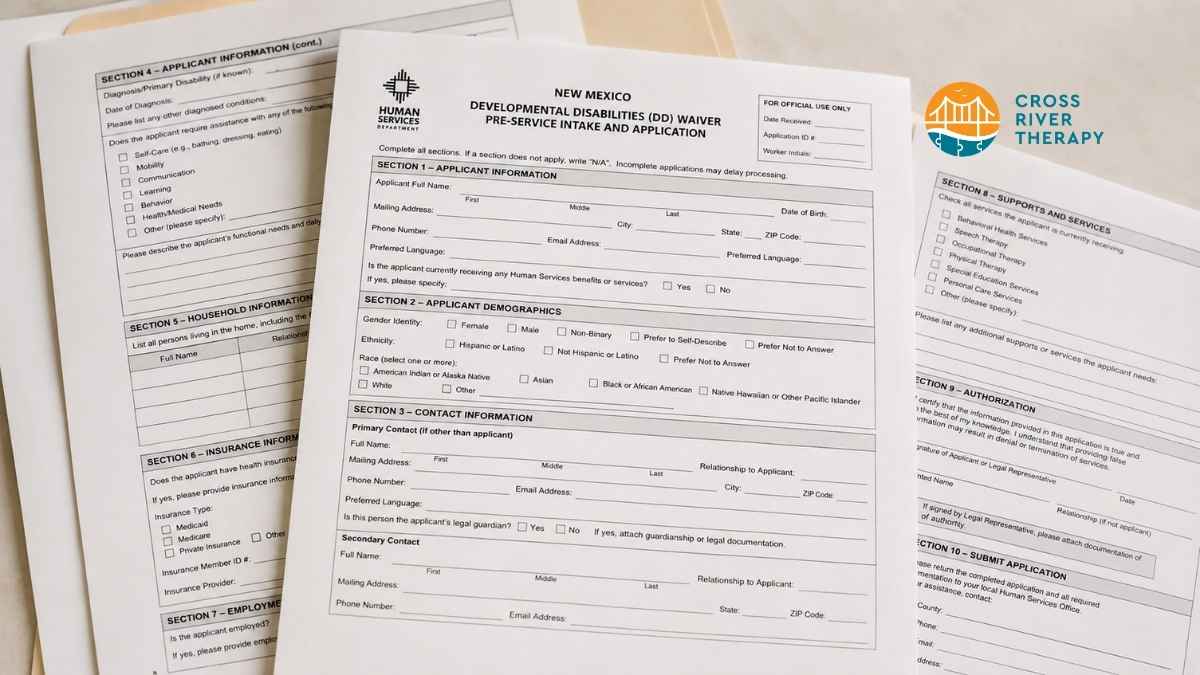
How to Apply for New Mexico’s DD Waiver While Starting ABA Therapy
Autism waiver New Mexico applications need DD Waiver records and proof of daily support needs. Your next step is to start ABA intake with Cross River.

Is ABA Therapy Covered by Insurance in New Jersey? What Every Parent Should Know
ABA therapy insurance New Jersey may cover medically necessary care based on plan type, network, and authorization. Verify benefits with Cross River.

How ABA Therapy Builds Communication for Nonverbal Children Without Forcing Speech
ABA therapy communication for nonverbal children starts with AAC, signs, and daily routines. See how kids ask, refuse, choose, and get help.

How to Start ABA Therapy in New Jersey With a First-Call Checklist
How to start ABA therapy in New Jersey begins with records, insurance details, and intake questions. Use this first-call checklist before you call.

How to Get an Autism Evaluation in Arkansas Before Starting ABA Therapy
How to get an autism evaluation in Arkansas starts with a referral, provider choice, and key records. Use this parent checklist before ABA intake.

Center-Based vs In-Home vs School-Based ABA Therapy and How to Choose the Right Fit
Center-based, in-home, and school-based ABA therapy each fit different goals, routines, and settings. Compare options before your intake call.

Early Signs of Autism: A Guide for North Carolina Parents
Early signs of autism North Carolina parents notice can include speech, play, sensory, or skill loss patterns. See what to track before screening.