








Creating a Supportive Home Environment for Children in ABA Therapy
Maximizing ABA Therapy Success Through Home Environment Adjustments


Introduction
Creating a supportive home environment is instrumental in enhancing the outcomes of ABA therapy for children. With the potential to improve therapy success rates substantially, parents and caregivers are key players in this process. By focusing on structure, routines, and sensory considerations, families can create a nurturing space that complements their child’s therapy journey.
Foundations of ABA Therapy at Home

How do you conduct ABA therapy at home?
Conducting ABA therapy at home involves several structured steps to ensure effectiveness and consistency. Start by identifying your child’s preferred activities and items that can serve as reinforcers. This could involve using tokens, stickers, or other rewards that motivate your child.
Creating a structured environment is essential; maintain consistent routines that help your child anticipate daily activities. Visual schedules can significantly aid in promoting independence and reducing anxiety. For example, a clear visual timetable might include images depicting each part of their day, including therapy sessions, playtime, and meals.
Utilize positive reinforcement strategies: provide immediate praise or rewards when your child demonstrates desired behaviors. This encourages them to repeat positive actions. It's effective to break skills down into smaller, manageable steps, making tasks less overwhelming. Use prompts—like modeling, physical, or verbal cues—to support learning effectively during practice sessions.
Additionally, integrating Discrete Trial Training (DTT) and Naturalistic Teaching Strategies is beneficial. DTT involves teaching skills in short, structured sessions, while naturalistic strategies allow learning in everyday activities, further reinforcing skills in real-life contexts.
Setting up structured home environments
A well-organized, distraction-free setup is crucial. Use designated spaces for therapy to establish routine and minimize sensory overload. Create visual supports like schedules and prompts around the home, addressing each area’s purpose.
Role of family involvement
Involvement from family members fosters a supportive community for the child. Engaging siblings in therapy activities can enhance social skills and create a positive atmosphere conducive to learning. Keeping communication open with ABA professionals allows for tailored strategies, ensuring everyone is aligned with the child's therapeutic goals.
Strategies for a Positive Therapy Environment

What strategies can be implemented to support a positive environment for children undergoing ABA therapy?
To foster a supportive atmosphere for children in ABA therapy, several strategies are fundamental. Firstly, the significance of positive reinforcement cannot be overstated. Parents can reward desired behaviors through verbal praise, stickers, or tokens, which motivates children to engage productively. Celebrating even small achievements helps boost their self-esteem, reinforcing positive behavior.
Structured routines play a crucial role in reducing anxiety through structure. Consistent daily schedules help children anticipate activities and transitions, creating a sense of stability. Visual supports like schedules and cue cards can further aid children in understanding what is expected of them, reducing apprehension about changes in their routine.
Encouraging social interactions is another pillar of a positive therapy environment. Parents can facilitate playdates and community activities where children can practice social skills in a safe setting. Utilizing tools like social stories and role-playing can aid in teaching appropriate social behaviors, enhancing communication skills and building confidence. Additionally, integrating cooperative games can promote peer relationships, making learning both fun and effective.
Creating a sensory-friendly environment is just as important. This involves minimizing distractions, such as harsh lighting and noise, and providing designated quiet spaces where children can retreat when overwhelmed. By employing these strategies, families can significantly enhance the effectiveness of ABA therapy and contribute positively to their child's development.
Consistency and Routines: Pillars of Progress

How can parents maintain consistency and routines to support children's development during ABA therapy?
Parents can play a pivotal role in maintaining consistency and routines essential for supporting their children's development during ABA therapy. Collaborating actively with therapists is crucial; together, they can establish effective daily schedules that reflect the routines practiced in therapy sessions to help enhance skill generalization at home.
- Daily Schedules: Adhering to consistent routines for meals, playtime, and therapy can help children feel secure, predict upcoming activities, and reduce anxiety.
- Positive Reinforcement: Utilizing reinforcement systems, such as tokens or verbal praise, during daily activities encourages desired behaviors and makes learning more engaging for the child.
- Visual Supports: Employing visual cues like schedules and picture cards clarifies expectations, helping children navigate their routines more effectively and independently.
Communication with therapists should be ongoing. Parents need to share observations about their child’s progress and any challenges encountered. This collaboration allows adjustment of goals and strategies, ensuring they are tailored to the child’s evolving needs. Over time, this structured approach fosters a supportive environment that promotes the child's overall growth and well-being.
The Role of Sensory-Friendly Adaptations

Impact of sensory considerations on ABA success
Creating a supportive home environment is crucial for maximizing the effectiveness of ABA therapy. Research indicates that addressing sensory elements can boost therapy outcomes by up to 70%. Incorporating sensory-friendly adaptations significantly enhances the ability of children with autism to focus, engage, and progress during sessions.
Creating sensory-friendly zones
To promote engagement, designating specific areas in the home for therapy activities is essential. These zones should be clutter-free and organized, allowing children to minimize distractions and concentrate better. Establishing quiet spots where children can retreat when feeling overwhelmed helps in emotional regulation.
Adjustments to lighting and noise
Environmental modifications play a pivotal role in creating a comfortable therapy space. Adjusting lighting to softer hues and reducing background noise significantly alleviates sensory overload. Using calming elements, like sensory-friendly seating or soundproof options, fosters a more conducive atmosphere for learning.
Adaptation Description Benefits Quiet zones Designated areas for calm and self-regulation Reduces anxiety and provides emotional refuge Soft lighting Implementation of gentle, non-flickering lights Enhances comfort and minimizes sensory overload Noise reduction Use of soundproof materials or headphones Promotes focus and engagement during therapy sessions
Making these adjustments not only supports children’s focus but also empowers them to thrive in therapy and daily life.
Understanding Natural Environment Teaching

What is Natural Environment Teaching in ABA therapy?
Natural Environment Teaching (NET) is an innovative strategy used in ABA therapy, designed to teach skills within the natural contexts where they are usually applied. This approach emphasizes child-led learning, harnessing natural reinforcements and focusing on functional skills that pique the child’s interest. By embedding instructional opportunities in everyday activities and promoting authentic interactions, NET aims to enhance motivation and make learning more engaging.
Benefits and methods of NET
The benefits of NET are significant. By using familiar settings, children often exhibit improved generalization of skills learned, translating to better application in real-life situations. Additionally, NET facilitates better social interactions and deeper family involvement in therapy, resulting in a more supportive learning environment. Techniques employed in this method include:
- Incorporating play into lessons to encourage exploration.
- Using everyday activities as teaching moments.
- Allowing the child to lead interactions to maintain engagement.
Comparison to traditional approaches
In contrast to traditional methods like Discrete Trial Training (DTT), which focuses on highly structured and repetitive tasks, NET offers a more flexible and dynamic approach. Where DTT sequences learning in a controlled manner, NET provides learning opportunities within natural contexts, thus aligning better with children's interests and everyday life. This shift supports a more holistic approach in the child’s development and enhances their natural learning experiences.
Conclusion
The success of ABA therapy is significantly influenced by the home environment, which can act as an extension of therapeutic settings. By adopting consistent routines, engaging in active communication with therapists, and addressing sensory needs, parents can make lasting contributions to their child’s progress. The home thus becomes a vital space where learning and development naturally continue beyond formal therapy sessions.
References
- How to Create a Supportive Home Environment for ABA Therapy
- Creating a Structured Home Environment to Support Child ...
- Prepare Your Home for In-Home ABA Therapy: Essential Tips
- How to Incorporate ABA Therapy at Home - Surpass Behavioral Health
- Best Ways to Create a Autism-Friendly Environment for a Child
- 7 Ways Families Can Reinforce ABA Therapy at Home
- How Parents Can Support ABA Therapy From Home
Recent News
Related articles

6 Arkansas Medicaid ABA Therapy Rules Families Need to Know
Arkansas Medicaid ABA therapy has age, diagnosis and approval rules. Families can check six requirements before care.

Arizona Autism Laws Every Parent Should Know Before Starting ABA Therapy
Autism laws Arizona parents should know cover ABA insurance, AHCCCS appeals, IEPs, and Section 504 rights. Check ABA coverage with Cross River.

ABA Therapist Salary in Arkansas: What BCBAs and RBTs Actually Earn in 2026
ABA therapist salary Arkansas figures compare RBT and BCBA rates, benefits, guaranteed hours, and contract terms. Explore careers at Cross River.

5 Autism Support Groups and Family Resources in New Mexico Alongside ABA Therapy
Autism support groups New Mexico families can use offer peer support, local events, and school help. Cross River can explain ABA therapy options.

Where to Get an Autism Evaluation in New Mexico Before Starting ABA Therapy
Autism evaluation New Mexico options include UNM, NMSU, FIT, and private providers. Compare providers, records, and ABA steps with Cross River.

7 North Carolina Autism Resources to Contact Before ABA Therapy Starts
Autism resources North Carolina families can call for diagnosis, early intervention, rights, and parent support. Start ABA intake with Cross River.

Does Indiana Medicaid Cover ABA Therapy? A Step-by-Step Eligibility Checklist for Parents
Medicaid ABA therapy Indiana covers eligible children under 21 with prior authorization. Your five-step coverage review can start with Cross River.
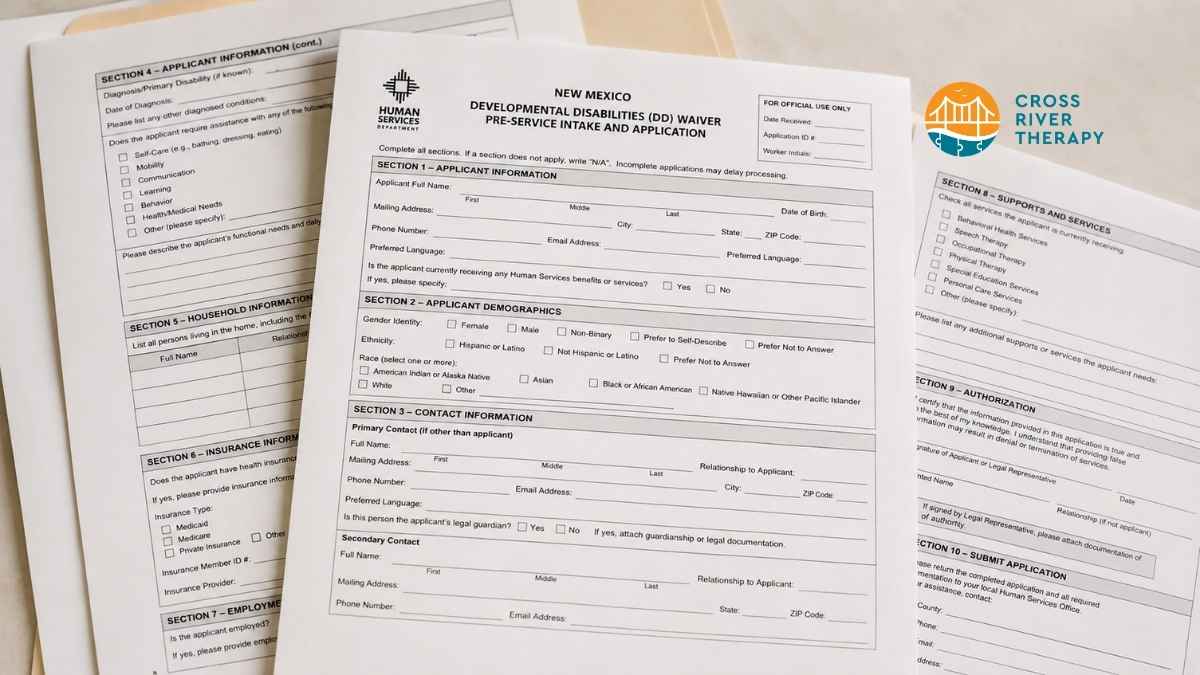
How to Apply for New Mexico’s DD Waiver While Starting ABA Therapy
Autism waiver New Mexico applications need DD Waiver records and proof of daily support needs. Your next step is to start ABA intake with Cross River.

Is ABA Therapy Covered by Insurance in New Jersey? What Every Parent Should Know
ABA therapy insurance New Jersey may cover medically necessary care based on plan type, network, and authorization. Verify benefits with Cross River.

How ABA Therapy Builds Communication for Nonverbal Children Without Forcing Speech
ABA therapy communication for nonverbal children starts with AAC, signs, and daily routines. See how kids ask, refuse, choose, and get help.

How to Start ABA Therapy in New Jersey With a First-Call Checklist
How to start ABA therapy in New Jersey begins with records, insurance details, and intake questions. Use this first-call checklist before you call.

How to Get an Autism Evaluation in Arkansas Before Starting ABA Therapy
How to get an autism evaluation in Arkansas starts with a referral, provider choice, and key records. Use this parent checklist before ABA intake.