








Creating Autism-Friendly Plans
Strategies for Designing Inclusive Spaces for Individuals with Autism


Understanding Autism-Friendly Environments
Creating autism-friendly environments is crucial for supporting individuals with Autism Spectrum Disorder (ASD) in diverse settings. Such environments cater to the unique sensory, communication, and social needs of individuals with autism, thereby enhancing their overall well-being and inclusivity. By adopting specific strategies and plans, communities, educators, families, and event organizers can significantly improve the quality of life for those on the spectrum.
Key Facts about Designing Homes for Autism Sensitivity

- Color Choices: Use subdued colors like greens and blues to enhance calmness.
- Adjustable Lighting: Opt for multiple light sources with high CRI for natural lighting effects.
- Soundproofing: Implement solid core doors and acoustic panels to reduce disruptive noise.
- Clutter Control: Provide ample storage to create a tidy environment that alleviates anxiety.
- Defined Spaces: Establish quiet zones or sensory rooms for individual relaxation needs.
- Support Plan Benefits: Enhances behavioral outcomes and emotional well-being for children with autism.
- Collaboration: Involves caregivers, teachers, and therapists for a comprehensive support approach.
- ABC Model: Uses Antecedent, Behavior, Consequence framework for understanding behaviors.
- Measurable Goals: Establishes clear objectives to track progress in the support plan.
- Autism-Friendly Approach: Focuses on clear communication and structured routines to reduce anxiety.
Strategies for Designing Homes that Cater to Sensory Needs
How can homes be designed to cater to the sensory needs of individuals with autism?
Designing homes to meet the sensory needs of individuals with autism involves carefully considering color, lighting, sound, and space organization. Here are key strategies to create an autism-friendly environment:
- Color Choices: Use subdued colors like greens and blues, which are known to promote calmness. Bright primary colors can be overstimulating and may induce anxiety.
- Adjustable Lighting: Install multiple light sources instead of relying solely on overhead lighting. Opt for bulbs with a high Color Rendering Index (CRI) of at least 90 to provide natural-looking light. Having dimmable options allows for control over brightness, reducing glare and harsh lighting effects.
- Soundproofing: Minimize external noise using solid core doors and acoustic panels in walls and ceilings. This helps create a quiet haven, which is particularly beneficial for individuals hypersensitive to sound.
- Clutter Control: Ensure ample storage space to keep the home organized and free from visual clutter. A tidy and orderly environment can significantly reduce anxiety for those on the autism spectrum.
- Defined Spaces: Create designated areas in the home, such as quiet zones or sensory rooms with calming elements. These spaces can provide comfort and promote relaxation, offering individuals a retreat when needed.
Overall Impact on Quality of Life
Implementing these strategies not only addresses specific sensory sensitivities but fosters a more inclusive and supportive home environment. Clear pathways and well-organized spaces facilitate movement, ensuring safety and promoting independence. By thoughtfully designing living areas, families can enhance the quality of life for individuals with autism, creating a home that truly understands and meets their unique sensory needs.
Design Element Recommendations Benefits Color Choices Use greens and blues to promote calmness. Avoid bright, stimulating colors. Reduces anxiety, enhances relaxation Lighting Multiple, dimmable sources with high CRI bulbs. Prevents glare, allows control over brightness Soundproofing Install solid core doors and acoustic panels. Minimizes noise distractions Clutter Control Provide storage solutions to maintain an organized space. Reduces sensory overload Defined Spaces Create quiet rooms and sensory zones. Offers comfort and a retreat from stimuli
Developing Effective Autism Support Plans

What is an autism support plan and what are its benefits?
An autism support plan, often referred to as a positive behavior support plan, is a tailored approach designed to help children with Autism Spectrum Disorder (ASD) manage challenging behaviors. It goes beyond merely focusing on behavior modification; instead, it aims to enhance the overall quality of life for the child.
The development of this plan involves collaboration among key stakeholders, including caregivers, teachers, therapists, and medical professionals. This collective input ensures that the plan is comprehensive and well-rounded, addressing various aspects of the child’s life and needs.
How does it work?
One effective framework used in these plans is the ABC (Antecedent, Behavior, Consequence) model. This model helps caregivers analyze the context of behaviors, identifying triggers (antecedents) and responses (consequences) to understand better the reasons behind specific actions. By doing so, caregivers can implement proactive strategies to prevent negative behaviors while also teaching positive alternatives.
The support plan typically includes:
- Evidence-Based Practices: Interventions grounded in research to ensure efficacy.
- Measurable Goals: Clear, achievable objectives that allow for tracking progress over time.
- Adaptations for Various Settings: Modifications that can be utilized within home, school, and community environments.
What are the benefits?
The implementation of an autism support plan can yield numerous benefits, including:
- Enhanced Behavioral Outcomes: With clear expectations and intervention strategies, children tend to show improvements in behavior.
- Improved Emotional Well-Being: As challenging behaviors are managed effectively, children often experience reduced stress and anxiety.
- Coping Strategies Development: Both children and their families learn how to manage behaviors positively, fostering resilience and adaptability.
In summary, a well-crafted autism support plan can significantly empower children with autism and their families, leading to a more supportive environment conducive to growth and development.
Implementing Autism-Friendly Approaches

What is an autism-friendly approach?
An autism-friendly approach involves creating an environment that supports the specific needs of children with Autism Spectrum Disorder (ASD). This begins with clear communication strategies, such as using visual supports like Picture Exchange Communication System (PECS) and concise language. Engaging methods, like social stories, help children navigate their world better.
Structured routines and predictable schedules play a vital role in alleviating anxiety, providing children a sense of stability. The consistency of a daily routine allows them to anticipate what comes next, making their environment feel safer. Addressing sensory sensitivities is equally essential; creating quiet zones can mitigate sensory overload caused by overwhelming stimuli.
Promoting inclusive play environments further enriches the social development of children with ASD. This can be achieved by educating peers about autism and encouraging collaborative activities, fostering understanding and inclusion.
Sensory-friendly design strategies
When designing spaces for autism-friendly environments, sensory-friendly techniques are paramount. Here’s a brief overview of effective strategies:
| Strategy | Description | Benefits ||---------------------------|-------------------------------------------------------------|----------------------------------------|| Soft Lighting | Use indirect and dimmable lighting instead of fluorescent | Reduces visual discomfort, promoting calm || Controlled Noise Levels | Implement sound absorption materials, such as acoustic panels | Decreases auditory distractions, enhancing focus || Color Schemes | Opt for subdued color palettes, like greens and blues || Supports relaxation and decreases anxiety || Designated Quiet Areas | Create spaces where individuals can retreat when overwhelmed | Provides a sanctuary for stress relief || Visual Supports | Incorporate schedules, charts, and social stories | Helps children understand and prepare for changes |
By integrating these strategies, environments can become increasingly accommodating, ultimately benefiting children with autism and improving their overall well-being.
Conclusion: Embracing Autism-Inclusive Practices
The significance of creating autism-friendly plans cannot be overstated. By understanding and implementing strategies that cater to the sensory, communication, and social needs of individuals with autism, communities can forge more inclusive, supportive environments. Whether designing homes, developing intervention plans, or implementing inclusive approaches, the consideration of individual needs can lead to enhanced outcomes and foster acceptance and understanding across society. Through continuous learning and adaptation, we can create spaces and experiences where everyone, regardless of their neurodiversity, can thrive.
References
- Best Ways to Create a Autism-Friendly Environment for a Child
- How to create an autism-friendly environment
- Safety Plan for Individuals with Autism - PAAutism.org
- Autism Friendly Community - Cooper City, FL
- Autism-Friendly Design Ideas | CHOP Research Institute
- Virtual interactive autism activities - Autism Speaks
- Hosting a Sensory Friendly Event - PAAutism.org
Recent News
Related articles

6 Arkansas Medicaid ABA Therapy Rules Families Need to Know
Arkansas Medicaid ABA therapy has age, diagnosis and approval rules. Families can check six requirements before care.

Arizona Autism Laws for ABA Coverage and School Rights
Arizona autism laws for ABA coverage vary by plan. Families can check insurance, appeal options, and school rights.

ABA Therapist Salary in Arkansas for RBTs and BCBAs
Compare ABA therapist salary in Arkansas by role. See how paid hours and benefits affect earnings before applying.

5 Autism Support Groups and Family Resources in New Mexico
Autism support groups in New Mexico connect families. Local resources offer events, parent support, and school help.

Where to Get an Autism Evaluation in New Mexico
Autism evaluation options in New Mexico include UNM and NMSU. Age and referral details help parents prepare.

7 North Carolina Autism Resources to Contact Before ABA Therapy Starts
Autism resources North Carolina families can call for diagnosis, early intervention, rights, and parent support. Start ABA intake with Cross River.
Does Indiana Medicaid Cover ABA Therapy? A Parent Checklist
Indiana Medicaid ABA therapy may cover care for eligible children. The checklist covers coaching and renewals.
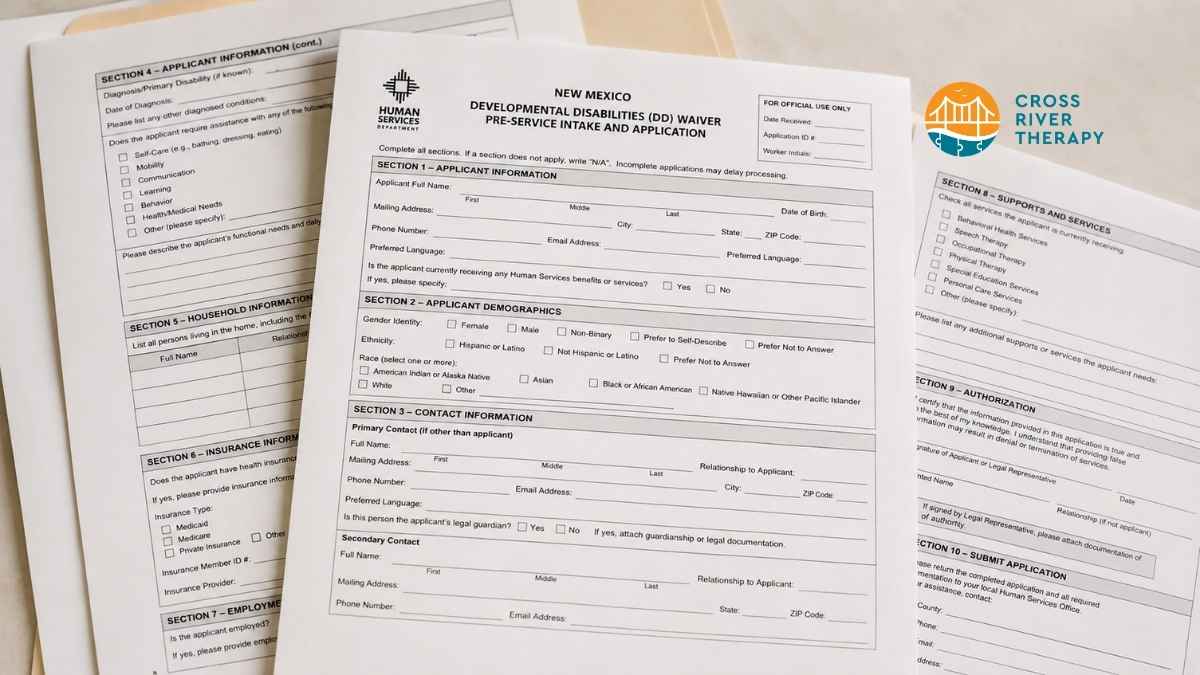
How to Apply for the New Mexico DD Waiver
Your NM DD waiver application starts with state intake. The steps cover records, submission, and enrollment.

Does Insurance Cover ABA Therapy in New Jersey?
ABA therapy insurance in New Jersey varies by plan. Learn what NJ FamilyCare covers and how to check costs.

How ABA Therapy Builds Communication for Nonverbal Children Without Forcing Speech
ABA therapy communication for nonverbal children starts with AAC, signs, and daily routines. See how kids ask, refuse, choose, and get help.

How to Start ABA Therapy in New Jersey With a Checklist
Your guide explains how to start ABA therapy in New Jersey. A first-call checklist covers records and next steps.

How to Get an Autism Evaluation in Arkansas Before Starting ABA Therapy
How to get an autism evaluation in Arkansas starts with a referral, provider choice, and key records. Use this parent checklist before ABA intake.