






Does Newt Scamander Have Autism?
It's unknown if Newt Scamander definitely has autism, but several signs show that he does.
Does Newt Scamander Have Autism?
It's unknown if Newt Scamander definitely has autism, but several signs show that he does.
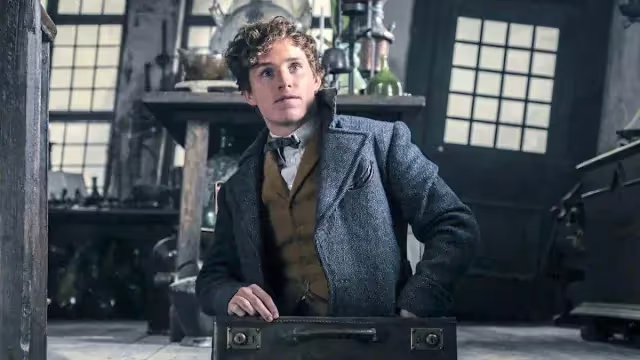
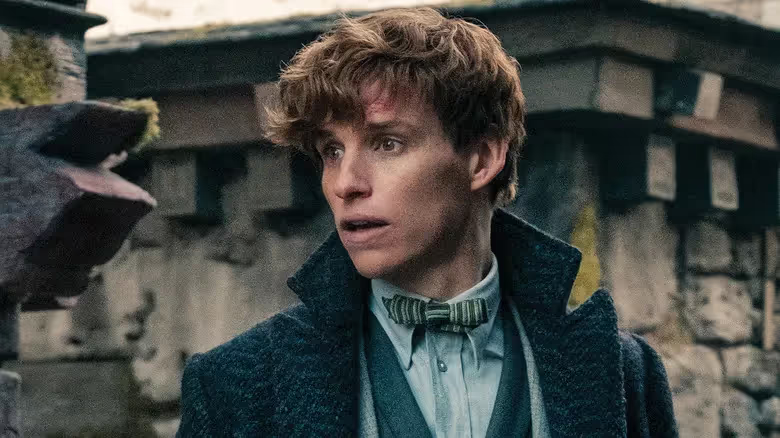
Rumors have spread that Newt Scamander, the famed fictional writer in Fantastic Beasts, is autistic. Some of these have been accepted within the autism community for two distinct reasons.
The first reason relates to the personality of Newt in the film. He seems sharp and edgy, but very concerned by the fine details of matters.
He sometimes wanders around on his own, seemingly not putting much thought into the outcome of his words and actions. How he's played by Eddie Redmayne seems awkward, especially when he's around different people.
In some scenes where he's alone or there isn't a crown around, his personality appears to calm in a relaxed manner.
Not all are in favor of the autism theory. The film itself takes place in the 1800s at a time when such things as autism weren't known in the psychology and medical world.
In the last two decades, researchers have with increasingly better results been able to detect autism in people they once counted out, particularly those with mild symptoms.
People on the spectrum show difficulty understanding the emotions of others around them. For most of the film, Newt doesn't seem to have issues with this, being able to make out complex obstacles during scenes that others can't. This is best shown in the underground tunnel scene.
Then again, he doesn't appear to have problems gazing at others, a very common characteristic for anyone with ASD.
He seems introverted at times, something that both autistic and non-autistic people could be. He does show social anxiety, especially during the first half of the film, but opens up as it progresses.
Not everyone with autism has a problem with emotion. Intuitiveness and compassion are common, more so for people with mild symptoms.
That the autistic are incapable of empathy is a stigmatization, rather than a reality. The second reason which may indicate that autism is present comes from none other than the actor portraying him.
Eddie Redmayne said that he believes the character has autism during an interview. One important note is that such speculation has been ongoing since the first film aired in 2016. During the initial phase of the argument, Asperger syndrome was frequently used in place of autism.
Since that time, it has been discounted as a symptom of autism rather than its distinct disorder. The writer of the Fantastic Beasts series, J.K. Rowling has never publicly stated that Newt has autism or was written to be autistic.
Recent News
Related articles

Arizona Autism Laws Every Parent Should Know Before Starting ABA Therapy
Autism laws Arizona parents should know cover ABA insurance, AHCCCS appeals, IEPs, and Section 504 rights. Check ABA coverage with Cross River.

ABA Therapist Salary in Arkansas: What BCBAs and RBTs Actually Earn in 2026
ABA therapist salary Arkansas figures compare RBT and BCBA rates, benefits, guaranteed hours, and contract terms. Explore careers at Cross River.

5 Autism Support Groups and Family Resources in New Mexico Alongside ABA Therapy
Autism support groups New Mexico families can use offer peer support, local events, and school help. Cross River can explain ABA therapy options.

Where to Get an Autism Evaluation in New Mexico Before Starting ABA Therapy
Autism evaluation New Mexico options include UNM, NMSU, FIT, and private providers. Compare providers, records, and ABA steps with Cross River.

7 North Carolina Autism Resources to Contact Before ABA Therapy Starts
Autism resources North Carolina families can call for diagnosis, early intervention, rights, and parent support. Start ABA intake with Cross River.

Does Indiana Medicaid Cover ABA Therapy? A Step-by-Step Eligibility Checklist for Parents
Medicaid ABA therapy Indiana covers eligible children under 21 with prior authorization. Your five-step coverage review can start with Cross River.
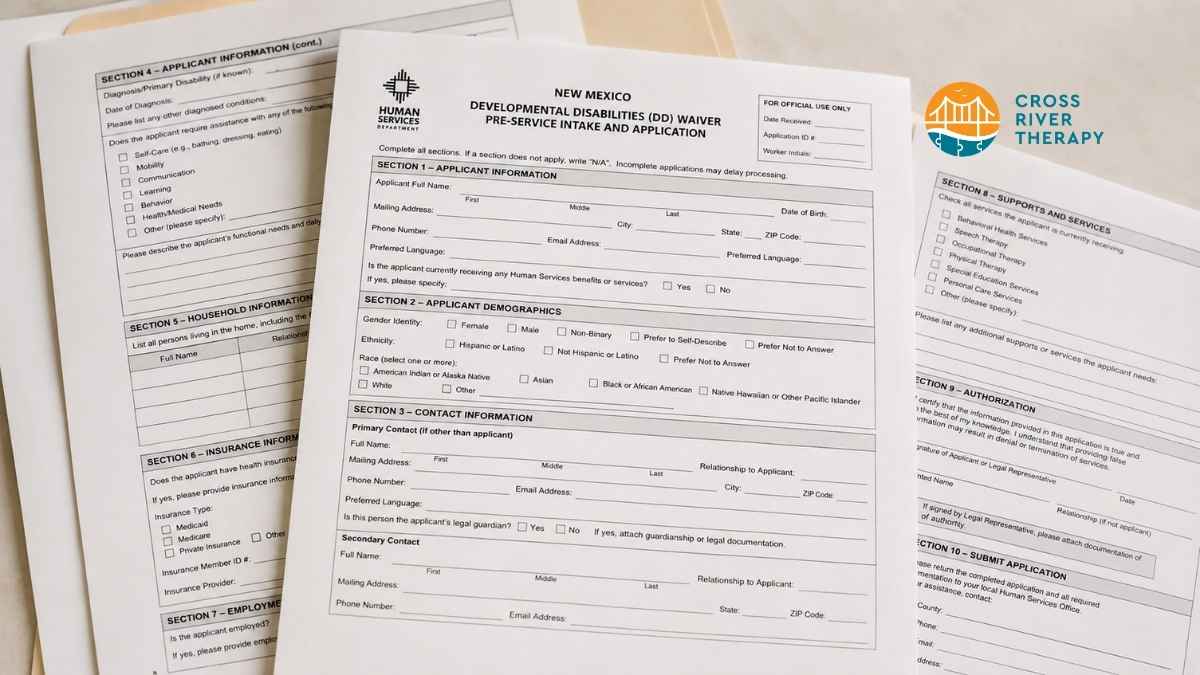
How to Apply for New Mexico’s DD Waiver While Starting ABA Therapy
Autism waiver New Mexico applications need DD Waiver records and proof of daily support needs. Your next step is to start ABA intake with Cross River.

Is ABA Therapy Covered by Insurance in New Jersey? What Every Parent Should Know
ABA therapy insurance New Jersey may cover medically necessary care based on plan type, network, and authorization. Verify benefits with Cross River.

How ABA Therapy Builds Communication for Nonverbal Children Without Forcing Speech
ABA therapy communication for nonverbal children starts with AAC, signs, and daily routines. See how kids ask, refuse, choose, and get help.

How to Start ABA Therapy in New Jersey With a First-Call Checklist
How to start ABA therapy in New Jersey begins with records, insurance details, and intake questions. Use this first-call checklist before you call.

How to Get an Autism Evaluation in Arkansas Before Starting ABA Therapy
How to get an autism evaluation in Arkansas starts with a referral, provider choice, and key records. Use this parent checklist before ABA intake.

Center-Based vs In-Home vs School-Based ABA Therapy and How to Choose the Right Fit
Center-based, in-home, and school-based ABA therapy each fit different goals, routines, and settings. Compare options before your intake call.