








How ABA supports self-advocacy in children with autism
Empowering Young Voices: The Role of ABA in Fostering Self-Advocacy Among Children with Autism


Understanding How ABA Transforms Children's Ability to Advocate for Themselves
Applied Behavior Analysis (ABA) is a widely utilized therapeutic approach for children with autism, known for its evidence-based strategies that promote learning and behavioral improvements. Beyond traditional interventions, ABA plays a crucial role in nurturing self-advocacy skills — enabling children to express their needs, make decisions, and participate actively in their communities. This article explores the multifaceted functions of ABA in fostering independence, empowering self-representation, and supporting the rights of children on the autism spectrum.
Strategies in ABA That Promote Self-Advocacy and Independence

What strategies within ABA can promote independence and self-advocacy in children with autism?
Applied Behavior Analysis (ABA) offers numerous effective strategies designed to foster independence and self-advocacy skills in children with autism. One of the foundational approaches involves teaching essential daily living skills such as self-care, grooming, and dressing. These skills are broken down through task analysis and chaining techniques, enabling children to perform each step independently and build confidence in their abilities.
Incorporating visual supports and providing opportunities for children to make choices are also central to ABA strategies. Visual aids like picture schedules, choice boards, and communication devices help children understand their options and encourage decision-making. Giving children the ability to select meals, activities, or preferred items boosts their sense of agency and supports self-determination.
Positive reinforcement is another critical approach. When children receive praise, rewards, or preferred items for making decisions or demonstrating independent behaviors, they learn to associate these actions with positive outcomes. This reinforcement encourages continued engagement and the development of autonomy.
Social skills training, role-play, and social stories assist children in effectively expressing their needs and advocating for themselves. These methods teach children to navigate social interactions confidently, communicate their preferences clearly, and understand social norms related to boundaries and consent.
Naturalistic and child-driven ABA models emphasize learning within everyday environments, such as at home, school, or community settings. These approaches promote the generalization of skills, enabling children to apply self-advocacy strategies in various contexts. For example, children learn to request breaks, ask for help, or modify activities based on their sensory or emotional needs.
Family involvement is also vital. Training parents and caregivers to implement strategies, reinforce skills, and model self-advocacy behaviors ensures consistency and long-term success. Educating children about their rights, as well as using communication supports like AAC devices or gestures, equips them to advocate effectively throughout their lives.
Overall, these integrated ABA strategies aim to empower children with autism to be independent, confident, and active participants in their own lives, supporting their journey toward self-advocacy and personal autonomy.
Resources Available to Parents and Caregivers to Teach Self-Advocacy through ABA
What resources are available to parents and caregivers to teach self-advocacy through ABA?
Parents and caregivers have access to a broad range of resources designed to foster self-advocacy skills in children with autism through Applied Behavior Analysis (ABA). These resources include specialized training programs and educational materials that provide comprehensive guidance on teaching children to articulate their needs, make decisions, and navigate social situations.
Support groups dedicated to self-advocacy skills serve as valuable platforms where families can share experiences, learn new strategies, and gain emotional support. Organizations such as the Center for Parent Information and Resources, Brainline, the Brain Injury Association of Colorado, and The Arc of Colorado offer detailed explanations, toolkits, and practical strategies. These materials help parents understand how to promote self-awareness, communication, and decision-making in their children.
In addition, ABA therapists utilize evidence-based techniques such as visual supports, Picture Exchange Communication System (PECS), scripting, video modeling, and functional communication training. These methods are effective in helping children learn to request, express their feelings, and solve problems more independently.
Speech-language pathologists and occupational therapists play essential roles in this process. Speech-language pathologists focus on developing functional communication, including speech and alternative means like AAC devices, while occupational therapists assist with sensory integration and self-regulation strategies. Their collaborative efforts tailor interventions to each child's unique abilities and needs.
Furthermore, educational specialists are involved in teaching children to recognize when they require help, to ask for accommodations, and to communicate confidently with teachers and peers. This multidisciplinary approach ensures that children develop confident self-advocacy skills aligned with their developmental levels.
Overall, these resources and collaborations facilitate a holistic development of self-advocacy abilities, empowering children to participate actively in their own lives, make autonomous decisions, and navigate various settings with confidence.
How ABA Therapy Supports Development of Self-Advocacy
How does ABA therapy support the development of self-advocacy skills in children with autism?
ABA (Applied Behavior Analysis) therapy plays a significant role in helping children with autism develop essential self-advocacy skills. It does so by teaching children to recognize, understand, and clearly articulate their needs and preferences.
Using techniques such as modeling, prompting, and reinforcement, ABA encourages children to communicate effectively across various situations. For example, children learn to use gestures, visual aids, or speech to express when they need a break or assistance. This gradual process builds their confidence in advocating for themselves.
In addition to communication skills, ABA integrates practices that involve the children actively in decision-making. Including children in Individualized Education Program (IEP) meetings or discussions about their support needs teaches them about their rights and nurtures a sense of ownership and self-awareness.
A crucial part of ABA support is helping children develop coping strategies for sensory overload or emotional stress. Techniques such as requesting sensory breaks, using calming signals, or requesting sensory adjustments allow children to manage their feelings effectively. This mastery of self-regulation supports their ability to negotiate necessary accommodations.
Furthermore, ABA supports fostering independence through self-determination. Children are encouraged to make choices about daily routines, activities, and social interactions, which helps them gain control over their lives and develop resilience.
ABA’s emphasis on personalized, consistent interventions ensures that each child's unique needs and abilities are considered. This tailored approach respects neurodiversity perspectives, aiming to improve quality of life and empower children to be active participants in their social and educational environments.
Teaching recognition and articulation of needs and preferences
Children are guided through steps to identify what they need in different contexts, whether it’s a sensory adjustment or social support. Visual schedules, social stories, and role-plays are used to practice expressing preferences clearly.
Modeling, prompting, and reinforcement techniques
Modeling ideal communication and behavior provides children with concrete examples. Prompting supports them as they initiate requests or responses. Reinforcement—praise, tokens, or privileges—encourages consistent use of self-advocacy skills.
Including children in IEP meetings and disclosure discussions
By gradually involving children in meetings, they learn about their rights and how to speak up for themselves. Role-playing and visual aids help prepare them to participate actively.
Developing coping strategies for sensory or emotional challenges
Strategies such as requesting a break, using calming tools, or adjusting environmental settings enable children to manage sensory sensitivities and emotional responses, fostering self-reliance.
Promotion of independence and self-determination
Encouraging decision-making, respecting choices, and teaching how to set boundaries all promote a sense of autonomy. These skills are foundational for self-advocacy and lifelong independence.
In summary, ABA therapy lays a structured foundation for children with autism to become confident self-advocates. It equips them with communication tools, decision-making skills, and emotional regulation techniques, all of which are vital for advocating for their needs and participating fully in society.
The Benefits of ABA in Fostering Self-Advocacy and Community Inclusion
What are the benefits of ABA in fostering self-advocacy and community inclusion for children with autism?
Applied Behavior Analysis (ABA) plays a significant role in helping children with autism develop the skills needed for self-advocacy and active participation in their communities. By using evidence-based strategies such as positive reinforcement, prompting, and shaping, ABA teaches essential communication and social skills. These foundational skills enable children to interact effectively, express their needs, and navigate social environments.
ABA interventions focus on helping children reach developmental milestones like imitation, play, self-care, and functional communication. Achieving these milestones fosters a sense of independence and builds confidence, both of which are crucial for children to advocate for themselves confidently and effectively.
Incorporating social skills training, communication technology (such as AAC devices), and involvement of family members helps children generalize their skills across different settings. This broad application ensures that children can participate in community activities—such as visiting parks, attending events, or going shopping—and articulate their needs, preferences, or problems.
Furthermore, ABA techniques help in reducing frustration and challenging behaviors by teaching coping mechanisms and adaptive responses. As a result, children experience improved emotional well-being and safety, which supports their overall ability to engage with their surroundings.
Overall, ABA not only promotes greater inclusion in community life but also empowers children with autism to become self-advocates—enabling them to take control of their lives, express themselves, and participate actively in society. This comprehensive developmental support prepares children for lifelong advocacy, fostering independence and a higher quality of life.
Connection Between ABA and Empowerment for Children with Autism
How are ABA therapies connected to empowerment and self-representation for children on the autism spectrum?
Applied Behavior Analysis (ABA) is more than just a set of intervention techniques; it is a pathway toward empowerment for children with autism. By focusing on building essential skills, ABA helps children communicate effectively, navigate social situations, and manage daily activities independently. This growth in skills fosters confidence and a sense of agency, enabling children to better advocate for their needs and preferences.
ABA uses evidence-based strategies like positive reinforcement, prompting, and generalization to teach desired behaviors. These strategies help children master skills such as asking for help, expressing emotions, or managing sensory sensitivities, which are vital for participating fully in everyday life.
Modern ABA practices emphasize person-centered approaches, actively involving families and caregivers as partners in the therapy process. Tailoring interventions to each child's unique needs and goals ensures that therapies are respectful, meaningful, and effective. This person-focused methodology respects the child's individuality and supports their self-determination.
As children practice these skills in natural settings—like home, school, and community environments—they develop a stronger self-awareness of their abilities. This ongoing process of skill mastery builds resilience, allowing children to handle challenges confidently.
Furthermore, ABA supports the development of self-representation. By learning to express their needs and preferences, children gain a voice in decisions affecting their lives. Whether through communication tools like AAC devices or social stories that teach about rights and boundaries, ABA promotes self-advocacy.
In essence, ABA aims to empower children with autism—not merely to change behaviors but to foster independence, self-confidence, and an authentic sense of self. Through these targeted interventions, children can participate actively in society, emphasizing their strengths and advocating for their own future.
Influence of ABA on Supporting the Rights of Children with Autism

How does ABA influence understanding and supporting the rights of children with autism?
Applied Behavior Analysis (ABA) significantly impacts how we understand and advocate for the rights of children with autism. This approach emphasizes creating tailored, evidence-based interventions that foster learning, independence, and self-advocacy. By focusing on positive reinforcement, ABA helps children acquire vital skills such as effective communication, social interaction, self-care, and academic abilities, all of which are crucial for active participation in society.
The adaptability of ABA across diverse environments—home, school, and community—ensures that each child receives support that aligns with their individual strengths and needs. This personalization respects their unique profiles and promotes a sense of autonomy.
Legal frameworks like the Individuals with Disabilities Education Act (IDEA) strengthen ABA’s role in protecting children’s rights. IDEA mandates free and appropriate public education (FAPE) in the least restrictive environment, emphasizing the importance of inclusive practices and individualized supports. ABA supports these goals by providing structured, measurable strategies that help children access and thrive in educational settings.
Family involvement is another cornerstone of ABA’s influence. Engaging parents and caregivers in treatment planning empowers them to advocate effectively and reinforces skills outside formal sessions. This collaboration ensures that interventions are consistent and culturally sensitive, further supporting children’s rights to effective and respectful care.
Developing skills through ABA also promotes self-determination, which includes making choices, expressing preferences, and establishing boundaries. These capabilities are fundamental to exercising autonomy and can directly influence a child’s ability to advocate for themselves.
Furthermore, ABA’s focus on social competence enables children to navigate social environments confidently and assertively. By practicing appropriate responses and understanding social cues, children learn to communicate their needs and rights clearly.
In summary, ABA’s influence extends beyond skill acquisition—it drives the ethical, social, and legal recognition of children with autism as active participants in society. It encourages practices that uphold their human rights, foster independence, and facilitate meaningful inclusion.
Here is an overview of the main aspects of ABA’s impact:
| Aspect | Description | Impact on Rights and Participation |
|---|---|---|
| Individualized, evidence-based approaches | Tailoring interventions to each child's profile | Supports personalized learning and self-advocacy |
| Legal frameworks like IDEA | Ensuring access and accommodations | Upholds children’s right to education and inclusion |
| Family involvement | Including families in planning and intervention | Empowers advocates and reinforces skills |
| Development of societal participation | Teaching social and functional skills | Fosters independence and community engagement |
| Supporting communication and self-determination | Enhancing expressive abilities and decision-making | Promotes autonomy and self-advocacy |
By integrating these strategies, ABA plays a vital role in advancing the rights of children with autism, ensuring they are understood, supported, and empowered to lead fulfilling lives.
ABA's Impact on Self-Awareness, Self-Expression, and Self-Determination
How can behavioral interventions via ABA enhance self-awareness, self-expression, and self-determination in children with autism?
Applied Behavior Analysis (ABA) has been a foundational approach in supporting children with autism to develop essential skills of self-awareness, self-expression, and self-determination. Through targeted strategies, ABA helps children recognize their own feelings, behaviors, and needs, fostering a clearer understanding of themselves.
One significant aspect of ABA is teaching children to identify and articulate their internal states, which is fundamental to self-awareness. For example, children learn to recognize when they feel overwhelmed or anxious and to communicate these feelings appropriately. This awareness is crucial for enabling them to manage their responses and advocate for their needs.
Self-expression is further reinforced through methods such as using visual aids, social stories, and communication devices, enabling children to communicate their desires, preferences, and frustrations more effectively. By practicing these skills in structured settings, children gain confidence in expressing themselves, leading to more meaningful social interactions.
Enhancing self-determination involves empowering children to make choices, set personal goals, and regulate their behaviors independently. ABA employs self-management strategies, including goal setting, self-monitoring, and reinforcement techniques. These promote autonomy by encouraging children to initiate social interactions, select preferred activities, and manage their own behaviors.
For example, children may learn to use timers to structure their daily routines and to request breaks when needed. Such practices foster a sense of control over their environment, reducing dependence on support staff and increasing their ability to navigate everyday situations.
Training in social initiation also plays a vital role. Children learn how and when to approach others for social interactions, which enhances their ability to engage meaningfully and independently. Reducing reliance on adult prompts, these skills promote greater independence and confidence.
Addressing executive functioning and mental health is integral to this developmental process. ABA interventions can incorporate techniques to improve planning, organization, impulse control, and emotional regulation. By strengthening these areas, children develop more robust self-determination skills.
Overall, ABA’s personalized, reinforcement-based methods aim to equip children with autism to understand themselves better, communicate their needs confidently, and take control of their lives. These improvements significantly contribute to their quality of life, fostering greater independence, self-advocacy, and participation in the community.
| Strategy | Description | Impact |
|---|---|---|
| Self-monitoring | Children track their own behaviors and feelings | Promotes awareness and self-regulation |
| Goal setting | Establishing personal objectives for development | Fosters motivation and independence |
| Self-reinforcement | Using rewards to reinforce desired behaviors | Encourages voluntary engagement and growth |
| Using timers/daily routines | Implementing scheduled activities and breaks | Builds self-management skills |
| Social initiation training | Teaching how to approach others for interaction | Enhances social independence |
Implementing these strategies within ABA programs offers a comprehensive pathway for children to develop crucial skills. As they grow more self-aware, expressive, and autonomous, they are better equipped to advocate for themselves and lead more independent lives.
Empowering Children Through Tailored Support and Advocacy
The integration of ABA strategies to support self-advocacy in children with autism embodies a comprehensive approach to fostering independence, confidence, and social participation. By emphasizing personalized interventions, active involvement of families, and a deep respect for each child's rights and individuality, ABA empowers children to express themselves effectively, advocate for their needs, and participate fully in their communities. As the field evolves, ongoing commitment to ethical practices and neurodiversity principles ensures that ABA remains a valuable tool in building inclusive, supportive environments where every child's voice can be heard and valued.
References
- How to Build Self-Advocacy Skills in Your Autistic Child
- How to Advocate for ABA Therapy Services in School Settings
- On Empowerment: Where to Begin When Building Self-Advocacy ...
- ASD, Neurodiversity, Advocacy, and Behavior Analysis: What can ...
- The Top 10 Reasons Children With Autism Deserve ABA - PMC
- Self-Advocacy - The Autism Community in Action
- What We Believe - Autistic Self Advocacy Network
Recent News
Related articles

ABA Therapist Salary in Arkansas: What BCBAs and RBTs Actually Earn in 2026
ABA therapist salary Arkansas figures compare RBT and BCBA rates, benefits, guaranteed hours, and contract terms. Explore careers at Cross River.

5 Autism Support Groups and Family Resources in New Mexico Alongside ABA Therapy
Autism support groups New Mexico families can use offer peer support, local events, and school help. Cross River can explain ABA therapy options.

Where to Get an Autism Evaluation in New Mexico Before Starting ABA Therapy
Autism evaluation New Mexico options include UNM, NMSU, FIT, and private providers. Compare providers, records, and ABA steps with Cross River.

7 North Carolina Autism Resources to Contact Before ABA Therapy Starts
Autism resources North Carolina families can call for diagnosis, early intervention, rights, and parent support. Start ABA intake with Cross River.

Does Indiana Medicaid Cover ABA Therapy? A Step-by-Step Eligibility Checklist for Parents
Medicaid ABA therapy Indiana covers eligible children under 21 with prior authorization. Your five-step coverage review can start with Cross River.
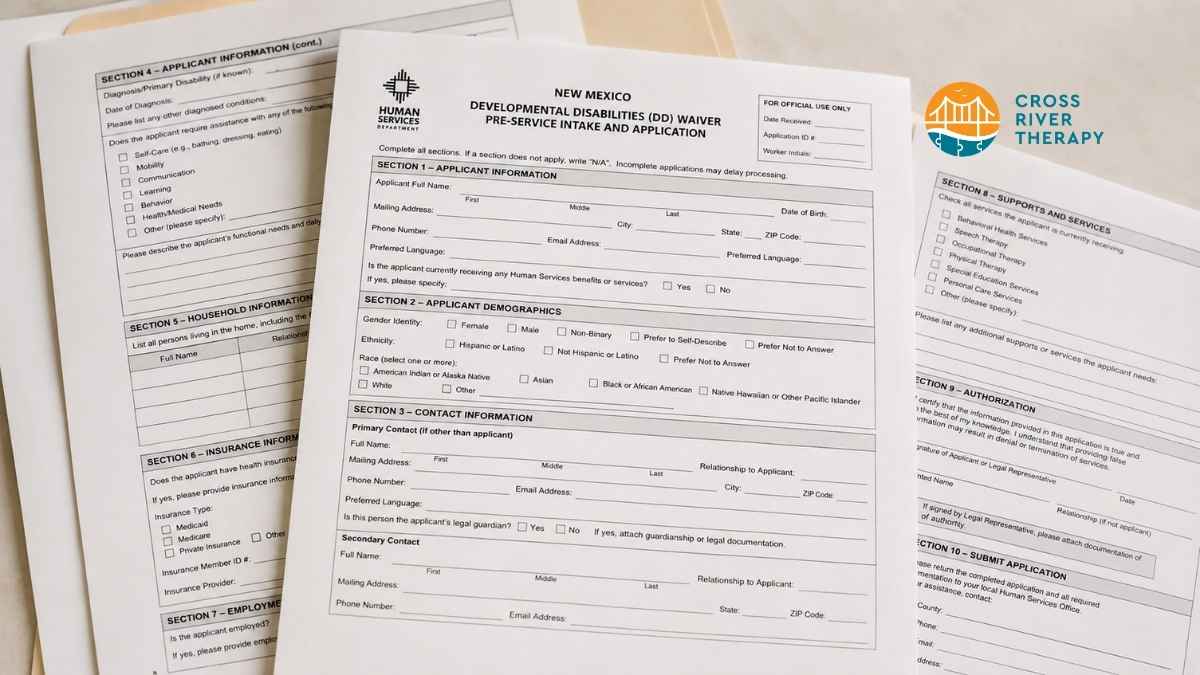
How to Apply for New Mexico’s DD Waiver While Starting ABA Therapy
Autism waiver New Mexico applications need DD Waiver records and proof of daily support needs. Your next step is to start ABA intake with Cross River.

Is ABA Therapy Covered by Insurance in New Jersey? What Every Parent Should Know
ABA therapy insurance New Jersey may cover medically necessary care based on plan type, network, and authorization. Verify benefits with Cross River.

How ABA Therapy Builds Communication for Nonverbal Children Without Forcing Speech
ABA therapy communication for nonverbal children starts with AAC, signs, and daily routines. See how kids ask, refuse, choose, and get help.

How to Start ABA Therapy in New Jersey With a First-Call Checklist
How to start ABA therapy in New Jersey begins with records, insurance details, and intake questions. Use this first-call checklist before you call.

How to Get an Autism Evaluation in Arkansas Before Starting ABA Therapy
How to get an autism evaluation in Arkansas starts with a referral, provider choice, and key records. Use this parent checklist before ABA intake.

Center-Based vs In-Home vs School-Based ABA Therapy and How to Choose the Right Fit
Center-based, in-home, and school-based ABA therapy each fit different goals, routines, and settings. Compare options before your intake call.

Early Signs of Autism: A Guide for North Carolina Parents
Early signs of autism North Carolina parents notice can include speech, play, sensory, or skill loss patterns. See what to track before screening.