








How ABA therapists manage maladaptive behavior
Transformative Strategies in ABA for Behavior Improvement


Understanding the Foundations of Managing Maladaptive Behaviors
Applied Behavior Analysis (ABA) stands as the gold standard in addressing maladaptive behaviors in children with autism spectrum disorder (ASD). Central to its effectiveness is a comprehensive assessment process that helps therapists decipher the underlying reasons, or functions, of behaviors. This understanding guides personalized intervention strategies aimed at reducing challenges while promoting adaptive skills.
Identifying and Understanding Maladaptive Behaviors in Children with Autism
What are some common maladaptive behaviors observed in children with autism?
Children with autism often display a range of maladaptive behaviors that can affect their daily lives and social interactions. These behaviors include aggression, such as kicking, slapping, or biting, which may be directed towards others or oneself. Self-injurious behaviors like head banging, scratching, and hitting are also common and can be particularly concerning. Additionally, property destruction, such as breaking or throwing items, can occur during episodes of distress.
Other notable behaviors include elopement, where a child runs away from safe environments, and challenging tantrums. Repetitive movements—such as hand-flapping, rocking, or spinning—are often observed, along with a strong insistence on routines and fixations on specific interests. Sensory sensitivities, like overstimulation or aversion to certain textures or sounds, are also considered maladaptive behaviors because they can limit the child's engagement and learning.
Most of these behaviors serve important functions for the child, often acting as ways to communicate unmet needs, frustrations, or sensory overloads. Since they are frequently linked to difficulties with communication and coping, understanding the purpose behind these behaviors is crucial for effective intervention. Strategies such as Applied Behavior Analysis (ABA), functional communication training (FCT), and early developmental approaches focus on reducing these maladaptive behaviors by teaching more appropriate and functional skills.
How do ABA therapists assess and understand maladaptive behaviors?
ABA therapists take a structured and detailed approach to understanding maladaptive behaviors. The first step involves comprehensive assessments that include direct observations of the child in natural settings, interviews with parents and caregivers, and skill testing to identify strengths and challenges.
A core tool used is the Functional Behavior Assessment (FBA). FBA helps pinpoint the reasons or functions behind behaviors, such as seeking attention, escaping from demands, gaining sensory stimulation, or accessing preferred items.
Therapists analyze the behaviors using the ABC model, which stands for Antecedent, Behavior, and Consequence. This analysis involves identifying what happens immediately before the behavior (the antecedent), what the behavior looks like, and what happens afterward (the consequence). Understanding these elements helps in recognizing patterns and triggers.
Ongoing data collection is vital. Therapists monitor behavior frequency, intensity, and context to track progress accurately. This data informs adjustments in intervention strategies, ensuring that the approach remains personalized and effective.
By understanding what triggers maladaptive behaviors and what they achieve for the child, ABA therapists can develop tailored interventions. These strategies aim to replace maladaptive behaviors with functional communication, teach self-regulation skills, and modify environmental factors to support the child's developmental needs.
Strategies and Principles Behind Behavior Modification in ABA Therapy

What strategies do ABA therapists use to modify maladaptive behaviors?
ABA therapists employ a variety of proven methods to help children with autism manage and reduce maladaptive behaviors. One of the most common techniques is positive reinforcement, which involves rewarding desirable behaviors to encourage their occurrence. For example, a child might receive praise or a small reward after asking appropriately for a break, reinforcing the behavior.
In addition to reinforcement, therapists use methods like extinction—where they withhold attention or rewards for challenging behaviors to decrease their frequency. Prompting and fading are also widely used; these involve guiding the child through the desired behavior with prompts and gradually reducing help as the child gains independence.
Other interventions include chaining—linking simple behaviors into complex sequences—and modeling, where therapists demonstrate appropriate actions for the child to imitate. Visual supports such as picture schedules or social stories help clarify expectations and guide behavior.
Central to these strategies is the functional behavior assessment (FBA), which helps identify the underlying causes or functions of behaviors. Based on this assessment, personalized intervention plans are crafted to effectively target specific behaviors and their reasons for occurring.
What are some recommended practices for managing maladaptive behaviors in children?
Managing maladaptive behaviors effectively requires understanding and addressing their root causes. Strategies include teaching children alternative coping skills, such as requesting a break or expressing feelings verbally, to replace disruptive actions.
Establishing consistent routines and clear expectations creates a predictable environment that reduces anxiety and misbehavior. Using positive reinforcement to motivate children for appropriate behaviors—like sharing or calming down—encourages healthier responses.
Setting boundaries and applying structured consequences help children understand what behaviors are acceptable. Supporting emotional regulation through techniques like labeling feelings and validating their experiences fosters self-awareness.
Early intervention is crucial. Collaborating with families, educators, and specialists ensures a unified approach. Providing parents with training on behavior management techniques, such as reinforcement and visual supports, extends progress beyond therapy sessions, promoting lasting change.
How does evidence support the effectiveness of ABA interventions for maladaptive behaviors?
A substantial body of research underscores ABA’s effectiveness in reducing maladaptive behaviors and enhancing communication, social skills, and adaptive functioning in children with autism.
Meta-analyses and systematic reviews have reported moderate to large effects—indicating significant improvements—in areas like IQ, expressive language, and daily living skills. For instance, children who received early and intensive ABA therapy showed notable reductions in behaviors like self-injury, tantrums, and aggression.
Studies also reveal that children with less severe ASD symptoms initially tend to respond more quickly to ABA interventions. Additionally, involvement of parents and caregivers in intervention plans correlates with better outcomes, highlighting the importance of a collaborative approach.
While some specific skills, such as receptive language, may show limited improvement, overall evidence affirms that ABA provides practical strategies for managing behaviors and fostering development. The consistency of these positive results across multiple studies solidifies ABA’s reputation as the gold standard for behavioral intervention.
Strategy/Principle Description Example Positive Reinforcement Reward desirable behaviors to encourage their recurrence Giving praise when a child requests appropriately Functional Behavior Assessment Analyzing behavior to identify its purpose or trigger Observing and recording when and why challenging behaviors occur ABC Model of Behavior Framework for understanding behavior by analyzing antecedents, behaviors, and consequences Noticing a child tantrums after a demand is placed, and understanding the outcome
Understanding these core concepts and strategies helps caregivers and professionals create effective, tailored interventions. These approaches work together to replace maladaptive behaviors with more functional and adaptive skills, fostering positive development for children with autism.
The Role of ABA Models like ESDM in Behavior Management

What role do models like ESDM play in managing maladaptive behaviors?
The Early Start Denver Model (ESDM) is an evidence-based approach that combines principles of Applied Behavior Analysis (ABA) with naturalistic, child-led strategies tailored to young children, especially those with autism spectrum disorder (ASD). Its primary focus is on promoting social, communication, and cognitive skills while reducing maladaptive behaviors.
ESDM emphasizes understanding the context in which behaviors occur—identifying triggers and consequences—and uses this information to guide intervention strategies. Therapists observe how children respond to various situations, looking at antecedents (what happens before a behavior) and consequences (what happens after). This analysis is similar to the ABC model used broadly in ABA, which helps to decode the function of behaviors.
By integrating reinforcement strategies within engaging play-based sessions, ESDM encourages children to develop desirable behaviors organically. Positive affect and social rewards, such as praise or preferred activities, are used to motivate children and reinforce appropriate responses. This naturalistic approach often leads to greater engagement and skill acquisition.
Building strong, responsive relationships is at the core of ESDM. Therapists and caregivers create a supportive environment that promotes emotional connection and trust. This relationship helps children feel secure enough to explore new skills and reduces anxiety or frustration that may trigger maladaptive behaviors.
Strategies like least-to-most prompting are employed to gently guide children toward desired behaviors without overwhelming them. The approach also emphasizes motivation—making tasks relevant and fun to ensure children are engaged and eager to participate.
Furthermore, ESDM promotes the generalization of skills by practicing across different settings and situations—whether at home, in therapy, or in community environments. This ensures that the behaviors learned are functional and adaptable to real-life challenges.
By focusing on individualized intervention, ESDM helps to address the root causes of maladaptive behaviors—such as difficulties in communication, emotional regulation, or sensory sensitivities. As children gain better communication and social skills, the frequency and intensity of problematic behaviors typically decrease.
Overall, ESDM plays a vital role in behavior management by fostering social connection, emotional understanding, and adaptive skills. Its child-centered, play-based approach makes it highly effective in reducing maladaptive behaviors and promoting positive development, especially when implemented early in the intervention process.
Expected Outcomes from ABA Therapy in Behavior Reduction
What outcomes can be expected from ABA therapy in reducing maladaptive behaviors?
ABA therapy is designed to systematically address problematic behaviors such as aggression, self-injury, and tantrums. By carefully analyzing the situations before and after these behaviors occur, therapists can identify their triggers and the consequences that maintain them. This process helps in designing targeted interventions that use positive reinforcement to encourage more desirable behaviors.
The primary goal is to increase functional, helpful skills that support independence and social participation. These include improving communication, developing social skills, and enhancing daily living capabilities like dressing, eating, and self-care tasks.
As therapy progresses, measurable improvements are expected, tailored to each child's needs and abilities. For example, a child might learn to ask for a break instead of acting out or to use alternative communication methods like PECS or AAC devices.
Research supports that sustained and intensive ABA programs can lead to notable behavioral changes. Many children experience a significant reduction in maladaptive behaviors over time, especially when interventions are personalized and involve ongoing assessments.
The ultimate outcomes include fewer behavioral disruptions, greater social engagement, and improved adaptive functioning. These effects collectively aim to improve overall quality of life, independence, and social integration for children with autism.
Behavior Area Expected Improvements How It Is Achieved Maladaptive behaviors Reduction in aggression, self-injury, tantrums Functional behavior assessment, reinforcement strategies Communication skills Increased use of expressive language, alternative signals Teaching functional communication tools like PECS or sign language Social skills Better peer interactions, eye contact, turn-taking Social skill training, modeling, positive reinforcement Daily Living Skills Improved self-care, adaptive routines Step-by-step teaching, prompting, visual supports
Is crying considered a maladaptive behavior, and when should it be addressed?
Crying is a natural part of emotional expression and communication, especially in young children. It often serves important functions such as self-soothing, expressing needs, or regulating mood.
In many cases, crying is not considered maladaptive. It helps children communicate discomfort or frustration when they lack other skills to do so. However, when crying becomes excessive, persistent, or interferes with daily activities and social interactions, it may be viewed as maladaptive.
Excessive crying may indicate underlying issues such as emotional distress, sensory sensitivities, or health concerns. For example, in infants, prolonged crying has been associated with later behavioral challenges and neurobiological vulnerabilities.
Addressing maladaptive crying involves understanding its emotional and social roles. Interventions might include teaching alternative communication strategies, calming techniques, or addressing underlying health or emotional issues.
In cases where crying significantly impacts the child's well-being or development, clinical evaluation can help determine appropriate supports and interventions. Overall, while crying is normal, persistent or overwhelming crying warrants thoughtful assessment and, if needed, targeted management to support emotional health.
Integrating ABA for Long-term Behavior Success
ABA therapy, grounded in scientific research and best practices, offers a comprehensive framework for managing maladaptive behaviors in children with autism. Through precise assessment, evidence-based strategies, and individualized interventions like ESDM, therapists aim to reduce problematic behaviors while bolstering communication, social, and adaptive skills. The ongoing collaboration with families and caregivers enhances the real-world applicability of these interventions, ensuring sustained progress. As continued research underscores the effectiveness of ABA, it remains a vital approach for helping children achieve greater independence, emotional regulation, and quality of life.
References
- Maladaptive Behaviors and Autism Spectrum Disorder
- Maladaptive Behavior in Autism: Our Comprehensive Guide
- Reducing Maladaptive Behaviors in Preschool-Aged Children with ...
- Understanding and Addressing Maladaptive Behavior in Children ...
- How to Address Bad Behavior During ABA Therapy - Elemy
- ABA Techniques: Strategies for Behavior Analysts - GSEP Blog
- Applied Behavior Analysis (ABA) | Autism Speaks
- ABA Therapy Examples, Definition & Techniques
- 10 Effective ABA Behavior Management Strategies - Ori Learning
- ABA Therapy Goals: 25 Practical Examples & Timelines
Recent News
Related articles

5 Autism Support Groups and Family Resources in New Mexico Alongside ABA Therapy
Autism support groups New Mexico families can use offer peer support, local events, and school help. Cross River can explain ABA therapy options.

Where to Get an Autism Evaluation in New Mexico Before Starting ABA Therapy
Autism evaluation New Mexico options include UNM, NMSU, FIT, and private providers. Compare providers, records, and ABA steps with Cross River.

7 North Carolina Autism Resources to Contact Before ABA Therapy Starts
Autism resources North Carolina families can call for diagnosis, early intervention, rights, and parent support. Start ABA intake with Cross River.

Does Indiana Medicaid Cover ABA Therapy? A Step-by-Step Eligibility Checklist for Parents
Medicaid ABA therapy Indiana covers eligible children under 21 with prior authorization. Your five-step coverage review can start with Cross River.
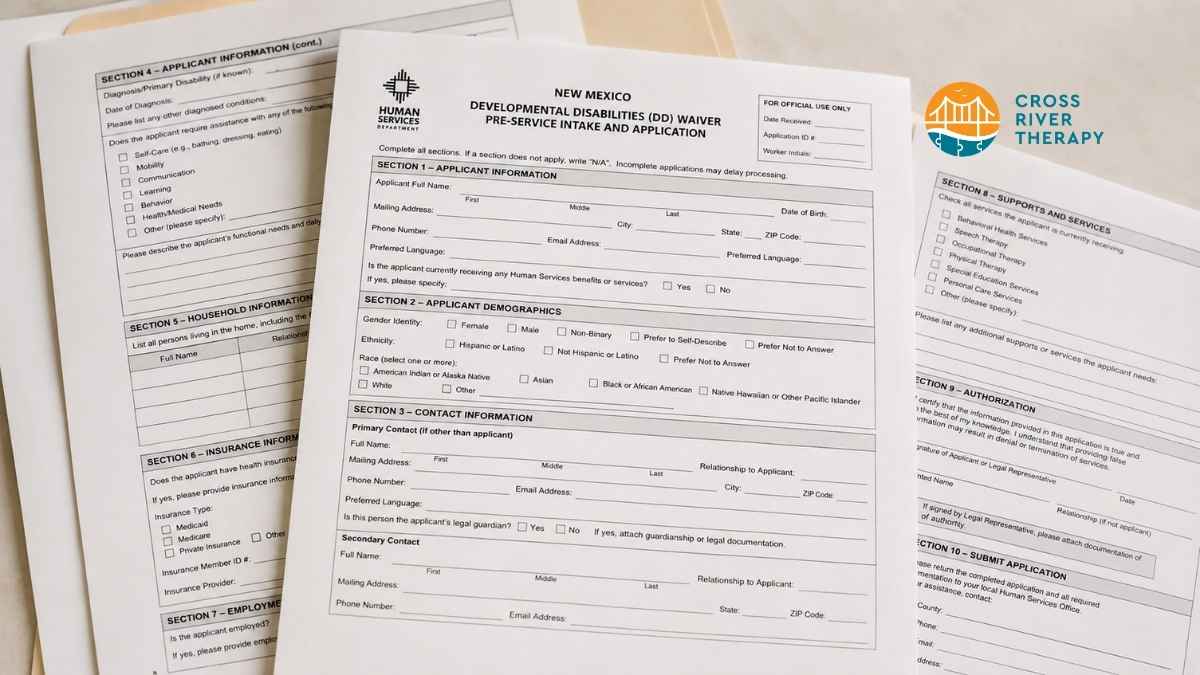
How to Apply for New Mexico’s DD Waiver While Starting ABA Therapy
Autism waiver New Mexico applications need DD Waiver records and proof of daily support needs. Your next step is to start ABA intake with Cross River.

Is ABA Therapy Covered by Insurance in New Jersey? What Every Parent Should Know
ABA therapy insurance New Jersey may cover medically necessary care based on plan type, network, and authorization. Verify benefits with Cross River.

How ABA Therapy Builds Communication for Nonverbal Children Without Forcing Speech
ABA therapy communication for nonverbal children starts with AAC, signs, and daily routines. See how kids ask, refuse, choose, and get help.

How to Start ABA Therapy in New Jersey With a First-Call Checklist
How to start ABA therapy in New Jersey begins with records, insurance details, and intake questions. Use this first-call checklist before you call.

How to Get an Autism Evaluation in Arkansas Before Starting ABA Therapy
How to get an autism evaluation in Arkansas starts with a referral, provider choice, and key records. Use this parent checklist before ABA intake.

Center-Based vs In-Home vs School-Based ABA Therapy and How to Choose the Right Fit
Center-based, in-home, and school-based ABA therapy each fit different goals, routines, and settings. Compare options before your intake call.

Early Signs of Autism: A Guide for North Carolina Parents
Early signs of autism North Carolina parents notice can include speech, play, sensory, or skill loss patterns. See what to track before screening.

Early Intervention ABA Therapy in Albuquerque, NM: Why Starting Early Matters
Early intervention ABA therapy in Albuquerque, NM helps toddlers practice communication, play, and routines. Spot signs and care options sooner.