








How ABA Therapy Enhances Learning
Unlocking Educational Potential with ABA Therapy


Exploring the Transformative Impact of ABA in Education
Applied Behavior Analysis (ABA) has emerged as a leading therapeutic approach in enhancing the educational experiences of individuals with autism and other developmental challenges. This article delves into how ABA's principles and techniques are effectively applied in educational settings, offering insights into its role in fostering academic achievement, behavior management, communication skills, and social-emotional development. By understanding the application and benefits of ABA, parents, educators, and caregivers can better support students with diverse learning needs, leading to improved learning outcomes and enriched educational opportunities.
The Core Principles of ABA Therapy

What is ABA therapy?
Applied Behavior Analysis (ABA) is a therapy grounded in the science of learning and behavior. It emphasizes understanding how behavior operates in various environments and how learning occurs. ABA is particularly effective for individuals with autism or related developmental disorders, aiming to facilitate skill acquisition in areas such as communication, social interaction, and academic performance.
Key principles of ABA
ABA therapy is built on several core principles that guide its practice:
- Positive Reinforcement: This essential concept involves rewarding desirable behaviors, which encourages their repetition. This approach enhances motivation and learning engagement among learners.
- Individualized Approach: Each therapy plan is tailored to meet the unique needs of the student, breaking down complex skills into smaller, manageable components for easier comprehension.
- Data-Driven: Continued monitoring and assessment of behaviors allow practitioners to adjust strategies based on collected data, ensuring effective learning and behavioral change are sustained.
- Structured Environment: Clear routines and visual supports are used to help students understand expectations and reduce anxiety, promoting a conducive learning atmosphere.
What are the benefits of ABA therapy?
ABA therapy, or Applied Behavior Analysis, offers numerous benefits for individuals, particularly children with autism and related developmental disorders. It aims to improve essential skills, such as language and communication, attention, social interactions, and academics, while also decreasing harmful behaviors. The therapy is grounded in evidence-based practices and is customized to meet the unique needs of each learner, often involving positive reinforcement to encourage desirable behaviors. Research supports its efficacy, making it a best practice endorsed by organizations like the U.S. Surgeon General and the American Psychological Association. Overall, ABA therapy significantly enhances the quality of life for individuals by teaching them necessary skills and promoting positive behavior changes.
Enhancing Academic Success through ABA

How does ABA help improve academics?
Applied Behavior Analysis (ABA) plays a crucial role in enhancing academic outcomes for students, particularly those with autism spectrum disorder. By tailoring interventions to meet individual needs, ABA utilizes evidence-based techniques to foster a more conducive learning environment. One of the foundational principles is positive reinforcement, which encourages desired behaviors by rewarding them, thus motivating students to engage more effectively in their academic pursuits.
Additionally, Natural Environment Teaching (NET) integrates learning opportunities into everyday activities, promoting skill application in real-world contexts. This approach helps students build vital social interactions and communication skills that are essential for success in the classroom. For instance, techniques like task analysis break down complex tasks into simpler, manageable steps, which reduces feelings of overwhelm and anxiety, allowing students to focus on immediate learning goals.
To illustrate, the table below summarizes how ABA contributes to enhancing academic success:
ABA Strategy Description Impact on Learning Positive Reinforcement Rewards encouraging desirable behaviors Increases engagement and motivation in learning Natural Environment Teaching Incorporates everyday situations into learning Enhances skill generalization and application Task Analysis Breaks tasks into manageable components Reduces anxiety and improves comprehension Individualized Education Plans Customizes learning strategies based on assessments Ensures tailored interventions for student needs
Overall, research suggests that these strategies collectively lead to significant improvements in language development, adaptive behavior, and overall school experiences. By focusing on both academic skills and social interactions, ABA equips students with the tools they need to succeed in inclusive educational settings.
ABA Techniques in Practice: Classroom Applications
Classroom-based ABA interventions
Applied Behavior Analysis (ABA) strategies have proven effective in classroom settings. These structured techniques aim to enhance learning and behavior among students, particularly those with autism spectrum disorder (ASD).
One key method is Discrete Trial Training (DTT). In DTT, skills are taught in small, manageable steps, providing positive reinforcement for correct responses. For instance, a teacher might use DTT to help a child learn colors by rewarding them each time they correctly identify a color. This systematic approach reinforces learning while minimizing frustration.
Another effective technique is Modeling. In this method, educators demonstrate desired behaviors. For example, a teacher might show how to initiate a conversation, providing students a clear example to imitate. This method not only teaches social skills but also builds confidence in students' ability to engage with peers.
The Picture Exchange Communication System (PECS) is also beneficial. This approach allows children to communicate their needs by exchanging pictures of desired items. By incorporating PECS in daily classroom activities, educators can enhance students' language skills and reduce frustration during communication attempts.
Strategies for behavior management
Various strategies are essential for managing behaviors in the classroom effectively. Functional Communication Training (FCT) focuses on teaching children appropriate ways to communicate instead of resorting to inappropriate behaviors. For example, instead of throwing objects when frustrated, students learn to express their feelings verbally, fostering a more positive classroom atmosphere.
Antecedent-Based Interventions (ABI) adjust the environmental factors that may trigger problematic behaviors. By allowing students choices over their worksheets or seating arrangements, teachers can decrease instances of defiance and enhance engagement.
Collectively, these ABA techniques promote a structured, positive learning environment by effectively addressing academic and behavioral challenges. Through consistent application of strategies like DTT, modeling, PECS, FCT, and ABI, educators can significantly improve student interactions and learning outcomes in classrooms.
Breaking Down Tasks to Facilitate Learning
Chaining and Task Analysis in ABA
One effective way Applied Behavior Analysis (ABA) facilitates learning is through chaining and task analysis. Chaining involves breaking down complex skills into smaller, manageable steps, allowing students to learn each component progressively. This segmented approach promotes clearer understanding as students master each link before moving on to the next, creating a solid foundation for learning.
Task analysis complements chaining by systematically evaluating and defining the individual steps needed to complete a task. For instance, teaching a child to tie their shoes might involve several distinct steps: pulling the laces, making an X, and creating loops. This structured breakdown not only enhances learning but also empowers students by making seemingly overwhelming tasks feel achievable.
Reducing Anxiety Through Structured Learning
ABA's structured approach significantly reduces anxiety, a common barrier to effective learning. Establishing clear routines and visual schedules helps students anticipate what comes next, fostering a sense of security in the learning environment. When students know what to expect, they are more likely to engage fully and participate actively, leading to improved focus and academic performance. This predictability removes uncertainty, allowing children with diverse learning needs to thrive in educational settings.
The Role of Positive Reinforcement in ABA

Importance of Positive Reinforcement
Positive reinforcement is a fundamental aspect of Applied Behavior Analysis (ABA) therapy, designed to encourage and strengthen desirable behaviors. By rewarding positive actions with incentives such as praise, treats, or privileges, individuals feel motivated to repeat those behaviors. This technique is particularly effective in developing academic skills and social interactions, as it fosters a more engaging learning atmosphere.
Impact on Behavior Change and Learning
The application of positive reinforcement directly contributes to significant behavior changes and improvements in learning outcomes. For instance, students who display increased focus and engagement in their studies often receive immediate rewards, leading to enhanced motivation. Research has shown that when educators implement these reinforcement strategies consistently, students experience elevated academic performance, including better results in reading and mathematics.
Furthermore, positive reinforcement aids in reducing disruptive behaviors, creating a more conducive learning environment for all students. As behaviors are encouraged and reinforced, children learn the importance of socially acceptable responses, thereby improving their ability to interact with peers and teachers effectively.
Summary Table of Positive Reinforcement Benefits
Benefit Description Example Increased Motivation Encourages repetition of positive behaviors Rewarding good grades Enhanced Learning Outcomes Improves academic performance and focus Increased attention in class Reduced Disruptive Behavior Promotes a more positive classroom environment Fewer interruptions during lessons Improved Social Skills Facilitates better peer interactions Encouraging sharing and cooperation
With ongoing reinforcement, students not only thrive academically but also develop essential life skills necessary for future success.
Supporting Social Skills and Communication Development
Social Skills Training in ABA
Applied Behavior Analysis (ABA) involves comprehensive social skills training tailored to meet the unique needs of individuals. This training uses structured strategies to cultivate essential interaction skills such as communication, cooperation, and conflict resolution. With an emphasis on positive reinforcement, learners are encouraged to engage in appropriate social behaviors through rewards, making peer interactions more approachable and enjoyable.
ABA therapy also incorporates techniques like modeling, role-playing, and social scripts, which provide students with clear examples and scenarios to practice these skills in a safe environment. This method supports the transfer of learned skills to real-world situations, enhancing overall social integration.
Impact on Communication and Peer Relationships
The focus on developing communication abilities within ABA enables children to express themselves more effectively. Techniques such as breaking down language into manageable components make communication less daunting and reduce frustration.
Evidence suggests that children engaging in ABA therapy show substantial improvements in their ability to participate in social activities, as they learn to read social cues and take turns. These gains significantly contribute to enhancing peer relationships, facilitating smoother interactions in educational contexts, and fostering a more supportive atmosphere among classmates.
Overall, the combination of social skills training and communication development through ABA results in lasting improvements for students, ultimately leading to enhanced academic success and personal fulfillment.
Early Intervention and Its Long-Term Benefits

Importance of Early ABA Intervention
Early intervention through Applied Behavior Analysis (ABA) can have profound impacts on children, especially those diagnosed with autism spectrum disorder (ASD). Engaging in ABA therapy at a young age can lead to significant improvements in skills necessary for daily living, education, and social integration. By addressing behavioral challenges and fostering communication, social skills, and academic competencies, early ABA intervention lays a strong foundation for future learning and development.
Research Findings on Early Intervention Outcomes
Numerous studies underscore the effectiveness of early ABA interventions. Research spanning over five decades indicates that children who receive therapy at younger ages often show greater progress in various areas, such as language development and social interaction. These early learners frequently exceed their peers in academic performance and independence, highlighting the critical role that time-sensitive interventions play in shaping better life outcomes. Studies also indicate that consistent ABA therapy can significantly decrease problem behaviors and enhance overall adaptive functions, further emphasizing the necessity of early engagement in such programs.
Addressing Behavioral Challenges in Educational Settings
Behavior Management Strategies in ABA
Applied Behavior Analysis (ABA) employs various strategies to manage behavioral challenges in educational settings effectively. These strategies include positive reinforcement, where desirable behaviors are rewarded to encourage repetition. This method not only promotes positive behavior but also engages students by maintaining their motivation.
Function-Based Interventions are another strategy used within ABA. By understanding the antecedents and consequences of a student’s behavior, educators can implement targeted strategies that address the specific causes of undesirable behaviors, resulting in improved focus and engagement in the classroom.
Developing Individualized Behavior Plans
Individualized Behavior Plans (IBPs) are crucial in ABA therapy as they tailor interventions to meet each student's unique needs. These plans are developed through Functional Behavioral Assessment (FBA), which identifies the specific behaviors that require intervention.
Once the assessments are complete, educators and therapists collaborate to outline clear goals and strategies, ensuring that the interventions align with the student's learning and behavioral objectives. This individualized approach allows for precise tracking of progress, enabling adjustments to be made as needed. As a result, students benefit from structured and supportive environments that foster both academic and social development.
Critiques and Considerations of ABA

Is ABA therapy ever considered harmful?
ABA therapy has been a topic of significant debate within the autism community and beyond. Critics often voice concerns about its historical reliance on aversive techniques, which included punitive measures for undesirable behaviors. This approach led to anxiety and distress for some children, fostering fears about the therapy's intent to encourage conformity to neurotypical behaviors rather than honoring the unique traits of autistic individuals.
While many families report positive outcomes from ABA, it’s important to acknowledge the diversity of experiences. Some children may thrive, developing critical communication and social skills, yet others might endure negative experiences, leading parents to question the overall effectiveness and ethical implications of the therapy.
Contemporary practices have shifted significantly towards emphasizing positive reinforcement and client-centered approaches. The modern ABA seeks to respect individual behaviors and preferences, yet the controversy around its fundamentals persists.
Balancing therapeutic goals with individual needs
To navigate the critiques surrounding ABA, practitioners are increasingly focused on balancing therapeutic objectives with the unique needs of each child. Effective implementation of ABA involves creating individualized plans that respect the child’s identity and autonomy.
Individualized Education Programs (IEPs) play a crucial role here, outlining not just educational goals, but also acknowledging emotional and behavioral characteristics unique to each learner. Moreover, continuous assessments and adjustments are essential, ensuring interventions remain relevant and beneficial.
In conclusion, while ABA therapy can yield significant gains in skill development for many children, it is vital to approach its application with caution. Understanding the nuanced perspectives surrounding ABA will lead to more ethical and effective intervention strategies, ultimately prioritizing the dignity and well-being of individuals with autism.
Personalized Learning Experiences through ABA
Customizable nature of ABA
Applied Behavior Analysis (ABA) is at the forefront of tailored educational interventions, emphasizing its adaptable approach to meet the varied needs of learners. With techniques structured to accommodate individual learning profiles, ABA allows for the personalization of strategies that address specific behavioral and academic goals. Whether it’s enhancing communication, social skills, or academic performance, ABA can break down complex skills into smaller, manageable components, fostering an environment where personalized learning flourishes.
Tailoring interventions for individual success
The flexibility of ABA is its cornerstone. By developing individualized behavior intervention plans, practitioners can assess the unique challenges each student faces. This involves detailed evaluations to identify both strengths and areas for growth, creating a supportive framework for learning. Techniques like Discrete Trial Training (DTT) and Natural Environment Teaching (NET) ensure that interventions not only teach crucial skills but also promote their application in real-world scenarios.
Does ABA improve IQ?
ABA therapy has been shown to potentially improve IQ scores among autistic children, particularly when implemented early and intensively. Numerous case studies and research, such as the study conducted by the University of Southampton, support the notion that individualized ABA interventions can lead to measurable cognitive improvements. However, the impact on IQ varies widely due to factors like initial IQ levels, age at intervention, and the unique challenges faced by autistic individuals when undergoing standardized testing. Parental involvement and ongoing support enhance the effectiveness of ABA therapy, ensuring sustained cognitive gains. Overall, while ABA can contribute positively to cognitive development, the outcomes are complex and individualized.
The Future of ABA in Education
As ABA therapy continues to evolve, its role in education grows ever more critical. By embracing its evidence-based strategies and tools, educators and caregivers can significantly enhance learning experiences for students with diverse needs. The success of ABA therapy lies not only in its ability to improve academic and social outcomes but also in its adaptability to meet each student’s unique challenges. While ABA remains a widely endorsed approach, ongoing discussions and adaptations are necessary to ensure it supports all learners effectively and respectfully. ABA’s future in education is bright, with the potential to unlock the learning potential of countless students, paving the way for an inclusive and equitable educational landscape.
References
- Applied Behavior Analysis (ABA) | Autism Speaks
- School-Based ABA Therapy: Boosting Learning and Behavior
- Does ABA Therapy Improve Academic Achievement?
- 5 Ways ABA Therapy Helps with Classroom Adaptations
- The effectiveness of applied behavior analysis program training on ...
- Enhancing Educational Services Through Applied Behavior ...
- ABA's Impact On Learning Disabilities - Goldstar Rehabilitation
- ABA Therapy Enhancing Inclusive Education
- How ABA Therapy Enhances Academic Skills?
Recent News
Related articles

6 Arkansas Medicaid ABA Therapy Rules Families Need to Know
Arkansas Medicaid ABA therapy has age, diagnosis and approval rules. Families can check six requirements before care.

Arizona Autism Laws for ABA Coverage and School Rights
Arizona autism laws for ABA coverage vary by plan. Families can check insurance, appeal options, and school rights.

ABA Therapist Salary in Arkansas for RBTs and BCBAs
Compare ABA therapist salary in Arkansas by role. See how paid hours and benefits affect earnings before applying.

5 Autism Support Groups and Family Resources in New Mexico
Autism support groups in New Mexico connect families. Local resources offer events, parent support, and school help.

Where to Get an Autism Evaluation in New Mexico
Autism evaluation options in New Mexico include UNM and NMSU. Age and referral details help parents prepare.

7 North Carolina Autism Resources to Contact Before ABA Therapy Starts
Autism resources North Carolina families can call for diagnosis, early intervention, rights, and parent support. Start ABA intake with Cross River.

Does Indiana Medicaid Cover ABA Therapy? A Parent Checklist
Indiana Medicaid ABA therapy may cover care for eligible children. The checklist covers coaching and renewals.
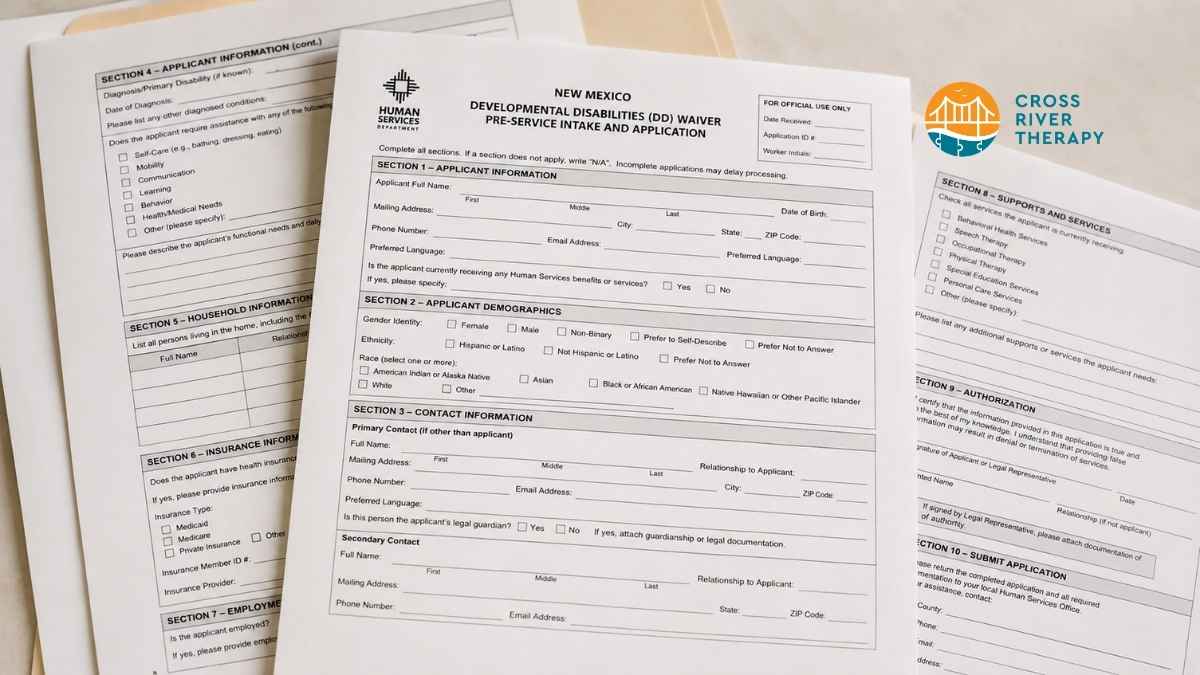
How to Apply for the New Mexico DD Waiver
Your NM DD waiver application starts with state intake. The steps cover records, submission, and enrollment.

Does Insurance Cover ABA Therapy in New Jersey?
ABA therapy insurance in New Jersey varies by plan. Learn what NJ FamilyCare covers and how to check costs.

How ABA Therapy Builds Communication for Nonverbal Children Without Forcing Speech
ABA therapy communication for nonverbal children starts with AAC, signs, and daily routines. See how kids ask, refuse, choose, and get help.

How to Start ABA Therapy in New Jersey With a Checklist
Your guide explains how to start ABA therapy in New Jersey. A first-call checklist covers records and next steps.

How to Get an Autism Evaluation in Arkansas Before Starting ABA Therapy
How to get an autism evaluation in Arkansas starts with a referral, provider choice, and key records. Use this parent checklist before ABA intake.